Key takeaways
- Handlebar clamp or dock. The speaker sits close to your ears and the sound travels directly to you. Mounts must grip a 22 to 32 mm bar, so check your handlebar diameter and any bell or light clamps that crowd the space.
- Stem or top tube bag. Placing the speaker inside a frame bag or a stem pouch cuts wind noise and protects it from rain, but also muffles treble.
- Rear rack or pannier. The speaker faces backward and mainly serves people riding behind you. This works for group rides but gives you poor sound.
- Backpack strap or jersey pocket. The lightest option. It adds no mount parts, but the speaker moves, and sound is blocked by the body.
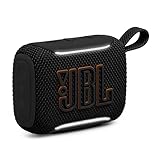
A bike speaker has to survive vibration, rain and a bracket that may fail on the first pothole, so the best choice is usually a small IP67 speaker with a secure mount rather than the loudest model you can find. The JBL Clip 5 with a dedicated handlebar mount is the most practical pick for most riders in 2026, the JBL Wind 3 is the purpose-built choice if you want a speaker that docks to the bar, and the Tribit StormBox Micro 2 and Sony SRS-XB100 are strong strap-mounted options.
This guide compares eight options by weight, mounting method, water rating and battery, and it explains the trade-offs of each approach. It is based on published specifications and published reviews, not on personal testing.
Our top picks


As an Amazon Associate we earn from qualifying purchases at no extra cost to you.
Bike speakers compared
| Speaker | Mounting | Water rating | Claimed battery | Weight (approx.) | Price tier |
|---|---|---|---|---|---|
| JBL Wind 3 | Handlebar dock, built for bikes | IP67 | 5 h | 230 g | Mid |
| JBL Clip 5 | Carabiner or add-on mount | IP67 | 12 h | 285 g | Mid |
| Tribit StormBox Micro 2 | Integrated strap | IP67 | About 12 h | About 340 g | Entry to mid |
| Sony SRS-XB100 | Detachable strap | IP67 | About 16 h | About 274 g | Entry to mid |
| Soundcore Boom Go 3i | Strap or bag mount | IP68 | 24 h at half volume | 380 g | Entry |
| Bose SoundLink Micro (2nd Gen) | Silicone strap | IP67 | 12 h | About 320 g | Entry to mid |
| Ultimate Ears Wonderboom 4 | Rack, frame bag or strap | IP67 | 14 h | 420 g | Mid |
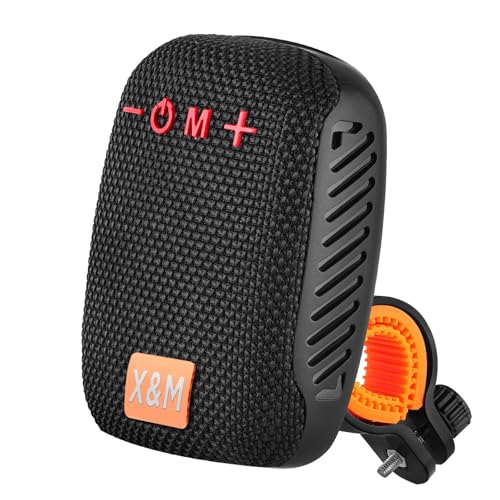
| Budget handlebar speakers (Onforu, Zealot S1 class) | Clamp | Splash resistant | Varies | Light | Entry |
Where a speaker should live on a bike
Mounting decides how a speaker sounds as much as its drivers do. Wind noise at 20 km/h masks frequencies below about 300 Hz, and the rider’s head gets in the way of anything pointed away. These are the four common locations.
- Handlebar clamp or dock. The speaker sits close to your ears and the sound travels directly to you. Mounts must grip a 22 to 32 mm bar, so check your handlebar diameter and any bell or light clamps that crowd the space.
- Stem or top tube bag. Placing the speaker inside a frame bag or a stem pouch cuts wind noise and protects it from rain, but also muffles treble.
- Rear rack or pannier. The speaker faces backward and mainly serves people riding behind you. This works for group rides but gives you poor sound.
- Backpack strap or jersey pocket. The lightest option. It adds no mount parts, but the speaker moves, and sound is blocked by the body.
JBL Wind 3: the purpose-built bike speaker
Spec line: IP67, about 5 hours, 230 g, FM radio on some versions, handlebar dock that clamps to the stem or bar.
Best for: commuters and riders who want a speaker that comes off the bike in two seconds.
Skip if: you want a long battery or deep bass.
- Pro: one review calls it the best Bluetooth speaker for bicycle use because of its secure handlebar docking system.
- Pro: dust-tight and water-resistant to IP67.
- Pro: the dock keeps the speaker aligned toward the rider’s ears.
- Con: the battery claim of about 5 hours is the shortest in this list.
- Con: some versions are older designs, so check current stock and compatibility with your handlebar.
JBL Clip 5 with a handlebar mount: the flexible choice
Spec line: IP67, up to 12 hours, 285 g, built-in carabiner, Auracast.
Best for: riders who want one speaker for the bike, the backpack and the shower.
Skip if: you want to clip it straight to the bar and leave it.
- Pro: NBC Select named it best overall among portable speakers, and TechGearLab found it the loudest and clearest pocket-sized speaker it reviewed.
- Pro: a third-party mount designed for the Clip 4 and Clip 5 gives it a fixed riding position.
- Pro: JBL lists up to 12 hours; TechGearLab measured about 8 hours 50 minutes.
- Con: clipped straight to the bar it can rotate freely, so use a mount or a strap.
- Con: the mount is a separate purchase.
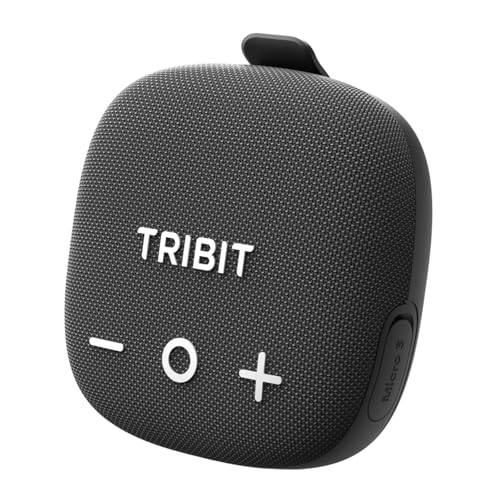
Tribit StormBox Micro 2: strap and go
Spec line: IP67, about 12 hours, about 340 g, a wrap-around strap designed for bikes and bags.
Best for: mountain bikers and anyone who rides rough surfaces.
Skip if: you want the safest mount for a very rough trail.
- Pro: the strap wraps around a bar, a frame tube or a bag strap without a separate bracket.
- Pro: it is loud for its size and entry priced.
- Pro: Treblab-style comparisons and similar reviews list it among the pocket speakers that cope with outdoor use.
- Con: the strap can slide on a smooth tube unless tightened with a rubber shim.
- Con: less well known, so warranty handling depends on region.
Sony SRS-XB100: dependable and compact
Spec line: IP67, about 16 hours, about 274 g, detachable strap.
Best for: road cyclists who want a light speaker with a long battery claim.
Skip if: you need floating.
- Pro: light enough that a strap mount stays stable.
- Pro: Sony’s tuning keeps vocals clear against wind.
- Pro: the longest battery among the small straps in this list.
- Con: no real bass.
- Con: the detachable strap is thin, so reinforce it with a short velcro wrap on rough trails.
Soundcore Boom Go 3i: loudest of the small ones
Spec line: IP68, up to 24 hours at half volume, 380 g, 15 W mono, 4,800 mAh power bank.
Best for: long rides and bikepacking where a power bank is useful.
Skip if: you want it small enough for a bar clamp.
- Pro: the large battery can top up a phone or a bike light on a long trip.
- Pro: IP68 rating and a rugged shell.
- Pro: the carry loop accepts a strap or a webbing mount.
- Con: at 380 g it needs a secure mount; a loose strap will let it swing.
- Con: Soundcore’s own figure for full volume with lights on is about 6 hours.
Bose SoundLink Micro (2nd Gen): the quality choice
Spec line: IP67, about 12 hours, about 320 g, silicone strap, no microphone.
Best for: riders who prefer sound quality to loudness.
Skip if: you need to take calls.
- Pro: Bose describes it as a small speaker with a full sound.
- Pro: the silicone strap attaches directly to a bar or a bag.
- Pro: it can be paired in stereo with another Bose speaker.
- Con: no microphone.
- Con: mono sound.
Ultimate Ears Wonderboom 4: heavy, but tough
Spec line: IP67, about 14 hours, 420 g, floats, 360-degree sound.
Best for: a rack or frame bag on a touring bike.
Skip if: you want a handlebar speaker.
- Pro: the rubber body is among the toughest here.
- Pro: 360-degree sound suits group rides with friends around you.
- Pro: it floats, which helps on river crossings.
- Con: Treblab notes that at 420 g it suits a rear rack or frame mount better than a handlebar.
- Con: the loop needs a short strap through it.
Budget handlebar speakers
Brands such as Onforu and Zealot sell clamp-on handlebar speakers at the entry price tier, according to published roundups. They usually include a light and a clamp, which saves buying a mount. Treat them as short-ride speakers: water resistance is often only splash-level, sound is thin in wind and battery life varies widely. They are a reasonable first bike speaker if you ride in dry weather and want to try the idea.
How to choose: a numbers-first approach
- Measure your handlebar. Most road bars are 31.8 mm, most mountain bars are 31.8 or 35 mm and many commuter bars are 22.2 mm. A mount that fits the wrong diameter will slip.
- Set a weight limit. Keep a handlebar-mounted speaker under about 300 g. A heavier speaker swings or rattles, and the strain can loosen the clamp.
- Calculate the battery. A 12-hour claim becomes about 6 hours at the volume needed over wind. A 5-hour Wind 3 claim means about 2.5 hours, so it suits a commute, not a day ride.
- Pick the water rating. For rides in rain, require IP67 or higher. Splash resistance only works for dry-weather rides.
- Test the volume you need. Wind noise at 25 km/h reaches around 70 to 75 dB at the ear, so a speaker needs to reach about 80 dB at the ear to be heard, which is close to its limit in small models.
Decision matrix
| Riding style | Best option |
|---|---|
| Daily commute | JBL Wind 3 or JBL Clip 5 with mount |
| Mountain biking | Tribit StormBox Micro 2 with strap |
| Road cycling | Sony SRS-XB100 |
| Bikepacking, long rides | Soundcore Boom Go 3i |
| Group touring | UE Wonderboom 4 on a rack |
| First experiment, dry weather | Budget clamp speaker |
Mounting step by step, with the reason for each step
- Clean the bar. Grip tape residue and oil reduce friction, and a clamp that starts on a dirty surface will creep. Wipe with a cloth and isopropyl alcohol.
- Add a rubber shim or inner tube strip. A strip of old inner tube under a clamp or strap raises friction on smooth alloy or carbon bars and prevents scratches. On carbon bars, never over-tighten, because crushing damages the fibres.
- Place the speaker away from the controls. Position it between the stem and the grip, clear of brake levers, shifters and the bell, so full lever travel is never blocked.
- Angle it toward your ears. Tilt the speaker about 20 to 30 degrees upward. Sound aimed at your chest is lost to wind and your jacket.
- Add a safety loop. A short tether or a second strap to the frame stops a failed clamp from dropping the speaker into the front wheel.
- Do a bump check. Ride slowly over a kerb or a rough patch and see if the speaker shifts. Adjust before you head onto a fast route.
Sound strategy: getting clear audio over wind
Speakers lose bass to wind first, which is why the heavy bass modes of larger speakers do little on a bike. Raise the mid-range through the speaker’s app if it has an equaliser, choose podcasts and vocal-led music for faster rides, and lower the volume when you slow for traffic. A speaker mounted lower on the bike gets less turbulence than one on top of the bars, and a small windscreen made from a foam sleeve, like the cover used on a microphone, can reduce wind noise noticeably at commuting speeds.
If you often ride above 30 km/h, consider that bone conduction or open-ear headphones may serve you better than any speaker, because wind noise overwhelms a speaker’s output at that pace. Speakers are best for casual riding, group rides and campsite stops.
Durability and care
- Vibration loosens clamps and straps. Check the mount before each ride and after any rough section.
- Mud and grit damage port covers. Rinse the speaker with clean water and dry it before charging. Never charge a speaker with a wet port.
- Heat shortens the battery’s life. A speaker left on a bike in a hot car or in direct summer sun can degrade quickly.
- Straps and rubber wear first. Inspect them every few months and replace a cracked loop before it fails on the road.
Safety, laws and etiquette
Riding with a speaker is allowed in most places, but rules vary. Some regions restrict headphones or earbuds while cycling, and a speaker can fall under noise rules in parks and on shared trails. Keep the volume low enough that you can hear traffic, other riders’ bells and car horns. Mount the speaker so it cannot reach your wheel or brake cable, and check it before each ride, because a swinging speaker can cause a crash. If you ride in a group, ask before playing music, because many riders prefer to hear their surroundings.
Frequently Asked Questions
Can I use any Bluetooth speaker on a bicycle?
Yes, if you can mount it securely. Small speakers with a loop or strap, such as the JBL Clip 5 or the Tribit StormBox Micro 2, work well. Large speakers over about 400 g are better on a rack or in a bag than on the bar.
What is the best handlebar speaker for bicycles?
The JBL Wind 3 is the purpose-built option with a secure docking system. If you want one speaker for several uses, the JBL Clip 5 with an add-on handlebar mount is a good alternative.
How do I attach a speaker to my handlebars?
Use a clamp mount sized to your bar diameter, a strap with a rubber shim to stop slipping, or a carabiner on a short loop. Tighten it, then shake the bike to check that the speaker does not rotate or hit the brake lever.
Are bike speakers waterproof?
Many are rated IP67, which covers dust and short immersion, but budget clamp speakers are often just splash resistant. Check the rating on the spec sheet before riding in rain.
How loud do bike speakers need to be?
Wind noise rises quickly with speed. At commuting pace you will want a speaker that can reach about 80 dB at the ear, and small speakers often reach their limit near that level, so expect clear sound only at lower speeds.
Is it safe to ride with a speaker instead of headphones?
A speaker leaves your ears open, which helps you hear traffic, but it can still mask important sounds if played too loudly. Keep the volume moderate and follow local rules about audio devices on bikes.
More from Amazon
Programs that pair well with the guide above. Offers and eligibility are set by Amazon and may change.
Free shipping on eligible items, Prime Video and more. Eligible new members can start with a free trial.
Start a Prime free trialAd-free music streaming. Eligible new subscribers can start with a free trial.
Try Music Unlimited freeA Prime membership for ages 18-24 with a trial period. Eligibility is set by Amazon.
See Prime for Young AdultsAudiobooks and podcasts to listen to on the go. Eligible new members can start with a free trial.
Try Audible freeAs an Amazon Associate we earn from qualifying purchases.