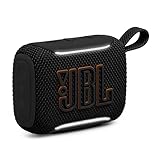
Key takeaways
- Wireless Bluetooth streaming
- 12 hours of playtime
- IPX7 waterproof
For most people the JBL Flip 7 is the best Bluetooth speaker to buy in 2026: it is loud for its size, rated IP68, and has an app equalizer that lets you fix its tuning. If you care more about out-of-the-box sound and phone calls, the Bose SoundLink Flex (2nd Gen) is the better pick, and if you want battery life and volume above all, the JBL Charge 6 is the one to buy. The rest of this guide sorts seven current speakers by how you actually listen, then shows how to read the specs so you do not pay for features you will not use.
The analysis below is based on manufacturer spec sheets and published third-party measurements and reviews. Where sources disagree on a number, the article says so and uses the conservative figure. Prices are described as tiers (entry, mid, premium) because street prices move constantly; the only budget numbers used are the two limits readers search for most, under $50 and under $100.
Our top picks
 JBL FLIP 5
- Wireless Bluetooth streaming
- 12 hours of playtime
- IPX7 waterproof
 Anker soundcore 2 Portable Bluetooth Speaker
- Outdoor-Proof Speaker: Portable design with IPX7 waterproof protection…
- 24H Non-Stop Music: With Anker's world-renowned power management…
- Powerful Sound: The speaker features 12W power with…
| Product | Key specs | |
|---|---|---|
| JBL FLIP 5 | Wireless Bluetooth streaming 12 hours of playtime IPX7 waterproof | Check price |
| Anker soundcore 2 Portable Bluetooth Speaker | Outdoor-Proof Speaker: Portable design with IPX7 waterproof protection… 24H Non-Stop Music: With Anker's world-renowned power management… Powerful Sound: The speaker features 12W power with… | Check price |
 Marshall Acton III Bluetooth Home Speaker | Check price | |
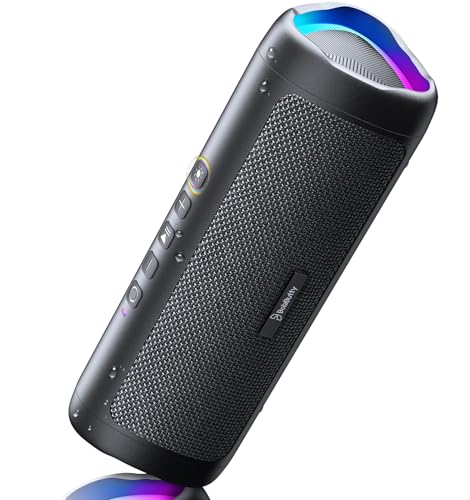 BolaButty Portable Bluetooth Speaker | [Immersive Sound & TWS Dual Pairing] Two full-range… [IPX5 Waterproof & Built for Outdoors] Durable shell… [24-Hour Playtime & Bluetooth 5.3] Up to 24… | Check price |
As an Amazon Associate we earn from qualifying purchases at no extra cost to you.
Quick comparison of the seven picks
| Speaker | Best for | Rated battery | Water / dust | Weight | Price tier |
|---|---|---|---|---|---|
| JBL Flip 7 | All-round pick | 14 h (16 h with Playtime Boost) | IP68 | 560 g | Mid |
| Bose SoundLink Flex (2nd Gen) | Balanced sound, calls | 12 h | IP67 | about 590 g | Mid to premium |
| JBL Charge 6 | Loud and long-lasting | 24 h (up to 28 h with boost) | IP68 | 960 g | Mid to premium |
| Soundcore Motion 300 | Stereo sound on a budget | 13 h | IPX7 | roughly 800 g | Entry to mid |
| UE Wonderboom 4 | 360-degree sound, floating | 14 h | IP67 | 420 g | Mid |
| JBL Go 4 | Under $50, pocketable | 7 h | IP67 | 190 g | Entry |
| Sony SRS-XB100 | Small, long battery, strap | 16 h | IP67 | 274 g | Entry |
Battery figures are the manufacturers’ ratings at moderate volume. Independent measurements run much lower at loud volume, which the how-to-choose section covers with a worked example.
Best overall: JBL Flip 7
Spec line: 35 W RMS output, Bluetooth 5.4, IP68, 14 hours rated (about 16 with Playtime Boost), 560 g, USB-C, Auracast support.
Best for: anyone who wants one speaker for the kitchen, the backyard and a backpack. Skip if: you take a lot of calls on it, because the Flip 7 has no built-in microphone.
- Pro: IP68 is the strongest dust-and-water rating in this group, which matters if the speaker will live near a pool or sink.
- Pro: The JBL app gives you a multi-band equalizer, so you can pull the bass back for podcasts or push it for dance music.
- Pro: Auracast lets you link it with other recent JBL speakers without the old proprietary pairing step.
- Con: Real-world battery is far below the rating at loud volume. SoundGuys measured a little over six hours at a steady 80 dB, and RTINGS reported figures in the same area.
- Con: No microphone, so it is not a speakerphone.
The Flip 7 keeps the cylinder shape the Flip line has used for years, which is exactly why it works: it lies flat, stands upright, and fits a bag side pocket. The step up from the Flip 6 is the longer Bluetooth range, lossless USB-C audio from a computer and Auracast, rather than a radical change in sound. If you own a Flip 6 and it still works, the upgrade case is weak.
Best for sound quality and calls: Bose SoundLink Flex (2nd Gen)
Spec line: IP67, 12 hours rated, about 590 g, Bluetooth 5.3, aptX Adaptive support, built-in microphone, PositionIQ orientation-aware tuning.
Best for: listeners who want a natural, balanced sound without opening an app. Skip if: you want maximum volume or a long battery.
- Pro: PositionIQ adjusts the tuning depending on whether the speaker is standing, lying down or hanging, so it sounds consistent wherever you leave it.
- Pro: The built-in microphone makes it usable for quick calls and voice assistants.
- Pro: aptX Adaptive support helps on compatible Android phones, giving higher-quality streaming than plain SBC.
- Con: Rated 12 hours; SoundGuys measured just over seven hours in its own battery test.
- Con: Its EQ is a simple three-band control compared with the Flip 7’s finer adjustments.
Reviewers who compare the Flex against the Flip 7 tend to split along the same line: the JBL is louder and more adjustable, the Bose sounds smoother with less effort. If you listen to acoustic music, vocals and podcasts at moderate volume in a small room, the Bose is the more pleasant default.
Best for loud sound and long battery: JBL Charge 6
Spec line: about 40-45 W output (sources differ), IP68, 24 hours rated (up to 28 with Playtime Boost, depending on the source), 960 g, Bluetooth 5.4, USB power-bank output.
Best for: patios, camping trips and houses where one speaker has to fill several rooms. Skip if: you want something that slips into a jacket pocket.
- Pro: The largest battery in the group; the rated 24 hours leaves a real margin even after a heavy weekend.
- Pro: It can charge a phone over USB-C, which is useful on a trailhead or at a long outdoor event.
- Pro: IP68, lossless USB-C audio and Auracast, the same feature set as the Flip 7 with bigger drivers.
- Con: At 960 g it is a purchase you carry on purpose, not a speaker that is simply always in the bag.
- Con: Sources list conflicting microphone and wattage details, so check the spec sheet at the retailer if either matters to you.
Best stereo sound for the money: Soundcore Motion 300
Spec line: 30 W output, Bluetooth 5.3, IPX7, about 13 hours rated, USB-C, app EQ, spatial audio processing.
Best for: buyers who want a wider, more stereo-like image than a single cylinder can give, without paying a premium. Skip if: you need dust protection; IPX7 covers immersion in water but carries no dust rating.
- Pro: Coaxial drivers and a wide front-facing layout give a broader sound at desk and shelf distance.
- Pro: Gadget Review measured around 11.5 hours of runtime, close to the rated 13.
- Pro: It tends to cost noticeably less than the Bose and JBL options for similar loudness.
- Con: It is a flat, directional speaker, so it sounds best aimed at you rather than placed mid-room.
- Con: No fast charging, so a flat battery means a long wait.
Best 360-degree speaker: Ultimate Ears Wonderboom 4
Spec line: 14 hours rated, IP67, floats, 420 g, USB-C, Bluetooth range up to about 40 m (131 ft) per UE, 360-degree sound.
Best for: pool days, parties where people stand all around the speaker, and kids. Skip if: you need deep bass or high volume in a large space.
- Pro: The rounded body floats and survives drops that would damage a more delicate design.
- Pro: Sound spreads evenly around the speaker, so no seat is a bad seat.
- Pro: The tab loop lets you hang it from a tent pole, a bag or a shower hook.
- Con: Output is roughly 8.5 W, so volume tops out well below the Charge 6 and Flip 7.
- Con: Bass is light; it is a mid-forward, voice-friendly speaker.
Best under $50: JBL Go 4
Spec line: IP67, 7 hours rated, 190 g, Bluetooth 5.4, Auracast, built-in loop.
Best for: a cheap travel or desk speaker, or a gift. Skip if: you listen for more than a few hours at a time.
- Pro: One of the lowest-priced name-brand speakers with a real IP67 rating.
- Pro: At 190 g it fits a coat pocket.
- Pro: It clips into the Auracast ecosystem with newer JBL models, so you can add a Flip 7 or Charge 6 later and play the same music on both.
- Con: Seven hours is the shortest rated battery here, and real use at higher volume is shorter.
- Con: The small driver gives thin bass; it is for clarity, not weight.
Best small speaker with a strap and long battery: Sony SRS-XB100
Spec line: IP67, 16 hours rated, 274 g, Bluetooth 5.3, SBC and AAC, multiway strap, charging takes about 4.5 hours.
Best for: bikes, backpacks, kitchens and bedrooms where a small speaker should last the day. Skip if: you want hands-free calls, fast charging or the loudest sound in the class.
- Pro: The 16-hour rating is the best among the small speakers.
- Pro: The strap is more flexible than a basic loop, so it attaches to a handlebar, tree branch or shower rail.
- Pro: Sony’s Sound Connect app and a simple party-connect mode let you pair a second Sony speaker.
- Con: No fast charge.
- Con: Bass is modest, and it is clearly a small speaker when you push the volume.
How to choose: the numbers that matter
1. Battery: rated versus real hours
Manufacturers quote battery life at roughly 50-65 percent volume with bass boost and lights off. Independent measurements at a steady 80 dB (loud for a living room, about the volume of a busy kitchen) often land at 40-60 percent of the rating. A worked example: a speaker rated at 14 hours, measured at about 6.3 hours at 80 dB, gives you roughly 45 percent of the claim. If you plan a six-hour outdoor day at high volume, treat a 14-hour speaker as a close call and a 24-hour speaker as comfortable.
A quick rule: divide the rated hours by two for outdoor, loud listening, and divide by 1.3 for quiet background use.
2. Water and dust ratings
IP67 means dust-tight and survives immersion up to 1 m for 30 minutes. IP68 is dust-tight and rated deeper or longer immersion, which JBL specifies as 1.5 m for 30 minutes. IPX7 covers the same water test as IP67 but gives no dust claim. For beach and pool use, sand is the realistic hazard, so prefer a full IP6x rating over IPX7.
3. Size and weight
Under 300 g (Go 4, SRS-XB100) fits a pocket and clips to a bag. Around 400-600 g (Flip 7, Flex, Wonderboom 4) fits a bag side pocket and gives noticeably better bass. Above 900 g (Charge 6) you are carrying a dedicated speaker. As a rule of thumb, bass extension and maximum volume grow with weight; there is no shortcut around driver size and battery volume.
4. Codecs and phones
Every speaker above plays from any phone using SBC. If you use an Android phone that supports aptX Adaptive, the Bose Flex can take advantage of it. On an iPhone, AAC is the high-quality codec, and the Sony SRS-XB100 lists AAC support. In practice the difference is small compared with speaker tuning, so do not pay extra only for a codec.
5. Calls and microphones
Only the Bose in this group lists a built-in microphone among the confirmed specs. The Flip 7 does not have one. If you plan to use the speaker on conference calls, see a dedicated speakerphone instead of a music speaker.
Decision matrix: match your situation to a pick
| Your situation | Pick | Reason |
|---|---|---|
| One speaker for everything | JBL Flip 7 | Balanced size, IP68, app EQ |
| Quiet room, vocals, podcasts, some calls | Bose SoundLink Flex (2nd Gen) | Natural tuning, mic, simple to use |
| Weekend outdoors, loud volume | JBL Charge 6 | Largest battery and drivers |
| Desk or shelf, wide stereo sound, budget | Soundcore Motion 300 | Wide front soundstage for the money |
| Pool, kids, people all around | UE Wonderboom 4 | Floats, 360-degree sound |
| Under $50, travel | JBL Go 4 | Small, rated IP67, Auracast |
| Bike, bag, long day | Sony SRS-XB100 | 16 h rating, strap |
Budget guide: under $50 and under $100
Under $50: The JBL Go 4 and Sony SRS-XB100 are the established small speakers from major brands, with waterproof ratings. At this level you give up bass and volume; you are buying portability and reliability. Anker’s Soundcore line also has several entry-level speakers in this price class, and they often add a longer battery for the money. Avoid unbranded speakers that list huge wattage with a tiny body; peak-power claims are marketing, not RMS output.
Under $100: This is the sweet spot for the Soundcore Motion 300, the Wonderboom 4 on sale, and often the Flip 7 and Bose Flex during major sale events. The step from under $50 to under $100 buys you real bass, higher maximum volume and an app with an equalizer. The step beyond $100 mostly buys bigger batteries and louder maximum volume.
Instead of chasing a price, chase the sale cycle. Bluetooth speakers from JBL, Bose and Sony have been discounted most often around Prime-style events in summer and October, Black Friday, and the weeks after Christmas. If you do not need one this week, waiting for those windows is the single cheapest way to move up a tier.
Ownership realities: what wears first
- Battery: Lithium cells lose a noticeable share of capacity after a few hundred full cycles. Keep the speaker between roughly 20 and 80 percent when it is stored for months, and do not leave it in a hot car.
- Charging port: USB-C ports on waterproof speakers have a cover or gasket. Dry the port before charging after a swim, and rinse salt water off with fresh water first.
- Grille and fabric: Fabric grilles trap sand and suncream. Rinse with lukewarm water and let the speaker dry port-down.
- Firmware: JBL, Bose, Sony and Soundcore all issue app updates that fix pairing bugs and add features; update before you assume a fault.
- Pairing limits: Auracast works across newer JBL speakers; older PartyBoost-era speakers do not join the same group.
Common mistakes when buying
- Buying on wattage alone. A 40 W speaker with large drivers and a good enclosure outplays a 60 W claim on a tiny body.
- Ignoring weight. If the speaker will ride in a bag every day, 960 g gets left at home; a 560 g speaker travels.
- Trusting battery ratings at loud volume.
- Assuming waterproof means sand-proof; check the dust digit.
- Paying extra for lights you will switch off. Lights draw battery.
Frequently Asked Questions
What is the best portable Bluetooth speaker overall in 2026?
The JBL Flip 7 is the most balanced option: it combines IP68 protection, loud output for its size, an app equalizer and a bag-friendly 560 g body. The Bose SoundLink Flex (2nd Gen) is the main alternative if natural sound and a built-in microphone matter more than volume.
What is the best small Bluetooth speaker under $50?
The JBL Go 4 and Sony SRS-XB100 are the most established choices. The Go 4 is smaller at 190 g, but its rated battery is seven hours. The Sony lasts up to 16 hours by its rating and has a more versatile strap.
Which Bluetooth speaker should I buy under $100?
The Soundcore Motion 300 is the usual value pick for a wide, stereo-like sound, and the JBL Flip 7 and Wonderboom 4 sometimes drop into this range during sales. Choose the Motion 300 for a desk or shelf and the Wonderboom 4 for the pool or travel.
Are wireless Bluetooth speakers good for music?
Yes, within limits. A single portable speaker gives clear sound at moderate volume, and a pair of identical speakers gives true stereo separation. For critical listening or room-filling bass, a powered bookshelf speaker or soundbar will do better, but those are not portable.
How long should the battery last?
Plan on about half the rated hours at loud volume. A speaker rated at 12 to 14 hours realistically gives you six to eight hours of loud listening, while a 24-hour speaker gives about 10 to 12.
Is IP67 enough for the beach?
Yes, because it includes dust protection and brief immersion. After use, rinse salt and sand off with fresh water, dry the port and let the speaker air dry before you charge it.
More from Amazon
Programs that pair well with the guide above. Offers and eligibility are set by Amazon and may change.
Free shipping on eligible items, Prime Video and more. Eligible new members can start with a free trial.
Start a Prime free trialAd-free music streaming. Eligible new subscribers can start with a free trial.
Try Music Unlimited freeA Prime membership for ages 18-24 with a trial period. Eligibility is set by Amazon.
See Prime for Young AdultsAudiobooks and podcasts to listen to on the go. Eligible new members can start with a free trial.
Try Audible freeAs an Amazon Associate we earn from qualifying purchases.