Key takeaways
- IP67 or higher. This means dust-tight and survives 1 metre of water for 30 minutes. A shower head does not apply that much pressure, so the rating leaves a large safety margin for splashes and drops into a bath.
- A closed port cover. The USB-C cover must seal after charging. This is the most common point of failure.
- A mounting method that keeps the speaker out of direct spray. Even rated speakers last longer when the water hits the back instead of the grille.
- Physical buttons. Touch panels misbehave with wet fingers. Rubber buttons are easier to press.
- A built-in microphone or not. Some people want calls; most do not.
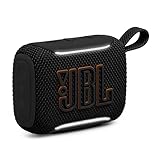
A good shower speaker needs three things: an IP67 or higher rating, a way to attach it where water will not hit it directly, and enough battery that you are not charging it every other day. The JBL Clip 5 is the strongest all-round choice in 2026 because its carabiner hooks onto a shower rail and its buttons are easy to press with wet hands, the Soundcore Select 4 Go is the value choice, and a small suction-cup model is the answer if your shower has nothing to hook onto.
The recommendations below rest on published specifications and published reviews, plus some practical bathroom physics. They are not claims of personal testing.
Our top picks


As an Amazon Associate we earn from qualifying purchases at no extra cost to you.
Which shower speaker fits which bathroom
| Model | Mounting | Water rating | Claimed battery | Weight (approx.) | Price tier |
|---|---|---|---|---|---|
| JBL Clip 5 | Built-in carabiner | IP67 | 12 h | 285 g | Mid |
| Soundcore Select 4 Go | Built-in loop, floats | IP67 | 20 h | 265 g | Entry |
| JBL Go 4 | Loop strap | IP67 | 7 h | Under 200 g | Entry |
| Tribit StormBox Micro 2 | Bike-style strap | IP67 | About 12 h | About 340 g | Entry to mid |
| Sony SRS-XB100 | Detachable strap | IP67 | About 16 h | About 274 g | Entry to mid |
| INSMY C12 | Suction cup | Water resistant (see note) | About 10 h | Light | Entry |
| SoundBot SB510 | Suction cup | Water resistant (see note) | About 6 h | Light | Entry |
Battery and weight figures for the smaller brands vary between retailer pages, so treat them as estimates and confirm on the manufacturer spec sheet. Suction-cup models are often rated for splashes rather than a full IP code, so keep them out of the direct spray.
What makes a speaker shower-safe
A shower is a hard environment for electronics: spray, steam, soap residue and temperature swings. A speaker sold for the shower should meet these requirements.
- IP67 or higher. This means dust-tight and survives 1 metre of water for 30 minutes. A shower head does not apply that much pressure, so the rating leaves a large safety margin for splashes and drops into a bath.
- A closed port cover. The USB-C cover must seal after charging. This is the most common point of failure.
- A mounting method that keeps the speaker out of direct spray. Even rated speakers last longer when the water hits the back instead of the grille.
- Physical buttons. Touch panels misbehave with wet fingers. Rubber buttons are easier to press.
- A built-in microphone or not. Some people want calls; most do not.
Readers often search for the best shower speakers according to major outlets such as CNET. Whatever the outlet, the criteria that matter are the same: a real IP code, a mounting option, clear mid-range sound in a tiled room and a battery that survives a week of 15-minute showers.
Best overall: JBL Clip 5
Spec line: IP67, 12 hours claimed, 285 g, built-in carabiner, Auracast.
Best for: hooking to a shower rail, a towel hook or a shelf bracket.
Skip if: you want to stick it flat on a tile.
- Pro: several reviewers pick it as the best shower speaker, noting its carabiner and its easy-to-find control buttons.
- Pro: it is among the loudest and clearest of the pocket-sized speakers in published lab-style comparisons.
- Pro: the carabiner lets you move it from the shower to a backpack with no extra gear.
- Con: it is the most expensive of the shower picks.
- Con: independent measurements put real playtime at roughly 9 hours at loud volume, which is still about 36 fifteen-minute showers.
Best value: Soundcore Select 4 Go
Spec line: IP67, about 20 hours, about 265 g, Bluetooth 5.4, 9-band EQ in the Soundcore app, built-in loop, floats.
Best for: tight budgets and bathrooms with a rod or hook.
Skip if: you want strong bass.
- Pro: reviewers often name it the value pick because of its long battery and EQ.
- Pro: it floats, so a bath drop is a minor event.
- Pro: the app lets you lift mid-range, which helps spoken-word clarity in tiled rooms.
- Con: 5 W output is modest, so a fan or a running shower can drown it.
- Con: the buttons are smaller than the JBL’s.
Best small and cheap: JBL Go 4
Spec line: IP67, about 7 hours, under 200 g, loop strap, Auracast.
Best for: small bathrooms, hotel showers and travel.
Skip if: you shower daily and hate charging.
- Pro: very small and light, easy to carry.
- Pro: JBL’s tuning gives clear mids for its size.
- Pro: the IP67 rating and the rubberised exterior handle splashes.
- Con: a 7-hour claim means weekly charging with daily showers.
- Con: bass is limited, and the sound thins if the shower is loud.
Best for a bigger bathroom: Tribit StormBox Micro 2
Spec line: IP67, about 12 hours, roughly 340 g, an integrated strap that wraps around a rail or a handlebar.
Best for: people who want more volume and a strap that wraps around a bar or pipe.
Skip if: you do not have a rail or a hook.
- Pro: Tribit’s published specs show a larger driver than similar pocket speakers, which helps in a tiled room.
- Pro: the wrap-around strap grips a rail without a carabiner.
- Pro: it works equally well on a bike or a backpack.
- Con: the strap can slide on a smooth rail unless you tighten it.
- Con: the brand is less known, so after-sales support varies by region.
Best for an easy detachable strap: Sony SRS-XB100
Spec line: IP67, about 16 hours claimed, roughly 274 g, detachable strap, tough housing.
Best for: people who want a compact speaker from a brand with an established service network.
Skip if: you need floating.
- Pro: Sony tunes it for natural vocals and good volume for its size.
- Pro: the detachable strap can be hung from a shower caddy or a tap.
- Pro: the housing handles drops.
- Con: it does not float, so a drop into a bath means retrieval.
- Con: no EQ depth like the Soundcore app.
Best suction-cup options: INSMY C12 and SoundBot SB510
None of the JBL, Soundcore or Sony speakers above has a suction cup. If your shower has no rail, hook or shelf, a speaker with a built-in suction cup is the practical alternative. Two names appear regularly in published roundups.
INSMY C12
Spec line: suction cup, water resistant, about 10 hours claimed, light body.
- Pro: roundups praise its strong suction hold on smooth tile.
- Pro: it is cheap and light.
- Pro: it is simple to use with one button for each function.
- Con: the suction can release if the surface is textured or soapy.
- Con: sound is thin compared with the JBL or Sony speakers.
SoundBot SB510
Spec line: suction cup, water resistant, about 6 hours claimed, very low price tier.
- Pro: it is the lowest-cost option in this list.
- Pro: the suction cup is usable on a glass shower door.
- Pro: the speaker has a built-in microphone for calls.
- Con: the battery is the shortest here.
- Con: it is rated water resistant rather than IP67, so keep it away from direct spray.
How to choose: a battery calculation for real showers
- Estimate your weekly shower time. Seven 15-minute showers equal 1 hour 45 minutes.
- Apply a loud-listening factor. Shower noise makes you raise the volume, so cut the claimed battery by about half. A 12-hour claim becomes about 6 hours.
- Divide. 6 hours divided by 1.75 hours a week gives about 3.4 weeks per charge for the Clip 5. A 7-hour Go 4 at half is 3.5 hours, so about 2 weeks. A 6-hour SB510 at half is 3 hours, so a bit over 1.5 weeks.
- Add the rest of your use. If you also use the speaker for a kitchen or a trip, count that time too.
Quick decision guide
| Your bathroom | Best choice |
|---|---|
| Rail, hook or caddy | JBL Clip 5 or Sony SRS-XB100 |
| Rod or bar, tight budget | Soundcore Select 4 Go |
| Only smooth tile or glass | INSMY C12 or SoundBot SB510 |
| Travel and hotel showers | JBL Go 4 |
| Large, echoing bathroom | Tribit StormBox Micro 2 |
Sound in a tiled bathroom: what actually changes
Tile, glass and porcelain reflect sound strongly, so a bathroom behaves like a small echo chamber. Two consequences matter when you choose. First, reflections add apparent loudness, which is why a modest 5 W speaker can feel adequate in a compact bathroom and then fail in a large walk-in shower. Second, the same reflections smear speech, so podcasts and calls become harder to follow than music. Speakers with a clear mid-range and a boost at around 2 to 4 kHz, where consonants live, help far more than speakers with heavy bass.
Steam also changes the sound slightly. Warm, humid air carries high frequencies a little less crisply, and the speaker’s grille can collect droplets that damp the drivers for a few minutes. If the sound seems dull at the start of a shower and clears afterwards, that is the grille drying, not a fault.
Placement beats price here. A speaker hung at head height on a side wall, angled toward you, sounds louder and clearer than a more powerful speaker placed on the floor behind a glass screen. If your bathroom has an extractor fan, mount the speaker away from it, because fan noise masks the 100 to 400 Hz range where most vocals sit.
Budget, safety and what to skip
You do not need a premium speaker for a shower. The Select 4 Go and the Go 4 sit in the entry price tier and cover most needs, while the Clip 5 pays for a better carabiner, louder output and clearer controls. Skip speakers that only say “water resistant” without a code if you plan to hang them in the direct spray, skip large party speakers that are hard to mount and heavy enough to damage tile if they fall, and skip any model whose charging port has no cover.
Electrical safety deserves a separate note. Never charge a speaker in a wet bathroom, never leave a plugged-in cable near a bath or shower, and do not use mains-powered Bluetooth or Wi-Fi speakers in a wet zone. Battery-powered speakers charged elsewhere are the safe approach, and a speaker that has taken a hard impact with a visible crack should be retired rather than hung back up, because a cracked seam lets water reach the cell.
Installation and care that keep a shower speaker alive
- Clean the tile first. Suction cups only hold on a clean, smooth, non-porous surface. Wipe off soap film with a damp cloth and let it dry.
- Re-wet the cup. A slightly damp cup seals better than a dry one on glass.
- Keep the speaker out of the stream. Direct spray pushes water against the seals at high pressure. Place it to the side.
- Close the port cover tightly after charging. Check that the rubber sits flush. A half-closed cover voids the IP rating in practice.
- Rinse off soap residue. Soap and shampoo can build up in the grille. Use fresh water, then dry with a soft cloth.
- Charge outside the bathroom. Humid air damages cables, and charging in a wet room is a safety risk.
Frequently Asked Questions
Does a shower speaker need to be IP67?
IP67 is the best practical target. It guarantees protection from dust and from immersion at 1 metre for 30 minutes, which exceeds the water exposure in a normal shower. IPX7 is a close second for a speaker that is kept out of direct spray.
Can I use any waterproof Bluetooth speaker in the shower?
Yes, if it has an IP67 or higher rating and a way to mount it. Larger speakers like the JBL Charge 6 will survive the water, but they are heavy and awkward to hang, so a small speaker with a hook or suction cup is easier to live with.
How do I stop a suction cup speaker from falling?
Wipe the tile or glass with a clean cloth, press the cup in firmly and check it again after a few minutes. Avoid textured tile and do not place it directly under the shower head, where water pressure and soap break the seal.
Will steam damage a shower speaker?
A speaker with a proper IP rating handles steam, but prolonged heat and humidity can age seals and the battery. Leave the speaker in the bathroom only when needed and let it dry fully after each use.
What is the best shower speaker for hotel and travel use?
The JBL Go 4 is the lightest option and fits in a pocket, while the Clip 5 offers a carabiner and longer battery. Either fits on a towel rail or a shower caddy found in most hotels.
How loud should a shower speaker be?
A running shower produces background noise around 60 to 70 dB, so a speaker needs to reach about 80 dB at the listening position to stay clear. Small 5 W speakers like the Select 4 Go can manage this in a small bathroom but struggle in a large one.
How often should I replace a shower speaker?
Expect two to four years of regular use. Humidity ages the rubber seals and the battery, so replace the speaker when the battery drops to a fraction of its original runtime, when the grille shows corrosion, or when the port cover no longer sits flush. Rinsing and drying it after use stretches that lifespan.
More from Amazon
Programs that pair well with the guide above. Offers and eligibility are set by Amazon and may change.
Free shipping on eligible items, Prime Video and more. Eligible new members can start with a free trial.
Start a Prime free trialAd-free music streaming. Eligible new subscribers can start with a free trial.
Try Music Unlimited freeA Prime membership for ages 18-24 with a trial period. Eligibility is set by Amazon.
See Prime for Young AdultsAudiobooks and podcasts to listen to on the go. Eligible new members can start with a free trial.
Try Audible freeAs an Amazon Associate we earn from qualifying purchases.