Key takeaways
- Wireless Bluetooth streaming
- 12 hours of playtime
- IPX7 waterproof
The JBL Charge 6 is the best waterproof Bluetooth speaker for most people in 2026: it carries an IP68 rating, runs about 24 hours per charge according to JBL, and doubles as a power bank. If you want something smaller, the JBL Flip 7 gives up some battery for a body that fits a daypack side pocket, and the Soundcore Boom 2 is the value pick when you want loud, floating, rugged sound for less money. This guide compares seven current models by rating, weight and real outdoor use, and explains what the waterproof codes on the box actually promise.
The picks below are based on published manufacturer specifications and published reviews from audio outlets, not on personal testing. Where sources disagree on a figure, the article says so and points you to the manufacturer sheet.
Our top picks
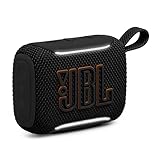
 JBL FLIP 5
- Wireless Bluetooth streaming
- 12 hours of playtime
- IPX7 waterproof
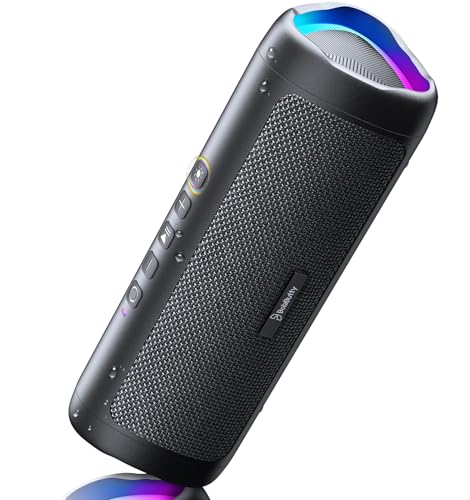 BolaButty Portable Bluetooth Speaker
- [Immersive Sound & TWS Dual Pairing] Two full-range…
- [IPX5 Waterproof & Built for Outdoors] Durable shell…
- [24-Hour Playtime & Bluetooth 5.3] Up to 24…
 JBL Charge 6
- Powerful JBL Pro Sound with AI Sound Boost:…
- Up to 28 hours of playtime + Fast…
- Multi-speaker connection by Auracast: Wouldn't it be great…
| Product | Key specs | |
|---|---|---|
| JBL FLIP 5 | Wireless Bluetooth streaming 12 hours of playtime IPX7 waterproof | Check price |
| BolaButty Portable Bluetooth Speaker | [Immersive Sound & TWS Dual Pairing] Two full-range… [IPX5 Waterproof & Built for Outdoors] Durable shell… [24-Hour Playtime & Bluetooth 5.3] Up to 24… | Check price |
| JBL Charge 6 | Powerful JBL Pro Sound with AI Sound Boost:… Up to 28 hours of playtime + Fast… Multi-speaker connection by Auracast: Wouldn't it be great… | Check price |
 Anker soundcore 2 Portable Bluetooth Speaker | Outdoor-Proof Speaker: Portable design with IPX7 waterproof protection… 24H Non-Stop Music: With Anker's world-renowned power management… Powerful Sound: The speaker features 12W power with… | Check price |
As an Amazon Associate we earn from qualifying purchases at no extra cost to you.
Quick comparison of the waterproof picks
| Speaker | Best for | Water rating | Claimed battery | Weight (approx.) | Price tier |
|---|---|---|---|---|---|
| JBL Charge 6 | Best overall | IP68 | 24 h (28 h with boost) | 960 g | Mid to premium |
| JBL Flip 7 | Best compact | IP68 | 14 h (16 h with boost) | 560 g | Mid |
| Soundcore Boom 2 | Best value, loud and floating | IPX7 | Long, 20 h class | 1.7 kg | Entry to mid |
| JBL Xtreme 4 | Best for groups and trips | IP67 | 24 h (30 h with boost) | 2.1 kg | Premium |
| Ultimate Ears Wonderboom 4 | Best for the pool and the beach | IP67, floats | 14 h | 420 g | Mid |
| Bose SoundLink Flex (2nd Gen) | Best for voice and clear mids | IP67 | 12 h | 590 g | Mid |
| Soundcore Boom Go 3i | Best budget rugged pick | IP68 | 24 h at half volume | 380 g | Entry |
Battery figures are manufacturer claims at moderate volume. Independent lab reviews commonly find real runtime at higher volume lands well below the claim, sometimes near half, so treat the claim as a ceiling.
What the waterproof codes really mean
Most listings say “waterproof” when the standard only describes ingress protection. The two-digit IP code is the part worth reading: the first digit covers dust, the second covers water.
- IPX7: survives immersion up to about 1 metre for 30 minutes. The “X” means dust was not rated, so sand is a risk to the ports and the passive radiators.
- IP67: fully dust-tight plus the same 1 metre, 30 minute water test. This is the practical floor for beach trips.
- IP68: dust-tight and rated for continuous immersion at a depth and time the manufacturer defines. The exact depth is set by the brand, not the standard, so read the spec sheet before taking a speaker diving.
None of these ratings cover salt water indefinitely or soapy water, and rubber seals age. A rinse with fresh water after the sea or a pool, with the port cover closed, is the single habit that extends life the most.
Best overall: JBL Charge 6
Spec line: IP68, about 24 hours claimed (28 with Playtime Boost), roughly 960 g, built-in power bank, Auracast support, USB-C.
Best for: one speaker that handles a beach day, a campsite and a living room without feeling like a compromise.
Skip if: you need something that clips onto a bag or you want deep, room-shaking bass.
- Pro: the IP68 rating and the thick outer housing make it among the most reassuring speakers for rain, spills and a dunk in the pool.
- Pro: the power bank output can top up a phone, which matters on a long hike or a day at the lake.
- Pro: review sites such as SoundGuys name it the best all-round Bluetooth speaker of 2026 on balance of sound, battery and durability.
- Con: it is not a floating design, so a fall into deep water means a retrieval.
- Con: the strap is useful but adds weight, and the speaker is too large for a jacket pocket.
The Charge 6 also uses Auracast, which lets it join newer JBL models for multi-speaker playback. If you already own a Flip 7 or a Clip 5, that pairing path is simpler than older proprietary party modes.
Best compact: JBL Flip 7
Spec line: IP68, 14 hours claimed (16 with Playtime Boost), roughly 560 g, Auracast.
Best for: backpackers, commuters and anyone who wants a single grab-and-go speaker.
Skip if: you want 20-plus hours or a power bank.
- Pro: TechGearLab and CNN Underscored both rank it among the strongest compact options for water resistance and sound for its size.
- Pro: the cylinder shape sits in a bottle holder and the lanyard is easy to hook to a bag.
- Pro: it supports stereo pairing and Auracast when you want a second speaker.
- Con: lab-style reviews often find real playtime closer to 6 to 8 hours at loud volume, so the claim is generous.
- Con: bass is controlled rather than heavy, and it clips when pushed to the maximum.
Best value: Soundcore Boom 2
Spec line: IPX7, floats, about 1.7 kg, 2.1-channel design with a dedicated subwoofer, light show, long battery claim in the 20-hour class.
Best for: a loud, rugged speaker for a pool deck, a boat or a tailgate without paying for the premium brands.
Skip if: you carry it long distances or want a compact shape.
- Pro: the separate subwoofer gives more low-end punch than the compact brands at a similar level.
- Pro: it floats and survives drops into a pool or lake, which is exactly the failure that kills many speakers.
- Pro: SoundGuys and The Gadgeteer both call it a standout value pick.
- Con: TechGearLab notes the bass can distort at top volume, so staying around 80 percent gives cleaner sound.
- Con: at roughly 1.7 kg it is a drive-to speaker, not a hiking speaker.
Best for groups and trips: JBL Xtreme 4
Spec line: IP67, 24 hours claimed (30 with boost), about 2.1 kg, swappable battery, power bank.
Best for: a campsite or yard where one speaker has to fill an open area.
Skip if: you want the cheapest loud speaker or you need pocketable size.
- Pro: the replaceable battery means you can extend the speaker’s life when the original cell fades.
- Pro: SoundGuys compares it with the Charge 6 as “loud and rowdy” versus “small but mighty”, which captures its role well.
- Pro: it joins Auracast groups with newer JBL speakers.
- Con: it is the heaviest portable in this list and sits in the premium tier.
- Con: it does not float, so shoreline use needs care.
Best for the pool and the beach: Ultimate Ears Wonderboom 4
Spec line: IP67, floats, 14 hours claimed, about 420 g, 360-degree sound, stereo pairing.
Best for: pool days where the speaker lives on the water.
Skip if: you want deep bass or a power bank.
- Pro: it floats and the rubber exterior handles knocks.
- Pro: the 360-degree design suits sharing sound across a group sitting around it.
- Pro: the loop can be used with a short strap or carabiner.
- Con: bass is modest, with a thin low end compared with the Boom 2.
- Con: it is tuned for music rather than calls, and it has no power bank function.
Best for voice and clear mids: Bose SoundLink Flex (2nd Gen)
Spec line: IP67, 12 hours, about 590 g, built-in microphone, stereo pairing with other Bose speakers that have the shortcut button.
Best for: podcasts, calls and vocal-heavy music outdoors.
Skip if: you want a power bank or the largest battery.
- Pro: Android Central calls it the one to get for a go-anywhere speaker with strong sound, and Bose’s rubberised body is built for outdoor knocks.
- Pro: the shape is flat enough to prop against a rock or hang from the loop.
- Pro: it can be paired in stereo with the Micro (2nd Gen), Plus or Max according to Bose.
- Con: the battery claim is shorter than most rivals.
- Con: it sits in the mid price tier for a speaker without a power bank.
Best budget rugged pick: Soundcore Boom Go 3i
Spec line: IP68, up to 24 hours at half volume with lights off, 380 g, 15 W mono output, power bank function.
Best for: kayaks, bike bags and campsites on a tight budget.
Skip if: you want stereo separation from one speaker.
- Pro: the 4,800 mAh battery can charge a phone, an unusual feature in this size class.
- Pro: the rubber carry loop and the IP68 rating suit rough use.
- Pro: SoundGuys describes it as a rugged speaker for outdoor adventures.
- Con: at full volume with lights and BassUp on, Soundcore itself lists about 6 hours.
- Con: mono output means less width than the larger stereo models.
How to choose: a numbers-first checklist
1. Match the rating to the place
| Where you will use it | Minimum rating | Why |
|---|---|---|
| Kitchen, patio, light rain | IPX5 to IPX6 | Splashes and spray only |
| Pool deck, boat, kayak | IPX7 and a floating design | Accidental drops into water |
| Beach, desert, dusty trails | IP67 or IP68 | Sand and dust protection |
| Shower or steam | IP67 and a hanging loop or suction cup | Constant humidity |
2. Do the weight and runtime maths
Divide the claimed battery by two for an honest loud-listening estimate. A speaker claiming 24 hours becomes about 12 hours at party volume. A 14-hour claim becomes 7 hours, which is still fine for an afternoon but not a weekend. Weight matters more than most buyers expect: past about 1 kg, speakers usually stay in the car, so the lighter picks get used far more often.
3. Decide whether you need floating
Floating is a design choice, not an IP code. The Boom 2 and the Wonderboom 4 float; many IP68 speakers sink. If the speaker will be near open water, a floating design avoids the single most expensive mistake, which is watching a speaker settle to the bottom of a lake.
4. Check the pairing standard
Auracast is the new cross-brand sharing standard, and the newest JBL models use it instead of older proprietary party modes. Older JBL speakers use PartyBoost, so mixed generations may not connect with each other. Check your existing speakers before buying a second.
Durability and ownership realities
- Rinse after salt water. Salt crystals dry in the charging port cover and in the grille, so a fresh-water rinse with the cover closed prevents corrosion.
- Keep the port cover closed. The IP rating depends on it. A cover that stays open after charging is a common reason an “IP67” speaker fails.
- Let it dry before charging. Water in the USB-C port can short a charge. Dry for several hours, face-down so water can drain.
- Replace worn seals sooner than the battery. Ratings are valid when new; a speaker that has lived in a hot car for years has a looser seal.
- Heat shortens battery life. A dashboard in summer sun can drive a lithium cell past 60 degrees Celsius, which is the main reason batteries fade in the first two years.
Which one should you buy
| Your situation | Choose |
|---|---|
| One speaker for everything | JBL Charge 6 |
| Hiking and travel | JBL Flip 7 or Soundcore Boom Go 3i |
| Pool and boat | Soundcore Boom 2 or Wonderboom 4 |
| Campsite for a group | JBL Xtreme 4 |
| Calls and podcasts | Bose SoundLink Flex (2nd Gen) |
Sound trade-offs you will notice outdoors
Open air removes the walls that reinforce bass indoors, so every speaker sounds thinner outside than it does in a showroom. Two practical rules follow. First, place the speaker on a hard surface such as a table, a cooler lid or a rock, because a towel or sand absorbs low frequencies and can cut bass noticeably. Second, point the main driver at the listeners; the 360-degree designs, like the Wonderboom 4, are forgiving about placement, while front-firing designs such as the Flex sound best when aimed.
Stereo pairing is the cheapest way to get more sound from small speakers. Two Flip 7 units paired together give left and right separation and roughly double the usable volume across a larger area, and a pair is often more flexible than one large speaker that you must carry everywhere. If you expect to use two speakers, buy two from the same brand family so the pairing standard matches.
Frequently Asked Questions
Is IP67 or IP68 better for a Bluetooth speaker?
IP68 is rated for continuous immersion under conditions the maker specifies, while IP67 covers 1 metre for 30 minutes. For beach and pool use the difference is small, but an IP68 speaker gives more margin if it is left under water for longer.
Can I use a waterproof speaker in the sea?
Yes, with care. Salt water is more corrosive than fresh water, so rinse the speaker with fresh water after use and keep the port cover closed. Salt can degrade seals and metal contacts over time.
Do waterproof Bluetooth speakers float?
Only some do. Models such as the Soundcore Boom 2 and the UE Wonderboom 4 float, but many IP68 speakers, including large ones, sink. Check the product page for the word “floats” rather than assuming.
How long do waterproof speakers stay waterproof?
Ratings apply to a new, undamaged unit. Seals harden and wear with heat, drops and age, so a speaker used hard for two or three years is less protected than when new. Replace a speaker that shows cracks or a loose port cover.
What is the best waterproof speaker for a kayak or boat?
Choose a floating model such as the Soundcore Boom 2 or the Wonderboom 4, and add a lanyard. Both have rugged bodies and strong water ratings, and the floating design saves the speaker if it goes overboard.
Are cheap waterproof speakers worth buying?
The budget pick can be, if the rating is stated as an IP code and the brand lists it on the spec sheet. Be cautious with speakers that only say “waterproof” without a code, because that word is not a standard.
More from Amazon
Programs that pair well with the guide above. Offers and eligibility are set by Amazon and may change.
Free shipping on eligible items, Prime Video and more. Eligible new members can start with a free trial.
Start a Prime free trialAd-free music streaming. Eligible new subscribers can start with a free trial.
Try Music Unlimited freeA Prime membership for ages 18-24 with a trial period. Eligibility is set by Amazon.
See Prime for Young AdultsAudiobooks and podcasts to listen to on the go. Eligible new members can start with a free trial.
Try Audible freeAs an Amazon Associate we earn from qualifying purchases.