Key takeaways
- Alarm behaviour. A speaker alone cannot wake you unless it has its own alarm or your phone sends one. Standalone alarms keep working when the phone dies or sits in another room.
- Volume floor. A bedside speaker is used at very low volume, so you need a unit that sounds clear at 10 to 20 percent. Small speakers designed for loud parties often have a coarse volume step at the bottom.
- Light. Bright displays and blue lights disrupt rest for many people. A dimmable or hidden display, or a warm nightlight, is easier to live with.
For a bedside speaker that also wakes you up, the Loftie Clock is the strongest pick if you want a real Bluetooth speaker with a gentle two-stage alarm, and the Hatch Restore 3 is the better fit if you want a sunrise light and a louder wake-up for heavy sleepers. If you would rather keep your current alarm and add better sound, a compact Bluetooth speaker such as the Bose SoundLink Flex (2nd Gen) or the JBL Go 4 does the job, and a pillow speaker suits anyone sharing a bed with a light sleeper.
This guide compares bedside options by alarm behaviour, sound, light, battery and clutter. It relies on published specifications and published reviews, such as those from the Sleep Foundation and Tom’s Guide, and offers general information, not medical advice. If you have persistent trouble sleeping, talk to a doctor or a sleep specialist.
Our top picks


As an Amazon Associate we earn from qualifying purchases at no extra cost to you.
Bedside speakers at a glance
| Option | Best for | Alarm built in | Light | Power | Price tier |
|---|---|---|---|---|---|
| Loftie Clock | Gentle wake-ups, Bluetooth music, sleep sounds | Two-stage alarm | Nightlight only | Mains | Premium |
| Hatch Restore 3 | Sunrise light and sound routines | Yes, light then sound | Sunrise and reading light | Mains | Premium |
| Bose SoundLink Flex (2nd Gen) | Quality sound beside the bed | No (use the phone) | None | 12 h battery | Mid |
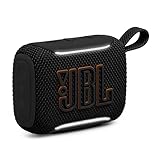
| JBL Go 4 | Small, cheap, tucks on a shelf | No | None | 7 h battery | Entry |
| Marshall Emberton III | Styled bedroom speaker with long battery | No | None | Long battery claim | Mid to premium |
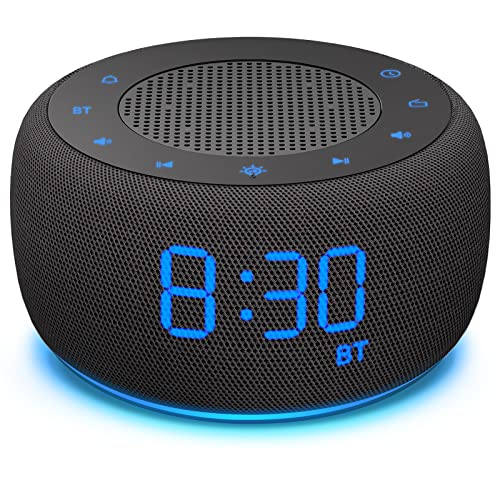
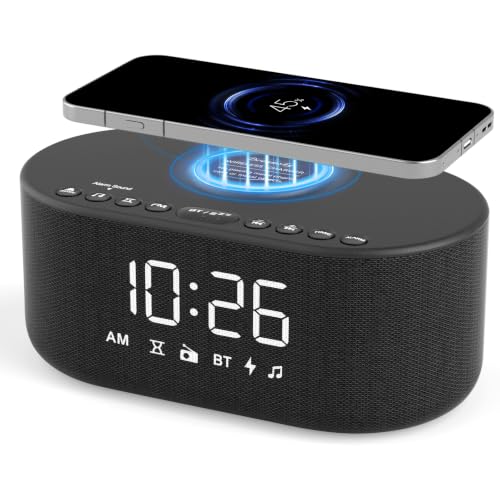
| Bluetooth radio alarm clock (spec class) | Simple alarm plus phone streaming | Yes, dual alarms | Dimmable display | Mains with battery backup | Entry |
| Under-pillow speaker (spec class) | Quiet sound for one person | No | None | USB rechargeable | Entry |
Three things that decide a bedside speaker
- Alarm behaviour. A speaker alone cannot wake you unless it has its own alarm or your phone sends one. Standalone alarms keep working when the phone dies or sits in another room.
- Volume floor. A bedside speaker is used at very low volume, so you need a unit that sounds clear at 10 to 20 percent. Small speakers designed for loud parties often have a coarse volume step at the bottom.
- Light. Bright displays and blue lights disrupt rest for many people. A dimmable or hidden display, or a warm nightlight, is easier to live with.
Loftie Clock: the gentle two-stage alarm
Spec line: Bluetooth speaker, Wi-Fi app control, two-stage alarm, nightlight, more than 100 included sounds, optional subscription for extra content.
Best for: people who dislike harsh alarms and want phone-free evenings.
Skip if: you need a sunrise light or sleep very heavily.
- Pro: the Sleep Foundation names it Best Overall in its 2026 alarm clock roundup.
- Pro: comparisons note it has the best sound quality for its size, and it works as a real Bluetooth speaker for music or podcasts.
- Pro: the first alarm phase is soft, then the second phase comes in more firmly.
- Con: its first stage is intentionally quiet, so very heavy sleepers may find it too weak.
- Con: it has a nightlight, not a true sunrise light; a separate Loftie Lamp is needed for that.
Hatch Restore 3: the sunrise light and routine pick
Spec line: sunrise light that builds for about 30 minutes before the sound alarm, forward-facing speaker, reading light, sleep sounds, app-based routines.
Best for: dark winter mornings and heavy sleepers.
Skip if: you want a speaker for streaming music.
- Pro: Tom’s Guide calls it the best sunrise alarm clock, with great sound for a bedside unit.
- Pro: the gradual light builds before the sound, which many people find gentler.
- Pro: the speaker is louder than Loftie’s first stage, so it wakes heavy sleepers more reliably.
- Con: one comparison table lists it without a Bluetooth speaker function, and Tom’s Guide notes the Bluetooth connection sometimes glitches, so check the use case you want.
- Con: many of its sleep sounds sit behind the optional Hatch subscription.
Bose SoundLink Flex (2nd Gen): quality sound beside the bed
Spec line: IP67, about 12 hours, about 590 g, Bluetooth, microphone.
Best for: listening to podcasts, audiobooks or soft music as you wind down.
Skip if: you want an alarm built into the speaker.
- Pro: Bose tunes it for clear mid-range, which suits spoken word at low volume.
- Pro: Android Central calls it the go-anywhere pick, so it moves from bedside to bathroom to garden.
- Pro: battery power means no cable beside the bed.
- Con: you must set the alarm on your phone, which keeps the phone near the bed.
- Con: it costs more than a basic speaker in the entry tier.
JBL Go 4: the small, cheap bedside speaker
Spec line: IP67, about 7 hours, under 200 g, loop strap, Auracast.
Best for: a nightstand or a shelf in a small room.
Skip if: you want full sound or long battery between charges.
- Pro: very small and easy to hide behind a lamp.
- Pro: the Go 4 is low priced and clear for voice.
- Pro: it moves with you for a bath or a trip.
- Con: 7 hours of battery requires frequent charging if you use it nightly.
- Con: limited bass.
Marshall Emberton III: the style-first choice
Spec line: IP67, long battery claim in the 30-hour class, Bluetooth, about 700 g, analogue-style control knob.
Best for: a bedroom with a visible speaker that looks good on a shelf.
Skip if: you want an alarm or a sunrise light.
- Pro: a physical knob makes low-volume adjustments easy in the dark.
- Pro: the long battery means charging only occasionally.
- Pro: balanced sound for its size.
- Con: the price tier is above basic speakers.
- Con: no alarm, so the phone is still needed.
Bluetooth radio alarm clocks: the simple class
A classic alarm clock with a Bluetooth speaker, FM radio, dual alarms and a USB port is the cheapest all-in-one choice. Look for a dimmable display with at least three brightness levels or a switch to turn it off, a battery backup that keeps the alarm alive during a power cut, and a snooze button large enough to find in the dark. The sound is usually modest, but for a bedside use at low volume it is enough. Because there are many brands in this class, judge them on the spec sheet and avoid models that do not state the display dimming or battery backup.
Pillow and sleep speakers: the quiet class
An under-pillow speaker is a thin flat unit that sits beneath the pillow and plays sound only you can hear. It suits a shared bed where one person wants a podcast or a meditation track. Look for a unit with a flat profile under about 15 mm, a rechargeable battery, an auto-off timer so it does not drain overnight and a connection by Bluetooth or a cable. Do not rely on one as an alarm, because the volume is too low to wake most people. Keep any electronic device, charging cable and battery out of direct contact with your head and body when charging, and charge it away from the bed.
Sound quality at low volume: what to look for
Most speaker reviews judge loud, outdoor sound. A bedside speaker lives at the opposite extreme, so different traits matter. At low volume the ear loses sensitivity to bass and treble, which is why many speakers sound thin at night. A good bedside speaker either includes a loudness-style boost that lifts the low end at low levels or has a warm, mid-forward tuning that keeps voices clear. Fine volume steps matter too: if the first step from silence is already louder than you want, you will end up reaching for the phone volume instead. Speakers with a physical dial or many volume steps, such as the Marshall design, are easier to set in the dark than touch-only controls.
Distortion at low volume is rare, but hiss is not. Cheap speakers can produce a faint background noise when idle, which is audible in a silent bedroom. Check reviews for mention of idle noise, and avoid any unit that hums when connected to mains power.
Power, cables and placement
- Mains or battery. A mains-powered clock never runs flat but needs a socket within reach and a cable on the nightstand. A battery speaker is tidy but needs charging every week or two if used nightly.
- Battery backup. For any unit that carries the alarm, choose one with a battery backup so a power cut does not silence it.
- Distance from the bed. A speaker at head height about a metre away gives a clear, even sound. A speaker on the floor or behind the bed frame sounds muffled.
- Charging safety. Charge lithium speakers on a hard surface, not under bedding, and unplug a unit that gets hot.
What to skip
Skip loud party speakers for the bedroom: they are hard to set quietly and their bright lights are a nuisance in the dark. Skip clocks with glaring blue displays that cannot be dimmed fully, and skip any alarm product that depends entirely on a subscription for basic wake-up functions. If you own an Alexa or Google smart speaker already, it can serve as an alarm, but it relies on Wi-Fi, so keep a backup alarm for important mornings.
Common mistakes with bedside audio
- Relying on a Bluetooth connection for the alarm. If the phone goes out of range or the speaker sleeps, the alarm simply does not sound. Use a clock with a built-in alarm, or a backup on the phone.
- Setting the alarm volume to match daytime listening. What sounds loud at noon can be too weak in a deep sleep, and what wakes you can be too harsh at night. Test at the time you will use it.
- Leaving a bright display on. Light exposure close to bed can make it harder to fall asleep for many people.
- Letting music play all night. Use the timer, so the speaker stops and does not drain its battery.
How to choose: a decision matrix
| Your situation | Choose |
|---|---|
| Want to leave the phone in another room | Loftie Clock or Hatch Restore 3 |
| Dark mornings, heavy sleeper | Hatch Restore 3 |
| Music and podcasts at night, phone alarm | Bose SoundLink Flex (2nd Gen) |
| Small room, small budget | JBL Go 4 or a Bluetooth radio alarm clock |
| Sharing the bed with a light sleeper | Under-pillow speaker |
| Style matters | Marshall Emberton III |
A worked cost-per-year example
Smart alarm clocks often add a subscription. If a clock sits in the premium tier up front and its optional yearly subscription costs roughly a quarter of the purchase price, five years of subscribing more than doubles what you pay for the clock. Decide whether the free content is enough before you subscribe: both Loftie and Hatch work for basic alarms and some sounds without a plan, and the subscription adds extra sleep content and routines.
Setting up a bedroom speaker so it helps sleep
- Set the volume the night before. Test it at the level you would use in bed, because the level that feels fine in the evening may be too loud in a quiet room at night.
- Use a sleep timer. Most apps and the Loftie and Hatch clocks can stop audio after 30 to 60 minutes so music does not run all night.
- Put the speaker out of arm’s reach if it has an alarm. Placing it across the room means you must stand up to turn it off, which makes you less likely to fall back asleep.
- Dim or cover any lights. Cover a bright display with a small piece of dark tape or choose a model with an adjustable screen.
- Keep the speaker away from the bed’s edge. A speaker that falls during the night wakes you and may break.
Frequently Asked Questions
What is the best alarm clock with a Bluetooth speaker?
The Loftie Clock is the best-known alarm clock with a true Bluetooth speaker, and the Sleep Foundation ranks it among the top options. If you prefer a sunrise light, the Hatch Restore 3 is the alternative, though its Bluetooth role is less clear, so check before you buy.
Can a regular Bluetooth speaker wake me up?
It can only if it plays an alarm sent from your phone, and the phone must stay connected. If the phone disconnects or the speaker turns off after a timeout, you may not hear the alarm, so keep a backup alarm on the phone.
Are pillow speakers safe?
They are designed for use under a pillow at low volume, but you should follow the maker’s instructions, avoid charging under bedding and check for overheating. If a unit gets warm, stop using it.
Which speaker is best for sleep sounds?
The Loftie Clock and the Hatch Restore 3 include built-in sound libraries, such as white noise and nature sounds. A regular Bluetooth speaker also works with a sleep sounds app, but needs a timer so it switches off.
How loud should a bedroom speaker be at night?
Keep it low, ideally at a level where it is clearly audible but does not dominate the room, usually around 30 to 40 dB at the pillow. Loud sound can disturb sleep, so use the timer and the lowest comfortable setting.
Do I need a sunrise alarm clock?
Not necessarily. A sunrise clock helps some people wake more gently in dark seasons, but it is not required. If you only want a speaker with an alarm, the Loftie Clock or a simple Bluetooth radio alarm clock is enough.
More from Amazon
Programs that pair well with the guide above. Offers and eligibility are set by Amazon and may change.
Free shipping on eligible items, Prime Video and more. Eligible new members can start with a free trial.
Start a Prime free trialAd-free music streaming. Eligible new subscribers can start with a free trial.
Try Music Unlimited freeA Prime membership for ages 18-24 with a trial period. Eligibility is set by Amazon.
See Prime for Young AdultsAudiobooks and podcasts to listen to on the go. Eligible new members can start with a free trial.
Try Audible freeAs an Amazon Associate we earn from qualifying purchases.