Key takeaways
- Max pressure: 2500 PSI
- Max flow: 1.76 GPM
- Cleaning units: roughly 4,400 (PSI × GPM)
- Power: corded electric, standard outdoor outlet
- Frame: anti-tipping base with onboard storage
- Typical jobs: siding, patios, walkways, fences, cars
For most homes, the best Westinghouse pressure washer is the Westinghouse ePX3500. Its 2500 max PSI and 1.76 max GPM put it at the top of the brand’s corded electric range for pressure, and the anti-tipping frame with onboard storage makes it stable and easy to live with. It suits a homeowner with a two-car driveway, a patio, vinyl siding, a fence, and one or two vehicles — the ordinary mix of jobs where you need real pressure but not industrial flow, and where you would rather not store gasoline, change engine oil, or listen to a small engine. Step up to a gas model such as the WPX3400 if you have long concrete runs, heavy moss, or paint prep, because extra flow cuts job time far more than extra pressure does. Step down to a budget electric model if your cleaning is mostly one car and a small patio. The sections below compare PSI, GPM, electric versus gas, nozzle kits, and hose reach so you can match a machine to your square footage instead of to a headline number.
Top 3 Picks
Best overall: Westinghouse ePX3500. The most balanced corded electric unit in the line — 2500 max PSI, 1.76 max GPM, anti-tipping base, onboard storage. It handles siding, patios, walkways, and cars without fuel or exhaust, which is exactly the workload most homeowners actually have.
Best budget: Westinghouse ePX3100. Rated 2300 max PSI at the same 1.76 max GPM, with anti-tipping technology and onboard storage. It gives up a little pressure versus the ePX3500 but keeps the same flow, so rinse speed stays useful and the price tier stays low.
Best premium electric: Westinghouse WPX3400e. A 3400 max PSI, 2.0 max GPM brushless-motor machine with an onboard soap tank. It is the closest an electric unit gets to gas-model cleaning speed, without the fuel and maintenance routine.
Best gas: Westinghouse WPX3400. 3400 PSI and 2.6 GPM with an onboard soap tank and a five-nozzle kit. If your driveway is long, cracked, and shaded, this is the machine that finishes the job in an afternoon rather than a weekend.
Quick Comparison
| Model | Best for | Power | Max PSI | Max GPM | Cleaning units (PSI × GPM) | Nozzle kit | Price tier |
|---|---|---|---|---|---|---|---|
| ePX3500 | All-around home cleaning | Corded electric | 2500 | 1.76 | ~4,400 | Standard multi-nozzle set, onboard storage | Mid-range |
| WPX3400 (gas) | Heavy-duty concrete, decks, paint prep | Gas | 3400 | 2.6 | ~8,840 | 5 nozzles, onboard soap tank | Premium |
| WPX3400e | Maximum electric cleaning power | Corded electric, brushless | 3400 | 2.0 | ~6,800 | Multi-nozzle set, onboard soap tank | Premium |
| WPX3000e | Large driveways and siding | Corded electric, induction | 3000 | 1.76 | ~5,280 | Multi-nozzle set, onboard soap tank | Mid-range |
| ePX3100s | Budget car detailing with foam | Corded electric | 2100 | 1.76 | ~3,700 | Foam cannon + turbo nozzle | Budget |
| ePX3100 | First-time buyers | Corded electric | 2300 | 1.76 | ~4,050 | Standard set, onboard storage | Budget |
| ePX3100v | Small storage, portability | Corded electric | 2100 | 1.76 | ~3,700 | Standard set, carry handle | Budget |
| WPX3200 (gas) | Mixed home and auto use | Gas | 3200 | 2.5 | ~8,000 | 5 nozzles, onboard soap tank | Premium |
| ePX3050 | Weekend car washing | Corded electric | 2100 | 1.76 | ~3,700 | Foam cannon + turbo nozzle | Budget |
| WPX3000 (gas) | Fences, cars, tighter spaces | Gas | 3000 | 2.3 | ~6,900 | 4-nozzle set | Premium |
| WPX2300e | Patios, furniture, light siding | Corded electric, induction | 2300 | 1.76 | ~4,050 | Multi-nozzle set, onboard soap tank | Mid-range |
| WPX2700e | Mid-size yards, regular upkeep | Corded electric, induction | 2700 | 1.76 | ~4,750 | Multi-nozzle set, onboard soap tank | Mid-range |
Cleaning units are simply PSI multiplied by GPM and are the single most useful number for comparing machines across power types, because they combine how hard the water hits with how much water arrives. Note that all of these figures are peak ratings measured at the pump; expect somewhat less at the nozzle once you account for hose friction and fittings.
How We Chose
This comparison is built from published specifications and the practical realities of the category, not from field work. We started with the three numbers that decide how a pressure washer actually performs — max PSI, max GPM, and the cleaning units they produce — then sorted the line into power types (corded electric with universal motors, corded electric with induction or brushless motors, and gasoline) because power type drives noise, maintenance, outlet dependence, and long-run endurance more than any single rating does. From there we weighed category fit: nozzle kits, onboard soap tanks, foam cannons and turbo nozzles where the model name states them, plus frame stability, carry handles, and storage footprint for buyers with limited garage space. We also looked at the upgrade path, since a buyer who outgrows a 2100 PSI unit should know whether the next sensible step is more pressure, more flow, or a switch to gas. Finally, we considered ownership costs that never appear in a spec sheet — pump seals, O-rings, nozzle wear, fuel stabilizer, and freeze protection — and favored models whose ratings and accessories line up cleanly with a specific job rather than models that look impressive on paper but duplicate another machine in the same line.
1. Westinghouse ePX3500 – Best for All-Around Home Cleaning
As an Amazon Associate we earn from qualifying purchases at no extra cost to you.
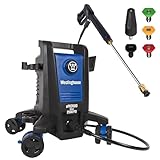
The ePX3500 is the machine to buy when you want one unit for the whole property and you would rather not deal with gasoline. It is rated 2500 max PSI and 1.76 max GPM, which makes it the highest-pressure corded electric model in the ePX family, and it uses anti-tipping geometry with onboard storage so it stays planted when you pull the hose taut around a corner. It suits a homeowner with a two-car driveway, a patio, vinyl siding, a wood fence, and one or two vehicles — jobs that need genuine pressure but not industrial flow.
- Max pressure: 2500 PSI
- Max flow: 1.76 GPM
- Cleaning units: roughly 4,400 (PSI × GPM)
- Power: corded electric, standard outdoor outlet
- Frame: anti-tipping base with onboard storage
- Typical jobs: siding, patios, walkways, fences, cars
Where it earns its keep. The ePX3500 is a pressure machine rather than a flow machine, and that shapes what it does well. Mildew on siding, algae on a north-facing walkway, and dirt baked into concrete all respond to pressure delivered through a narrow nozzle at close range, and 2500 PSI is enough for that work when you keep the tip moving. The 1.76 GPM flow is the ceiling for the entire corded electric line, so rinsing soap off a car or a patio takes the same time here as on cheaper models — you are paying for the extra pressure, not extra rinse speed. Anti-tipping geometry matters more than it sounds: a lightweight electric unit on a short hose tips when you tug, and a tipped unit can starve the pump or drag the wand across paint. Onboard storage keeps the gun, wand, and nozzles with the machine instead of scattered across the garage floor.
Pros
- Highest pressure in the corded electric ePX range at 2500 PSI
- Full 1.76 GPM flow, so rinse speed matches the rest of the electric line
- Anti-tipping frame and onboard storage for stability and tidy storage
- No fuel, no oil changes, no exhaust, no pull cord — plug in and work
- Mid-range price tier for a machine that covers most household surfaces
Cons
- Roughly 4,400 cleaning units is about half of a 3400 PSI gas machine, so long concrete runs take longer
- Corded operation requires an outdoor outlet within reach of a heavy-gauge extension cord
- Not the right tool for heavy moss, paint stripping, or hours of continuous work
- Peak ratings read higher than sustained working pressure at the nozzle
How it compares. Against the budget ePX3100 (2300 PSI, same 1.76 GPM), the ePX3500 buys you 200 PSI of extra cleaning force for a modest step up in tier — worth it if concrete is on your list, unnecessary if you mostly wash cars. Against the mid-range WPX3000e (3000 PSI, induction motor), the ePX3500 is lighter and simpler but gives up about 20 percent of its cleaning units; the WPX3000e is the better choice if you clean often enough to care about motor longevity and quieter running.
2. Westinghouse WPX3400 Gas – Best for Heavy-Duty Driveways and Decks

The WPX3400 is the most powerful machine in this comparison at 3400 PSI and 2.6 GPM, and it is the one to choose when cleaning is a project rather than a chore. It ships with an onboard soap tank, a spray gun and wand, and a five-nozzle set, so the accessory kit covers everything from a pinpoint stream for concrete to a wide fan for siding and a soap setting for vehicle pre-treatment. It suits owners of larger properties — long driveways, multiple decks, big fences, shaded roofs and walkways that grow moss — who are willing to trade fuel and maintenance for roughly double the cleaning units of a corded electric machine.
- Max pressure: 3400 PSI
- Max flow: 2.6 GPM
- Cleaning units: roughly 8,840 (PSI × GPM)
- Power: gasoline engine, no cord or outlet required
- Included: onboard soap tank, spray gun and wand, 5-nozzle set
- Typical jobs: concrete, decks, fences, siding, paint prep, large vehicles
Why flow matters here. The jump from 1.76 GPM to 2.6 GPM is the real story, not the extra 900 PSI. Pressure loosens dirt; flow carries it away. On a 20 by 20 foot concrete pad, a 2.6 GPM machine moves roughly 50 percent more water per minute than an electric unit at 1.76 GPM, which means fewer passes to float grime off the surface and a visibly cleaner result in the same time. The onboard soap tank lets you lay down detergent at low pressure through the soap nozzle, let it dwell, then switch to a fan nozzle and rinse — the standard workflow for mildew on siding and for vehicle pre-wash.
Pros
- Highest cleaning units in the lineup at roughly 8,840
- 2.6 GPM flow dramatically speeds up rinsing and large flat surfaces
- No outlet or extension cord needed; works anywhere you can roll it
- Onboard soap tank plus a five-nozzle set covers most household tasks out of the box
- Runs indefinitely as long as you keep fuel in the tank
Cons
- Premium tier, and the running costs — fuel, oil, spark plugs, stabilizer — continue after purchase
- Engine noise makes early-morning or close-neighbor use inconsiderate
- Requires small-engine maintenance and proper off-season fuel handling
- Heavier and bulkier to move and store than any electric model here
- Exhaust means it must be run outdoors, never in a closed garage
How it compares. The nearest alternative is the WPX3200 gas at 3200 PSI and 2.5 GPM, which is only about 10 percent behind on cleaning units and carries the same five-nozzle kit and soap tank. If the price gap is small, the WPX3400 is the stronger machine; if you find the WPX3200 meaningfully cheaper, the difference in real-world cleaning is slight. Against the WPX3400e electric, the gas unit wins on flow (2.6 versus 2.0 GPM) and on unlimited runtime, while the electric unit wins on noise, maintenance, and indoor-adjacent convenience.
3. Westinghouse WPX3400e Electric – Best for Premium Electric Power
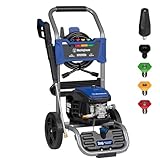
The WPX3400e is the answer for anyone who wants gas-level pressure without owning a small engine. It is rated 3400 max PSI and 2.0 max GPM, driven by a brushless motor — a design that removes the carbon brushes that wear out on cheaper universal-motor units and typically runs quieter and cooler in the process. It includes an onboard soap tank and a multi-nozzle kit, and it sits at the premium tier of the electric range. It suits a homeowner with a serious driveway, a large deck, and a couple of vehicles who values convenience and low maintenance above the last increment of flow.
- Max pressure: 3400 PSI
- Max flow: 2.0 GPM
- Cleaning units: roughly 6,800 (PSI × GPM)
- Motor: brushless, with induction-style durability characteristics
- Included: onboard soap tank, multi-nozzle set
- Typical jobs: concrete, decks, siding, fences, vehicles
What the brushless motor changes. Universal motors, the type used in budget electric pressure washers, rely on spring-loaded carbon brushes that slowly wear and generate noise and heat. A brushless motor replaces that contact with electronic commutation, which means fewer wear parts, better efficiency at the same power draw, and a quieter, smoother sound profile. In practice, that translates into a machine you can run in a residential neighborhood at a reasonable hour without drawing complaints, and one with a longer expected service life than a comparably rated budget unit. The 2.0 GPM flow is the highest of any corded electric model here, so rinse speed is closer to a gas machine than the 1.76 GPM models in the ePX family.
Pros
- 3400 PSI matches the most powerful gas model in the lineup
- 2.0 GPM gives the fastest rinse of any corded electric unit here
- Brushless motor means fewer wear parts, less noise, and better efficiency
- Onboard soap tank and multi-nozzle kit included
- No fuel, no exhaust, no oil changes, no pull cord
Cons
- Premium tier, priced well above the mid-range electric models
- Still limited to a 1.76–2.0 GPM class flow versus 2.5–2.6 GPM on the gas machines
- Depends on a nearby outdoor outlet and a properly gauged extension cord
- Heavier than the compact ePX units, so stairs and tight storage are a consideration
How it compares. Against the WPX3400 gas, the electric version gives up 0.6 GPM of flow and unlimited runtime but wins decisively on noise, maintenance, and storage — no fuel can, no oil, no stabilizer, no spark plug. Against the WPX3000e, you gain 400 PSI, 0.24 GPM, and a brushless motor for a step up in tier; if you clean more than a few times a season, that upgrade is the difference between a machine that feels adequate and one that feels fast.
4. Westinghouse WPX3000e Electric – Best for Large Driveways and Siding
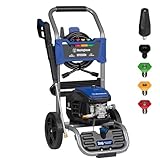
The WPX3000e fills the gap between entry electric units and the premium brushless model, at 3000 max PSI and 1.76 max GPM with an induction motor and an onboard soap tank. Induction motors are the workhorse of mid-range electric pressure washers: no brushes to replace, quieter operation than universal motors, and a reputation for long service in intermittent household duty. It suits a homeowner with a wide driveway, a two-story siding job, and a fence line — someone who wants more pressure than a budget unit provides but does not need the top-tier price.
- Max pressure: 3000 PSI
- Max flow: 1.76 GPM
- Cleaning units: roughly 5,280 (PSI × GPM)
- Motor: induction, no carbon brushes
- Included: onboard soap tank, multi-nozzle set
- Typical jobs: driveways, walkways, siding, fences, patio furniture
The pressure-versus-flow trade-off. At 3000 PSI with 1.76 GPM, this machine leans hard toward pressure. That is the right bias for concrete and masonry, where a narrow stream does the work, and for siding, where you want to lift mildew without blasting water behind the panels. It is a less natural fit for large, flat rinse jobs, because the flow is the same as every other ePX-class unit — you will spend more time floating soap and dirt off than you would with a 2.5 GPM gas machine. The induction motor is the practical highlight: it runs noticeably quieter than a universal-motor unit, which makes it a reasonable choice in tighter neighborhoods.
Pros
- 3000 PSI is a real step up for concrete and masonry
- Induction motor with no brushes to wear out, and quieter running
- Onboard soap tank for detergent application at low pressure
- Mid-range tier, well below the premium electric and gas models
- Covers the standard household surface list without fuel or exhaust
Cons
- 1.76 GPM flow limits rinse speed on large flat surfaces
- Cord and outlet required; long runs need a heavy-gauge extension cord
- Less total cleaning power than the WPX3400e or either 3400-class gas machine
- Heavier than the compact ePX models, so portability is only average
How it compares. The nearest alternative in this list is the WPX2700e, which shares the induction motor, the 1.76 GPM flow, and the onboard soap tank but is rated 300 PSI lower. If your surfaces are concrete and siding, the WPX3000e’s extra pressure is worth the step up; if you mostly clean patios, furniture, and cars, the WPX2700e saves money and does the job. Against the ePX3500, this model trades some peak pressure for a more durable motor design and a larger frame.
5. Westinghouse ePX3100s Electric – Best for Budget Car Detailing with Foam
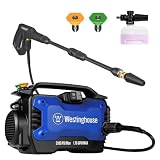
The ePX3100s is the budget pick for people whose main job is vehicle care. It is rated 2100 max PSI and 1.76 max GPM and comes with a foam cannon and a turbo nozzle — the two accessories that matter most for car washing and for stubborn spots. The lower pressure rating is not a drawback for paint; it is closer to the safe end of the range for automotive use than a 3400 PSI machine, provided you still choose the right nozzle and keep your distance. It suits a two-car household that washes vehicles regularly and wants a light, inexpensive unit that stores easily.
- Max pressure: 2100 PSI
- Max flow: 1.76 GPM
- Cleaning units: roughly 3,700 (PSI × GPM)
- Included: foam cannon and turbo nozzle
- Power: corded electric
- Typical jobs: cars, wheels, patio furniture, small walkways
Why a foam cannon changes the workflow. A foam cannon uses a venturi effect to mix detergent with a high-pressure stream and aerate it into thick foam that clings to paint for several minutes. That dwell time is what actually dissolves road film and bug residue, so you can rinse most of the dirt away before a wash mitt ever touches the surface — which is the single biggest reduction in swirl marks a home washer can buy. The turbo nozzle is the opposite tool: a rotating zero-degree stream that concentrates pressure for stripping mud from wheel wells and cleaning concrete edges, and it should never be pointed at painted panels. Pairing both accessories in one budget machine covers two very different jobs.
Pros
- Foam cannon included — the highest-value accessory for vehicle washing
- Turbo nozzle handles wheel wells, concrete edges, and caked mud
- 2100 PSI is a comfortable pressure class for automotive paint
- Budget tier, light, and easy to store
- Same 1.76 GPM flow as the more expensive electric models
Cons
- Lowest pressure class here, so concrete cleaning is slow and shallow
- Not suitable for heavy moss, paint prep, or large hardscape jobs
- Requires an outlet and a garden hose supply within reach
- Universal-motor class, so louder and less durable than induction models
How it compares. The closest sibling is the ePX3050, which shares the 2100 PSI rating, the 1.76 GPM flow, and the same foam cannon and turbo nozzle pairing — the two are near-twins in capability, so buy whichever is available at the better tier. If you want more pressure for the same money, the ePX3100 adds 200 PSI but drops the foam cannon, which is a poor trade for a car-focused buyer.
6. Westinghouse ePX3100 Electric – Best for First-Time Buyers

The ePX3100 is the sensible default for a first pressure washer. It is rated 2300 max PSI and 1.76 max GPM, includes anti-tipping technology and onboard storage, and sits in the budget tier. The 2300 PSI rating is the highest of the three 2100–2300 PSI budget models here, which makes it the most versatile of the entry-level group: enough pressure for a concrete walkway at close range with a narrow nozzle, gentle enough for siding and a car with a wide fan. It suits a new homeowner, a renter with a patio, or anyone replacing a worn-out unit who wants the essentials without paying for accessories they will not use.
- Max pressure: 2300 PSI
- Max flow: 1.76 GPM
- Cleaning units: roughly 4,050 (PSI × GPM)
- Frame: anti-tipping design with onboard storage
- Power: corded electric
- Typical jobs: walkways, siding, patio furniture, cars, fences
Why it is the safest first purchase. New pressure washer owners usually underestimate two things: how much damage the wrong nozzle can do, and how much a stable base matters. The ePX3100’s anti-tipping geometry addresses the second directly, and its 2300 PSI ceiling keeps the first within manageable limits — it will not strip paint off a deck as quickly as a 3400 PSI gas unit, and it will not etch concrete as easily. The 1.76 GPM flow is identical to the more expensive electric models in this list, so rinsing a car or a patio takes the same time; you are simply giving up some peak pressure. Onboard storage means the wand, gun, and nozzles live with the machine, which is the difference between a tool you use and a tool you cannot find the parts for.
Pros
- Highest pressure of the three budget-tier models at 2300 PSI
- Anti-tipping frame and onboard storage for stability and organization
- Full 1.76 GPM flow, matching the mid-range electric models
- Budget tier with no fuel, oil, or exhaust to manage
- Forgiving pressure class for beginners working near paint and wood
Cons
- No foam cannon or turbo nozzle included by name
- Concrete cleaning is slow compared with 3000+ PSI machines
- Universal-motor class, so noisier than induction models
- Corded, so it needs an outdoor outlet and a suitable extension cord
How it compares. Against the ePX3500, the ePX3100 gives up 200 PSI but keeps the flow and the anti-tipping design while costing less — a reasonable saving if your hard surfaces are modest. Against the ePX3100v, this model adds 200 PSI while the v-variant adds a built-in carry handle; the choice comes down to whether you value cleaning force or portability more.
7. Westinghouse ePX3100v Electric – Best for Small Storage and Portability

The ePX3100v is the storage-friendly option. It is rated 2100 max PSI and 1.76 max GPM, and its distinguishing feature is a built-in carry handle, with the model name also flagging a detachable component — in this class that is typically a foam cannon or a nozzle, so confirm the exact accessory on the current listing. It suits apartment dwellers with a balcony, townhouse owners with a single parking spot, and anyone whose garage is already full and who needs a washer that can be carried one-handed from a shelf to the hose bib.
- Max pressure: 2100 PSI
- Max flow: 1.76 GPM
- Cleaning units: roughly 3,700 (PSI × GPM)
- Frame: built-in carry handle for one-handed transport
- Detachable component noted in the model name — verify the specific accessory
- Typical jobs: cars, patio furniture, small walkways, bikes
The case for a lighter machine. Portability is not a marketing extra; it decides how often a pressure washer gets used. A 60-pound gas unit parked behind the mower rarely comes out for a fifteen-minute car rinse. A compact electric model with a molded handle and a small footprint gets carried to the driveway, used, drained, and put back on a shelf in one trip. The 2100 PSI rating is entirely adequate for vehicles, patio furniture, grills, and small walkways when you match the nozzle to the surface — a 25-degree fan for general work and a 40-degree fan for anything painted. The 1.76 GPM flow again matches the rest of the electric line, so rinse time is consistent across the range.
Pros
- Built-in carry handle makes it genuinely portable
- Compact footprint fits shelves, closets, and small garages
- Full 1.76 GPM flow despite the low price tier
- 2100 PSI is a safe, controllable class for vehicle paint
- Budget tier with minimal maintenance requirements
Cons
- Lowest pressure class here, limiting concrete and masonry work
- No turbo nozzle or foam cannon stated in the model name
- Light weight can mean less stability under hose tension
- Requires an outlet, so cordless freedom is not on the table
How it compares. Against the ePX3100, you trade 200 PSI for a carry handle and a smaller frame — a fair swap for apartment and townhouse users, a poor one for anyone with a concrete driveway. Against the ePX3100s, you lose the foam cannon and turbo nozzle but gain easier transport; car-focused buyers should take the accessories, storage-constrained buyers should take the handle.
8. Westinghouse WPX3200 Gas – Best for Mixed Home and Auto Use

The WPX3200 is the gas model for households that split their time between hard surfaces and vehicles. It is rated 3200 PSI and 2.5 GPM, includes an onboard soap tank, a spray gun and wand, and a five-nozzle set. That combination covers concrete and siding on one end and vehicle pre-wash on the other, because the nozzle kit spans a pinpoint stream to a wide fan and the soap tank handles detergent application at low pressure. It suits a homeowner with a driveway, a deck, and two or three vehicles who wants one machine to handle all of it and is prepared to maintain a small engine.
- Max pressure: 3200 PSI
- Max flow: 2.5 GPM
- Cleaning units: roughly 8,000 (PSI × GPM)
- Power: gasoline engine, no cord or outlet
- Included: onboard soap tank, spray gun and wand, 5-nozzle set
- Typical jobs: driveways, decks, siding, fences, vehicle pre-wash
Why 2.5 GPM is the sweet spot for mixed work. On concrete, the difference between 2.0 and 2.5 GPM is measured in passes: more water per minute means grime floats away instead of being pushed around. On vehicles, the same flow lets you rinse a full-size SUV quickly, and the soap tank lets you lay down a detergent film at low pressure, dwell, and then rinse with a 40-degree fan from a safe distance. The 3200 PSI ceiling is high enough to strip heavy mildew from siding and to clean a weathered deck, but you should still treat wood carefully — too much pressure furs the grain, and a turbo nozzle or zero-degree tip will gouge it. The five-nozzle set is the practical advantage here, because it lets you change approach rather than changing machines.
Pros
- About 8,000 cleaning units — near the top of the lineup
- 2.5 GPM flow speeds up both rinsing and concrete work
- Onboard soap tank and a five-nozzle set included
- No cord, no outlet, and effectively unlimited runtime
- Broad surface coverage from one machine
Cons
- Premium tier with ongoing fuel, oil, and maintenance costs
- Engine noise rules out early-morning or late-evening use in close neighborhoods
- Heavier and bulkier to store than any electric model
- Requires winterization and proper fuel handling to avoid costly repairs
- More pressure than a beginner needs for vehicle paint, so technique matters
How it compares. Against the WPX3400 gas, this model gives up 200 PSI and 0.1 GPM — roughly 10 percent of its cleaning units — and is the better value if the two are priced apart. Against the WPX3400e electric, the gas unit wins on flow by 0.5 GPM and on runtime, while the electric wins on noise and maintenance. Against the WPX3000 gas, you gain 200 PSI, 0.2 GPM, and a fifth nozzle for a modest step up.
9. Westinghouse ePX3050 Electric – Best for Weekend Car Washing

The ePX3050 is a purpose-built car-washing package. It is rated 2100 max PSI and 1.76 max GPM and ships with