Key takeaways
- At 2.0 GPM, one shower uses about 16 gallons.
- At 1.5 GPM, one shower uses about 12 gallons.
- The difference is about 4 gallons per shower, or 120 gallons over 30 showers.
Best High-Pressure Handheld Shower Heads: Choose by Bathroom, Not by Promise
The best high pressure handheld shower heads for a low-pressure bathroom are models with a focused spray, a relatively small spray face, and a flow rate that suits your plumbing—not simply the one with the most spray settings. For a broad, gentler rinse, choose a larger face; for rinsing thick hair, cleaning a shower, or coping with weak flow, prioritize a concentrated stream and a hose long enough to reach comfortably.
There is an important distinction: a shower head can make a given supply of water feel more forceful by concentrating it through fewer or smaller openings, but it cannot create extra water pressure. If flow is weak throughout the home, the cause may be a partially closed valve, clogged pipe, or supply issue rather than the shower head.
Our top picks
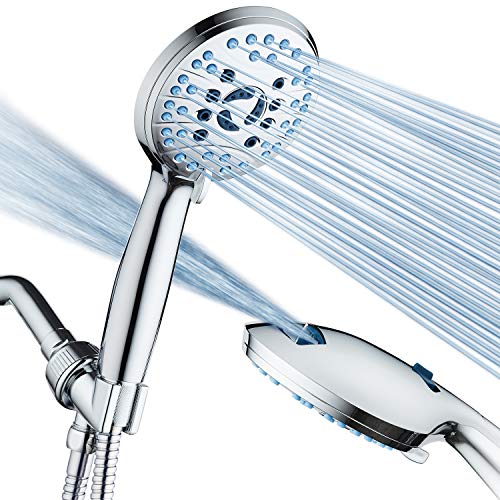


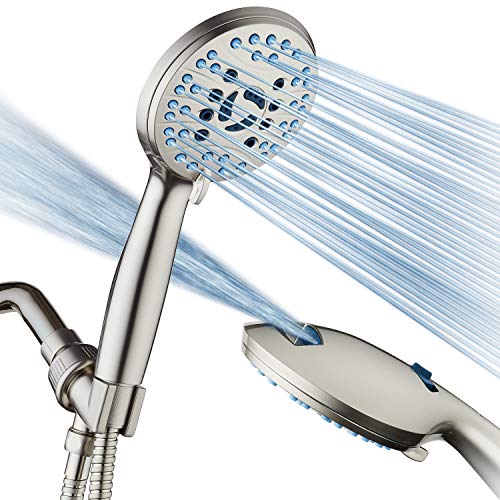
As an Amazon Associate we earn from qualifying purchases at no extra cost to you. Ratings are shown as listed on Amazon.
Quick comparison: which type fits your shower?
Flow rates below are common product-spec ranges, not guarantees. Actual flow depends on the model, local rules, and your home’s water supply. Check the exact model’s packaging or manufacturer specifications before buying.
| Type | Typical flow rate | Nozzle and spray design | Hose and filter considerations | Best suited to |
|---|---|---|---|---|
| Compact focused handheld | 1.5–2.0 GPM | Smaller face, fewer active jets, concentrated spray | Often sold with a 60-inch hose; check whether the hose is metal or reinforced polymer | Weak-feeling showers, targeted rinsing, smaller stalls |
| Multi-spray handheld | 1.8–2.5 GPM | Switchable streams, such as focused, massage-style, and wider coverage | Commonly paired with a 60–72-inch hose; verify filter cartridge fit separately | Households wanting one head for different users and tasks |
| Large-face handheld | 1.8–2.5 GPM | Wide coverage; may feel softer when supply flow is limited | Longer hoses help with bathing children or rinsing a tub, but add weight and potential kinks | Comfort-focused showers with adequate supply |
| Filtered handheld | Varies by model; check the stated rate | Spray performance depends on both the head and the filter cartridge | Confirm replacement cartridge availability, interval, and compatible connection | People who specifically want a replaceable filter stage |
Best picks by situation
For a weak-feeling shower: choose a focused spray, not the biggest face
A compact head with a concentrated setting is usually the better first choice when the shower feels feeble. It directs the available water into a narrower stream, which can feel stronger against the skin. Look for a clearly identified focused or rinse mode, and check that the stated flow rate is compatible with your local requirements.
Before replacing the head, unscrew the existing one and briefly check whether flow improves without it. If it does, mineral buildup or a restrictive old head may be the issue. If it does not, a new head is unlikely to solve a plumbing or supply problem.
For mixed household needs: choose a multi-spray model with simple controls
Multi-spray heads are useful when one person wants a broad rinse and another needs a narrower stream for shampoo or cleaning. The key is whether the mode selector is easy to turn and whether the focused setting remains usable at your home’s flow. Extra settings do not necessarily mean better performance; a few distinct, practical patterns are more valuable than a long list of similar ones.
For tub cleaning or seated bathing: prioritize hose reach and a secure mount
A 60-inch hose suits many standard showers, while a 72-inch hose can offer more reach for rinsing a tub, bathing a child, or using the spray while seated. Measure from the shower outlet to the farthest point you need to reach, then allow a little slack so the hose does not pull tight. A longer hose is not automatically better: it can drag, kink, or make the handpiece harder to park securely.
For filtration: buy for a specific filter, not a broad promise
“Filtered” can mean different things depending on the cartridge and what it is designed to reduce. Check the replacement cartridge model, cost range, suggested service interval, and whether the filter is integrated or attaches between the hose and head. A filter can also add resistance as it becomes clogged, so weak-flow households should be especially careful to confirm the model’s flow specifications and replacement availability.
How to judge pressure, flow, and water savings
Flow rate is the volume delivered over time; pressure is the force behind the water supply. A head that restricts or concentrates flow may feel more forceful without increasing the home’s actual pressure. If a product lists a high maximum flow rate, that does not guarantee a stronger shower in a low-pressure home: the supply still has to provide enough water.
Water-saving performance is easiest to compare by looking at the stated gallons per minute (GPM), while also checking how the spray feels at your normal setting. For a simple estimate, assume an eight-minute shower:
- At 2.0 GPM, one shower uses about 16 gallons.
- At 1.5 GPM, one shower uses about 12 gallons.
- The difference is about 4 gallons per shower, or 120 gallons over 30 showers.
This is a theoretical comparison at the rated flow. Your actual use changes with shower duration, supply conditions, and whether the head has a pause or reduced-flow mode. A lower rating is only a good fit if it still rinses comfortably for you.
Installation and upkeep that affect performance
Most handheld heads connect to a standard shower arm, but verify the connection type and included fittings before ordering. During installation, use the supplied washer, hand-tighten the connection, and follow the maker’s instructions. Overtightening can damage plastic threads or crush a washer, creating a leak rather than fixing one.
- Check for debris first: Flush the shower arm briefly before attaching the new head if the old fixture was clogged or recently removed.
- Clean the nozzles gently: Wipe flexible silicone nozzles or soak removable parts as directed. Avoid sharp tools that can enlarge or damage the openings.
- Inspect the hose: Kinks and repeated tight bends can weaken the hose over time. Let it hang naturally after use.
- Replace filter cartridges on schedule: A spent cartridge can reduce flow; do not assume a low-flow symptom means the head itself has failed.
- Check the holder: A loose mount can let the handpiece slip or point unpredictably. Confirm that it supports the head’s weight, especially with a longer hose.
In ordinary ownership, washers, hose connections, spray-face deposits, and filter cartridges are more likely to need attention than the main body. If mineral scale is common in your area, regular cleaning matters more than buying a head with the most settings.
Bottom line
For a low-pressure bathroom, start with a compact handheld head that offers a focused spray and a clearly stated flow rate. Choose a multi-spray model if household preferences differ, a longer hose if reach is the limiting factor, and a filtered model only if you are comfortable buying and replacing its specific cartridge. If the shower remains weak after cleaning the existing head and checking the basic connections, investigate the plumbing or supply before expecting a new fixture to fix it.