Key takeaways
- Package Includes : 100 * 3-1/4" Plastic golf…
- Reduces Friction: Prong head reduces friction and side…
- More Stability: Our unique impact ribs for added…
The best golf deals in 2026 are almost always last year’s flagship gear: a previous-generation driver such as the Ping G430 MAX or TaylorMade Stealth 2 at roughly $250–$400, a game-improvement iron set one cycle back at $450–$750, and urethane tour balls bought by the multi-dozen rather than the sleeve. For most players the single best value pick is a discounted previous-generation driver head fitted with the right shaft — it delivers nearly all of current-model performance at around 60% of the price. The bigger long-term saving, though, is on balls, because that is a recurring cost rather than a one-time one.
Our top picks
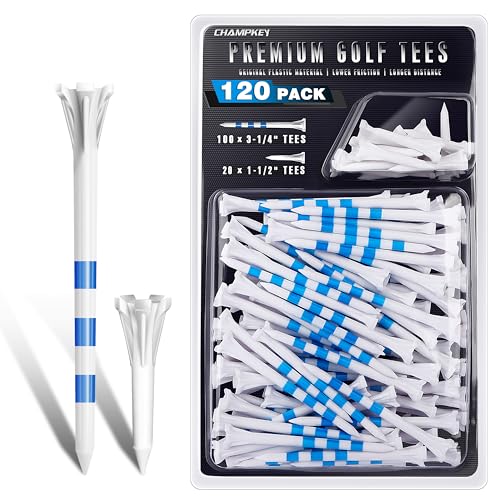 CHAMPKEY Advanced 5-Prong Plastic Golf Tees 120
- Package Includes : 100 * 3-1/4" Plastic golf…
- Reduces Friction: Prong head reduces friction and side…
- More Stability: Our unique impact ribs for added…
 adidas Tech Response SL 3 Golf Shoes
- Men's golf shoes for performance on the course
- Lightweight Bounce cushioning provides enhanced comfort and flexibility
- Traxion outsole maximizes grip in all directions with…
 Callaway Golf 300 Pro Slope Laser Rangefinder
- Precise Slope Measurement: Our highly accurate laser rangefinder…
- Superior Magnification and Accuracy: Equipped with 6x magnification,…
- Pin-Locking Technology: Our precise laser measure with Pin…
| Product | Key specs | |
|---|---|---|
| CHAMPKEY Advanced 5-Prong Plastic Golf Tees 120 | Package Includes : 100 * 3-1/4" Plastic golf… Reduces Friction: Prong head reduces friction and side… More Stability: Our unique impact ribs for added… | Check price |
| adidas Tech Response SL 3 Golf Shoes | Men's golf shoes for performance on the course Lightweight Bounce cushioning provides enhanced comfort and flexibility Traxion outsole maximizes grip in all directions with… | Check price |
| Callaway Golf 300 Pro Slope Laser Rangefinder | Precise Slope Measurement: Our highly accurate laser rangefinder… Superior Magnification and Accuracy: Equipped with 6x magnification,… Pin-Locking Technology: Our precise laser measure with Pin… | Check price |
 ZITY Mens Golf Shirts Short Sleeve Print ZITY Mens Golf Shirts Short Sleeve Print | Crafted from the finest moisture-wicking fabric, our golf… Designed with the athletic in mind, this shirt… Featuring stylish side slits for enhanced mobility and… | Check price |
As an Amazon Associate we earn from qualifying purchases at no extra cost to you.
Quick comparison: the best golf deals by category
Prices below are general street ranges for new or certified pre-owned gear in the 2026 market, not sale prices tied to any single retailer.
| Pick | Best for | Key specs | Typical price range |
|---|---|---|---|
| Previous-gen flagship driver (Ping G430 MAX, TaylorMade Stealth 2, Callaway Paradym) | Anyone replacing a driver that is 5+ years old | 460 cc head, 9°/10.5°/12° lofts, adjustable hosel, 45.5–45.75 in stock shaft | $250–$400 |
| Game-improvement irons one cycle back (Callaway Rogue ST Max, Cobra Aerojet, TaylorMade Stealth) | Mid and high handicaps wanting forgiveness | 4–PW, 7-iron loft 27–29°, 85–95 g steel or 55–65 g graphite shafts | $450–$750 |
| Urethane tour ball multi-dozen deals (Srixon Z-Star, TaylorMade TP5, Callaway Chrome Soft) | Players who need greenside spin | 3-piece, urethane cover, roughly 90–100 compression | $30–$45 per dozen on deal |
| Two-piece value ball (Kirkland Signature, Vice Drive) | Beginners and anyone losing 4+ balls a round | 2-piece ionomer cover, roughly 80–90 compression | $15–$25 per dozen |
| GPS watch (Garmin Approach series, Shot Scope) | Walkers who want front/middle/back only | 1.2–1.4 in display, 10–16 days smartwatch mode, 10–20 hrs golf GPS mode | $150–$400 |
| Rangefinder (Bushnell, Nikon Coolshot) | Players who want the exact number to the pin | 5–1,300 yd range, ±1 yd accuracy, 6x magnification | $150–$350 |
| Radar launch monitor (Garmin Approach R10, Rapsodo MLM2PRO) | Home practice into a net | Radar or camera-based, needs 8–10 ft of ball flight, 6–10 hr battery | $500–$700 |
| Push cart (Clicgear 4.0 class) | Regular walkers | Aluminum frame, 18–22 lb, folds to roughly 24 × 16 × 13 in | $200–$280 |
Cost per round: the math that actually decides a deal
A discount only matters in proportion to how often you use the thing. Here is the arithmetic, using 30 rounds a season and a three-season ownership window (90 rounds) for clubs and electronics.
- Balls: a premium urethane dozen at $50 is $4.17 per ball. A mid-handicapper loses two to three balls a round, so that is $8–$13 per round, or $250–$375 a season. Buy the same urethane construction on a multi-dozen deal at $35 a dozen and the per-ball cost falls to $2.92 — $6–$9 per round, or $175–$260 a season. The saving of roughly $90–$115 a year is larger than the discount on most drivers.
- Driver: a current-model head at $550 versus a previous-generation head at $300, kept three seasons, is $6.11 versus $3.33 per round. That is about $2.80 a round in your pocket.
- Irons: a $600 set over 90 rounds is $6.67 per round. Over five seasons (150 rounds) it drops to $4.00 — which is why irons are usually a better deal than drivers for players who keep clubs a long time.
- Electronics: a $250 rangefinder or GPS watch over 90 rounds is $2.78 per round. A $600 launch monitor over 90 range sessions is $6.67 per round, but over 150 sessions it falls to $4.00.
The takeaway: recurring costs beat one-time discounts. If you can only chase one deal this season, chase balls.
Decision matrix: match the deal to your situation
| Your situation | Better buy | Why | Approx. cost per round |
|---|---|---|---|
| 30+ rounds a year, lose 3+ balls a round | Urethane multi-dozen deal, or 2-piece value box if spin is not yet a factor | Recurring cost dominates every other purchase | $6–$13 |
| Under 15 rounds a year | Previous-gen driver only if your current one is 5+ years old | Fewer rounds means less benefit per dollar | $3.33 (over 90 rounds) |
| Walk most rounds | Push cart over a premium carry bag | Frame lasts 5+ seasons; energy saved shows up on the back nine | ~$1.67 (over 150 rounds) |
| Practice at home, no range access | Radar launch monitor | Cost is spread across many short sessions, not rounds | $4.00–$6.67 |
| Play unfamiliar courses often | Rangefinder | Exact pin numbers speed up club selection | $2.78 |
| Play the same home course weekly | GPS watch | Front/middle/back is enough once you know the greens | $2.78 |
Best overall: previous-generation flagship driver
The Ping G430 MAX, TaylorMade Stealth 2 and Callaway Paradym are the sweet spot in 2026. All three are 460 cc, fully adjustable, and built with the same face technology as the models that replaced them; per the manufacturers’ own spec sheets, the difference between generations is typically a few grams of weight placement and a small shift in launch, not a step change in ball speed.
Who it suits: the player replacing a driver from 2018–2021, or anyone who wants maximum forgiveness without paying $550+. Main trade-off: you lose the current model’s adjustable weight track and the newest stock shaft options, and you may have to hunt for the right loft and flex combination rather than ordering exactly what you want.
Best for high handicaps: game-improvement irons one cycle back
Irons depreciate faster than any other category because most players buy them once every five to seven years. A set like the Callaway Rogue ST Max or Cobra Aerojet, with a 7-iron loft in the 27–29° range and a wide, low sole, gets the ball airborne on thin strikes and off-center hits.
Who it suits: mid and high handicaps, especially anyone playing irons with a 7-iron loft above 32°. Main trade-off: strong lofts mean bigger distance gaps at the bottom of the set, so you may need an extra wedge rather than a 4-iron.
Best ball deals: urethane by the dozen, value by the box
Urethane covers are the one ball feature that measurably changes scoring, because they grab on partial wedge shots. Srixon Z-Star, TaylorMade TP5 and Callaway Chrome Soft are the most frequently discounted tour-level balls, often at $30–$45 a dozen in multi-dozen packs. Below that tier, two-piece ionomer balls such as Kirkland Signature and Vice Drive cost $15–$25 a dozen and fly straight with low spin — useful if you are still losing four or more balls a round.
Main trade-off: the cheap balls will not hold a firm green on a 60-yard pitch, so as your handicap drops, the value tier becomes a false economy.
Best tech deal: GPS watch versus rangefinder
Both give you a number; they answer different questions. A rangefinder (5–1,300 yd range, ±1 yd accuracy, 6x magnification on typical current models) gives an exact distance to the flag but nothing about hazards. A GPS watch gives front, middle and back plus hazard carries, but rounds to the yard and depends on course mapping. If you play one home course, the watch wins on convenience and cost per round. If you play a rotation of courses, the rangefinder earns its keep faster.
Main trade-off: watches need charging every few rounds in GPS mode; rangefinders need a CR2 battery roughly once a season and struggle to lock onto the flag beyond about 250 yards without a prism.
Best home practice deal: radar launch monitors
Radar units in the $500–$700 band, such as the Garmin Approach R10 and Rapsodo MLM2PRO, measure ball speed, launch angle, spin and carry. The setup reality matters more than the spec sheet: you need roughly 8–10 feet of ball flight into a net and 6–8 feet of space behind the ball for the radar to read the club. In a garage with a 9-foot ceiling, most players are limited to wedges and short irons.
Main trade-off: spin numbers from radar indoors are estimates, not measurements, so do not tune a driver shaft based on indoor carry alone.
What wears out first: durability and ownership realities
| Component | Typical life | What kills it first | Replacement cost |
|---|---|---|---|
| Urethane ball | 1–2 rounds of full shots | Cart paths, trees, and wedge grooves scuffing the cover | $3–$4.50 per ball |
| Rubber grip | 40–60 rounds, or one season in humid climates | Sweat, oils and UV hardening | $6–$12 installed |
| Wedge grooves | 75–100 rounds of range and sand use for frequent players | Sand abrasion and range mats | $150–$190 per wedge |
| Cabretta leather glove | 10–15 rounds | Sweat and grip pressure; rotating two gloves roughly doubles life | $20–$30 |
| Rangefinder battery | About one season | Cold weather draining a CR2 lithium cell | $5–$10 |
| GPS watch battery | 2–3 years to a noticeable drop | Charge cycles and heat | Usually a new watch |
| Driver face | 3–5 years of regular play | Face fatigue near the legal CT limit; sky marks are cosmetic only | New head |
How to shop a golf deal without getting burned
- Buy one cycle back, not two. Two generations old means non-adjustable hosels and outdated shaft adapters.
- Check shaft flex and weight before price. A $250 driver in the wrong flex is worth less than a $400 one that fits.
- On used irons, budget for grips. A $500 set with worn grips is really a $570 set.
- Ignore “tour” versions unless you need lower spin. The standard model is more forgiving for the majority of players.
- Stock up on balls in multi-dozen packs when your preferred model is discounted; urethane balls keep for years if stored out of heat.
Frequently Asked Questions
Are previous-generation golf clubs worth buying over the newest model?
Yes, for most players. The performance gap between consecutive flagship generations is small — usually a few grams of weight placement and a modest launch or spin change — while the price gap is often 40–50%. The exceptions are adjustable-hosel features you specifically need, or a fitting that only the current line supports.
How much should I expect to pay for a full set of clubs in 2026?
A sensible value build is roughly $250–$400 for a previous-generation driver, $450–$750 for game-improvement irons, $150–$300 for wedges and $100–$200 for a putter, so $950–$1,650 total. Buying one cycle back on the driver and irons is what keeps that number under $1,200.
Do premium golf balls really only last one round?
A urethane ball can survive several rounds if it stays on grass, but any scuff, cut or cart-path strike changes how it flies and spins. Most low-handicap players retire a ball after one or two rounds because a damaged cover produces inconsistent wedge spin, which is exactly what they paid the premium for.
Is a GPS watch or a rangefinder the better value?
If you play one home course regularly, a GPS watch at $150–$400 gives you front, middle and back plus hazard carries with no aiming required. If you play unfamiliar courses, a rangefinder at $150–$350 gives exact pin distances and is usually faster. Cost per round is nearly identical over 90 rounds, so convenience should decide it.
How often should I replace wedges and grips?
Frequent players who hit range balls and bunker shots weekly should expect groove wear to show after roughly 75–100 rounds, which for many is one to two seasons. Rubber grips go at 40–60 rounds, or about one season in humid climates — a cheap regrip restores more feel than a new driver.
Are launch monitors worth it for a mid-handicapper?
They are worth it if you already have the space: roughly 8–10 feet of ball flight into a net and 6–8 feet behind the ball for radar. Without that space, a $500–$700 unit mostly measures wedges. If you have range access instead, that money buys a lot of practice balls.