Key takeaways
- Precise video control for the dedicated video professional
- Supports 8K/60P Internal Raw Recording
- Up to 4K 120P slow and fast Motion…
For most creators, the best VR camera in 2026 is an 8K pocket 360 camera: the Insta360 X5 if you want the current flagship, or the Insta360 X4 if you want the same in-camera stitching workflow for a few hundred dollars less. If your target is true stereoscopic 180° for a Meta Quest 3 or Apple Vision Pro, the right tool is a dual-fisheye lens rig such as the Canon RF 5.2mm f/2.8 L Dual Fisheye on an EOS R5 C-class body, because it concentrates full sensor resolution in the direction the viewer is actually looking instead of spreading it around a sphere.
Our top picks
 Canon VR Content Creator Kit
- Precise video control for the dedicated video professional
- Supports 8K/60P Internal Raw Recording
- Up to 4K 120P slow and fast Motion…
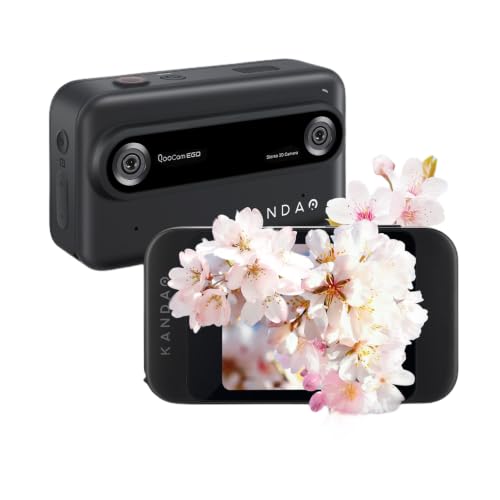 KanDao QooCam Ego-Handheld 3D VR Camera
- See the World in True 3D, Just Like…
- Create Smooth Footage
- Instant 3D Viewing & Sharing Your Portable 3D…
 SLAM XCAM Professional 3D VR Camera:8K 30FPS
- 【Professional 8K/12K 3D Capture】Shoot stunningly immersive 8K 30FPS…
- 【Complete, No-Extra-Cost Android System】Powered by the Snapdragon 8…
- 【Direct 6K Live Streaming & Vivid Preview】Go live…
| Product | Key specs | |
|---|---|---|
| Canon VR Content Creator Kit | Precise video control for the dedicated video professional Supports 8K/60P Internal Raw Recording Up to 4K 120P slow and fast Motion… | Check price |
| KanDao QooCam Ego-Handheld 3D VR Camera | See the World in True 3D, Just Like… Create Smooth Footage Instant 3D Viewing & Sharing Your Portable 3D… | Check price |
| SLAM XCAM Professional 3D VR Camera:8K 30FPS | 【Professional 8K/12K 3D Capture】Shoot stunningly immersive 8K 30FPS… 【Complete, No-Extra-Cost Android System】Powered by the Snapdragon 8… 【Direct 6K Live Streaming & Vivid Preview】Go live… | Check price |
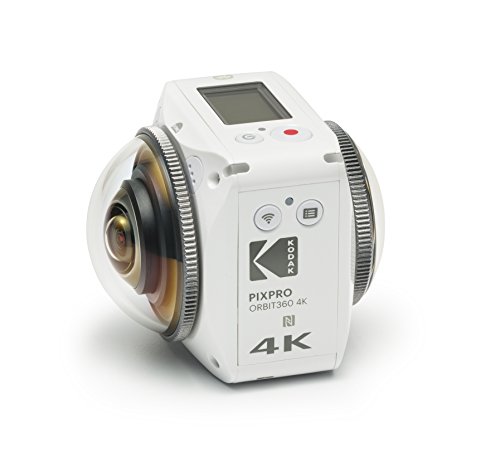 PixPro Kodak ORBIT360 4K 360 Degree VR PixPro Kodak ORBIT360 4K 360 Degree VR | 360 Degree VR camera with two fixed focus… Each curved lens is designed to work in… Dual 20MP CMOS sensors | Check price |
As an Amazon Associate we earn from qualifying purchases at no extra cost to you.
Quick comparison of the main picks
| Pick | Best for | Key specs (per manufacturer spec sheets) | Typical price range (USD) |
|---|---|---|---|
| Insta360 X5 | Best overall | Dual ~1/1.28″ sensors, 8K30 360° video, in-camera stitching, larger battery than X4 | $550–650 |
| Insta360 X4 | Best value | Dual 1/2″ sensors, 8K30 / 5.7K60 360°, 203 g, 2290 mAh (~135 min at 5.7K30), IPX8 to 10 m without a housing | $400–500 |
| Insta360 ONE RS 1-inch 360 Edition | Best low-light image quality | Dual 1-inch sensors, 6K30 360°, better dynamic range, heavier and thirstier than the X-series | $700–900 |
| Ricoh Theta X | Best for stills-first, simple capture | Dual 1/2″ sensors, 5.7K30 360°, ~60 MP stills, removable battery and microSD, ~170 g | $700–850 |
| Kandao Qoocam 3 Ultra | Best mid-range alternative | Dual ~1/1.7″ sensors, 8K30 360°, in-camera stitching plus desktop reframing | $500–650 |
| Canon RF 5.2mm f/2.8 L Dual Fisheye + EOS R5 C | Best true stereo 180° VR | Dual fisheye for 180° 3D, one file per eye, desktop-only stitching via EOS VR Utility or the Premiere Pro plugin | $1,800–2,200 lens, plus body |
| Insta360 Pro 2 | Best professional 8K 3D 360 | Six lenses, 8K 3D 360° output, desktop stitching, external power and networking | $4,000–5,500 |
What actually separates these cameras
Four things decide whether your footage looks good in a headset: resolution per degree, stitch quality, stabilization, and how much desktop work sits between the shoot and the upload.
Resolution per degree. A 360° sphere is a lot of surface area. An 8K 360 frame is 7680 × 3840, but a viewer wearing a headset sees roughly a 90–110° horizontal window at a time — about a quarter of the sphere. That means an 8K 360 shot delivers roughly 1080p–1440p of real detail inside that window, which is why 5.7K 360 footage can look soft once you’re inside a headset, and why 180° stereo rigs look dramatically sharper: the same sensor area is aimed at the half of the world the viewer can actually see, split across two eyes.
Stitching. Pocket cameras such as the Insta360 X-series stitch in-camera and hand you a finished equirectangular file. Dual-fisheye rigs like the Canon lens record two separate circular images per eye and require stitching on a computer, either in Canon’s EOS VR Utility or through the Adobe Premiere Pro plugin. In-camera stitching is faster but less adjustable; desktop stitching lets you place the seam and correct parallax, at the cost of a render step.
Stabilization. FlowState-style electronic stabilization (Insta360), Ricoh’s in-body stabilization, and gimbal-free horizon lock mean you can shoot handheld or on a selfie stick and still get a level horizon. This matters more in 360 than in flat video, because the viewer can look anywhere — including at the wobble you’d normally crop out.
Workflow. Most published VR content is reframed to flat 16:9 for phone and social viewing, with the 360 file kept as a master. Budget for that step: reframing is manual keyframing, and a 10-minute clip can take 30–60 minutes to cut well.
The picks in detail
Best overall: Insta360 X5
The X5 is the current flagship of the pocket 360 class: larger sensors than the X4 for cleaner indoor footage, 8K30 capture, in-camera stitching, and a longer claimed runtime. It suits anyone shooting travel, events, or real estate who wants a finished 360 file without touching a desktop. The trade-off is price and the fact that the biggest workflow gains still come from the software, not the sensor — if you only ever publish flat clips, the extra sensor size buys you less than better lighting would.
Best value: Insta360 X4
The X4 is the camera most people should start with. It records 8K30 and 5.7K60 in 360°, weighs 203 g, runs on a 2290 mAh battery rated for roughly 135 minutes at 5.7K30, and is waterproof to 10 m (IPX8) without a housing per the spec sheet. Its main trade-offs are low-light noise from the smaller 1/2-inch sensors and heat: long 8K takes in direct sun will throttle or stop before the battery dies. Suits beginners, vloggers, and anyone who wants one camera that fits a jacket pocket.
Best for low light: Insta360 ONE RS 1-inch 360 Edition
Two 1-inch sensors capture noticeably more light than the pocket X-series, which shows up in dim interiors, evening exteriors, and any scene where you’d otherwise be pushing ISO. Maximum video resolution is lower (6K30), the module is bulkier, and battery life is shorter — but for dusk real-estate walkthroughs or concert footage, this is the class where image quality stops being the limiting factor. Suits shooters who already know they’ll grade and stitch on a computer.
Best for stills and simplicity: Ricoh Theta X
The Theta X is the least fussy camera here: a removable battery, a microSD slot, an on-body screen for settings, and roughly 60 MP 360° stills alongside 5.7K30 video. It suits virtual-tour operators, archivists, and anyone who mostly shoots stills and occasionally needs video. The trade-off is that 5.7K30 video looks soft in a headset compared with 8K, and the ecosystem of accessories and reframing tools is smaller than Insta360’s.
Best for true stereo 180°: Canon RF 5.2mm f/2.8 L Dual Fisheye
If your deliverable is a stereo 180° file for a headset, this is the only mainstream mirrorless option: one lens, two fisheye elements, one image per eye, mounted on an EOS R5 C-class body. You get genuine depth and full-resolution detail in the forward 180°, which is what makes VR feel immersive rather than panoramic. The trade-off is the workflow — no in-camera stitching, larger files, a fixed 180° field of view, and a total kit cost several times a pocket camera.
Which one fits your situation
| Your situation | Choose | Reason |
|---|---|---|
| First VR camera, travel, budget under $500 | Insta360 X4 | 8K in-camera stitching, waterproof, pocketable, cheapest route to a usable 360 file |
| Want current specs and better low light, ~$600 | Insta360 X5 | Larger sensors and longer runtime for a modest premium |
| Dim interiors, evening exteriors, real-estate tours | ONE RS 1-inch 360 Edition | 1-inch sensors cut noise before it reaches the encoder |
| Mostly stills, minimal editing | Ricoh Theta X | High-resolution stills, removable battery, on-body controls |
| Delivering stereo 180° to Quest or Vision Pro | Canon RF 5.2mm dual fisheye rig | Real depth perception; resolution aimed where the viewer looks |
| Professional 8K 3D 360 for distribution | Insta360 Pro 2 | Multi-lens 3D capture with desktop stitching and external power |
| Publishing mostly flat 16:9 clips | Any 8K pocket 360 camera | A pro rig adds cost without improving a reframed flat export |
Storage and runtime math you should do before you buy
VR files are large, and the card is the most common failure point. Work it out from the bitrate:
- 8K30 at 100 Mbps writes 12.5 MB/s (100 ÷ 8), which is 45 GB per hour of footage (12.5 × 3600 seconds).
- The same clip at 180 Mbps writes 22.5 MB/s, or about 81 GB per hour.
- A 256 GB card therefore holds roughly 3–5.5 hours of 8K 360 depending on bitrate — and about 10% less once filesystem overhead and the odd failed take are counted.
- Card spec: you need sustained write speed above 22.5 MB/s, which means a V30 UHS-I card at minimum. A slower card will stop the recording mid-take, usually at the worst moment.
Runtime is the second limit. A 2290 mAh battery rated at 135 minutes for 5.7K30 will not deliver 135 minutes of 8K in summer sun — heat throttling typically cuts long takes well before the battery is flat. Carry two spare batteries and treat 45–60 minutes of continuous 8K as a realistic ceiling.
From card to headset: the workflow
- Shoot with the seam behind you. Dual-lens cameras stitch along a line between the two lenses. Keep that line away from faces and straight edges, and stay at least 0.5 m from the nearest subject to avoid parallax ghosting.
- Lock exposure and horizon. Auto exposure shifts as you turn, which is far more distracting in a headset than on a phone. Horizon lock keeps the world level no matter how you hold the stick.
- Stitch and reframe on desktop. Import the equirectangular file into the manufacturer’s studio app, set keyframes for the flat version, and export both the 360 master and the 16:9 cut. Keep the master — it’s the only version you can re-cut later.
- Check it in a headset before publishing. Stitch lines, exposure steps, and motion sickness triggers are invisible on a monitor and obvious at 90° field of view.
Ownership realities
The first thing to wear out is not the sensor — it’s the lens. Pocket 360 cameras have exposed front elements, and a scratch sits permanently in the middle of your field of view. Replaceable lens guards are the consumable to budget for; buy a spare set at purchase and swap them rather than polishing the glass. Clean with a microfibre cloth and a blower only — solvents can cloud the coating on the guard.
Second, batteries. Small high-drain cells lose capacity noticeably after a year or two of heavy use, so treat spares as a running cost rather than a one-time purchase. Third, cards: format in-camera, not on the computer, and retire cards that start dropping frames. Finally, cold weather: 360 cameras fog and stall below freezing, so let the camera acclimatise in a sealed bag before shooting outdoors in winter.
Frequently Asked Questions
Do I need a VR headset to shoot VR video?
No, but you need one to judge your work. All the cameras here record to a memory card and can be edited on a normal computer; the headset is only for reviewing. That said, stitch lines, exposure shifts, and uncomfortable camera movement are essentially invisible on a flat monitor and obvious in a headset, so a Quest-class headset is worth owning if you’re publishing regularly.
Is 8K 360 actually better than 5.7K?
Yes, in a headset, because the resolution is spread across a full sphere. At a typical 90–110° viewing window, an 8K 360 frame delivers roughly 1080p–1440p of detail, while 5.7K delivers closer to 720p. For flat reframed exports the difference is smaller, which is why some creators still shoot 5.7K60 for smoother motion and smaller files.
Can a pocket 360 camera shoot true 3D VR?
Most dual-lens pocket cameras capture a single spherical image, not a stereo pair, so there’s no depth. To get genuine 3D you need a rig that records two offset views per eye — a dual-fisheye lens on a mirrorless body for 180°, or a multi-lens professional camera for 3D 360°. Depth is the single biggest factor in how immersive footage feels.
How close can people get before the stitch line shows?
As a rule, keep subjects at least 0.5 m from the camera and ideally 1 m or more. Inside that distance, parallax between the two lenses creates a visible ghost or a doubled edge along the seam. You can hide the seam behind a wall, a doorway, or by positioning the camera so the stitch line runs behind you.
What memory card should I buy?
A V30-rated UHS-I microSD card from a reputable brand, at 128 GB or larger, formatted in the camera. VR recording needs sustained writes above roughly 22.5 MB/s at 8K, and cards that benchmark well on a PC can still drop out under continuous load. Buy two cards rather than one huge one — that way a failure costs you one shoot, not the whole trip.
How long can I record continuously?
Expect 45–60 minutes of 8K 360 in warm conditions before heat throttling or battery limits stop the take, even when the battery is rated for over two hours at lower resolution. If you need longer continuous capture — interviews, stage performances — plan for external power and shade, or step down to 5.7K, which runs cooler and roughly doubles your practical runtime.