Key takeaways
- Wireless Bluetooth streaming
- 12 hours of playtime
- IPX7 waterproof
The best speaker for an Android phone is one that pairs in one tap, supports a high-quality codec and carries enough battery to outlast your day. In 2026 that points to the JBL Charge 6 for an all-round pick, the Soundcore Motion 300 for the best sound per unit of price, and the Sony ULT Field 5 if you stream high-bitrate music over LDAC. Android handles Bluetooth differently from iPhone, so the codec, the pairing method and the sharing feature matter as much as the brand.
This guide is based on published manufacturer specifications and reviews, not personal testing, and it covers Samsung Galaxy, Google Pixel and other Android phones.
Our top picks
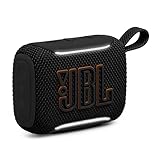
 JBL FLIP 5
- Wireless Bluetooth streaming
- 12 hours of playtime
- IPX7 waterproof
 JBL Charge 6
- Powerful JBL Pro Sound with AI Sound Boost:…
- Up to 28 hours of playtime + Fast…
- Multi-speaker connection by Auracast: Wouldn't it be great…
| Product | Key specs | |
|---|---|---|
| JBL FLIP 5 | Wireless Bluetooth streaming 12 hours of playtime IPX7 waterproof | Check price |
| JBL Charge 6 | Powerful JBL Pro Sound with AI Sound Boost:… Up to 28 hours of playtime + Fast… Multi-speaker connection by Auracast: Wouldn't it be great… | Check price |
 Marshall Emberton III Portable Bluetooth Waterproof Speaker | Check price | |
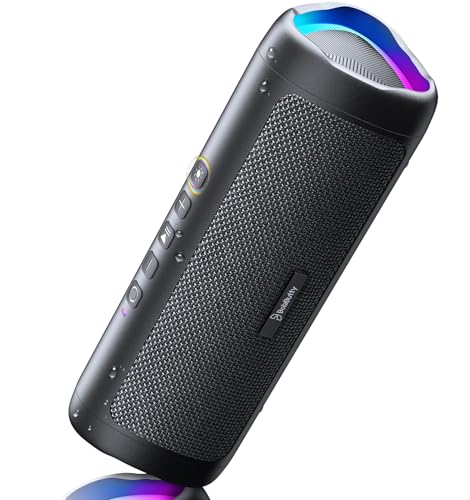 BolaButty Portable Bluetooth Speaker | [Immersive Sound & TWS Dual Pairing] Two full-range… [IPX5 Waterproof & Built for Outdoors] Durable shell… [24-Hour Playtime & Bluetooth 5.3] Up to 24… | Check price |
As an Amazon Associate we earn from qualifying purchases at no extra cost to you.
What makes a speaker good for Android
An iPhone uses SBC and AAC over Bluetooth. Android phones add more options, and the three features that change your experience are below.
- Codec support. SBC is the universal baseline. AAC works on Android but is encoded less efficiently than on iPhone. LDAC, from Sony, can send up to about 990 kbps on supported Android phones, which gives noticeably more detail than SBC on a speaker with good drivers. Many Samsung, Pixel and Sony phones support LDAC, and the setting sits in Developer options or the Bluetooth device settings.
- Fast Pair. Google’s Fast Pair lets an Android phone detect a nearby speaker and connect in one tap, then remember it across your Google account. Many JBL, Sony and Soundcore models support it, but check the box or the product page.
- Auracast. This broadcast standard lets one phone send audio to many speakers at once with no pairing. Newer Galaxy and Pixel phones can broadcast, and the latest JBL speakers can receive. It is the Android answer to multi-speaker party modes.
Beyond those, the usual rules still apply: battery, water rating and weight decide whether a speaker fits your habits.
Comparison of the picks
| Speaker | Best for | Codecs | Water rating | Claimed battery | Weight (approx.) | Price tier |
|---|---|---|---|---|---|---|
| JBL Charge 6 | Best overall, charges your phone | SBC, AAC, Auracast | IP68 | 24 h | 960 g | Mid to premium |
| Soundcore Motion 300 | Best sound for the money | SBC, AAC, Hi-Res support (check LDAC) | IPX7 | 13 h | Mid weight | Mid |
| Sony ULT Field 5 | Best for LDAC and loud sound | SBC, AAC, LDAC | IP67 | 25 h | 3.3 kg | Premium |
| JBL Flip 7 | Best portable | SBC, AAC, Auracast | IP68 | 14 h | 560 g | Mid |
| Sony ULT Field 1 | Best pocket speaker with a bass button | SBC, AAC | IP67 | 12 h | 650 g | Entry to mid |
| Bose SoundLink Flex (2nd Gen) | Best for calls and tone | SBC, AAC | IP67 | 12 h | 590 g | Mid |
| Soundcore Boom Go 3i | Best budget with a power bank | SBC, AAC | IP68 | 24 h at half volume | 380 g | Entry |
JBL Charge 6: the safe overall choice
Spec line: IP68, about 24 hours (28 with boost), about 960 g, power bank, Auracast.
Best for: Android users who want a speaker that also charges the phone and survives rough use.
Skip if: you want LDAC or the lightest speaker.
- Pro: SoundGuys names it the best Bluetooth speaker overall in 2026.
- Pro: Auracast lets a recent Android phone and a JBL speaker share a stream.
- Pro: the USB-C port charges a phone from the speaker in an emergency.
- Con: it does not support LDAC, so high-bitrate streaming on Android is not used.
- Con: weight limits it for backpack use on long trips.
Soundcore Motion 300: best sound per unit of price
Spec line: IPX7, about 13 hours, 30 W from two 15 W full-range drivers, Hi-Res capable according to Soundcore, EQ in the Soundcore app.
Best for: Android users who stream good-quality music and want stereo-style sound without the premium brand price tier.
Skip if: you want a speaker for rough outdoor use or a bike.
- Pro: two full-range drivers deliver a wider sound than single-driver speakers of the same size.
- Pro: the Soundcore app provides a detailed equaliser and firmware updates on Android.
- Pro: IPX7 means it handles rain and a short dunk.
- Con: Engadget notes its weight and size make it better handheld or bagged than hung from a bike.
- Con: 13 hours is shorter than the JBL Charge 6.
Confirm the codec list on Soundcore’s product page for your region before buying if LDAC matters, because Soundcore adjusts features by model revision.
Sony ULT Field 5: the LDAC pick
Spec line: IP67, about 25 hours, 3.3 kg, Bluetooth 5.3, LDAC, aux input, USB-C power bank output, Party Connect for many speakers.
Best for: Android users who stream lossless or high-resolution music and want a speaker that can show the difference.
Skip if: you want to carry the speaker on a hike.
- Pro: it is the only model on this list with confirmed LDAC, per published specs.
- Pro: the large battery and power bank make it a camp speaker.
- Pro: Party Connect links many Sony speakers, which suits a group.
- Con: at 3.3 kg it is a car-and-patio speaker.
- Con: it is premium priced, and the LDAC advantage applies only with matching source files.
JBL Flip 7: the best portable for most Android users
Spec line: IP68, 14 hours (16 with boost), 560 g, Auracast, USB-C.
Best for: daily carry in a bag.
Skip if: you need a power bank or the longest battery.
- Pro: TechGearLab says it has the best water resistance among the small speakers it compares.
- Pro: bottle-shaped and easy to place.
- Pro: Auracast and stereo pairing with a second JBL speaker.
- Con: lab-style reviews often find about 6 hours at loud volume.
- Con: no LDAC.
Sony ULT Field 1: the small bass-button speaker
Spec line: IP67, about 12 hours, about 650 g, Bluetooth 5.3, SBC and AAC only, no aux input.
Best for: commuters who like a bigger low end from a small speaker.
Skip if: you want LDAC.
- Pro: the ULT button adds bass on demand.
- Pro: it has an IP67 rating and a small body.
- Pro: it works with Sony’s Music Center app on Android.
- Con: no LDAC, so Sony’s own codec is unused on this model.
- Con: the shorter battery is below the Charge 6.
Bose SoundLink Flex (2nd Gen): calls and tone
Spec line: IP67, about 12 hours, about 590 g, built-in microphone, stereo pairing.
Best for: speakerphone calls and balanced sound.
Skip if: you want long battery or advanced codecs.
- Pro: Android Central calls it the go-anywhere pick with great sound.
- Pro: the Bose Music app on Android handles updates and pairing.
- Pro: robust and splash-proof.
- Con: only SBC and AAC are supported.
- Con: it does not charge other devices.
Soundcore Boom Go 3i: the budget speaker that charges your phone
Spec line: IP68, up to 24 hours at half volume, 380 g, 15 W mono, 4,800 mAh battery with power bank function.
Best for: low budgets and travel.
Skip if: you want stereo separation.
- Pro: the power bank function is rare at this price tier.
- Pro: rugged and water-proof for hikes and trips.
- Pro: SoundGuys describes it as a rugged speaker for outdoor adventures.
- Con: at 100 percent volume with lights and BassUp on, the claim drops to about 6 hours.
- Con: mono output.
How to pair and set up a speaker on Android
- Turn on Bluetooth and location. Fast Pair needs both, because Android uses location permission to scan for nearby devices.
- Power on the speaker in pairing mode. Hold the Bluetooth button until the light flashes. A Fast Pair pop-up appears on supported speakers.
- Tap Connect. If no pop-up appears, open Settings, Connected devices and pair the speaker manually.
- Select the codec. Go to the speaker’s entry in Bluetooth settings or Developer options, and choose LDAC if both devices support it. Use the “Best effort” or the 660 kbps option if connection drops occur.
- Install the maker’s app. JBL Portable, Sony Music Center, Soundcore and Bose Music provide EQ and firmware updates that fix many connection problems.
- Test Auracast. On a newer phone, open Quick Settings, find the audio sharing tile and send audio to a supported JBL speaker.
Common Android connection problems and fixes
- Audio cuts out when the phone is in a pocket. LDAC at the highest bitrate is the usual culprit; switch to the adaptive or 660 kbps setting.
- Speaker will not appear. Remove it from the paired devices list and from other phones that may be holding the connection, then pair again.
- Volume is low. Android has a separate media volume and an absolute volume setting; check both. In Developer options, “Disable absolute volume” fixes a mismatch with some speakers.
- Call audio sounds thin. Switch the speaker from music mode to the call profile, and keep the phone within a couple of metres.
How to choose: match the speaker to your phone and habits
| Your situation | What matters most | Pick |
|---|---|---|
| Recent Galaxy or Pixel, streams lossless | LDAC support, wired input | Sony ULT Field 5 |
| Mid-range Android, casual listening | Battery and ruggedness | JBL Charge 6 |
| Budget Android, travel | Price, power bank | Soundcore Boom Go 3i |
| Frequent speakerphone calls | Microphone quality | Bose SoundLink Flex (2nd Gen) |
| Wants stereo-style sound at home | Two drivers, EQ app | Soundcore Motion 300 |
| Carries it daily in a bag | Weight under 600 g | JBL Flip 7 |
A battery calculation that includes your phone
Some speakers act as power banks, which changes the maths for a long day. A speaker with a 4,800 mAh cell like the Boom Go 3i holds roughly 17 Wh at typical cell voltage. A modern phone battery of about 5,000 mAh holds roughly 19 Wh. After conversion losses, you can expect to recover only about half to two-thirds of one phone charge from such a speaker, and each phone charge takes the speaker’s playback time with it. Use the power bank function for emergencies, not as a daily habit, and remember that the speaker battery then has less to give to music.
Using the phone’s own speaker: when you do not need a speaker at all
Searches for the best phone speakers sometimes mean the speakers built into phones. A flagship Android phone has stereo speakers and can fill a small room for a podcast or a video call, but the output is limited by a thin body: bass is weak below about 300 Hz and volume tops out around the level of conversation across a room. A dedicated Bluetooth speaker extends that range by two to three times in loudness and adds low-end weight, so it is worth buying when you listen in a kitchen, garden or group, and not worth buying when you only use the phone alone in bed.
Wireless speakers for cell phones also differ from smart speakers. A Bluetooth speaker plays whatever your phone sends and works without Wi-Fi, which is the right choice for travel and outdoors. A Wi-Fi speaker adds multi-room and voice assistants but depends on a network, so it fits a permanent home setup rather than a portable role.
What to skip
- Heavy party speakers for phone-only listening. The Field 5 shows its strength only at volume and with high-quality files.
- Speakers with no app support. An unbranded speaker without an Android app cannot receive firmware updates, which fix connection bugs over the speaker’s life.
- Codec marketing without a spec sheet. If a listing claims “HD audio” without naming LDAC, aptX or AAC, assume it is plain SBC.
- Old speakers that predate Bluetooth 5. They tend to have shorter range and weaker connection stability with newer phones.
Ownership notes for Android users
Keep the speaker’s firmware current through its app, because Android updates occasionally change Bluetooth behaviour and manufacturers respond with patches. If a speaker starts to disconnect after a phone update, remove it from the saved devices list, restart both and pair again before assuming the speaker is faulty. Treat the claimed battery as a ceiling: independent measurements frequently find real use at loud volume lands near half the claim. Finally, rinse any speaker that has been near salt water or pool chemicals, and keep the port cover closed, which protects the IP rating that you paid for.
Frequently Asked Questions
Do I need LDAC for a speaker on an Android phone?
No. LDAC adds detail when the speaker’s drivers can reveal it and your music is high quality, but most small speakers are limited by their size, not by the codec. For casual listening, SBC and AAC are fine.
Which speaker works with Samsung Galaxy phones?
All Bluetooth speakers work with Galaxy phones. Newer Galaxy models also support Auracast broadcasting, which pairs well with the latest JBL speakers, and Samsung phones support LDAC, so Sony’s ULT Field 5 gets the best result.
Is the JBL Charge 6 or the Soundcore Motion 300 better for Android?
The Charge 6 is better for rugged use, battery life and phone charging, while the Motion 300 offers wider stereo-style sound for a lower price tier. Choose by where you listen rather than by brand.
Can I use two speakers with an Android phone at once?
Yes. Auracast on newer phones and speakers sends a single stream to many speakers, and brand modes such as JBL’s pairing or Sony’s Party Connect link speakers from the same maker.
Why does my speaker sound different on Android than on iPhone?
The phones use different codec defaults. iPhones use AAC, while Android may use SBC, AAC or LDAC depending on the phone and speaker. Switching the Android codec or using the speaker’s app EQ usually closes the gap.
What speaker is best for a cheap Android phone?
Choose a speaker with a simple SBC connection and a long battery. The Soundcore Boom Go 3i is the entry-tier pick because it does not rely on advanced phone features.
More from Amazon
Programs that pair well with the guide above. Offers and eligibility are set by Amazon and may change.
Free shipping on eligible items, Prime Video and more. Eligible new members can start with a free trial.
Start a Prime free trialAd-free music streaming. Eligible new subscribers can start with a free trial.
Try Music Unlimited freeA Prime membership for ages 18-24 with a trial period. Eligibility is set by Amazon.
See Prime for Young AdultsAudiobooks and podcasts to listen to on the go. Eligible new members can start with a free trial.
Try Audible freeAs an Amazon Associate we earn from qualifying purchases.