Our Top Picks
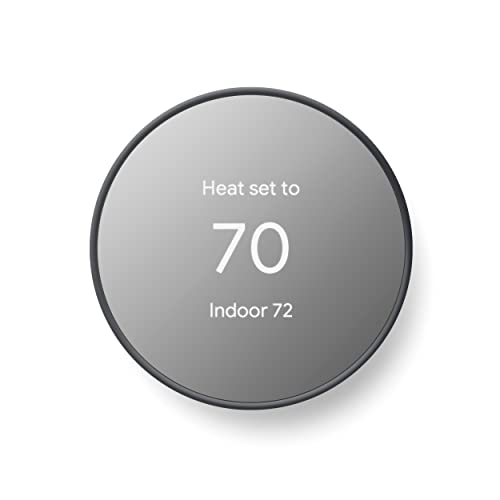


The best smart thermostat for most homes is the ecobee Smart Thermostat Enhanced, because it covers the widest range of real HVAC equipment — multi-stage furnaces, heat pumps, dual-fuel setups, and accessory terminals for humidifiers and ventilators — and it supports the brand’s remote room sensors for rooms that never quite reach the set temperature. If your home has no C-wire and you want a swap that takes minutes rather than an electrician’s visit, the Sensi Smart Thermostat ST55 is the better fit: it runs on battery power, works with the wiring already in your wall, and sits in the mid-range tier. And if you simply want the least expensive credible entry into scheduling and app control, the Google Nest Thermostat is the budget pick that still looks and feels like a premium device.
Three questions decide almost everything: what equipment your system actually has (single-stage, multi-stage, heat pump, dual fuel), whether you have a spare C-wire behind the wall plate, and whether you need remote sensors to fix a room that runs hot or cold. Get those three right and the remaining differences — display type, app polish, voice assistant support — become preference rather than compatibility.
Top 3 Picks
Best Overall: ecobee Smart Thermostat Enhanced
The Enhanced is the model that fits the most homes without compromise. It handles multi-stage heating and cooling, heat pumps, and dual-fuel systems, it exposes accessory terminals for humidifiers, dehumidifiers, and ventilators, and it works with the brand’s remote room sensors so you can average temperatures across several rooms instead of trusting one hallway wall. It is a premium-tier purchase, and worth it if your equipment is anything more complex than a single-stage furnace and air conditioner.
Best Budget: Google Nest Thermostat
For a first smart thermostat on a single-stage system, the charcoal Google Nest Thermostat delivers app scheduling, eco-mode savings behavior, and a mirror-finish display at the lowest tier here. It is designed to work in many homes without a C-wire by drawing power from existing conductors, which removes the single biggest DIY obstacle. It is not the right pick for multi-stage or dual-fuel equipment.
Best Value for C-Wire-Free Homes: Sensi Smart Thermostat ST55
The ST55 is the pragmatic middle of this list. Sensi builds its thermostats around battery operation, so a missing C-wire is not a dealbreaker, and the mid-range price tier buys multi-stage-capable compatibility that budget models skip. If your wall has four wires and no common conductor, this is where most people should start looking.
Quick Comparison
The table below covers every model in this roundup. Compatibility statements describe the class of equipment each thermostat is built for; always confirm against the manufacturer’s compatibility checker using your exact model numbers before you buy. Price is expressed as a tier rather than a figure because listings move constantly.
| Product | Best for | System compatibility class | C-wire | Remote room sensors | App & voice | Price tier |
|---|---|---|---|---|---|---|
| Google Nest Thermostat (Charcoal) | First smart thermostat on a simple system | Single-stage conventional and basic heat pump | Recommended; often not required | No | Google Home app, Google Assistant | Budget |
| ecobee Smart Thermostat Essential | Ecobee ecosystem on a mid-range budget | Conventional and heat pump, entry of the ecobee line | Recommended; adapter kit in most ecobee boxes | Limited — verify per model | ecobee app, Alexa built into higher tiers | Mid-range |
| Amazon Smart Thermostat | Alexa households with a C-wire already present | Single-stage and heat pump applications | Required | No | Alexa app, works with Alexa and Ring | Budget |
| Amazon Smart Thermostat (Pack of 2) | Two-zone homes or two properties | Same as single unit | Required on both units | No | Alexa app, works with Alexa and Ring | Mid-range |
| Sensi Smart Thermostat ST55 | Homes without a C-wire that still want multi-stage support | Conventional, multi-stage, and heat pump class | Not required (battery powered) | No | Sensi app, Alexa and Google Assistant | Mid-range |
| Sensi Lite Smart Thermostat ST25 | Simple single-stage systems on a tight budget | Single-stage conventional and heat pump class | Not required (battery powered) | No | Sensi app, Alexa | Budget |
| ecobee Smart Thermostat Enhanced | Multi-stage, heat pump, and dual-fuel homes | Multi-stage conventional, heat pump, dual fuel, accessory terminals | Recommended; adapter kit included | Yes, sold separately | ecobee app, Alexa, Google Assistant, Apple Home | Premium |
| Honeywell Home RTH9600WF | Large color touchscreen and brand-name support | Conventional and heat pump class | Required per installation requirements | No | Resideo app, Alexa-ready | Premium |
How We Chose
This roundup is built from published specifications, manufacturer compatibility documentation, installation manuals, and the structural differences between HVAC systems — not from a single score awarded in isolation. Every model here was evaluated on four axes. First, compatibility class: what stages, equipment types, and accessory terminals the thermostat is documented to control, since a thermostat that cannot talk to your furnace is worthless regardless of its app. Second, installation reality: whether the unit needs a C-wire, whether an adapter kit ships in the box, and how much of the work a confident homeowner can do. Third, sensor and control features: whether remote room sensors are part of the platform, how scheduling and geofencing work, and which voice ecosystems are supported natively. Fourth, upgrade path and ownership: whether the model leaves room to grow into multi-stage equipment, how long the hardware typically stays supported, and what consumables or wear items a buyer should expect. Price tiers reflect where each model sits in the market rather than a daily figure, because listings change constantly. We deliberately included overlapping tiers so that readers with a four-wire wall, a heat pump, or a two-zone house each find a direct answer.
1. Google Nest Thermostat – Best for Budget-Minded First-Timers
As an Amazon Associate we earn from qualifying purchases at no extra cost to you.
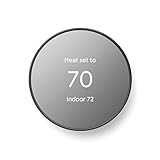
The charcoal Google Nest Thermostat is the model to look at if you have never owned a smart thermostat, your system is a straightforward single-stage furnace and air conditioner, and you want the upgrade to feel like a finished product rather than a project. It is the entry point of the Nest line, and it is priced in the budget tier — but it does not look or behave like a budget device. The mirrored face stays dark until you approach it, and a touch strip on the right edge replaces the rotating ring that the brand’s more expensive models use.
Its most useful trick for older homes is power sharing. Rather than demanding a dedicated common wire, the thermostat is designed to draw the small amount of power it needs through the existing heating and cooling conductors in many installations, which means a four-wire wall — typically red, white, green, and yellow — is often enough. That single design decision removes the most common reason people give up on a DIY thermostat install and call a contractor instead.
Key specs and features
- Equipment class: single-stage conventional heating and cooling, plus basic heat pump applications; not intended for multi-stage or dual-fuel equipment.
- Power: designed to operate without a C-wire in many homes via power sharing; a C-wire is still recommended where one exists because it is the most stable configuration.
- Display: mirrored finish with a side touch strip and no rotating dial.
- App: managed through the Google Home app rather than a standalone thermostat app.
- Voice: Google Assistant control; scheduling and remote adjustment work from the app.
- Sensors: no remote room sensor support — the built-in sensor in the thermostat itself is what the system reads.
- Efficiency features: eco mode temperature presets, schedule-based setbacks, and a savings-oriented suggestion engine in the app.
- Certification: ENERGY STAR certified, which matters if a utility rebate requires it.
Strengths
The value proposition is unusually clean: you get the scheduling, geofencing-style presence behavior, remote app control, and efficiency nudges that define the category, at the lowest tier on this list. Installation is friendly to older wiring because of power sharing, and the physical design is genuinely attractive on a hallway wall. Because it lives inside the Google Home app, it integrates naturally with other Google devices and routines — if your household already runs on Google Assistant, the marginal setup effort is close to zero.
It also behaves well as a set-and-forget device. You can build a four-period daily schedule (wake, away, home, sleep) in a few minutes, and the app will surface suggestions when it detects patterns worth automating. For a first-time buyer whose main goal is “stop heating an empty house,” that is exactly the right feature set.
Pros
- Lowest price tier in this roundup while still offering full app scheduling and remote control.
- Often installs without a C-wire thanks to power sharing, which suits older four-wire homes.
- Clean mirrored design that reads as premium on the wall.
- Deep integration with the Google Home app and Google Assistant routines.
- ENERGY STAR certified, useful for utility rebate paperwork.
Cons
- No remote room sensor support, so a chronically cold bedroom cannot be averaged into the reading.
- Not appropriate for multi-stage, dual-fuel, or complex heat pump systems.
- No humidifier, dehumidifier, or ventilator accessory terminals.
- Managed through the Google Home app rather than a dedicated thermostat app, which some users find less focused.
- Power sharing can occasionally cause short cycling on systems with unusual transformer behavior; a C-wire is the safer configuration.
How it compares with the nearest alternative
Against the Sensi Lite Smart Thermostat ST25, the Nest wins on design and ecosystem polish and loses on nothing important for a single-stage home — both are budget-tier and neither supports remote sensors. The real decision point is the wiring. If you have a C-wire and use Alexa, the Amazon Smart Thermostat is a similarly priced alternative with a simpler, more utilitarian interface. If you have no C-wire and no interest in the Google ecosystem, the Sensi Lite is the more neutral choice, and if you need multi-stage support you should move up to the Sensi ST55 or the ecobee line entirely.
2. ecobee Smart Thermostat Essential – Best for the ecobee Ecosystem on a Mid-Range Budget

The ecobee Smart Thermostat Essential is the entry door into ecobee’s platform. It is the model to choose if you want the ecobee app, the brand’s scheduling logic, and ENERGY STAR certified efficiency behavior, but you do not need the multi-stage and accessory-terminal depth of the Enhanced or the premium build of the top of the line. It sits in the mid-range tier and is the natural pick for a conventional single-stage or straightforward heat pump home where the owner still wants room to grow.
ecobee’s reputation rests on two things: a genuinely good scheduling and comfort engine, and remote room sensors that let the thermostat average temperatures across multiple rooms. That sensor ecosystem is the single biggest reason people choose ecobee over cheaper alternatives, and it is the first thing to verify for this specific model, because sensor support is not uniform across every tier of the family.
Key specs and features
- Equipment class: conventional heating and cooling with heat pump support at the entry level of the ecobee range; confirm the exact stage counts for your model on the manufacturer’s compatibility page.
- Power: C-wire recommended, and ecobee includes a power extender kit with most of its thermostats so a home without a common wire can often still be supported. Verify what ships in the box for this model.
- App: the ecobee app, which handles schedules, comfort settings, alerts, and remote adjustment.
- Voice: works with the major voice assistants; ecobee’s higher tiers add a built-in voice assistant, which this entry model does not carry.
- Sensors: verify remote room sensor compatibility for this specific model before buying — it is the deciding feature between ecobee tiers.
- Certification: ENERGY STAR certified.
- Installation: DIY-friendly with a standard wall plate and clear in-app wiring guidance.
Strengths
The Essential’s appeal is that it gives you the ecobee software experience — the part of an ecobee thermostat that people actually rave about — without paying premium-tier money. The scheduling model is built around comfort settings rather than rigid clock times, so “away” and “sleep” behave the way households actually live. Alerts for filter changes, unusual runtime, and temperature swings are part of the platform and can catch a failing system before it fails completely.
It is also a sensible stepping stone. If you buy this now for a single-stage system and later replace the equipment with a multi-stage or dual-fuel setup, the upgrade path within the ecobee family is well documented, and the app experience carries over. For households that already own ecobee devices elsewhere, keeping one app and one account is a real convenience worth factoring in.
Pros
- Full ecobee app experience at the mid-range tier rather than the premium tier.
- ENERGY STAR certified with utility rebate eligibility in many programs.
- Power extender kit included with most ecobee models, easing C-wire-less installs.
- Comfort-setting schedules and diagnostic alerts are genuinely useful, not filler.
- Clean, straightforward hardware that fits a standard wall plate footprint.
Cons
- Sensor support and exact stage counts vary by ecobee tier — you must verify this model specifically.
- No built-in voice assistant at this level, unlike ecobee’s higher tiers.
- Less capable than the Enhanced for multi-stage, dual-fuel, and accessory-terminal setups.
- Mid-range price without the premium hardware feel of the Enhanced.
How it compares with the nearest alternative
The direct comparison is against the Sensi Smart Thermostat ST55. Both are mid-range. The ecobee wins on software, ecosystem, and the possibility of remote sensors if this model supports them; the Sensi wins on wiring flexibility, because Sensi thermostats are designed around battery power and never require a C-wire at all. If your wall has a common wire, the ecobee Essential is the more capable platform. If it does not and you do not want an adapter in the loop, the ST55 is the simpler answer. Against the ecobee Smart Thermostat Enhanced, the Essential trades stage depth and accessory terminals for a lower tier — a fair trade only if your equipment is genuinely simple.
3. Amazon Smart Thermostat – Best for Alexa Households With a C-Wire

The Amazon Smart Thermostat is the most single-minded device in this roundup, and that is its strength. It is built for one ecosystem and one job: give Alexa households a competent, inexpensive thermostat that works with voice control and with Ring devices, and keep the interface simple. It sits in the budget tier and it requires a C-wire — the manufacturer states this plainly, which is refreshing, because it means buyers know the wiring question up front rather than discovering it at the wall.
If you have already pulled the wall plate off your old thermostat and counted five conductors with a blue common wire, this is one of the least expensive ways to get scheduling, remote control, and voice commands into your home. If you have four wires and no common, you should either budget for a power adapter kit or choose a battery-powered model such as the Sensi line instead.
Key specs and features
- Equipment class: conventional single-stage heating and cooling plus heat pump applications; not designed for multi-stage or dual-fuel equipment.
- Power: C-wire required for standard installation. Homes without one need a compatible power adapter kit sold separately.
- App: managed through the Alexa app, which also handles routines, schedules, and device grouping.
- Voice: works with Alexa and with Ring devices; temperature adjustment by voice is native.
- Sensors: no remote room sensor ecosystem.
- Display: compact touchscreen with a minimal interface rather than a decorative mirror finish.
- Installation: guided in-app wiring walkthrough; screwdriver and about twenty minutes are the realistic requirement.
Strengths
The strongest argument for this thermostat is ecosystem gravity. If your household already runs on Alexa — Echo speakers in the kitchen and bedroom, Ring doorbells, smart plugs, and routines — adding the thermostat to that fabric takes minutes and immediately gives you voice control, scene integration, and scheduling in one app you already use. There is no second app to learn, no second account, and no separate automation hub.
It is also honest about its limits. By requiring a C-wire rather than offering a clever workaround, it avoids the reliability quirks that can appear when a thermostat steals power from other conductors. On a properly wired single-stage system, that translates to stable operation and predictable behavior, which is exactly what you want from the device that controls your largest utility bill.
Pros
- Budget-tier price with full scheduling, remote control, and voice operation.
- Deep native integration with Alexa routines and Ring devices.
- Explicit C-wire requirement means no surprises about compatibility.
- Simple interface that non-technical household members can operate without instruction.
- Straightforward guided installation for anyone comfortable with a screwdriver.
Cons
- C-wire required, which rules out many older four-wire homes without an extra adapter purchase.
- No remote room sensors, so multi-room averaging is not possible.
- Not suitable for multi-stage, dual-fuel, or accessory-terminal equipment.
- Interface is functional rather than attractive compared with mirrored or color-display competitors.
- Value depends heavily on already being inside the Alexa ecosystem.
How it compares with the nearest alternative
The nearest alternative is the Google Nest Thermostat, and the choice comes down to ecosystem and wiring. Both are budget-tier and both target simple systems. Nest wins if you have four wires and no common conductor, or if your household runs on Google Assistant. The Amazon model wins if you have a C-wire and your home is already organized around Alexa and Ring, because the integration is tighter and the interface is more utilitarian. Against the Sensi Lite ST25, the Amazon unit is a near-peer in capability but loses the battery-powered wiring advantage. If wiring is your constraint, Sensi wins; if ecosystem is your priority, this does.
4. Amazon Smart Thermostat (Pack of 2) – Best for Two-Zone or Two-Property Setups

This is the same thermostat described above, supplied as a two-pack, and it is priced in the mid-range tier as a bundle. That framing matters, because the buyer for a two-pack is a different buyer entirely. You are not choosing a thermostat for one hallway; you are either wiring two separate zones in a larger house, outfitting a second property such as a rental or cabin, or replacing a pair of aging thermostats in one project so that both floors or both buildings share a single app and a single set of routines.
Buying in a pair has practical advantages beyond convenience. Identical hardware means identical wiring procedures, one app, one set of schedules to replicate, and no confusion about which thermostat behaves which way. If you manage a rental property, uniformity also means you can walk a tenant through settings over the phone without guessing at the interface.
Key specs and features
- Contents: two identical Amazon Smart Thermostat units, each with its own mounting hardware and wiring labels.
- Equipment class: per unit, conventional single-stage heating and cooling plus heat pump applications.
- Power: C-wire required for each unit independently; two-zone systems often have a zone control board, which changes the wiring picture and should be reviewed carefully.
- App: both units appear in the same Alexa app account and can be scheduled separately or grouped.
- Voice: Alexa and Ring integration on each unit, with room-specific naming to avoid confusion.
- Sensors: no remote room sensor support on either unit.
- Price tier: mid-range as a bundle, though the per-unit cost is effectively budget-tier.
Strengths
The obvious benefit is per-unit economics: buying two together usually lands each thermostat at a lower effective cost than buying them separately at different times, and it guarantees matched firmware and interface behavior. In a two-zone house, matched thermostats prevent the frustrating situation where one floor runs a schedule the other cannot replicate.
There is also a maintenance argument. Two identical units share the same wiring diagram, the same filter reminder behavior, and the same app screens, so troubleshooting one teaches you how to handle the other. For landlords, that uniformity shortens every future support call, and for owners of a second property it means the vacation home and the primary residence can be managed from the same app without a second account or a second learning curve.
Pros
- Lower effective cost per thermostat than buying two units separately.
- Identical hardware simplifies wiring, scheduling, and troubleshooting across two locations.
- Both units live in one Alexa app account with room-specific naming.
- Well suited to two-zone houses, rentals, cabins, and multi-unit properties.
- Same budget-tier simplicity and guided installation as the single unit.
Cons
- C-wire required on both units, doubling the wiring hurdle if either location lacks one.
- Zoned systems with a control board can complicate DIY installation significantly.
- No remote sensors, so neither zone can be averaged across rooms.
- Only worth buying as a pair if you genuinely have two locations or two zones to equip.
- Single-stage and heat pump class only, so complex equipment still needs a different model.
How it compares with the nearest alternative
The comparison here is not really against another product but against buying two different thermostats. If both locations are simple single-stage systems with C-wires, this bundle is the cleanest route. If one location has a heat pump with auxiliary heat and the other is a simple furnace, you would be better served by pairing the Amazon Smart Thermostat with the ecobee Smart Thermostat Enhanced, accepting two apps in exchange for correct compatibility in the complex location. Against the Sensi Smart Thermostat ST55, the trade is identical to the single-unit comparison: Sensi removes the C-wire requirement, while the Amazon bundle keeps everything inside one Alexa account.
5. Sensi Smart Thermostat ST55 – Best for Homes Without a C-Wire

The Sensi Smart Thermostat ST55 is the answer to the most common smart thermostat problem: a wall with four wires and no common conductor. Sensi builds its thermostats around battery operation, which means the thermostat does not need to steal power from your heating or cooling circuits and does not need an adapter kit or a new wire run. You pull the old thermostat, label the wires, connect them to the same terminals on the new base, insert batteries, and mount the unit. That is the entire job in most homes.
It sits in the mid-range tier, which reflects broader equipment compatibility than the budget Lite model rather than a fancier screen. If you want a thermostat that simply works with the wiring you have, supports the systems most houses actually contain, and does not demand that you hire someone to fish a new cable through a finished wall, this is the model to start with.
Key specs and features
- Equipment class: conventional systems including multi-stage configurations, plus heat pump applications; Sensi publishes a compatibility checker — run your exact model numbers through it.
- Power: battery powered, so no C-wire is required. This is the defining feature of the model.
- App: the Sensi app for scheduling, remote adjustment, and alerts.
- Voice: works with Alexa and Google Assistant.
- Sensors: no remote room sensor ecosystem; the thermostat’s own sensor drives the reading.
- Display: backlit screen with straightforward on-device controls for manual adjustment.
- Certification: ENERGY STAR certified.
- Installation: DIY-first design with in-app wiring guidance and no adapter hardware.
What is actually behind your wall
Before choosing this model, it helps to know what you are looking at. The table below maps the wiring you are likely to find to the equipment it usually serves.
| Typical conductors at the wall | Common terminals | Equipment it usually serves | C-wire present? |
|---|---|---|---|
| 2 wires | R, W | Heat-only system, often a boiler or baseboard | No |
| 4 wires | R, W, G, Y | Single-stage furnace plus air conditioner | Usually no |
| 5 wires | R, W, G, Y, C | Single-stage system with a common wire available | Yes |
| 6–8 wires | Adds Y2, W2, O/B, and accessory terminals | Multi-stage, heat pump, or dual-fuel equipment | Usually yes |
Strengths
The wiring flexibility is the headline, but the secondary benefit is that battery operation removes a whole class of intermittent problems. Thermostats that draw power through other conductors can occasionally misbehave on systems with unusual transformer behavior; a battery-powered unit sidesteps that entirely. Combined with mid-range equipment compatibility, the ST55 covers the large middle of the housing stock — homes built with four-wire cable that later got air conditioning, and homes whose owners do not want to open a wall.
It is also a low-friction upgrade. Because the wiring matches the old thermostat in most cases, installation is measured in minutes, and the app handles the scheduling setup afterward. For a rental property or a home you may sell in a few years, that reversibility matters: you can put the original thermostat back in the box and take the smart one with you.
Pros
- No C-wire required, which eliminates the biggest DIY obstacle in older homes.
- Broader equipment compatibility than budget-tier single-stage models.
- Battery operation avoids power-sharing quirks entirely.
- ENERGY STAR certified and eligible for many utility rebates.
- Works with both Alexa and Google Assistant, so it is not ecosystem-locked.
Cons
- Batteries are a consumable you will need to replace periodically.
- No remote room sensors, so a cold bedroom cannot be averaged into the reading.
- No humidifier, dehumidifier, or ventilator accessory terminals.
- Display and build are functional rather than premium.
- Very complex dual-fuel systems may still exceed its compatibility class.
How it compares with the nearest alternative
Against the Sensi Lite ST25, the ST55 is the upgrade for anyone with more than single-stage equipment — that is the entire point of the mid-range tier. Against the ecobee Smart Thermostat Essential, the trade is reversed: ecobee offers the stronger software platform and the possibility of remote sensors, while the ST55 removes the C-wire question completely and works with whatever wiring you already have. If your wall has a common wire and you care about room-by-room comfort, choose the ecobee. If it does not, choose the Sensi.
6. Sensi Lite Smart Thermostat ST25 – Best for Simple Single-Stage Systems on a Tight Budget

The Sensi Lite Smart Thermostat ST25 is the stripped-down member of the Sensi family, and it keeps the one feature that matters most for older homes: battery-powered operation with no C-wire requirement. It sits in the budget tier and targets single-stage conventional systems and straightforward heat pump setups. If your goal is to stop paying to heat and cool an empty house, and your equipment is simple, this model does that job for the least money in the Sensi range.
What you give up is depth. The Lite is not intended for multi-stage equipment, and it does not offer the accessory terminals or remote sensor ecosystem of higher tiers. What remains is the core function: a schedule you can build from your phone, remote temperature adjustment, voice control through Alexa, and an ENERGY STAR certified efficiency profile.
Key specs and features
- Equipment class: single-stage conventional heating and cooling, plus heat pump applications in its compatibility class.
- Power: battery powered; no C-wire required.
- App: the Sensi app for schedules, remote control, and usage alerts.
- Voice: Alexa support, with app-based control as the primary interface.
- Sensors: no remote room sensor support.
- Display: simple backlit interface designed for quick manual adjustments.
- Certification: ENERGY STAR certified.
- Installation: among the simplest in this roundup because there is no adapter hardware to mount.
Strengths
The ST25’s value is that it removes every unnecessary complication from the upgrade. No C-wire, no adapter module behind the wall, no complex setup wizard, no ecosystem lock-in beyond the app you choose to use. For a landlord equipping several units, a homeowner with a basic furnace and air conditioner, or anyone replacing a failing manual thermostat in a hurry, that simplicity is the feature.
It also stays useful when the internet goes down. Battery-powered thermostats with on-device controls continue to run their last schedule and accept manual adjustments at the wall, which is a meaningful reliability advantage over models that depend more heavily on cloud connectivity for everyday operation. Add ENERGY STAR certification and the possibility of a utility rebate, and the effective cost of the upgrade can drop further.
Pros
- Budget-tier price with no C-wire requirement, making it one of the easiest DIY swaps available.
- Battery operation keeps the thermostat functional during internet outages.
- ENERGY STAR certified for rebate eligibility.
- Alexa support plus a capable app for scheduling and remote adjustment.
- Simple enough that any household member can operate it without a manual.
Cons
-
<