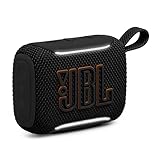
The best camping and hiking speaker is the one that survives rain and dust, weighs little enough to stay in the pack, and lasts the whole trip. For a hiker, that usually means the JBL Clip 5 or Tribit StormBox Micro 2. For a car camp or a beach day, the JBL Charge 6 offers more volume and can charge a phone. This guide ranks seven speakers for the outdoors, shows how to count speaker weight and battery against your trip length, and covers trail etiquette, cold weather and sand.
Specs come from manufacturer pages and independent measurements. Where sources conflict, the lower figure is shown. Prices are described as tiers because they change often.
Our top picks
 Anker soundcore 2 Portable Bluetooth Speaker
- Outdoor-Proof Speaker: Portable design with IPX7 waterproof protection…
- 24H Non-Stop Music: With Anker's world-renowned power management…
- Powerful Sound: The speaker features 12W power with…
| Product | Key specs | |
|---|---|---|
 Outdoor Bluetooth Speaker | Check price | |
| Anker soundcore 2 Portable Bluetooth Speaker | Outdoor-Proof Speaker: Portable design with IPX7 waterproof protection… 24H Non-Stop Music: With Anker's world-renowned power management… Powerful Sound: The speaker features 12W power with… | Check price |
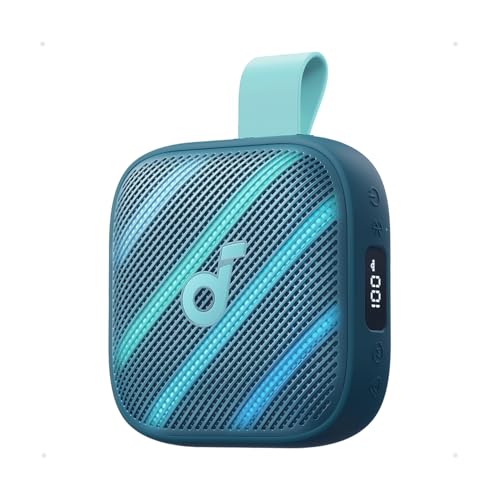 Soundcore Boom Go 3i Portable Bluetooth Speaker | Check price | |
 JWEX Revonext Camping Lantern Bluetooth Speaker | Combines a portable camping lantern with a wireless… Features warm white and cool white lighting modes… TRUE WIRELESS STEREO (TWS) SOUND | Check price |
As an Amazon Associate we earn from qualifying purchases at no extra cost to you.
The three questions that decide your pick
- How far will you carry it? On a long hike, every 100 g counts. For a car camp or beach, weight matters less than volume.
- How many days between chargers? A weekend trip with no power needs either a large battery or a power bank.
- How much abuse will it take? Rain, mud, sand and drops are routine outdoors, so IP67 or IP68 is the baseline.
Comparison of the seven picks
| Speaker | Weight | Rated battery | Rating | Attachment | Best for | Price tier |
|---|---|---|---|---|---|---|
| JBL Clip 5 | about 285 g | 12 h (conflicting, 10-15 h) | IP67 | Built-in carabiner | Hiking, backpack | Entry to mid |
| Tribit StormBox Micro 2 | hand-sized, listings vary | 12 h | IP67 | Integrated strap | Bike, pack, tent | Entry |
| Sony SRS-XB100 | 274 g | 16 h | IP67 | Multiway strap | Long battery, light weight | Entry |
| Bose SoundLink Micro (2nd Gen) | palm-sized | 12 h | IP67 | Removable strap | Sound quality | Mid to premium |
| UE Wonderboom 4 | 420 g | 14 h | IP67 | Tab loop, floats | Lake, beach, 360 sound | Mid |
| JBL Charge 6 | 960 g | 24 h (up to 28 h with boost) | IP68 | None; carry in pack | Car camping, power bank | Mid to premium |
| JBL Xtreme 4 | about 2.1 kg | 24 h plus about 6 h boost | IP67 | Shoulder strap | Campsite, beach party | Premium |
JBL Clip 5: best clip-on for hikers
Spec line: about 285 g, IP67, 12 hours rated (some sources say 15, others 10), Bluetooth 5.4, built-in wide carabiner, Auracast.
Best for: clipping to a pack strap or tent loop and playing background music at camp. Skip if: you want deep bass or a speaker that stands on a table by itself.
- Pro: The carabiner is part of the speaker, so there is nothing to lose.
- Pro: IP67 rating survives rain, mud and a drop in a stream.
- Pro: Auracast lets you link it with other JBL speakers at a group site.
- Con: Published battery numbers conflict; plan for about 10 hours.
- Con: Output is modest, so it is for a campsite, not a big group.
Tribit StormBox Micro 2: best value strap speaker
Spec line: 10 W output, IP67, 12 hours rated, Bluetooth 5.3, up to 120 ft range, integrated heavy-duty strap.
Best for: cycling, backpacking and any trip where the speaker will hang from something. Skip if: you want a well-known app ecosystem.
- Pro: PopSci and several roundups pick it as the best for biking and hiking.
- Pro: The strap suits handlebars, packs and tent poles.
- Pro: Output is higher than most speakers in this size.
- Con: Tuned with strong bass that can sound boomy at high volume.
- Con: Spec listings differ across retailers, so confirm weight and battery on the page you buy from.
Sony SRS-XB100: best battery for the weight
Spec line: 274 g, IP67, 16 hours rated, Bluetooth 5.3, AAC and SBC, multiway strap, about 4.5 hours to charge.
Best for: multi-day trips where weight and battery are both a priority. Skip if: you want fast charging.
- Pro: Sixteen hours rated gives about two evenings of light use at camp.
- Pro: The strap is flexible enough to mount on a pole, a bike frame or a rail.
- Pro: Light enough that you hardly notice it in a pack.
- Con: No fast-charge feature, so a flat speaker takes a long time to refill.
- Con: Small driver, so bass is limited.
Bose SoundLink Micro (2nd Gen): best sound for the weight
Spec line: IP67, 12 hours rated, Bluetooth 5.4, aptX Adaptive, USB-C, removable fabric strap, powder-coated steel grille.
Best for: the hiker who wants real sound quality at a campsite. Skip if: you want the lowest price.
- Pro: Bose tunes the small driver to avoid the harsh sound of many tiny speakers.
- Pro: A replaceable strap and a metal grille handle rough use.
- Pro: aptX Adaptive for Android phones that support it.
- Con: Costs more than most speakers of this size.
- Con: Battery is similar to cheaper speakers.
UE Wonderboom 4: best for lakes and beaches
Spec line: 420 g, IP67, 14 hours rated, floats, 360-degree sound, USB-C, Bluetooth range up to about 40 m (131 ft) per the manufacturer.
Best for: lakeside camps and beach trips where the speaker may end up in the water. Skip if: you want big bass.
- Pro: Floats and survives drops.
- Pro: Sound is spread evenly around the speaker, which suits a campfire circle.
- Pro: The tab loop hangs from a tent pole or tree branch.
- Con: Output is about 8.5 W, so it is quiet for a large group.
- Con: Heavier than the clip-on speakers.
JBL Charge 6: best for car camping and phone charging
Spec line: 960 g, IP68, 24 hours rated, roughly 40 to 45 W, Bluetooth 5.4, USB-C power bank output.
Best for: a campsite where you want music for a group and a way to top up a phone. Skip if: you are counting every gram.
- Pro: Best battery of the cylinder-style speakers in this guide.
- Pro: Charging a phone from the speaker is a real benefit on a weekend away from the car.
- Pro: IP68 handles rain, mud and dust.
- Con: Nearly a kilogram, so it does not belong in a long-distance pack.
- Con: Using the power bank drains the speaker’s own battery quickly.
JBL Xtreme 4: best for a big campsite
Spec line: about 2.1 kg, IP67, 24 hours rated plus about 6 hours with Playtime Boost, shoulder strap, replaceable battery, Auracast.
Best for: a large group camp, a beach day or a tailgate. Skip if: you are hiking.
- Pro: The strap makes it easier to carry from the car to the site.
- Pro: Fuller bass than any speaker above it in this guide.
- Pro: Replaceable battery extends its useful life.
- Con: Heavy and bulky.
- Con: Sources disagree on its output and battery figures, so confirm them at purchase.
The weight-and-battery budget
A simple way to decide how much speaker to bring is to compute two numbers: the weight as a share of your pack, and the battery hours against your listening plan.
Weight as a share of pack weight
A typical weekend backpacking load is 8 to 10 kg. A 285 g speaker is about 3 percent of that. A 960 g speaker is about 10 percent, which is the weight of a sleeping pad or a stove and fuel. Many hikers accept 3 percent for music at camp and refuse 10 percent. For a car camp, weight is irrelevant and the choice goes to volume and battery.
Battery hours against the plan
Estimate the listening time per day (for example, 2 hours at camp), multiply by days, and divide by the efficiency factor for volume. At moderate volume use 0.8 of the rating, and at loud volume use 0.5. A three-day trip with two hours per day needs six hours of use. A speaker rated 12 hours at moderate volume gives about 9.6 usable hours, so it is enough. If you plan to listen four hours a day for three days at loud volume, you need 12 hours of use, so you need a speaker rated at 24 hours (Charge 6 or Xtreme 4) or a power bank.
Cold weather
Lithium batteries lose capacity in the cold. At temperatures near freezing, expect noticeably shorter runtimes. Keep the speaker inside a jacket or sleeping bag at night, and charge it indoors. Do not charge a battery that is below freezing, because charging a very cold cell can damage it.
Mounting and packing tips
How you carry a speaker affects how often you use it and how long it survives.
- Clip high on a shoulder strap. A clip speaker on a chest or shoulder strap keeps the sound near ear level and keeps the weight stable. Bouncing on a hip belt it will swing and may catch on branches.
- Hang it in the tent. A loop or strap lets you hang the speaker from the ridge line inside a tent, which frees floor space and lowers the chance of stepping on it.
- Pad it in the pack. Put the speaker in a soft pocket or a spare sock when it travels in a pack with cooking gear. Hard edges scratch the grille and can press the power button, draining the battery before you arrive.
- Lock the power button. Some speakers have no lock. Switch the speaker off and check the light before you zip the pocket; a speaker that turns on in a pack will be empty by camp.
- Bring a short USB-C cable. Every speaker in this guide charges over USB-C, so one cable covers the speaker, a phone and most power banks.
Power options on multi-day trips
If a trip is longer than the battery, you have three choices. A power bank of 10,000 mAh weighs about 200 to 250 g and recharges a small speaker several times, so it is the most weight-efficient fix. A speaker with power bank output such as the JBL Charge 6 turns the speaker into the power source for your phone, but that drains the speaker faster than using a separate bank. Solar panels are rarely worth the weight for a speaker alone; they make sense only if you already carry one for a phone or a light.
A rough check: a small speaker battery holds about 15 to 20 Wh in the Flip class and 30 to 35 Wh in the Charge class (JBL lists about 34 Wh for the Charge 6). A 10,000 mAh power bank holds about 37 Wh at the cell, with some loss in conversion, so one bank recovers roughly one full Charge-class refill. That is why a light speaker plus a bank often beats a heavy speaker with a big battery for a three-day trip.
Waterproofing, sand and care in the field
- IP67 or IP68: Both ratings cover dust and immersion. They are for fresh water; salt water and sand are harder on seals.
- After the beach: Rinse the speaker in fresh water and dry the USB-C port before charging. Sand in the port can damage the connector.
- Dust: Brush off a fabric grille before you put the speaker away.
- Heat: Do not leave a speaker on a dashboard or in a closed tent in the sun.
- Drops: Rubber speakers survive most drops. A speaker with a metal grille, like the Bose Micro, can dent but usually keeps working.
Trail etiquette and safety
A speaker that suits a campsite can be a nuisance on a trail. Outdoor groups and land managers generally ask hikers to keep sound private on shared trails, in wildlife areas and near other campers. Use these habits:
- Keep the speaker off on trails and at overlooks, and play it at camp at a volume only your group can hear.
- Observe quiet hours at campgrounds, which are often 10 pm to 6 am.
- Avoid playing sound near wildlife, especially in nesting areas.
- Do not use a speaker as a replacement for awareness in areas with bears or other animals, where noise can help or hurt depending on local advice. Follow park guidance.
- Bring headphones for any listening during moving hikes.
Which speaker for which trip?
| Trip | Pick | Reason |
|---|---|---|
| Day hike | JBL Clip 5 | Light, clips on, IP67 |
| Weekend backpacking, minimal weight | Sony SRS-XB100 | 274 g and 16 h rated |
| Bike tour | Tribit StormBox Micro 2 | Strap, loud for its size |
| Hike where sound matters | Bose SoundLink Micro (2nd Gen) | Better tuning |
| Lake or beach | UE Wonderboom 4 | Floats, 360 sound |
| Car camping with a group | JBL Charge 6 | 24 h and power bank |
| Large site, party | JBL Xtreme 4 | Biggest sound, strap |
Frequently Asked Questions
What is the best speaker for hiking?
The JBL Clip 5 is the most practical for most hikers because it weighs about 285 g, has a built-in carabiner and an IP67 rating. The Sony SRS-XB100 is a good alternative if you want a longer rated battery at similar weight.
What is the best speaker for camping?
For a car camp, the JBL Charge 6 gives louder sound, a rated 24-hour battery and the ability to charge a phone. For a backpacking camp, a lighter speaker like the Sony SRS-XB100 or Tribit StormBox Micro 2 is a better fit.
Are clip speakers worth it?
Yes, if you want the speaker attached to a pack, belt or tent loop. A clip speaker saves time and prevents loss. The trade-off is less bass and a smaller battery than a larger speaker.
Which speaker is best for the beach?
The UE Wonderboom 4 floats and gives 360-degree sound, which suits a beach towel gathering. The JBL Charge 6 and Xtreme 4 suit larger groups. Rinse any speaker in fresh water after sand and salt.
How long will a speaker last on a camping trip?
Rated figures assume moderate volume. At loud volume expect about half. A 12-hour speaker lasts about six hours loud, and a 24-hour speaker lasts about 12. Bring a power bank for trips longer than a weekend.
Is it okay to play music on a hiking trail?
Most land managers and hiking groups ask hikers to keep music at a low volume or use headphones on shared trails. Save the speaker for your own campsite, and respect quiet hours and wildlife.
More from Amazon
Programs that pair well with the guide above. Offers and eligibility are set by Amazon and may change.
Free shipping on eligible items, Prime Video and more. Eligible new members can start with a free trial.
Start a Prime free trialAd-free music streaming. Eligible new subscribers can start with a free trial.
Try Music Unlimited freeA Prime membership for ages 18-24 with a trial period. Eligibility is set by Amazon.
See Prime for Young AdultsAudiobooks and podcasts to listen to on the go. Eligible new members can start with a free trial.
Try Audible freeAs an Amazon Associate we earn from qualifying purchases.