Our Top Picks
 FosPower NOAA Emergency Weather Radio A1 7400mWh Solar6.2 x 2.9 x 2.1 Inches0.7 poundsCheck on Amazon
When the power is out and cell service is patchy, the best portable radios are the ones that keep working on batteries, a crank or solar, and still pull in local AM, FM and weather stations. For everyday listening, a simple battery or plug-in AM/FM set with a big dial is often enough. This guide sorts ten listings into those two camps using only what their titles state.
Top picks at a glance

Panasonic Portable AM/FM Radio, Battery Operated Analog Radio, AC Powered, Black (RF-2400-K)
As an Amazon Associate we earn from qualifying purchases. Product prices and availability are accurate as of the date/time indicated.
FosPower NOAA Emergency Weather Radio A1 7400mWh Solar Hand Crank (Orange) | AM/FM/WB power bank 4 power options SOS alarm LED flashlight & 4 LED reading light for outdoor emergency & power outage use.


As an Amazon Associate we earn from qualifying purchases. Product prices and availability are accurate as of the date/time indicated.

Portable AM/FM Transistor Radio with Loud Speaker, Battery or USB Powered | Compact Emergency Radio for Indoor, Outdoor, Travel & Storms (Model BJL-671)


As an Amazon Associate we earn from qualifying purchases. Product prices and availability are accurate as of the date/time indicated.

PRUNUS J03 AM FM Radio Portable Plug in Wall or AA Battery Operated for Home/Outdoor, Large Speaker Excellent Sound and Reception, Large Tuning Knobs, Gifts for Seniors, No,Internet Radio/Shower Radio


As an Amazon Associate we earn from qualifying purchases. Product prices and availability are accurate as of the date/time indicated.
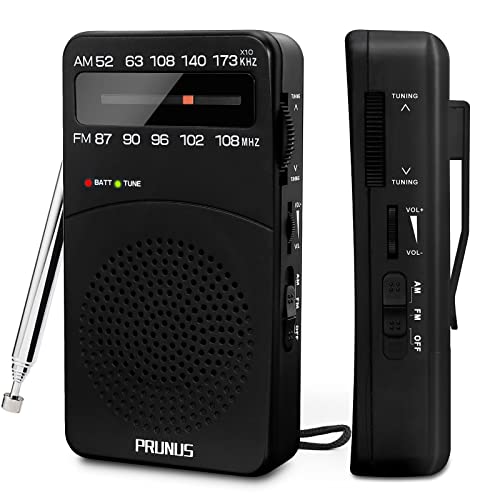
PRUNUS J-166 Portable Radio AM FM, Battery Operated Radio | Tuning Light, Back Clip, Layard, Excellent Reception, AM FM Radios Portable, Transistor Radios


As an Amazon Associate we earn from qualifying purchases. Product prices and availability are accurate as of the date/time indicated.
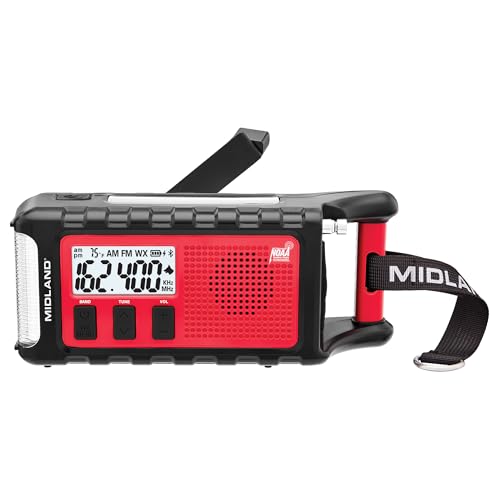
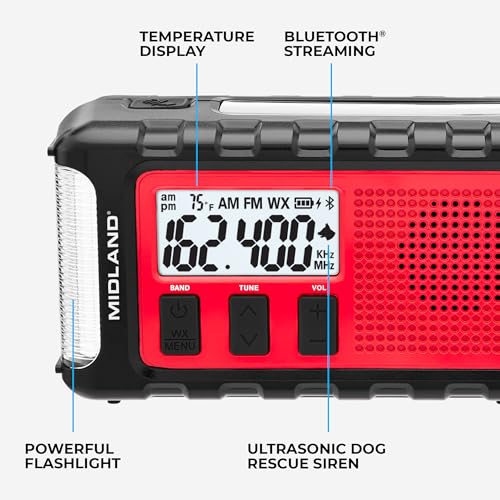
Midland - ER310PRO, Portable Emergency Bluetooth Weather AM/FM Radio | 10,000 mAh Power Bank - Multiple Power Sources, SOS Flashlight, Ultrasonic Rescue Dog Siren, & NOAA Weather (Red/Black)



As an Amazon Associate we earn from qualifying purchases. Product prices and availability are accurate as of the date/time indicated.

DreamSky AM FM Portable Radio Plug in Wall or Battery Operated | for Home & Outdoor, Strong Reception, Large Dial Easy to Use, Transistor Antenna, Headphone Jack, Elderly Seniors Small Gifts


As an Amazon Associate we earn from qualifying purchases. Product prices and availability are accurate as of the date/time indicated.

Solar Radio Emergency Hand Crank 12000mAh with Clear Signal | AM FM NOAA Weather Radio Battery Operated with 2-Mode LED Flashlight Cell Phone Charger Dual Outputs SOS


As an Amazon Associate we earn from qualifying purchases. Product prices and availability are accurate as of the date/time indicated.

Leaton Hand Crank Emergency Radio, NOAA Weather Radio AM/FM,10000mAh | Solar charging, Rechargeable Battery Powered, USB-C Charger, Flashlight, SOS Alarm, for Camping Survival Emergencies


As an Amazon Associate we earn from qualifying purchases. Product prices and availability are accurate as of the date/time indicated.

DreamSky AM FM Radio Portable Shortwave Radio Battery Powered/Plug in Wall | for Home Outdoor, Strong Reception, Large Dial Easy to Use, Digital Time Display, Transistor Antenna, Seniors Small Gift


As an Amazon Associate we earn from qualifying purchases. Product prices and availability are accurate as of the date/time indicated.
| Model | Key point from the title | Price tier | Best for |
|---|---|---|---|
| PRUNUS J-166 | Battery operated, back clip, lanyard | Budget | Carry-along and chores |
| BAIJIALI BJL-671 | Battery or USB powered, loud speaker | Budget | Basic storm backup |
| PRUNUS J03 | Plug-in or AA, large tuning knobs | Budget | Easy home listening |
| DreamSky AM FM (headphone jack) | Plug-in or battery, large dial | Budget | Bedside or kitchen use |
| DreamSky shortwave model | Shortwave, digital time display | Mid-range | Curious listeners |
| Panasonic RF-2400-K | AM/FM analog, battery or AC | Mid-range | Simple, familiar design |
| FosPower A1 | Solar and crank, 7400mWh, NOAA | Mid-range | Compact emergency kit |
| Leaton hand crank | 10000mAh, USB-C, solar, NOAA | Mid-range | Camping and outages |
| Mesqool solar crank | 12000mAh, dual outputs, NOAA | Premium | Phone charging in outages |
| Midland ER310PRO | Bluetooth, 10,000 mAh, NOAA, siren | Premium | Feature-rich emergency set |
Why portable radios still matter, and what has changed
Radio is old technology, and that is exactly its strength. An AM/FM receiver does not need a data plan, an app or a router, and local stations can keep broadcasting when other networks are overloaded. During storms, that makes a small battery-powered set a sensible backup next to your phone.
The category has changed in three visible ways. First, emergency radios now bundle power-bank functions, with large mAh ratings, USB outputs and flashlights. Second, many listings combine several power sources, such as solar panels, hand cranks, batteries and USB charging. Third, some premium sets add Bluetooth, rescue sirens and weather-band reception on top of the usual AM/FM.
At the other end, plain analog sets with big knobs and wall power remain popular for seniors and bedside use. Expect marketing to keep leaning on words like “excellent reception” and “strong sound,” which are impossible to verify from a title. Treat battery capacities, solar claims and crank run times as seller claims.
There is also a quiet shift in who buys these sets. Camping, hiking and van-life shoppers want compact units with a flashlight and USB output, while older listeners and caregivers look for large controls, wall power and clear sound. Sellers tune titles to each group, which is why the same category contains a pocket clip radio and a power-bank siren. Decide which group you belong to before comparing features, and the list becomes much shorter.
How we picked these
We compared ten portable radio listings using only what the titles state: bands, power sources, battery ratings, extra features and intended use. We favored listings that make clear claims and fit a real scenario, from a nightstand radio to a storm kit. Nobody on the team used or measured these units. Where a title is vague, repeats unclear phrasing or uses an odd model name, we say so and suggest what to confirm on the product page.
Everyday AM/FM and plug-in radios
PRUNUS J-166 portable AM/FM radio
The title describes a battery-operated AM/FM transistor radio with a tuning light, back clip and lanyard, and claims excellent reception. It is the lowest-priced listing in the set, and the clip and lanyard suggest a radio you wear while working in the yard or walking.
A good scenario is a handyman or gardener who wants a local station or a ball game in a belt clip. It is not an emergency set, because the title mentions no weather band, no crank and no charging. The lanyard also appears misspelled in the title, which is a small hint to read the page carefully.
- Pros: very low price tier and easy to carry.
- Pros: back clip and lanyard for hands-free use.
- Cons: no weather band or backup power listed.
- Cons: reception claims cannot be confirmed from the title.
At this price, expect a lightweight plastic body and a small speaker. That is fine for a quiet corner of the workshop, but it will struggle against a loud mower or a noisy room.
Check the listing for the battery type, speaker size and a headphone jack. Ask yourself: do I want a loud room radio or a small personal one?
BAIJIALI BJL-671 AM/FM transistor radio
The title lists a portable AM/FM transistor radio with a loud speaker, battery or USB power, and describes it as a compact emergency radio for indoor, outdoor, travel and storms. The USB power option is practical because a power bank can run it when batteries are gone.
It suits a buyer who wants an inexpensive backup in a storm drawer. The “emergency” label should be read loosely: the title does not mention a NOAA weather band, a hand crank or solar charging. For serious storm preparation, you would pair it with spare batteries and a charger.
- Pros: USB option adds flexibility.
- Pros: low price and compact size.
- Cons: no weather band in the title.
- Cons: lesser-known brand, so check support and returns.
It helps to keep a small power bank near the radio before storm season. A modest bank can run a USB-powered set for many hours, and it can charge a phone afterward if you still have charge left.
Check the listing for the USB cable, battery count and whether the radio charges from USB or simply runs. Ask: can I power it from a power bank during an outage?
PRUNUS J03 AM FM radio, plug-in or AA battery
This listing describes a portable AM/FM set that plugs into a wall or runs on AA batteries, with a large speaker and large tuning knobs, and it is marketed as a gift for seniors. The awkward phrase “No, Internet Radio/Shower Radio” appears to say the radio does not stream online and is not a shower radio; confirm that on the page.
Large knobs matter if you want to find stations by feel without reading small print. It is a straightforward kitchen, workshop or bedside radio.
- Pros: easy tuning knobs and large speaker claimed.
- Pros: dual power, so it survives an outage on batteries.
- Cons: title wording is confusing in places.
- Cons: no weather band or digital display listed.
Seniors’ gift labels are common in this category, but the useful question is whether the controls are legible and the volume dial is easy to find in a dim room. A lit dial or a clear pointer is worth looking for in the photos.
Check the listing for the AC cord length, battery compartment access and what is included in the box. Ask: does this need to move around the house or stay on a counter?
DreamSky AM FM portable radio with headphone jack
The DreamSky title lists plug-in or battery power, strong reception, a large dial, a transistor antenna, a headphone jack and seniors as a target audience. The large dial and headphone jack make it friendly for people who like quiet listening or have trouble with small controls.
It suits a bedside table or a shared living room. Because the set accepts both wall power and batteries, it can sit on a shelf all year and still serve as an outage backup.
- Pros: large dial and headphone jack.
- Pros: plug-in and battery operation.
- Cons: no emergency features in the title.
- Cons: reception quality depends on your location and antenna.
Headphone jacks also help in shared spaces, such as a hospital waiting room or a quiet house at night. Confirm the jack size and whether plugging in cuts the speaker.
Check the listing for the battery size, cord length and dial lighting. Ask: how important is a headphone jack to my listening?
DreamSky AM FM shortwave radio with digital time display
This second DreamSky listing adds shortwave and a digital time display to the AM/FM formula, while keeping the large dial, battery or plug-in power, a transistor antenna and a seniors gift pitch. Shortwave lets curious listeners explore international broadcasts, though reception depends heavily on time of day, season and local interference.
It fits a hobbyist or a family member who likes to hear distant stations. The clock is useful at a bedside. Because the title does not describe tuning precision, treat shortwave as a bonus rather than a guaranteed performer.
- Pros: shortwave band added.
- Pros: digital time display.
- Cons: shortwave listening takes practice and patience.
- Cons: no weather band or crank in the title.
Shortwave reception improves with a longer antenna and a spot away from electronics such as routers and chargers. Plan to experiment at different times of day before judging the set.
Check the listing for the shortwave frequency range, antenna details and whether the display is lit. Ask: will I really listen to shortwave, or just AM and FM?
Panasonic Portable AM/FM Radio RF-2400-K
The title calls this a portable AM/FM, battery-operated analog radio that is also AC powered, in black, with model RF-2400-K. That is all the title provides. It does not describe speaker size, dial type, antenna or battery count, so those details are for the product page.
It appeals to buyers who prefer a familiar brand and a simple analog design. A kitchen counter, a garage bench or a spare room are natural homes. We cannot say from the title how it performs on weak stations.
- Pros: recognizable brand name and a clearly stated model number.
- Pros: battery and AC power options.
- Cons: priced above the other plain analog sets here.
- Cons: no weather band or extra features listed.
If you want a radio that looks like a classic household set and is easy to replace, a mainstream brand has some appeal. Just confirm that the page lists the same model number as the title and check the return window.
Check the listing for dimensions, battery count and cord length. Ask: does the brand justify a higher price than the budget analogs?
Emergency weather, solar and hand-crank radios
FosPower NOAA Emergency Weather Radio A1
The title lists a 7400mWh battery, solar and hand-crank charging, AM/FM/WB bands, four power options, an SOS alarm, an LED flashlight and a four-LED reading light, for outdoor emergencies and power outages. Note the unit: 7400mWh is a milliwatt-hour rating, not mAh, so it cannot be compared directly with the other listings without conversion.
It fits a grab-and-go kit or a camping trip where weight matters. The reading light is a practical touch for a tent or a dark room.
- Pros: weather band and four power options.
- Pros: flashlight, reading light and SOS alarm.
- Cons: lower battery capacity than several other emergency sets here.
- Cons: crank and solar run times are not stated.
Since the capacity is quoted in a different unit from its rivals, do not assume it is smaller or larger at first glance. Convert it, as we do in the worked example below, then compare.
Check the listing for USB output details, the number of cranks needed and whether the radio has automatic weather alerts. Ask: is the battery enough for the phone I carry?
Leaton hand crank emergency radio
The Leaton title lists NOAA weather radio, AM/FM, a 10000mAh battery, solar charging, rechargeable battery power, USB-C charging, a flashlight and SOS alarm, and mentions camping and survival. USB-C charging is convenient if your other gear uses it too.
It suits a household that wants an all-purpose emergency set at a mid-range price. Be realistic about hand cranking, which is slow. It is a backup of last resort, and you should charge the battery in advance through USB.
- Pros: 10000mAh claim and modern USB-C port.
- Pros: weather band, flashlight and SOS alarm.
- Cons: lesser-known brand name.
- Cons: solar charging is typically slow.
Charging a power-bank radio fully from a wall adapter before the storm season starts is much more reliable than relying on the crank or on a cloudy day’s solar panel.
Check the listing for output ports, charging time and the specifics of the SOS feature. Ask: do I keep this charged between storms?
Mesqool solar hand-crank radio, 12000mAh
The title lists a 12000mAh battery, clear signal, AM/FM/NOAA, solar and hand-crank power, a two-mode LED flashlight, a cell phone charger with dual outputs and an SOS function. It carries the largest battery claim in the set and is priced just below the Midland.
It suits the buyer whose main emergency worry is keeping a phone alive. Two outputs could let you charge two small devices, though the title does not detail amperage.
- Pros: largest stated battery capacity here.
- Pros: dual outputs and weather band.
- Cons: premium price tier.
- Cons: title does not describe USB-C or fast charging.
Large battery packs add weight, so check the dimensions if you plan to carry it on a hike. At home, the weight is a bonus because the unit stays put on a shelf.
Check the listing for the actual output ratings, weight and charge indicators. Ask: how many phone charges do I expect from it?
Midland ER310PRO emergency Bluetooth weather radio
The most feature-heavy listing: AM/FM, NOAA weather, Bluetooth, a 10,000 mAh power bank, multiple power sources, an SOS flashlight and an ultrasonic rescue dog siren. It carries a recognizable brand name and the highest price in the group.
This is for a buyer who wants one device to do many emergency jobs. Bluetooth could let you play audio from a phone through the radio’s speaker, but the title does not explain whether it supports that. Confirm every feature before you pay the premium.
- Pros: widest feature set in the roundup.
- Pros: weather band and a larger battery pack.
- Cons: highest price tier.
- Cons: complexity can be more than casual users need.
Weigh the premium against simply buying a basic weather radio and a separate power bank. If you value one device that handles everything, the integration may be worth it; if not, separate tools are more flexible.
Check the listing for what the ultrasonic siren does, how Bluetooth works and which power sources are included. Ask: will I use these extras often enough to pay for them?
Buying guide: choosing a portable radio
Bands and what they mean
AM and FM cover local stations. WB or NOAA refers to the weather band in the United States, where official weather information is broadcast. Shortwave is a separate band for international broadcasts. If storms are your concern, a weather band is more valuable than a clock. Confirm on the listing whether a model offers automatic alerts, because a title that only says “NOAA” may mean you tune to the channel manually.
Power sources
Batteries are reliable but need spares, and AA cells are easy to find. Plug-in power is fine until the grid fails. USB power lets you run a small radio from a power bank. Solar and hand cranks are slow, so use them as a last resort. Always follow the manufacturer’s instructions and local codes for charging, and do not use damaged batteries.
Controls, speaker and reception
Analog dials and large knobs are easy for older users. Digital displays are easier to tune precisely. Telescoping antennas can improve reception, and rooms with metal roofs or concrete walls often weaken it. A larger speaker generally sounds fuller, but you can only confirm sound quality through buyer comments and the full listing.
Extras: flashlight, SOS, Bluetooth and power bank
Emergency sets add flashlights, sirens, reading lights and USB outputs. These are handy, but each increases weight and complexity. Choose the extras you will actually use, and keep a separate flashlight if you rely on one.
Emergency planning basics
A radio is one piece of a plan. Keep spare batteries, a separate flashlight, a paper list of important phone numbers and a basic first-aid kit with it. Know where your household would listen for local alerts, and check official guidance from your local emergency management office. Store the radio where everyone in the home can reach it, and show family members how to use it before the storm arrives.
Care, storage and battery safety
Remove alkaline batteries from sets that will sit unused for months, since leaks can ruin the contacts. Keep rechargeable packs away from heat, never charge a swollen or damaged battery, and use only the cable or adapter that is meant for the device. Do not use a radio in a shower or near open water unless the manufacturer says it is designed for that. Follow the manufacturer’s instructions and local codes.
Worked example: how many phone charges?
Capacity numbers on the listing are seller claims, and they are not directly equal to what your phone receives. Assume a phone with a 4000 mAh battery, and assume about 65 percent of the rated capacity reaches the phone after conversion losses. That is an estimate, not a measurement. Also assume a nominal 3.7 V battery, which lets us convert the FosPower figure: 7400 mWh divided by 3.7 V is about 2000 mAh.
| Model | Stated capacity | Estimated usable | Phone charges (estimate) |
|---|---|---|---|
| FosPower A1 | 7400 mWh (about 2000 mAh) | about 1300 mAh | about 0.3 |
| Leaton | 10000 mAh | about 6500 mAh | about 1.6 |
| Midland ER310PRO | 10,000 mAh | about 6500 mAh | about 1.6 |
| Mesqool | 12000 mAh | about 7800 mAh | about 1.9 |
The takeaway: a small emergency radio may give a phone a partial top-up, not a full recharge. If your goal is phone power, a dedicated charger is a better tool. See our guide to the best portable cell phone chargers for that job.
Specification concepts at a glance
| Spec concept | What to look for | Why it matters |
|---|---|---|
| Bands | AM/FM, plus WB or NOAA if storms matter | Determines what you can hear |
| Power options | Battery, plug-in, USB, solar, crank | Decides if it works in an outage |
| Battery claim | mAh or mWh, and which unit | Units are not directly comparable |
| Controls | Big knobs or digital display | Ease of tuning |
| Outputs | USB-A or USB-C, number of ports | Charging devices |
| Extras | Flashlight, SOS, Bluetooth | Convenience, weight and price |
Mistakes buyers make
One mistake is buying an “emergency” radio that lacks a weather band. Check for WB or NOAA in the title, not just the word emergency.
Another is trusting cranks and solar panels. They are slow, and a fully charged battery is the real backup.
Another quiet error is buying on sound claims alone. Phrases like excellent reception, strong sound and clear signal appear on nearly every listing, so they carry little information. Read buyer comments for recurring themes such as hiss, drift or weak AM pickup, and weigh them against your own location.
Buyers also compare mAh and mWh as if they were the same unit, miss that “plug-in” models need a nearby outlet, and ignore spare batteries. Finally, some assume a radio will sound the same indoors, in a basement or in a car, but reception varies with building materials and location.
Verdict by use case
For a simple bedside or kitchen radio, the DreamSky models and PRUNUS J03 fit, with Panasonic if you prefer a familiar brand. For a clip-on companion, the PRUNUS J-166 is the lightweight choice. For a storm drawer, the BAIJIALI covers the basics, while the Leaton and FosPower add a weather band and cranks. For maximum features, the Midland and Mesqool top the list, but check each claim first. For lasting use, test any emergency radio by running it every few months.
If you also want audio for a campsite, a separate speaker may serve better than a radio; see the guide to the best portable speakers for camping.
Related guides
- 3 In 1 Wireless Charging Stations For Iphone Apple Watch Airpods
- Apple Iphone 17 Vs 17 Pro Vs 17 Pro Max Vs Air
- Qi2 Power Bank With Built In Usb C Cable
Frequently asked questions
What is the difference between AM, FM and weather band radio?
AM and FM are the standard bands for local music, talk and sports stations. A weather band, shown as WB or NOAA on a listing, is a separate set of frequencies used in the United States for official weather information. Some sets also add shortwave for distant broadcasts. If storm preparedness is your goal, make sure the weather band is named in the title.
Are hand-crank radios reliable in an emergency?
They can help, but treat cranking as a last resort. Cranking is slow and tiring, and solar panels charge gradually. A battery charged in advance through USB is a more dependable backup. Test the radio every few months, keep it charged, and follow the manufacturer’s instructions for charging and storage. In a real outage, keep it near a window for better reception and conserve battery by listening in short intervals.
Can a portable radio charge my phone?
Several emergency radios in this roundup advertise USB output and large battery ratings, so they can give a phone a partial top-up. How much depends on the real battery, the phone and conversion losses. A 10000 mAh claim rarely delivers a full 10000 mAh to a device. If phone power is the priority, a dedicated portable charger is usually the better tool.
Which is better for seniors, an analog or digital radio?
Many seniors prefer analog dials and large knobs because they are easy to read and turn. Others like a digital display for precise tuning. Look at the dial size, knob size, speaker volume and whether the set has a headphone jack. A plug-in and battery model is convenient for a bedside table, with batteries as a backup during outages. Ask the person who will use it to try the controls before you commit, if possible.
Do I need Bluetooth on an emergency radio?
Not usually. Bluetooth adds a way to play audio from a phone, but it also adds cost and complexity, and it needs power. For an emergency, the weather band, a reliable battery and a clear speaker matter more. Choose Bluetooth only if you will use it regularly, and confirm on the listing exactly what it does and which power source it needs.
How should I store a portable radio for emergencies?
Keep it in a dry, accessible spot with fresh batteries, or with the rechargeable battery charged. Remove alkaline batteries if you store the radio for a long time, because leaking cells can damage it. Turn it on every few months to confirm it works, recharge as needed and follow the manufacturer’s instructions and local codes. Keep a printed list of local station frequencies with it.