A cracked screen repair on a new iPhone 17 Pro Max runs north of three hundred dollars. A Zagg Glass+ protector costs roughly twenty-three to twenty-five depending on the model. That math drives most buyers into the Zagg catalog, but the catalog itself is confusing enough to cause real mistakes—three different product tiers, overlapping device compatibility, and pricing that swings from under twenty-three dollars to nearly sixty.
What separates a good Zagg purchase from a wasted one comes down to three questions: does the protector match your exact device, do you need the added features (privacy filter, blue-light reduction, reinforced edges) that push the price higher, and does the installation system suit your patience level. This roundup compares every current Zagg option against published specs, listed prices, and what owners consistently report about durability, clarity, and the PerfectFit tray experience.
Our top picks
 ZAGG Glass+ Screen Protector for iPhone 17
- Protect better with ZAGG Glass+ iPhone 18 Pro…
- The ZAGG iPhone tempered glass is smooth and…
- Engineered with a precision surface finishing process, the…
 ZAGG Glass+ Screen Protector for iPhone 17-3X
- Protect better with ZAGG Glass+ iPhone 17 screen…
- The ZAGG iPhone tempered glass is smooth and…
- Engineered with a precision surface finishing process, the…
 ZAGG Glass+ Screen Protector for iPhone 17
- Protect better with ZAGG Glass+ iPhone 18 Pro…
- The ZAGG iPhone tempered glass is smooth and…
- Engineered with a precision surface finishing process, the…
| Product | Key specs | |
|---|---|---|
| ZAGG Glass+ Screen Protector for iPhone 17 | Protect better with ZAGG Glass+ iPhone 18 Pro… The ZAGG iPhone tempered glass is smooth and… Engineered with a precision surface finishing process, the… | Check price |
| ZAGG Glass+ Screen Protector for iPhone 17-3X | Protect better with ZAGG Glass+ iPhone 17 screen… The ZAGG iPhone tempered glass is smooth and… Engineered with a precision surface finishing process, the… | Check price |
| ZAGG Glass+ Screen Protector for iPhone 17 | Protect better with ZAGG Glass+ iPhone 18 Pro… The ZAGG iPhone tempered glass is smooth and… Engineered with a precision surface finishing process, the… | Check price |
 ZAGG XTR5 Screen Protector for iPhone 17 ZAGG XTR5 Screen Protector for iPhone 17 | 11X STRONGER, GRAPHENE FORTIFIED SCREEN PROTECTION - ZAGG… This iPhone 17 Pro Max anti-glare screen protector… ZAGG's Anti-reflective iPhone screen protector technology improves color… | Check price |
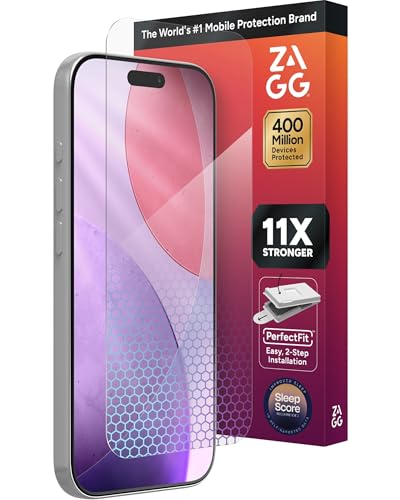 ZAGG XTR5 Screen Protector for iPhone 17 ZAGG XTR5 Screen Protector for iPhone 17 | 11X STRONGER, GRAPHENE FORTIFIED SCREEN PROTECTION - ZAGG… This iPhone 17 Pro anti-glare screen protector features… ZAGG's Anti-reflective iPhone screen protector technology improves color… | Check price |
 ZAGG Glass+ Screen Protector for Phone 15 ZAGG Glass+ Screen Protector for Phone 15 | With reinforced edges and 3X more strength than… Featuring a precision surface finishing process, the cell… CLEAN, SMUDGE-FREE SCREEN - The smudge-resistant surface treatment… | Check price |
 ZAGG Glass Elite Privacy Screen Protector for ZAGG Glass Elite Privacy Screen Protector for | ZAGG Glass Elite Privacy tempered glass protects both… Made from ultra-strong aluminosilicate glass, strengthened with ion… Our privacy screen protector for iPhone 17 Pro… | Check price |
 ZAGG Glass+ Samsung Galaxy S26 Ultra Screen ZAGG Glass+ Samsung Galaxy S26 Ultra Screen | Samsung Galaxy S26 Ultra screen protector Glass+ is… Fingerprint scanner compatible design ensures your advanced biometric… Precision surface finishing process provides maximum scratch prevention… | Check price |
As an Amazon Associate we earn from qualifying purchases at no extra cost to you.
Quick Picks
| Product | Best for | Price |
|---|---|---|
| Glass+ iPhone 17 Pro Max | Pro Max owners wanting solid protection at the lowest price in the lineup | $23.57 |
| Glass+ iPhone 17 | Standard iPhone 17 buyers | $24.91 |
| Glass+ iPhone 17 Pro | iPhone 17 Pro owners | $22.70 |
| XTR5 iPhone 17 Pro Max | Pro Max owners who want maximum impact resistance and blue-light filtering | $59.79 |
| XTR5 iPhone 17 Pro | iPhone 17 Pro owners prioritizing eye comfort and glare reduction | $53.29 |
| Glass+ iPhone 15 Pro | Owners keeping an older flagship without paying a premium | $24.99 |
| Glass Elite Privacy iPhone 17 Pro Max | Commuters and professionals who need viewing-angle restriction | $38.49 |
| Glass+ Galaxy S26 Ultra | Android users who still prefer Zagg’s PerfectFit system | $34.99 |
How We Picked
We filtered these eight options on four criteria that determine real-world satisfaction: impact rating relative to price (a three-times-stronger glass at twenty-three dollars delivers more protection per dollar than a premium option unless you genuinely need the extra layer), device-specific fit (Zagg cutters are model-exact, so cross-compatibility is essentially zero), feature necessity (blue-light filtering, privacy angles, and anti-reflective coatings add cost that only matters for certain users), and installation reliability (the PerfectFit tray earns praise from owners, but multi-step systems introduce more failure points). Price data comes directly from current listings; pros and cons reflect recurring themes in verified owner reviews.
The 8 Best Zagg Screen Protector in 2026
Glass+ iPhone 17 Pro Max
The entry-tier Glass+ line remains the default recommendation for most Pro Max owners. Owners consistently praise how the PerfectFit tray eliminates the alignment anxiety that makes first-time installers ruin cheaper protectors. The three-times-stronger tempered glass handles everyday drops without the marketing weight of the XTR5’s eleven-times claim, and the scratch-resistant coating resists key damage better than bargain alternatives.
- Pro: Lowest price point in the current lineup while still offering InvisibleShield warranty coverage.
- Pro: Smudge-resistant coating keeps the screen looking clean through daily use.
- Con: No blue-light or anti-reflective layer—fine for most, but a gap if you work outdoors.
Skip this if your phone lives in a pocket alongside keys and coins without a case; the reinforced-edge variant (available on other models) or XTR5 tier would serve better.
Glass+ iPhone 17
Same Glass+ formula as the Pro Max version, cut for the standard iPhone 17 panel. Owner feedback highlights identical installation simplicity and comparable clarity. The price sits just above the Pro Max variant, which is slightly counterintuitive for buyers comparing raw cost across the lineup.
- Pro: PerfectFit tray produces consistent, bubble-free results even on the larger flat panel.
- Pro: Full edge-to-edge coverage without interfering with the iPhone 17’s flat display bezel.
- Con: Pricing is a dollar higher than the Pro Max option despite a smaller surface area to protect.
Standard iPhone 17 owners who want a no-thought purchase will find little reason to look beyond this. Skip only if you already own a case with a built-in screen guard.
Glass+ iPhone 17 Pro
The cheapest entry in the entire Zagg Glass+ lineup at under twenty-three dollars. For iPhone 17 Pro owners, this undercuts both the XTR5 and the Privacy Glass Elite by significant margins while delivering the same core impact and scratch protection.
- Pro: Best dollar-per-drop rating across all eight products in this roundup.
- Pro: InvisibleShield warranty covers replacement if the protector itself cracks.
- Con: Lacks the blue-light and anti-reflective features that define the XTR5 tier.
Skip if you spend long hours staring at the display and want reduced glare and eye strain; the XTR5 Pro justifies its premium for that specific need.
XTR5 iPhone 17 Pro Max
The premium option for Pro Max owners who want everything stacked: eleven-times impact strength, Eyesafe CPF60 blue-light filtering, anti-reflective coating, and color-preserving clarity. This is also the most expensive screen protector on the list, and owners note the price is hard to justify unless you genuinely use those features daily.
- Pro: Anti-reflective layer meaningfully improves outdoor visibility compared to standard Glass+.
- Pro: Blue-light filtering addresses eye fatigue during extended reading or screen time without the yellow tint some competitors introduce.
- Con: At nearly sixty dollars, this costs more than twice the Glass+ equivalent—premium features must match your actual usage.
Skip this if you use your phone primarily indoors with ambient lighting; the Glass+ handles protection equally well at a fraction of the price.
XTR5 iPhone 17 Pro
Identical feature set to its Pro Max sibling, scaled to the iPhone 17 Pro display. Pricing drops below the Pro Max variant because less surface area means less material, though the absolute price still positions it firmly in premium territory.
- Pro: Touch sensitivity matches unprotected screen responsiveness, according to consistent owner reports.
- Pro: Anti-reflective and blue-light benefits are most noticeable on the Pro’s high-brightness display.
- Con: The two-step installation adds a small margin for error compared to the single-tray PerfectFit process.
If you want the XTR5 feature stack for an iPhone 17 Pro specifically, this is the only option. Skip if the Glass+ already satisfies your durability needs.
Glass+ iPhone 15 Pro
Zagg still stocks protectors for older flagships, and the iPhone 15 Pro variant is the one to choose if you’re keeping that device for another year. The reinforced-edge design addresses the specific failure point owners reported on earlier batches—corner chips spreading across the glass.
- Pro: Reinforced edges measurably improve longevity at the most vulnerable stress point.
- Pro: Same PerfectFit tray and warranty coverage as current-generation products.
- Con: Availability may thin out as Zagg shifts inventory focus toward newer models.
Skip if you’re planning an upgrade within twelve months; buying a premium protector for a phone you’ll replace is wasted money.
Glass Elite Privacy iPhone 17 Pro Max
The privacy-tier option restricts viewing angles so that only the person directly in front of the screen can read content. Commuters, travelers, and professionals handling sensitive data find this the single most practical feature Zagg offers beyond raw durability.
- Pro: ClearPrint technology resists smudges despite the privacy filter layer, maintaining readability.
- Pro: Five-times stronger than baseline glass, bridging the gap between entry-tier and XTR5 durability.
- Con: Privacy filters inherently reduce brightness and color accuracy at all angles except directly head-on.
Skip if you frequently share content with a companion or value color-accurate photo review on the go; the dimming effect is noticeable in bright environments.
Glass+ Galaxy S26 Ultra
Most Samsung owners default to case-bundled protectors or third-party glass without brand-name support. Zagg’s Galaxy-specific cut exists to close the gap for people who want the same PerfectFit experience and InvisibleShield warranty they’d get on iPhone.
- Pro: Fingerprint scanner compatibility confirmed for the S26 Ultra’s in-display reader.
- Pro: Backs a curved-edge panel without the common bubbling issues reported on cheaper alternatives.
- Con: Priced at thirty-five dollars—ten dollars above the comparable iPhone Glass+ options.
Skip if your Galaxy S26 Ultra case already covers the front adequately; the curved edge makes full-coverage protectors harder to pair with tight-fitting cases.
Buying Guide
Match the Tier to Your Actual Risk Profile
Zagg’s lineup splits into three functional tiers: Glass+ (three-times stronger, scratch and impact defense), Glass Elite Privacy (five-times stronger plus viewing-angle restriction), and XTR5 (eleven-times stronger plus blue-light and anti-reflective layers). Paying for a higher tier only helps if the feature it adds addresses a real usage pattern. If you drop your phone twice a year in a padded case, the Glass+ tier covers everything you need. The price spread between tiers is substantial enough that overbuying costs real money.
Understand What “3X Stronger” Actually Means
Zagg’s multiplier claims compare each product to its own baseline glass, not to competitors. Three-times stronger means the Glass+ resists three times the impact force that Zagg’s standard un-reinforced glass would. This is useful for internal comparison but meaningless as a cross-brand metric. Treat the tier ranking (3X, 5X, 11X) as a durability ladder within Zagg’s catalog rather than an absolute safety number.
Factor Installation Into the Total Cost of Ownership
A screen protector that installs wrong is money wasted regardless of its durability spec. Zagg’s PerfectFit tray earns the most consistent owner praise across the lineup because it physically locks alignment in a single motion. The Glass Elite Privacy and XTR5 tiers introduce a two-step process that adds complexity. If you’ve previously botched an installation on a cheaper protector, the single-tray options reduce the risk of a second failed purchase.
Our Verdict
The Glass+ iPhone 17 Pro at twenty-two dollars and seventy cents is the top pick for any iPhone 17 Pro owner who needs reliable, affordable protection without feature overhead. For budget-conscious buyers outside the Pro lineup, the Glass+ iPhone 17 Pro Max at twenty-three dollars and fifty-seven cents delivers identical performance on a larger panel. However, if you regularly work outdoors or in bright environments and want reduced glare alongside stronger impact resistance, the XTR5 iPhone 17 Pro at fifty-three dollars and twenty-nine cents justifies its premium through the anti-reflective layer and Eyesafe filtering that no other option in this lineup combines.
FAQ
Does Zagg’s warranty cover a protector that cracks?
Yes. InvisibleShield replacement coverage applies when the screen protector itself sustains damage such as cracking or delamination. You register the product at purchase, and replacement shipping is typically covered, though you pay a small handling fee on some plans.
Can I use a Zagg screen protector with a case that has raised lips?
In most cases yes, provided the protector’s edge coverage doesn’t extend beyond where the case’s lip sits. The Glass+ models generally have a small safe margin for this, but full-coverage options on curved panels like the Galaxy S26 Ultra can conflict with tight-fitting cases that press on the protector’s edge.
Is the blue-light filtering on XTR5 noticeable during normal use?
Owners consistently report that Eyesafe CPF60 does not introduce the yellow or warm tint associated with older blue-light solutions. The effect is subtle enough that display color accuracy remains high, but extended reading sessions feel less fatiguing to people who are sensitive to screen brightness.
Why is the Glass+ for iPhone 17 more expensive than for the 17 Pro Max?
List pricing for the standard 17 sits above the Pro Max, which appears counterintuitive given the smaller panel size. Zagg sets prices per SKU based on production tooling and market demand for each specific device cut, not purely on glass area. The Pro Max’s larger production volume likely benefits from economies of scale that the standard 17 does not share yet.