An electric mountain bike can replace a car commute, a weekend trail ride, and a hauling trip all in one machine, or it can collect dust in a garage because the brakes faded on a hill, the range collapsed in cold weather, or the frame flexed under a heavier rider. The difference usually comes down to a handful of decisions: motor torque delivery, suspension travel, battery chemistry and capacity, and whether the manufacturer built the frame around those components or simply bolted them on.
For this roundup we compared published specifications, current street prices, and aggregated owner feedback across the most commonly stocked electric mountain bikes for adults in 2026. The list ranges from sub-$200 commuter-leaning hardtails to a $800-plus dual-suspension fat-tire machine. What separates a good value from a money pit here is rarely one headline number; it is how the specs interact with your body weight, terrain, and intended use.
Our top picks
 Misodo Electric Bike for Adults
- Unrivaled Power: This 26 inch electric bike for…
- 7-speed Transmission & Satety: Fine-tune your ride with…
- 48V Removable Battery: The adult electric bicycle is…
 Jasion EB5 Electric Bike for Adults 26"
- 1000 W Motor & Upgraded Display: The EB5…
- Removable Large Battery: The EB5 e-bike is equipped…
- 4 Working Modes: PAS mode will assist you…
 Funhang Electric Bike for Adults
- 1000W Peak Strong Motor: Funhang electric bike features…
- 48V 13Ah Removable Battery: This fat tire electric…
- Rear Cargo Rack & Lighting System: The electric…
| Product | Key specs | |
|---|---|---|
| Misodo Electric Bike for Adults | Unrivaled Power: This 26 inch electric bike for… 7-speed Transmission & Satety: Fine-tune your ride with… 48V Removable Battery: The adult electric bicycle is… | Check price |
| Jasion EB5 Electric Bike for Adults 26" | 1000 W Motor & Upgraded Display: The EB5… Removable Large Battery: The EB5 e-bike is equipped… 4 Working Modes: PAS mode will assist you… | Check price |
| Funhang Electric Bike for Adults | 1000W Peak Strong Motor: Funhang electric bike features… 48V 13Ah Removable Battery: This fat tire electric… Rear Cargo Rack & Lighting System: The electric… | Check price |
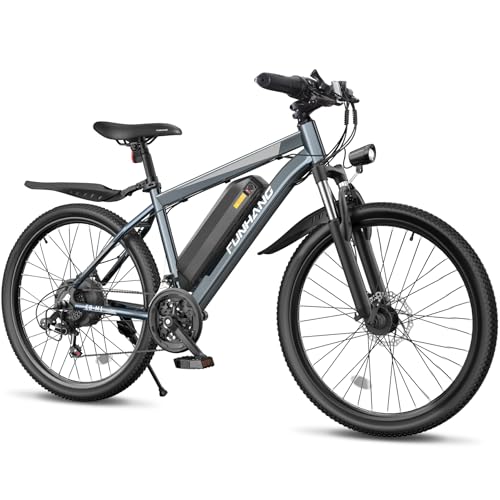 Funhang Electric Bike for Adults Funhang Electric Bike for Adults | 1000W Peak Powerful Motor: Funhang electric bike with… 48V Removable Large Battery: The EB-M1 ebike features… Safe Ebike Configuration: 26 inch electric bike for… | Check price |
 ASKGO Electric Bike for Adults ASKGO Electric Bike for Adults | Powerful 1000W Electric Bike: Ebike for Adults features… Dual Disc Brakes & 7-Speed Gearing: This e-bike… Pleasant and Customizable Fit: Ergonomically designed with a… | Check price |
 1500W Adult Electric Bike 1500W Adult Electric Bike | 【NFC/Password Unlock & Large Color LCD Display】Ditch bulky… 【Peak 2000W Brushless Motor】This e bikes for adults… 【48V 15.6Ah Removable Battery & 3A Fast Charging】48V… | Check price |
 VOLTVOGUE 1000W Peak Electric Bike for Adults VOLTVOGUE 1000W Peak Electric Bike for Adults | 𝗛𝗶𝗴𝗵-𝗣𝗲𝗿𝗳𝗼𝗿𝗺𝗮𝗻𝗰𝗲 𝟭𝟬𝟬𝟬𝗪 𝗣𝗲𝗮𝗸 𝗠𝗼𝘁𝗼𝗿: Designed for daily urban… 𝗟𝗼𝗻𝗴 𝗥𝗮𝗻𝗴𝗲 48𝗩 5.2Ah Integrated Battery: This adult… 3-𝗦𝗽𝗲𝗲𝗱 𝗗𝗿𝗶𝘃𝗲𝘁𝗿𝗮𝗶𝗻:3 - Speed Drive: Equipped with a… | Check price |
 Jasion EB5 Ultra Electric Bike for Adults Jasion EB5 Ultra Electric Bike for Adults | Built for fast acceleration and steep climbs, the… 52V 20Ah BATTERY & 70-MILE RANGE: Powered by… Built with a reinforced front fork and 160mm… | Check price |
As an Amazon Associate we earn from qualifying purchases at no extra cost to you.
Quick Picks
| Product | Best For | Price |
|---|---|---|
| Misodo Electric Bike for Adults | Long-range city and light trail riding | $309.98 |
| Jasion EB5 | Balanced 1000W entry-level trail bike | $339.99 |
| Funhang (60-Mile) | Fat-tire versatility with certified safety | $449.99 |
| Funhang (50-Mile) | Budget UL-certified commuter with fenders | $239.99 |
| ASKGO Electric Bike for Adults | High-wattage climbing on a mid-range budget | $319.99 |
| 1500W Adult Electric Bike (Fat Tire) | Snow and sand without suspension upgrades | $469.98 |
| VOLTVOGUE 1000W | Lowest-cost all-terrain entry | $179.99 |
| Jasion EB5 Ultra | Full dual-suspension, hydraulic-brake mountain riding | $799.99 |
How We Picked
We filtered candidates on four criteria. First, motor peak wattage relative to price, because wattage alone misleads without context on gearing and battery voltage. Second, published range figures, which correlate with usable daily distance before the rider commits to a charge. Third, suspension type and brake specification, since a hardtail with mechanical disc brakes on 26-inch wheels behaves very differently from a dual-suspension hydraulic setup on the same terrain. Fourth, whether the listing includes a recognized safety certification such as UL 2849, which signals that the battery and electrical system passed independent testing.
The 8 Best Electric Mountain Bikes For Adults in 2026
Misodo Electric Bike for Adults
This bike targets riders who want the longest rated range in the sub-$320 bracket without paying for fat tires or dual suspension. The 1500W peak motor paired with a 48V 10.4Ah removable battery and 7-speed drivetrain gives enough torque for moderate hills and flat suburban routes. Five riding modes let you dial in pedal-assist levels for efficiency or punch.
- Pro: 65-mile rated range is the highest figure published across this list, useful for riders with long commutes or limited charging access.
- Pro: Removable battery allows charging indoors without wheeling the entire bike inside.
- Con: Only front suspension, so rear-wheel impacts on rough trails transfer directly to the rider.
Skip this if you ride technical singletrack or carry loads over 250 pounds regularly; the 10.4Ah battery may under-deliver in those scenarios.
Jasion EB5 Electric Bike for Adults
The EB5 is a straightforward 26-inch hardtail with a 1000W peak motor. It occupies the middle ground: more power than budget commuter bikes but without the fat-tire weight penalty. Riders upgrading from a basic pedal bike who want electric assist without complexity tend to land here.
- Pro: 1000W peak motor provides confident hill-climbing assist on paved and packed-gravel grades.
- Pro: Jasion has an established aftermarket presence, making replacement parts and firmware support easier to source than for no-name brands on this list.
- Con: Published specifications are sparse compared to competitors at similar prices, so verifying battery capacity, gearing ratios, and brake type before purchase is essential.
Skip this if you need a specific battery capacity or certification confirmed in writing before ordering.
Funhang Electric Bike for Adults (60-Mile)
This Funhang variant pairs a 1000W peak motor with 26-inch fat tires, 48V 13Ah battery, 7-speed gearing, front suspension, a rear rack, and UL 2849 certification. The fat tires and rack make it the most utility-focused option here for riders who haul groceries, light camping gear, or work tools on loose or wet surfaces.
- Pro: UL 2849 certification means the electrical system passed independent safety testing, reducing battery-failure risk.
- Pro: 60-mile rated range combined with fat tires suits riders in snow, sand, or muddy trail conditions.
- Con: At $449.99 it is the most expensive front-suspension-only bike on this list, and fat tires add rolling resistance on pavement.
Skip this if your routes are primarily smooth pavement and you value efficiency over all-terrain grip.
Funhang Electric Bike for Adults (50-Mile)
Essentially the stripped-down sibling of the 60-mile model above, this version swaps fat tires for standard-width tires, drops the rear rack, and reduces rated range to 50 miles while adding fenders and retaining UL 2849 certification, 1000W peak motor, 48V removable battery, 7-speed, and front suspension.
- Pro: At $239.99 it is the second-lowest price on this list while still carrying a UL safety certification.
- Pro: Fenders and a removable battery make it a practical all-season commuter without accessory purchases.
- Con: 50-mile rating and standard tires limit it to moderate terrain and shorter trips compared to the fat-tire sibling.
Skip this if you ride off-road regularly or need fat-tire flotation for soft surfaces.
ASKGO Electric Bike for Adults
The ASKGO delivers a 1500W peak motor on a 26-inch mountain-style frame at $319.99, undercutting the Misodo while matching its wattage tier. Published details are limited, but the headline specs position it for riders who prioritize motor punch over range documentation.
- Pro: 1500W peak motor at this price point suits steep urban grades and loaded rear racks without straining a lower-wattage drivetrain.
- Pro: Mid-range pricing with high-wattage output offers favorable power-to-dollar ratio among the options listed.
- Con: Minimal published specification detail (no stated battery capacity, range, gearing, or certification) makes pre-purchase due diligence harder.
Skip this if you need documented range figures or safety certifications for workplace, apartment, or insurance requirements.
1500W Adult Electric Bike (Fat Tire)
Another 1500W peak option, this listing emphasizes fat tires and a “fast” throttle profile. At $469.98 it occupies the upper-mid price tier without the additional features (rear rack, fenders, certification) that justify the Funhang fat-tire model below it in range documentation.
- Pro: Fat tires on a 1500W platform handle snow, beach, and loose gravel with more confidence than standard-tire equivalents.
- Pro: Throttle-first design appeals to riders who want full electric propulsion without pedaling on flat stretches.
- Con: No published battery capacity, range, certification, or suspension specification; at $469.98 the ambiguity is harder to accept than at lower price points.
Skip this if spec transparency is important to you or if your routes include sustained climbing that demands verified torque curves.
VOLTVOGUE 1000W Electric Bike for Adults
The VOLTVOGUE claims up to 45 miles of range on a 1000W peak motor, 26-inch wheels, 3-speed gearing, and a removable battery, marketed toward beach, snow, and commuter use for all riders. At $179.99 it is the lowest-priced electric mountain-style bike in this comparison.
- Pro: Lowest cost of entry with a removable battery, so you can charge the pack separately from the frame.
- Pro: 3-speed simplicity reduces maintenance points for riders who want minimal mechanical complexity.
- Con: Only 3 speeds and a 1000W motor mean limited gear flexibility on varied terrain; sustained steep climbs will demand pedaling effort.
Skip this if you regularly encounter long or steep grades, or if you need more than 45 miles of realistic range between charges.
Jasion EB5 Ultra Electric Bike for Adults
The EB5 Ultra is the only dual-suspension, hydraulic-brake option on this list. Its 2500W peak motor, 52V 20Ah battery, and 26×4-inch fat tires make it the closest to a true mountain-bike platform. At $799.99 it is also the most expensive, but the component set reflects that.
- Pro: Dual suspension with hydraulic disc brakes absorbs trail impacts and provides consistent stopping power that mechanical cables cannot match under repeated use.
- Pro: 2500W peak motor and 52V 20Ah battery deliver the highest combined power and capacity figures here, suited to heavier riders and aggressive terrain.
- Con: The $799.99 price is more than triple the VOLTVOGUE, and the extra capability is wasted on flat suburban commuting.
Skip this if your riding is primarily paved paths or short errands; a cheaper hardtail will serve you equally well.
Buying Guide
Motor Peak Wattage Is Not the Whole Story
A 1500W peak motor on a 48V system with 7-speed gearing behaves differently from the same wattage on a 3-speed setup. Gearing multiplies torque to the wheel; more speeds let you match motor RPM to terrain. If you ride hills, prioritize gear range (7-speed or more) alongside wattage. If you ride flat paths, a lower gear count is acceptable because the motor will operate near its efficient RPM regardless.
Battery Voltage and Amp-Hours Determine Usable Range
Multiply voltage by amp-hours to get watt-hours: a 48V 10.4Ah pack stores roughly 500Wh, while a 52V 20Ah pack stores over 1000Wh. Doubling stored energy does not double range because motor draw varies with weight, terrain, wind, and assist level. Use the published range figure as a best-case ceiling and mentally subtract 25-30% for real-world cold weather, hills, and heavier loads.
UL 2849 Certification Matters for Insurance and Housing
Some apartment complexes, municipal transit agencies, and homeowner’s insurance policies require or prefer UL 2849 certification on electric bicycles. Two Funhang models on this list carry that mark. If you park the bike indoors, charge overnight unattended, or need documentation for a claims policy, certification is a practical requirement that justifies paying slightly more over an uncertified equivalent.
Our Verdict
The Jasion EB5 Ultra is the clear top pick for riders who genuinely need dual suspension, hydraulic brakes, and high-capacity battery on rough terrain. For budget-conscious buyers who still want a certified, removable-battery, all-season commuter, the $239.99 Funhang (50-Mile) is the standout value, offering UL 2849 testing at a price near the VOLTVOGUE but with 7-speed gearing and fenders. If your priority is maximum published range per dollar and your routes are light trail or suburban mixed-surface, the Misodo at $309.98 delivers the 65-mile figure that no other option matches below $400.
FAQ
Do I need a license to ride an electric mountain bike on public trails?
Regulations vary by municipality and land manager, but most U.S. states classify pedal-assist e-bikes up to 750W continuous as bicycles, meaning no license is required on roads. Peak wattage above 750W or a throttle-only mode may push the bike into a moped or scooter category where registration applies. Check your local trail and road rules before riding off your private property.
How long does a removable battery last before replacement?
Lithium-ion e-bike packs typically retain 70-80% of rated capacity after 300-500 full charge cycles, which translates to roughly two to four years of daily commuting. Removable packs are easier to replace than integrated batteries, and third-party options exist for common 48V form factors, though compatibility and warranty terms vary.
Is 1000W enough for hills, or do I need 1500W or more?
For paved grades up to about 8-10%, a 1000W peak motor with 7-speed gearing handles climbing comfortably for riders under 200 pounds. Steeper unpaved switchbacks, sustained gravel climbs above 12%, or rider-plus-cargo weights exceeding 250 pounds benefit from 1500W or 2500W motors and lower gear ratios.
Should I buy a fat-tire model if I mostly ride pavement?
Fat tires add weight and rolling resistance that reduce range on smooth surfaces by 15-20% compared to the same battery on standard-width tires. If your routes are 90%+ pavement, a standard-tire model with fenders gives you longer range and easier acceleration. Reserve fat tires for riders who encounter snow, sand, or loose gravel regularly.