A usb cable is one of those items people buy without thinking, then curse when the plastic sheath splits after three weeks or when a phone refuses to charge past eighty percent. The problem is real: connectors that wobble in the port, internal wiring too thin to carry the current your device expects, and data rates so low that transferring a hundred photos takes longer than the vacation that produced them.
What separates a good cable from a bad one is narrower than most buyers realize. Connector type determines compatibility. Wattage rating determines whether fast charging actually engages. Data-transfer speed determines whether the same cable can move files or only juice. Build quality determines whether you replace it quarterly or annually. This roundup compares eight options across published specs, listed prices, and owner feedback so you can match a cable to your actual use case instead of guessing.
Our top picks
 Anker USB A to USB C Cable
- The Anker Advantage: Join the 50 million+ powered…
- Enhanced Durability: Improved construction techniques and materials make…
- Universal Compatibility: Designed to work flawlessly with any…
 AINOPE USB to USB Cable
- 6.6ft Freedom
- Never Rupture & Nylon Braided
- 5Gbps Data Transfer Speed
 Amazon Basics USB 2.0 Cable
- (1) 6-foot high-speed multi-shielded USB 2.0 A-Male to…
- Connects mice, keyboards, and speed-critical devices, such as…
- Full 2.0 USB capability with 480 Mbps transfer…
| Product | Key specs | |
|---|---|---|
| Anker USB A to USB C Cable | The Anker Advantage: Join the 50 million+ powered… Enhanced Durability: Improved construction techniques and materials make… Universal Compatibility: Designed to work flawlessly with any… | Check price |
| AINOPE USB to USB Cable | 6.6ft Freedom Never Rupture & Nylon Braided 5Gbps Data Transfer Speed | Check price |
| Amazon Basics USB 2.0 Cable | (1) 6-foot high-speed multi-shielded USB 2.0 A-Male to… Connects mice, keyboards, and speed-critical devices, such as… Full 2.0 USB capability with 480 Mbps transfer… | Check price |
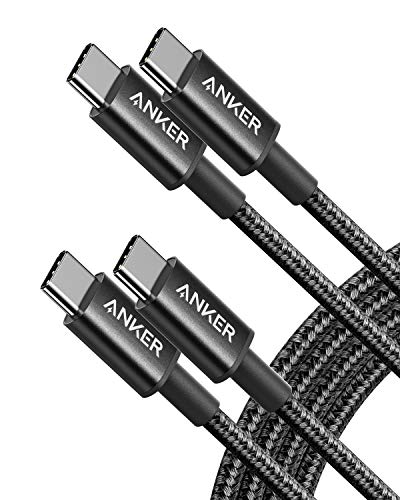 Anker USB C to USB C Cable Anker USB C to USB C Cable | Durable Design: Reinforced nylon exterior and a robust… Fast Charging: Supports Power Delivery for up to… Versatile Compatibility: Works with virtually all USB-C devices,… | Check price |
 USB C Cable Fast Charging Nylon Braided USB C Cable Fast Charging Nylon Braided | Type c Charger Fast Charging and Sync: 3A… International Safe Certified: This USB-C cable has electronic… Enhanced Durability: Strong fiber, the most flexible, powerful… | Check price |
 Superer Micro USB Charger Cable Fit for Superer Micro USB Charger Cable Fit for | Fit for PS4 controller, DualShock 4, PS4 Slim/Pro,… Fit for Roku Streaming Stick 3500X, 3600X, 3800X,… Compatibility notice!! This Micro-USB cable is not compatible… | Check price |
 USB C Cable 5 Pack 6FT USB C Cable 5 Pack 6FT | 5 Pack 6FT Charging Cords: Includes five 6-foot… 3A Fast Charging and Sync: Supports up to… Braided for Daily Use: Nylon braided material helps… | Check price |
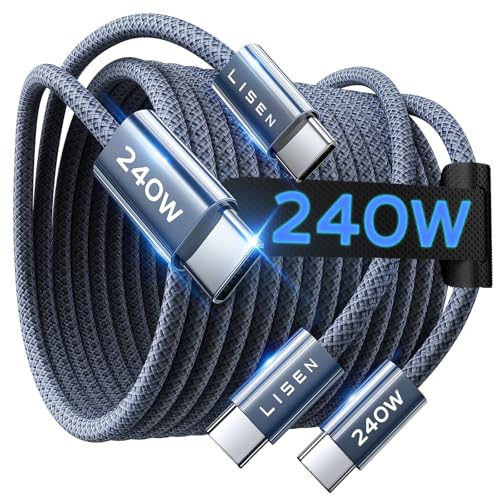 LISEN USB C to USB C Cable LISEN USB C to USB C Cable | Check price |
As an Amazon Associate we earn from qualifying purchases at no extra cost to you.
Quick Picks
| Product | Best for | Price |
|---|---|---|
| Anker USB A to USB C (2-Pack, 3ft) | Everyday desk charging | $8.99 |
| AINOPE USB 3.0 A to A (6.6FT) | Peripheral-to-peripheral data transfer | $6.60 |
| Amazon Basics USB-A to USB-B (6ft) | Printers and legacy hard drives | $5.12 |
| Anker USB C to USB C (2-Pack, 6ft) | Laptop and phone fast charging | $9.99 |
| Nylon Braided USB A to C (3-Pack, 6ft) | Bulk replacement at the lowest unit cost | $7.98 |
| Superer Micro USB Charger Cable | Older Androids, controllers, e-readers | $6.98 |
| USB C Cable 5 Pack (6FT) | Households with many devices | $8.97 |
| LISEN USB C to USB C (240W, 6.6FT) | High-wattage laptop charging | $8.97 |
How We Picked
We weighted four criteria: connector compatibility with common 2026 devices, rated charging wattage versus what modern phones and laptops actually negotiate, data-transfer speed where the spec sheet lists it, and durability signals pulled from long-term owner comments such as fraying connectors or intermittent charging. A cable that checks every box on paper but shows a pattern of early failure in user reports was penalized accordingly.
The 8 Best Usb Cable in 2026
Anker USB A to USB C Cable (2-Pack, 3ft)
This short pack suits anyone who charges a phone overnight from a bedside USB-A port or tops up a controller at a desk. Two cables in the box means you can leave one at each station. The three-foot length keeps cords off the floor without tangling, and Anker’s reputation for consistent conductor gauging means most owners report reliable full-speed charging. The main drawback is obvious: three feet will not reach a wall outlet across a room, so you need a USB-A adapter if your charger only has USB-C. Skip it if you require a longer reach or USB-C-to-C compatibility with newer laptops.
AINOPE USB 3.0 A to A Male to Male Cable (6.6FT)
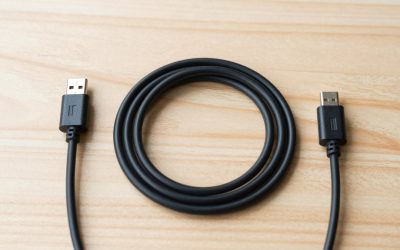
A niche but genuinely useful option for connecting two USB-A hosts or a peripheral that ends in a USB-A male plug — think external hard drives with A-to-A native ports, KVM switches, or laptop cooling pads. The stated five-gigabit transfer speed makes it one of the faster data cables in this group, and the six-and-a-half-foot length gives flexible routing. Owners praise the snug connector fit that resists accidental unplugging. The limitation: this is not a charging cable for phones or tablets, and many modern devices have dropped USB-A male ports entirely. Skip it if your primary need is power delivery to mobile devices.
Amazon Basics USB 2.0 Cable, USB-A to USB-B (6ft)
The workhorse for anyone who still owns a printer, scanner, or external hard drive with a USB-B port. Gold-plated connectors resist oxidation over years of use, and the six-foot run comfortably reaches from a desktop tower to a printer on a side table. At the lowest price in this roundup, the value proposition is hard to argue with. Data speed caps at 480 Mbps, which is irrelevant for a printer but would bottleneck a large file transfer to an external drive. Skip it if all your peripherals use USB-A or USB-C connectors instead of USB-B.
Anker USB C to USB C Cable, 60W (2-Pack, 6ft)
For the majority of people with a USB-C laptop, a USB-C phone, and a USB-C charger brick, this is the cable to buy. Sixty watts covers virtually every smartphone and most ultrabooks without thermal throttling. Two cables at six feet means one for the office bag and one for the nightstand. Anker’s internal wiring is thick enough to maintain full negotiation speeds over the longer run, something cheaper cables lose past four feet. The trade-off is that sixty watts will not feed a power-hungry sixteen-inch laptop running at full brightness under load. Skip it if your charger exceeds 60W output.
USB C Cable Fast Charging Nylon Braided 3-Pack (6ft)
Three braided USB-A-to-C cables at under eight dollars means each unit costs roughly what a single unbranded cable sells for. The nylon sheath is the selling point: owners consistently report these survive pocket and backpack abrasion far longer than rubber-jacketed alternatives. Six feet provides desk-to-outlet flexibility. The uncertainty is that the listing does not specify a wattage rating or data speed, so charging performance varies with the adapter on the other end. Skip it if you need a guaranteed wattage level for a laptop or if your charger and phone both use USB-C on the cable side.
Superer Micro USB Charger Cable
Micro USB is not dead yet. PS4 controllers, older Kindle Paperwhites, many Fire TV remotes, Roku sticks, and budget Android phones still use the trapezoidal port. This cable fits that long tail of devices with a fast-charge and data-sync combination. Owners appreciate the compatibility breadth without paying a premium for a brand label. The shape means it can only insert one way, and micro-USB connectors fatigue faster than USB-C in daily use. Skip it if every device you own has already moved to USB-C, because there is no reason to keep this cable in your drawer.
USB C Cable 5 Pack, USB A to Type C (6FT)
Five cables for the price of a single name-brand cord is the clearest bulk value in this list. The six-foot length suits family households where multiple phones, tablets, and power banks need simultaneous charging from USB-A ports in cars, nightstands, and kitchen counters. Owners who buy these report they are good enough for overnight trickle charges and car commuting. The catch is consistency: with five cables in a pack, at least one may feel tighter or looser in its connector than the others. Skip it if you want a single cable you trust for critical work charging.
LISEN USB C to USB C Cable, 240W (6.6FT)
The only cable here rated for 240 watts, which means it can deliver full power to the most demanding USB-C laptops, handheld consoles, and multi-port GaN chargers without negotiation throttling. Six and a half feet keeps it practical on a crowded desk. Owners note the cable remains flexible despite the heavy-duty internal conductors needed for that wattage. The downside is price-per-watt efficiency if you only charge phones: paying for 240W capacity you will never use is wasted money, and the thicker gauge makes it slightly stiffer than a sixty-watt cable. Skip it if your devices never draw more than sixty watts.
Buying Guide
Match the Connector to Your Devices
USB-C has become the default on phones, laptops, and tablets, but printers, older drives, and many controllers still rely on USB-A or USB-B. A usb cable only works if both ends plug into the hardware you actually own, so inventory your ports before purchasing. Buying the wrong connector shape is the single most common reason cables go unused in a junk drawer.
Check the Wattage Rating Before Charging
Not all USB-C cables carry the same power. Standard cables handle sixty watts; extended-capability cables push to 100, 140, or 240 watts. If your laptop charger outputs more than sixty watts and your cable is rated below that number, the phone or computer will negotiate down and charge slowly. Look for an explicit wattage figure on the listing rather than trusting a generic “fast charging” claim.
Prioritize Data Speed for File Transfers
A cable can charge at full speed yet transfer data at only 480 Mbps if it uses USB 2.0 wiring internally. If you regularly move large files between a phone and a computer or connect an external SSD, confirm the cable states USB 3.0 or higher with a specific gigabit-per-second figure. Charging cables often omit this spec because the manufacturer expects single-use power applications.
Our Verdict
The top pick is the Anker USB C to USB C 60W two-pack: it covers the widest range of current phones and laptops, the length is practical, and the brand’s consistency minimizes dead-on-arrival complaints. The budget pick is the USB C Cable 5 Pack at under nine dollars total, because no other option in this list comes close on per-cable cost. One condition under which another product wins: if your laptop or handheld demands more than 60W through USB-C, the LISEN 240W cable becomes the mandatory choice, and no other cable in this roundup will keep up.
FAQ
Can I use a USB-A to USB-C cable to fast-charge a USB-C phone?
Yes, provided the USB-A adapter or car charger you plug into supports fast charging protocols like Qualcomm Quick Charge. The cable itself can only pass whatever power the source delivers, so a standard five-watt USB-A port will produce slow charging regardless of cable quality.
Does cable length affect charging speed?
Over modest distances like three to six feet, the effect is negligible for phones. Over ten feet or more, thinner wires can introduce enough voltage drop that a device negotiates lower current. Choosing a cable with a generous wire gauge reduces this risk, which is why premium six-foot cables often feel noticeably thicker than generic ones.
Why do some USB-C cables not transfer data?
Some manufacturers build charge-only cables by omitting the data lines inside the connector. These work perfectly for powering a device but do nothing for file transfers. If a listing mentions only wattage and says nothing about transfer speed, assume it is charge-only.
Is a braided nylon cable actually more durable than rubber?
In most owner reports, yes, particularly for abrasion resistance against keys, zippers, and repeated coiling. Braided sheaths resist fraying at the stress points near the connector where rubber jackets fail first. However, braid does not protect against internal conductor fatigue from sharp bending at tight angles.