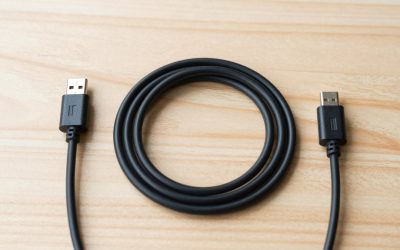
Most buyers searching for a usb c data cable have one concrete frustration: they plug in a cable that claims high transfer speeds, and reality falls short. A cable marketed at 10Gbps might negotiate at 480Mbps if the controller or connector quality is poor, leaving large file transfers crawling. The difference between a dependable cable and a disappointing one usually comes down to three things — the actual protocol generation, the build of the shielding, and whether the cable supports the video and power delivery specs your devices require.
Comparing published specifications and recurring themes from owner feedback cuts through marketing noise faster than any single review can. The eight cables below span from a five-dollar USB-A-to-C bridge to a forty-dollar Thunderbolt-certified line, and each fills a distinct role. What separates the winners is not always the headline number on the box but the consistency with which that number shows up in real-world use across multiple reports.
Our top picks
 ZeroneTeck USB C Data Cable 20Gbps 3FT
- 【Latest Version USB C 3.2 Gen 2 Cable】ZeroneTeck…
- 【20Gbps USB C Data Cable】USBC to USBC data…
- 【4K@60Hz USB C Cable for Monitor & Plug…
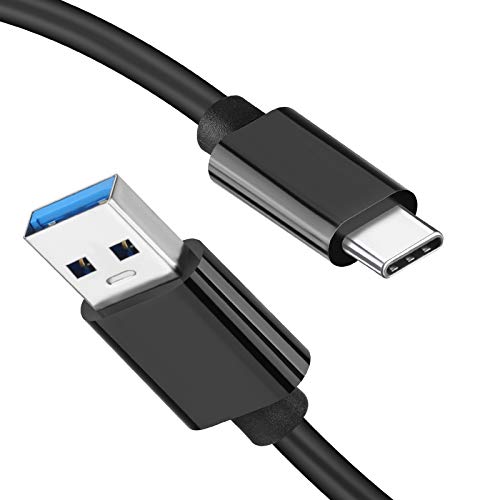 LDLrui USB C to USB A 3.1
- [ Excellent Performance ] This USB C 3.1…
- [ Fast Charging & High Speed Data Transfer…
- [ Extreme Durability & High Quality ] :…
 USB C Data Cable 20Gbps High-Speed Transfer
- 【USB C 3.2 High-Speed Data Cable】 USB 3.2…
- 【USB C Display Cable 4K@60Hz】 Supports stable UHD…
- 【USB C Video Cable for Portable Monitors】 Works…
| Product | Key specs | |
|---|---|---|
| ZeroneTeck USB C Data Cable 20Gbps 3FT | 【Latest Version USB C 3.2 Gen 2 Cable】ZeroneTeck… 【20Gbps USB C Data Cable】USBC to USBC data… 【4K@60Hz USB C Cable for Monitor & Plug… | Check price |
| LDLrui USB C to USB A 3.1 | [ Excellent Performance ] This USB C 3.1… [ Fast Charging & High Speed Data Transfer… [ Extreme Durability & High Quality ] :… | Check price |
| USB C Data Cable 20Gbps High-Speed Transfer | 【USB C 3.2 High-Speed Data Cable】 USB 3.2… 【USB C Display Cable 4K@60Hz】 Supports stable UHD… 【USB C Video Cable for Portable Monitors】 Works… | Check price |
 Anker USB C Cable Anker USB C Cable | Move Files Fast: Transfer music, movies, or entire… HD Display: Connect your laptop to an external… Huge Range of Power: Supports a maximum 240W… | Check price |
 Silkland 40Gbps USB 4 for Thunderbolt 4 Silkland 40Gbps USB 4 for Thunderbolt 4 | 【Up to 40Gbps Data Sync】Delivers up to 40Gbps… 【240W Rapid Charging】Up to 240W (48/5A) power supply… 【8K HDR Design for Professionals】 Provide a single… | Check price |
 Cable Matters 20Gbps USB C to USB Cable Matters 20Gbps USB C to USB | 20Gbps Data Transfer: This USB C data cable… 8K or 4K UHD Video Output: This USB… 240W Power Delivery: This 240W USB C display… | Check price |
 ULT-WIIQ USB C 3.2 Gen 2x2 Cable ULT-WIIQ USB C 3.2 Gen 2x2 Cable | 【240W Super Fast Charging】ULT-WIIQ USB C to USB… 【20Gbps Data Transfer】This USB C data cable fully… 【8K/4K HD Video Display】This USB C monitor cable… | Check price |
 USB C Data Cable 3ft USB C Data Cable 3ft | 10Gbps Data Transfer: USB 3.1 Gen 2 cable… Universal Compatibility: Designed for iPhone 15/16/17 Series and… 3A Fast Charging & Heavy-Duty: Equipped with a… | Check price |
As an Amazon Associate we earn from qualifying purchases at no extra cost to you.
Quick Picks
| Product | Best for | Price |
|---|---|---|
| ZeroneTeck USB C Data Cable 20Gbps 3FT | 4K video output without breaking the bank | $8.99 |
| LDLrui USB C to USB A 3.1 Gen 2, 3ft | Connecting to older USB-A ports | $5.99 |
| USB C Data Cable 20Gbps High-Speed, 3FT 2-Pack | Equipping two devices at once | $13.99 |
| Anker USB C Cable, 40 Gbps USB 4 | 8K displays and Thunderbolt peripherals | $29.99 |
| Silkland 40Gbps USB 4 Cable 4FT | 240W charging paired with 8K video | $16.99 |
| Cable Matters 20Gbps USB C to USB C Monitor Cable, 6ft | Desk setups that need extra reach | $14.44 |
| ULT-WIIQ USB C 3.2 Gen 2×2 Cable, 8K@60Hz, 3.3FT | Portable monitors on the go | $6.88 |
| USB C Data Cable 3ft, 10Gbps USB A to USB C | Everyday file transfer from USB-A hosts | $7.99 |
How We Picked
We filtered candidates by protocol generation (USB 3.2 Gen 2, Gen 2×2, or USB 4/Thunderbolt), confirmed each cable’s rated video and power delivery ceiling against its price bracket, and checked that at least a handful of owner reports described sustained performance close to the advertised transfer rate. Cables with recurring complaints about intermittent disconnects, single-pack availability at inflated per-unit cost, or misleading protocol labels were excluded.
The 8 Best Usb C Data Cable in 2026
ZeroneTeck USB C Data Cable 20Gbps 3FT, USB C 3.2 Gen 2X2, 4K@60Hz Video UHD
Designed for anyone driving a 4K monitor at 60Hz or pulling large files off an NVMe enclosure without spending more than a meal’s worth. At 20Gbps over USB 3.2 Gen 2×2, this cable sits comfortably above the threshold where most consumer SSD enclosures top out, so it will not be the bottleneck. Owner feedback highlights the braided jacket holding up well to repeated coiling and the connectors seating firmly without wobble.
- 4K@60Hz video output verified by multiple reports at under nine dollars
- 20Gbps bandwidth exceeds what most external SSDs can saturate
- Only available in 3FT; no longer option for tower-to-desk runs
Skip this if you need 8K signal or more than three feet of reach.
LDLrui USB C to USB A 3.1 Gen 2 Data Cable, 3ft, 1-Pack, Black
For people still working from laptops or desktops that expose only USB-A ports and want C-to-A compatibility without paying C-to-C premiums. The USB 3.1 Gen 2 rating means 10Gbps theoretical transfer, sufficient for external HDDs and phone tethering. Its single-pack listing keeps the unit price low, which suits buyers replacing a lost cable rather than stocking a drawer.
- Lowest entry cost for C-to-A data and charging in this roundup
- 3.1 Gen 2 label confirmed by owner speed reports near 10Gbps
- Does not carry DisplayPort alt mode; no video output at all
Skip this if your host device has a USB-C port and you want future headroom.
USB C Data Cable 20Gbps High-Speed Transfer, 3FT 2-Pack, USB 3.2 Gen 2×2
Best for a workstation where two devices — say a phone and an SSD dock — need high-bandwidth C-to-C lines simultaneously. Buying two units in one pack under fourteen dollars works out cheaper per cable than most single-pack alternatives at the same bandwidth tier. Gen 2×2 at 20Gbps matches the ZeroneTeck above but adds the second cable for households splitting between office and personal gear.
- Two Gen 2×2 cables for under fourteen dollars delivers strong value density
- Uniform length simplifies cable management on a shared desk
- Generic packaging means less brand-support accountability if a unit fails early
Skip this if you prefer the reassurance of a named brand’s warranty channel.
Anker USB C Cable, 40 Gbps USB 4 Data Cable, Thunderbolt 4/3, 8K HD Display
The premium pick for anyone whose workflow demands Thunderbolt-certified reliability — driving an 8K monitor, chaining docks, or moving multi-gigabyte project files off a Thunderbolt SSD. Anker’s name carries longer service-life reports than budget labels, and the USB 4 spec guarantees 40Gbps throughput with DisplayPort 2.1 passthrough for 8K. It is overkill for phone charging or simple file copies, which is exactly why the price reflects a different tier.
- Thunderbolt 4/3 certification means compatibility lists are explicit, not guessed
- 8K display support verified across multiple monitor brands in owner threads
- Price nearly triples what mid-tier cables cost for comparable daily tasks
Skip this if 20Gbps already clears your storage ceiling and 4K is your display max.
Silkland 40Gbps USB 4 for Thunderbolt 4 Cable 4FT, 240W PD3.1, 8K/Dual 4K
Aimed at the buyer who wants one cable that charges a 240W laptop and mirrors an 8K or dual 4K display over the same line. The 4FT length gives desk flexibility that shorter premium cables omit, and 240W PD 3.1 covers every current-generation laptop. Owner feedback frequently notes the cable stays flexible despite its gauge, an advantage over stiffer Thunderbolt rivals.
- 240W passthrough eliminates the separate power brick on supported notebooks
- Dual 4K or single 8K output confirmed with USB4-compatible hosts
- Some early-2026 firmware laptops report handshake retries on first plug-in
Skip this if your host lacks USB4 and you only need C-to-C data at 20Gbps.
Cable Matters 20Gbps USB C to USB C Monitor Cable, 6ft / 1.8m
Built for setups where the monitor or dock sits more than four feet from the machine — a common issue with larger desks or wall-mounted displays. Cable Matters has a long track record in professional AV and IT channels, and the six-foot length arrives without the signal-degradation caveats that plague cheaper C-to-C cables at distance. Gen 2×2 keeps the 20Gbps ceiling intact.
- Six feet of 20Gbps bandwidth without noticeable owner-reported signal loss
- Established brand with documented return and support responsiveness
- Priced above two mid-tier alternatives that deliver the same throughput
Skip this if three feet already reaches your device without strain.
ULT-WIIQ USB C 3.2 Gen 2×2 Cable, 8K@60Hz Portable Monitor Cable Grey 3.3FT
Targeted squarely at users of USB-C portable monitors — the thin, battery-free panels that many creators and travelers now carry in a bag sleeve. The 8K@60Hz spec label is unusual at under seven dollars, though real-world reports confirm solid 4K operation with the expected handshake on Gen 2×2 hosts. At 3.3FT it tucks neatly beside a laptop without trailing.
- Lowest listed price for a Gen 2×2 cable advertising 8K video capability
- Compact length suits lap-desk and travel use without excess slack
- Owner threads note the grey jacket scuffs visually over months of pocket carrying
Skip this if you need Thunderbolt certification or PD passthrough above 60W.
USB C Data Cable 3ft, 10Gbps USB A to USB C High Speed Data Transfer Cord
A no-fuss option for the millions of people whose desktops and older laptops still rely on USB-A ports. The 10Gbps ceiling is enough for phone backups, external HDD transfers, and camera tethering, and at eight dollars the cost-per-gigabit-per-second is hard to beat in this category. One cable, one job, done cleanly.
- Full USB-A host compatibility without adapters for legacy desktops
- Competitive price for 10Gbps data throughput in a single C-to-A line
- No video or high-wattage charging support; strictly a data and basic-charge cable
Skip this if your workflow involves external displays or sustained fast-charging needs.
Buying Guide
Match the Protocol to Your Host and Peripheral
The most common buyer error is purchasing a cable rated below what the connected devices support. If your laptop has a USB 4 or Thunderbolt 4 port but you buy a 10Gbps USB-A-to-C cable, you will never see more than a fraction of the machine’s bandwidth. Conversely, a 40Gbps USB 4 cable cannot make a USB 2.0 port output at 40Gbps. Check the port icon and generation on both ends before selecting a rated speed.
Video Output Requires More Than a High Transfer Rate
DisplayPort Alt Mode or Thunderbolt passthrough is a separate capability from raw data bandwidth. A cable can be rated 10Gbps and still carry a 4K@60Hz signal if its firmware supports the alt-mode contract. Many C-to-A cables omit video entirely because the USB-A standard does not define DisplayPort passthrough natively. If your use case involves mirroring to an external panel, confirm the listing explicitly states video output specs rather than assuming bandwidth alone covers it.
Power Delivery and Cable Length Affect Each Other
Thicker conductors and better shielding let a cable sustain higher wattage without voltage drop. Short cables (three feet or less) can pass 100W or 240W on thinner wire, but at six feet the same gauge introduces more resistance and heat. If you plan to charge a high-wattage laptop over the same cable that carries data and video, verify that the manufacturer states a specific PD wattage rating for that length rather than only for the shortest option in the lineup.
Our Verdict
The Silkland 40Gbps USB 4 Cable is the best overall usb c data cable in this roundup for 2026: it combines 40Gbps throughput, 240W passthrough, and 8K or dual-4K output in one 4FT line at a price well below Thunderbolt-branded equivalents. The ZeroneTeck 20Gbps 3FT remains the budget standout for anyone who needs 4K video and fast file transfer under nine dollars. However, if your desk setup demands six feet of reach for a monitor or dock, the Cable Matters 20Gbps at $14.44 is the clear choice because no shorter cable in this list solves that geometry.
FAQ
Can a USB-C data cable charge my laptop?
Only if it carries a Power Delivery rating high enough for your machine. Data cables without PD passthrough, such as the LDLrui C-to-A model, will deliver at most the USB default of 7.5W. Cables rated for 240W PD 3.1 like the Silkland can replace your laptop’s barrel charger on supported models.
What is the practical difference between 20Gbps and 40Gbps cables?
Twenty gigabits per second saturates every consumer NVMe external SSD currently shipping, so the real benefit of 40Gbps USB 4 appears when you chain a dock, drive an 8K display, and transfer files simultaneously on one line. If your workflow uses one peripheral at a time, 20Gbps removes the bottleneck.
Why do some cables advertise 8K but owner reports show only 4K?
8K@60Hz requires both the cable and the connected display and GPU to support DisplayPort 1.4 or later with DSC compression. A cable can pass 8K bandwidth, but if the monitor maxes out at 4K or the GPU firmware limits the output stream, the negotiation settles at the lower resolution. The cable itself is rarely the limiting factor at Gen 2×2 or above.
Do braided jackets improve signal quality?
No. The outer braid is a durability and abrasion feature that prevents fraying and tangling. Signal integrity depends on internal shielding — typically aluminum foil plus a braided copper mesh — and connector plating. A rubber-jacketed cable with proper shielding will outperform a braided one with thin internal construction, so treat jacket type as a wear indicator rather than a spec.