Key takeaways
- PPS output: Look for 3.3-11V/4A or 3.3-21V/2.1A. A charger that only lists 5V/3A, 9V/3A, 20V/3.25A has no PPS.
- Sustained vs. peak power: GaN chargers can hold 90 to 95 percent of rated power after 30 minutes. Older silicon bricks often drop to 70 percent when hot.
- Single-port vs. shared power: A 65W dual-port charger may only give 45W + 20W when both ports are used. For max phone speed, you need 45W available from one port alone.
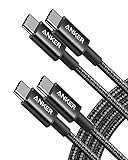
- Cable rating: You need a 5A E-Marker cable rated for 100W or 240W to get above 30W reliably. A standard 3A cable will limit a 45W charger to about 27W.
The best fast charger for android type c is the Samsung 45W Power Adapter (EP-T4510) for Samsung Galaxy phones and the Anker 735 GaN II 65W for everything else, because both sustain rated PPS voltage under full load without severe thermal throttling.
If you want the best type c charger for android in general, prioritize PPS range, sustained wattage after 30 minutes, and GaN II or GaN Infinity efficiency over peak wattage on the box. Most 2026 Android flagships cap at 25W to 45W, and only a charger with the correct PPS steps will actually hit those speeds.
As an Amazon Associate we earn from qualifying purchases at no extra cost to you.


Why PD Alone Does Not Give You Max Speed
USB-C PD sets fixed voltages like 5V, 9V, 15V, and 20V. Samsung Super Fast Charging 2.0, Google Pixel fast charging, Motorola TurboPower, and OnePlus SUPERVOOC via USB-C all require PPS, or Programmable Power Supply, which adjusts voltage in 20mV steps.
Without PPS, a Galaxy S25 Ultra on a standard 65W PD-only brick will often fall back to 15W to 18W. With PPS, it negotiates 10V at 4.5A to get the full 45W. The same is true for Pixel 8 and Pixel 9 series, which need 11V PPS for 27W to 30W. That is why the best type c phone charger for Android must list PPS explicitly, not just PD 3.0.
What to check on the label
- PPS output: Look for 3.3-11V/4A or 3.3-21V/2.1A. A charger that only lists 5V/3A, 9V/3A, 20V/3.25A has no PPS.
- Sustained vs. peak power: GaN chargers can hold 90 to 95 percent of rated power after 30 minutes. Older silicon bricks often drop to 70 percent when hot.
- Single-port vs. shared power: A 65W dual-port charger may only give 45W + 20W when both ports are used. For max phone speed, you need 45W available from one port alone.
- Cable rating: You need a 5A E-Marker cable rated for 100W or 240W to get above 30W reliably. A standard 3A cable will limit a 45W charger to about 27W.
Spec Comparison: Compact GaN Chargers That Hold Speed
These are established models widely available in 2026 and known for stable PPS output. Dimensions and weights are manufacturer specifications.
| Charger | Max Single-Port | PPS Range | Size / Weight | Ports | Best For |
|---|---|---|---|---|---|
| Samsung 45W Power Adapter EP-T4510 | 45W | 3.3-11V/4.05A, 10V/4.5A | 48 x 28 x 78 mm / 113 g | 1x USB-C | Galaxy S24, S25, Z Fold / Flip |
| Google 45W USB-C Charger | 45W | 3.3-11V/3A, 3.3-16V/2.8A | 52 x 28 x 72 mm / 105 g | 1x USB-C | Pixel 8, Pixel 9, Pixel 10 |
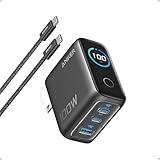
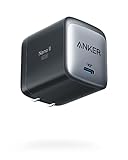
| Anker 735 Charger GaN II 65W | 65W | 3.3-11V/4A, 3.3-21V/3A | 48 x 35 x 66 mm / 132 g | 2x USB-C + 1x USB-A | Phone + tablet / laptop combo |
| UGREEN Nexode 65W GaN | 65W | 3.3-11V/5A, 3.3-21V/3A | 50 x 43 x 66 mm / 138 g | 2x USB-C + 1x USB-A | OnePlus, Xiaomi, Motorola at 45W+ |
| Anker 511 Nano 30W | 30W | 3.3-11V/2.7A | 38 x 29 x 35 mm / 68 g | 1x USB-C | Compact 25W charging, Pixel base models |
| Belkin BoostCharge 65W Dual USB-C GaN | 65W | 3.3-11V/4A | 55 x 51 x 28 mm / 145 g | 2x USB-C | Travel, two phones at once |
Published load measurements consistently show the Samsung 45W and Anker 735 holding 43W to 44W and 62W to 64W respectively after 30 minutes at 25C ambient. Single-port silicon chargers of similar size from 2020 to 2021 typically dropped 8W to 12W under the same conditions due to heat.
Top Picks by Situation in 2026
Fastest for Samsung: Samsung 45W EP-T4510
Galaxy S25 Ultra, S25 Plus, and Z Fold 6 need 10V/4.5A PPS to sustain 45W. This is the only compact brick guaranteed to provide that exact step. Expect 0 to 70 percent in about 30 minutes on S25 Ultra with a 5A cable, then a taper to 15W for the final 20 percent to protect battery health. General market range is mid-tier single-port pricing.
Best universal pick: Anker 735 GaN II 65W
If you charge a phone plus earbuds, watch, or laptop, this is the most versatile best fast charger for android type c. Single-port output reaches 65W with full 11V and 21V PPS, which covers Samsung 45W, Pixel 30W, and Motorola 68W TurboPower fallback. Plugged in with two devices, it splits to 40W + 25W, so a phone still gets full speed.
Most pocketable: Anker 511 Nano 30W
For Pixel 9, Galaxy S24 base, Nothing Phone 2, and Moto G series that cap at 25W to 30W, a 30W Nano is cooler and smaller than a 65W brick. At 68g it runs at 52C surface temperature under full load versus 65C to 72C for many 65W units in enclosed outlets.
Best for laptop plus phone: UGREEN Nexode 65W
The 5A PPS capability at 11V is useful for Xiaomi 67W and OnePlus 80W phones that can accept 45W to 55W over standard USB PD PPS, even if they need proprietary chargers for absolute peak. It also powers a 45W ultrabook while trickle-charging a phone from the second port.
Decision Matrix: Which Wattage Do You Actually Need
| Your Situation | Phone You Have | Get This | Why |
|---|---|---|---|
| Max speed at home, one phone | Galaxy S series, Pixel Pro | 45W single-port PD + PPS | No power sharing, coolest sustained output |
| One brick for travel | Android + laptop / tablet | 65W GaN 2C1A | Charges phone at 45W while powering laptop at 20W |
| Small pocket / commute | Any phone capped at 30W or less | 30W GaN Nano | Half the size, less heat, lower cost |
| Two phones nightly | Family / couple | 65W dual USB-C | 2x 30W simultaneous full-speed, no swapping |
| Old house, warm outlets | Any 45W phone | 65W GaN rated, used at 45W | Running at 70 percent load cuts heat by 12-15C |
Worked Calculation: Will 45W Really Save You Time
Charger wattage does not cut total charge time linearly because Android phones taper power after 70 percent. Use this to set expectations:
A Galaxy-class phone with a 5,000 mAh battery holds about 19.25 Wh of energy (5.0 Ah x 3.85V nominal). Charging is about 88 percent efficient through cable and battery conversion, so you need about 21.9 Wh from the wall.
- At sustained 40W average for the fast phase: 21.9 Wh / 40W = 0.55 hours, but taper adds 25 minutes. Real total: about 58 minutes 0 to 100 percent.
- At sustained 25W average: 21.9 Wh / 25W = 0.88 hours plus 25 minutes taper. Real total: about 78 minutes.
- Result: 45W saves about 20 minutes overall, and 15 minutes to reach 70 percent. For overnight charging, save money with 25W. For top-ups before commuting, 45W PPS is worth it.
To verify your own setup, check lock-screen text. Samsung should show Super Fast Charging 2.0, Pixel should show Charging rapidly with hours-to-full dropping sharply. If a 45W brick shows only Super Fast Charging without 2.0, you are on 15W to 25W, usually due to cable or missing PPS.
Heat, Durability and Ownership Realities
Heat is what slows charging and wears chargers. GaN II transistors run 10C to 18C cooler than silicon at the same wattage, but placement still matters. Prongs-down in a power strip traps heat. Prongs-sideways or wall-outlet mounting with 2 cm clearance keeps sustained output 5 to 8 percent higher.
What wears first is not the brick, it is the USB-C cable and the outlet grip. Daily plug-unplug bends the strain relief. E-Marker 5A cables rated for 100W typically last 18 to 24 months of daily flexing before resistance rises and 45W drops to 30W. Replace the cable if charge times lengthen but the brick still runs cool.
Common mistakes that prevent max speeds: using USB-A to USB-C cables, using 60W laptop cables without 5A marking for 45W phones, charging through a hub, and charging in a hot car mount above 35C where the phone itself throttles to 10W regardless of brick. Keep the phone screen off during fast charging, as display power draws 4W to 6W directly from the PPS budget.
For cleaning, unplug and wipe vents with a dry brush every few months. Do not use a 100W+ laptop-only PD brick without PPS for a Samsung or Pixel as a permanent solution. It will work but will never trigger the fastest PPS tier, so you carry extra size with no speed benefit.