Key takeaways
- Install in a steamy bathroom after a shower or in a still room with fan off. Moisture settles airborne dust.
- Remove your case, wash hands, and clean the screen with the wet wipe, then dry cloth. Finish with the dust sticker, lifting edge to edge in straight lines.
- Place the alignment tray and do a dry test without peeling the film. Check speaker, camera, and Dynamic Island or punch-hole alignment.
- Peel and lower from top to bottom in one motion. Do not press the center immediately. Let adhesive wick outward for 30 to 45 seconds.
- Push remaining small bubbles to the nearest edge with a microfiber cloth, not a fingernail. Bubbles with a dark speck inside are dust and need lifting with tape, not pressing.
- Re-register fingerprints and turn up touch sensitivity if your phone has a Screen Protector Mode under Display settings. Wait 12 to 24 hours before putting on a very tight case.
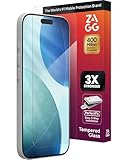
The best cellphone screen protector for most people in 2026 is a 0.33mm aluminosilicate tempered glass with full adhesive and a curved-edge fit made for your exact phone model, such as Spigen GlasTR EZ Fit, ESR Armorite, amFilm OneTouch, ZAGG InvisibleShield Glass Elite, or Belkin UltraGlass. These types balance scratch resistance, drop absorption, and touch sensitivity better than ultra-thin 0.21mm glass, thick 0.5mm glass, or basic PET/TPU films.
- What actually protects your screen: thickness, glass type, and fit
- Spec comparison: common tempered glass options in 2026
- Which protector should you buy for your situation?
- Cost per use: why a 3-pack often wins
- Installation that prevents bubbles and edge lift
- Durability and ownership realities
- Bottom line for 2026
- Frequently asked questions
If you are looking for the best screen protector for smartphone use in general, tempered glass remains the right choice for scratch and drop protection. Film protectors are thinner and cheaper and work well for scratch-only protection or curved screens, but they do not absorb impact the same way glass does.
As an Amazon Associate we earn from qualifying purchases at no extra cost to you.


What actually protects your screen: thickness, glass type, and fit
Most product listings focus on 9H hardness, but that rating alone does not tell you much. Almost all tempered glass claims 9H pencil hardness. What separates a protector that lasts 12 months from one that chips in 3 weeks is thickness, glass composition, adhesive coverage, and edge finishing.
1. Thickness: 0.21mm vs 0.33mm vs 0.5mm
Thinner is not automatically better. Ultra-thin 0.21mm to 0.26mm glass feels most like the original screen and preserves fingerprint sensor accuracy, especially for ultrasonic in-display sensors on Samsung Galaxy S-series and Pixel phones. The trade-off is lower impact absorption and easier edge chipping.
0.33mm is the sweet spot for scratch and drop protection. It is thick enough to take a direct impact and crack sacrificially instead of your display, but thin enough to keep case compatibility and touch response normal. 0.4mm to 0.5mm protectors marketed as extra-durable often cause halo lift with tight cases, reduce fingerprint reliability, and show more glare.
2. Glass type and oleophobic coating
Second, look at glass type. Standard soda-lime tempered glass is common in budget 2-packs and 3-packs. Aluminosilicate glass, used in Spigen GlasTR series, ESR Armorite, ZAGG Glass Elite, and Belkin UltraGlass, has higher compressive strength and better scratch resistance for keys, sand, and grit in pockets and bags.
Oleophobic coating wear is what most owners notice first. New glass feels slick and resists fingerprints. After 4 to 8 months of wiping on sleeves, jeans, or alcohol wipes, the coating wears off in the center swipe zone. The glass is still protective, but smudges stick and your finger drags. Premium protectors typically use a double-layer or plasma-sprayed coating that lasts 6 to 12 months, while budget glass often loses smoothness in 2 to 4 months. This is normal and not a defect.
3. Edge fit: flat, 2.5D, and full-cover alignment
Edge fit determines bubbles, dust lift, and cracks. A true flat protector leaves a 0.5mm to 1.0mm gap around the display edge to allow for case clearance. It is easiest to install bubble-free. A 2.5D rounded edge feels smoother to swipe but chips more easily if it extends too close to a case lip.
Full-cover protectors with black borders cover the entire front, including the curved edge on phones like the iPhone 15/16 series and Galaxy S24/S25 series. They look best but only work if they use full adhesive across the whole surface. Avoid older dot-matrix or edge-only adhesive designs. They create touch dead zones, rainbow Newton-ring effects, and trap dust under the border.
Spec comparison: common tempered glass options in 2026
The table below summarizes the types you will actually find for current iPhone and Galaxy models. Exact fit varies by phone model, so always select the version listed for your phone and camera cutout.
| Type / Example | Thickness | Material | Adhesive | Edge and fit | Best for |
|---|---|---|---|---|---|
| Budget tempered glass, e.g. amFilm OneTouch | 0.33mm | Soda-lime tempered, 9H | Full adhesive | 2.5D rounded, 0.6mm case gap, auto-alignment tray | Value scratch + drop cover |
| Mid-range alignment glass, e.g. Spigen GlasTR EZ Fit, ESR Armorite | 0.33mm | Aluminosilicate, 9H | Full adhesive | 2.5D polished, 0.5mm case gap, tray included | Easy install, fingerprint friendly |
| Premium coated glass, e.g. ZAGG InvisibleShield Glass Elite, Belkin UltraGlass | 0.29mm to 0.33mm | Aluminosilicate / lithium aluminosilicate, 9H | Full adhesive | Polished curved edge, model-specific speaker cutout | Longer coating life, smoother feel |
| Ultra-thin glass | 0.21mm to 0.26mm | Chemically strengthened, 9H | Full adhesive | Flat with small gap | Ultrasonic fingerprint reliability |
| PET / TPU film, e.g. generic film, OtterBox Alpha Flex type | 0.12mm to 0.18mm | PET or TPU film | Full adhesive, wet or dry install | Edge-to-edge, case friendly | Scratch-only, curved screens |
General market ranges in 2026: budget glass 2-packs or 3-packs with alignment tray typically cost in the low budget range, mid-range aluminosilicate with tray costs moderately more, and premium retail glass with installer service and limited lifetime replacement typically costs two to three times the budget pack. Film 3-packs remain the cheapest option.
Which protector should you buy for your situation?
Use this decision matrix instead of chasing the hardest or thickest claim:
| Your situation | Pick this | Why |
|---|---|---|
| You drop your phone often, use a rugged case like OtterBox Defender | 0.33mm aluminosilicate glass, flat with case gap | Absorbs corner hits; gap prevents case from pushing edge up |
| You have ultrasonic fingerprint issues on Galaxy or Pixel | 0.26mm to 0.33mm glass labeled fingerprint-compatible, full adhesive | Thinner stack plus full adhesive improves ultrasonic reading; re-register fingerprints after install |
| You hate bubbles and install it yourself | Glass with auto-alignment tray, e.g. Spigen EZ Fit, ESR, amFilm OneTouch type | Tray centers protector in 20 seconds and reduces dust trapping |
| You keep phones 2+ years and hate smudges | Premium glass with reinforced oleophobic coating | Coating stays slick 2x longer, replacement less often |
| Curved screen or you use a screen protector every 2 months for work | TPU film | Conforms to curves, no edge chipping, cheap to replace |
Cost per use: why a 3-pack often wins
A screen protector is a consumable. Even good glass usually needs replacement after one hard drop or after the coating wears out. Here is a simple way to compare:
Cost per month = pack price / (number of protectors x months each lasts)
Example: a budget 3-pack in the general low price range where each lasts 5 months gives you about 15 months of coverage. That works out to roughly one-tenth to one-fifth of the cost per month of a single premium protector in the high price range that lasts 9 months before coating wear. If you rarely drop your phone and wipe it carefully, premium glass can be cheaper long-term because you replace it less. If you work in construction, delivery, warehouses, or carry your phone with keys and tools, buy the multi-pack with alignment tray and plan to swap after any corner crack.
Do not keep using a cracked tempered glass to save money. Once the glass web-cracks, it no longer distributes the next impact evenly and glass splinters can scratch your case seal and irritate fingers.
Installation that prevents bubbles and edge lift
Most bubbles are dust, not air. Follow this order for a clean result:
- Install in a steamy bathroom after a shower or in a still room with fan off. Moisture settles airborne dust.
- Remove your case, wash hands, and clean the screen with the wet wipe, then dry cloth. Finish with the dust sticker, lifting edge to edge in straight lines.
- Place the alignment tray and do a dry test without peeling the film. Check speaker, camera, and Dynamic Island or punch-hole alignment.
- Peel and lower from top to bottom in one motion. Do not press the center immediately. Let adhesive wick outward for 30 to 45 seconds.
- Push remaining small bubbles to the nearest edge with a microfiber cloth, not a fingernail. Bubbles with a dark speck inside are dust and need lifting with tape, not pressing.
- Re-register fingerprints and turn up touch sensitivity if your phone has a Screen Protector Mode under Display settings. Wait 12 to 24 hours before putting on a very tight case.
Durability and ownership realities
What wears first is almost always the oleophobic coating, then the edges. Center smudging, reduced swipe slickness, and micro-scratches visible under sunlight at an angle after 3 to 6 months are normal. Small edge nicks from setting the phone face-down on tables usually spread after the next drop.
To extend life, clean with a dry microfiber only. Limit alcohol wipes to once per week or less, because frequent isopropyl alcohol accelerates coating wear. Never use paper towels, glass cleaner with ammonia, or abrasive pads. Keep the phone in a separate pocket from sand, which is harder than tempered glass and causes the fine scratches most people blame on keys.
Common mistakes: buying universal size instead of model-specific, installing over an existing film, reusing a lifted protector after dust gets under adhesive, and pairing full-cover border glass with an edge-only adhesive plus a tight case. That combination causes touch insensitivity along the edges and corner pop-off within days.
For drop protection, pair glass with a case that has a raised lip of at least 1.0mm above the screen and reinforced corners. A protector alone cannot save a phone from a direct corner hit on concrete. It works as part of a system: glass absorbs surface abrasion and minor face drops, the case absorbs frame shock.
Bottom line for 2026
For scratch and drop protection on flat-screen iPhones and Galaxy phones, choose a 0.33mm full-adhesive aluminosilicate glass with alignment tray and a small case gap. Choose ultra-thin 0.21mm to 0.26mm glass only if ultrasonic fingerprint accuracy matters most, and choose film only for curved screens or scratch-only needs. Replace cracked glass promptly, expect to replace any glass every 6 to 12 months as the coating wears, and keep a spare from a multi-pack so a crack does not leave your display exposed.
Frequently asked questions
Will a screen protector prevent my screen from cracking?
No protector guarantees it. Tempered glass absorbs light impacts and prevents many scratches and face-down scuffs, and it often cracks first to reduce force to the display. Direct corner drops, high drops onto hard uneven surfaces, and bending pressure can still break the underlying OLED.
Is thicker glass more protective?
Up to a point. Moving from 0.21mm to 0.33mm improves impact absorption noticeably. Above 0.4mm, gains are small and you trade touch sensitivity, fingerprint reliability, and case fit.
Why does my new protector show fingerprints after a few months?
The oleophobic layer has worn down in the high-touch zone. Cleaning will not restore it. If smudging bothers you, it is time to replace the protector even if there are no cracks.