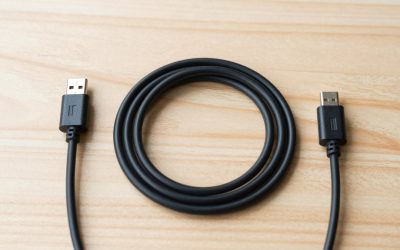
A failing or underpowered usb c cord is one of the most common reasons phone owners end up with dead batteries, slow charge cycles, and frayed connectors tucked behind couch cushions. The category looks simple on a product page, but the real differences show up in durability over months of bending, actual wattage delivered versus advertised, connector fit under a thick phone case, and whether the cable negotiates data at full speed or crawls. These are the factors that separate a cord you forget about from one you replace three times a year.
We compared the eight cables above by published specs, listed prices, and aggregated owner feedback across retailers. The goal is to help you match a specific cord to your daily charging setup without overspending on features you will never use or underbuying on build quality and ending up back at the same problem. What follows is a practical, spec-driven roundup for anyone shopping in 2026.
Our top picks
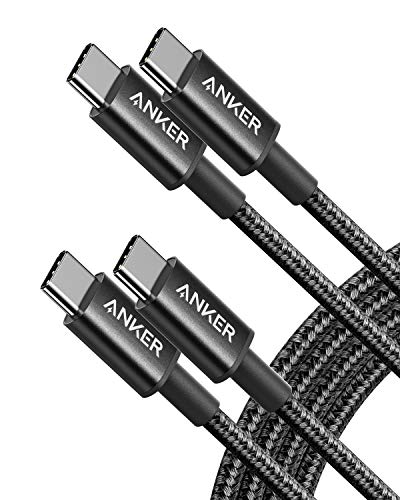 Anker USB C to USB C Cable
- Durable Design: Reinforced nylon exterior and a robust…
- Fast Charging: Supports Power Delivery for up to…
- Versatile Compatibility: Works with virtually all USB-C devices,…
 USB C to USB C Cable 3FT
- This type c to type c cable supports…
- The Braided USB C cable complies with the…
- Broad Compatibility: This is a USB C to…
| Product | Key specs | |
|---|---|---|
| Anker USB C to USB C Cable | Durable Design: Reinforced nylon exterior and a robust… Fast Charging: Supports Power Delivery for up to… Versatile Compatibility: Works with virtually all USB-C devices,… | Check price |
| USB C to USB C Cable 3FT | This type c to type c cable supports… The Braided USB C cable complies with the… Broad Compatibility: This is a USB C to… | Check price |
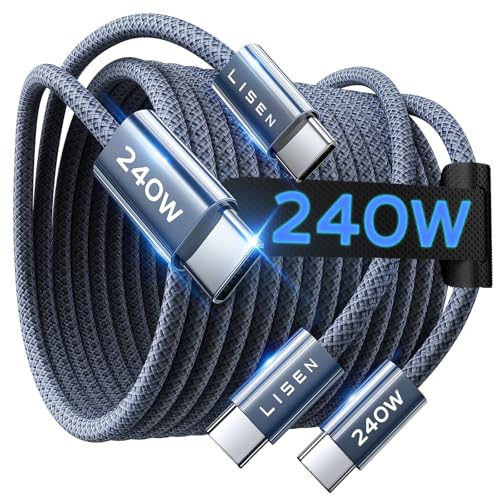 LISEN USB C to USB C Cable LISEN USB C to USB C Cable | Check price | |
 USB C Cable Fast Charging Nylon Braided USB C Cable Fast Charging Nylon Braided | Type c Charger Fast Charging and Sync: 3A… International Safe Certified: This USB-C cable has electronic… Enhanced Durability: Strong fiber, the most flexible, powerful… | Check price |
 LISEN USB C to USB C Cable LISEN USB C to USB C Cable | 60W Turbo Fast Charging:This iPhone 18 charger cord… Right for ALL Your Devices:This is the USB-C… Green Recyclable Materials:The LISEN USB C to USB… | Check price |
 Anker USB C to USB C Cable Anker USB C to USB C Cable | Durable Design: Reinforced nylon exterior and a robust… Fast Charging: Supports Power Delivery for up to… Versatile Compatibility: Works with virtually all USB-C devices,… | Check price |
 Apple 60W USB-C to USB-C Woven Charge Apple 60W USB-C to USB-C Woven Charge | Ideal for charging, syncing, and transferring data between… Supports charging of up to 60 watts and… WHAT’S IN THE BOX | Check price |
 USB C Cable 5 Pack 6FT USB C Cable 5 Pack 6FT | 5 Pack 6FT Charging Cords: Includes five 6-foot… 3A Fast Charging and Sync: Supports up to… Braided for Daily Use: Nylon braided material helps… | Check price |
As an Amazon Associate we earn from qualifying purchases at no extra cost to you.
Quick Picks
| Product | Best for | Price |
|---|---|---|
| Anker USB C to USB C 6 ft 2-Pack | Overall value and trusted brand | $9.99 |
| USB C to USB C 3FT Certified 2Pack 60W Woven | Cheapest certified option | $6.99 |
| LISEN 240W 6.6 ft | Laptop and tablet fast charging | $8.97 |
| USB A to Type C 3Pack 6 ft Nylon Braided | Older chargers and car ports | $7.98 |
| LISEN 5-Pack Mixed Length 60W | Outfitting multiple rooms at once | $9.99 |
| Anker USB C to USB C 3.3 ft 2-Pack | Desk and bedside short runs | $9.99 |
| Apple 60W USB-C Woven 1 m | iPhone owners wanting a native accessory | $14.99 |
| USB C Cable 5 Pack 6 ft USB A to Type C | Bulk replacement of legacy cords | $8.97 |
How We Picked
Three criteria drove every selection in this list. First, power rating matched to realistic use: 60W covers virtually all phones and most tablets, while 240W matters only if you charge a laptop over USB-C. Second, connector orientation and form factor: USB-C to USB-C cables pair with modern charger bricks, while USB-A to Type-C cords remain essential for older wall adapters, car chargers, and some laptops with legacy ports. Third, build quality relative to price: braided or woven jackets, reinforced strain relief, and certified conductor ratings separate cords that last years from those that fray within months. We also weighed per-cable cost because most buyers need more than one.
The 8 Best Usb C Cord in 2026
Anker USB C to USB C Cable, 60W 2-Pack, 6 ft, Black
This is the default recommendation for most phone and tablet owners. Anker’s reputation for consistent power delivery holds up in owner reviews, and 60W covers every iPhone, Pixel, and iPad currently shipping. The six-foot length gives you room to charge from a bedside outlet or a desk without straining the connector. The 2-pack at $9.99 means you effectively pay under $5 per cable, which is competitive with lesser-known brands.
- Pros: Reliable brand track record; comfortable length for most setups.
- Cons: Plain TPE jacket shows scuffs and discolors faster than woven alternatives.
- Skip it if: You need to charge a laptop that requires more than 60W over USB-C.
USB C to USB C 3FT Certified 2Pack 60W Woven Fast Charging
At $6.99 for two certified woven cables, this is the lowest per-unit price on the list for anyone who still has older chargers with 3-foot reach as a standard. The woven jacket resists tangling better than bare TPE, and the 60W rating handles any phone or tablet without issue. Three feet is short by design, making it ideal for a desk where excess slack creates clutter.
- Pros: Cheapest option here; certified power rating with a woven exterior.
- Cons: Three-foot length limits flexibility; you likely will not reach a wall outlet from your bed or couch.
- Skip it if: Your nearest outlet is more than two feet from where you charge.
LISEN USB C to USB C Cable, 240W Fast Charging, 6.6 ft
The standout here is the 240W rating, which supports full-speed charging for USB-C laptops, high-capacity tablets, and multi-device GaN bricks. At 6.6 feet and $8.97, it undercuts most competitor single cables in the same wattage tier. If your daily routine includes charging a MacBook or a Windows laptop alongside your phone, this is the most capable cable on the list.
- Pros: 240W future-proofs the purchase; generous length for desk or couch use.
- Cons: Single cable rather than a multi-pack, so per-unit value is lower if you only need a phone cord.
- Skip it if: You only charge phones and tablets and will never pull more than 60W through a cable.
USB C Cable Fast Charging Nylon Braided 3Pack 6 ft USB A to Type C
Not every wall adapter, car charger, or laptop side-port is USB-C. This pack delivers three nylon-braided USB-A to Type-C cords at 6 feet each for $7.98, which works out to roughly $2.66 per cable. It fills the gap for anyone whose charging infrastructure still includes older ports. The braided jacket handles repeated insertion and removal in car centers and desk setups better than vinyl-coated alternatives.
- Pros: Lowest per-cable cost; USB-A compatibility for legacy chargers and car ports.
- Cons: USB-A to Type-C cannot deliver full USB-C power-negotiation speeds and will cap charging rates compared to a C-to-C cord.
- Skip it if: Every charger you own has a USB-C output; you are better served by a C-to-C option.
LISEN USB C to USB C 5-Pack [3.3/3.3/6.6/6.6/10 ft] 60W
Five cables at $9.99 is hard to beat for anyone outfitting an entire home or small office. The mixed-length set covers bedside (3.3 ft), desk (6.6 ft), and couch or travel (10 ft) scenarios without buying separate packs. All five are USB-C to USB-C at 60W, so they work with modern charger bricks. The trade-off is build thickness; at this price per unit, expect a slimmer jacket than a single $10 cable.
- Pros: Unmatched per-cable value at under $2 each; covers every room length need.
- Cons: Thinner jacket material may not survive years of rough handling or frequent tugging.
- Skip it if: You need a high-durability cord for a shared family setup with heavy daily abuse.
Anker USB C to USB C Cable, 60W 2-Pack, 3.3 ft, Black
Short cables reduce desk clutter and prevent connector stress from long dangling runs. This 2-pack at $9.99 targets bedside outlets, tight desk spaces, or anyone who charges while working on a laptop directly in front of them. Anker’s build consistency means you get the same reliable 60W delivery as the 6-foot version. The only real difference is reach.
- Pros: Minimal slack keeps connectors aligned; same Anker quality at the same price as the longer 2-pack.
- Cons: Same $9.99 price as the 6-foot 2-pack, so you lose length without gaining anything else.
- Skip it if: Your nearest outlet sits more than two feet from your charging spot; the 6-foot version offers more utility for the same money.
Apple 60W USB-C to USB-C Woven Charge Cable, 1 m
Apple’s woven cable carries the highest price here at $14.99 for a single 1-meter cord. What you pay for is material finish, exact connector tolerances that seat cleanly under Apple cases, and the brand’s accessory certification. Owner feedback consistently notes the soft woven texture and the way it resists kinks. For iPhone owners who prioritize aesthetics and a guaranteed fit with MagSafe-compatible cases, this is the premium pick.
- Pros: Premium woven finish; connector tolerances match Apple hardware precisely.
- Cons: Highest cost per cable on this list; single unit at 1 meter gives limited reach.
- Skip it if: Budget is a primary concern; you can get equivalent performance from Anker or LISEN for well under half the price.
USB C Cable 5 Pack 6 ft, USB A to Type C Fast Charger Cord
Five 6-foot USB-A to Type-C cords for $8.97 rounds out the list as the ultimate “replace everything now” option. It suits households with mixed legacy chargers, older laptops, and car adapters that still have USB-A ports. The uniform 6-foot length means every cable is usable at a couch, desk, or bedside outlet without overthinking placement. Build quality is functional rather than premium, matching the sub-$2-per-cable price.
- Pros: Bulk replacement at the lowest total cost; uniform length simplifies organization.
- Cons: USB-A connector limits maximum charge speed compared to C-to-C options; plain jacket without braiding or weaving.
- Skip it if: You already own USB-C wall bricks and want the fastest possible charge on a modern phone.
Buying Guide
Match Wattage to Your Device, Not the Cable Label
A 240W cable will not charge your phone faster than a 60W cable, because the phone’s battery management chip sets the ceiling. Where wattage matters is on laptops and tablets that draw more than 60W under load. Buy 240W only if a USB-C laptop is in your daily rotation; otherwise, save the money and buy additional cables.
Choose Connector Type Based on Your Charger Inventory
USB-C to USB-C cables unlock full Power Delivery negotiation, meaning your phone, tablet, and laptop all get their fastest supported rate. USB-A to Type-C cords still work but cap at lower wattage because the USB-A side lacks the proper communication lines. If your charger bricks are all USB-C, a USB-A cable is a step backward regardless of its braided jacket or advertised speed.
Length Is a Durability Decision
Shorter cables put less lateral stress on the connector joint during daily plug and unplug cycles, which extends service life. A 3.3-foot cable on a desk where you reach an outlet directly feels rigid but will outlast a 6-foot cable that you repeatedly pull taut and let dangle from a nightstand. Match length to your physical setup, then choose a woven or braided jacket over bare TPE for extra longevity in high-flex positions.
Our Verdict
Top pick: The Anker 6 ft 2-Pack earns the overall recommendation for its combination of trusted brand reliability, full 60W phone charging, comfortable length, and sub-$5 per-cable cost. Budget pick: The USB C to USB C 3FT Certified 2Pack at $6.99 gives you two certified woven cables for the price of one name-brand cord, making it the best pure-value option if you can tolerate short reach. Conditional winner: If you charge a USB-C laptop as part of your daily routine, the LISEN 240W 6.6-foot cable at $8.97 is the only cable here that handles that workload without a second purchase.
FAQ
Will a cheap USB C cord damage my phone?
Not if it is within a reasonable wattage range and uses properly rated conductors. Damage risk comes from poorly made cables that lack insulation, short the power pins, or use undersized wire that overheats under sustained load. Certified cables from any brand in this roundup are built to USB-IF specifications and pose no risk.
Do I need a USB-C to USB-C cord or is USB-A to Type-C fine?
USB-C to USB-C delivers higher wattage and enables full Power Delivery negotiation. USB-A to Type-C works for slower or older chargers but cannot exceed the wattage the USB-A port supports, typically capping around 18W. If your charger has a USB-C output, always use a C-to-C cord.
Are braided or woven cables actually more durable than plain rubber ones?
The textile jacket resists abrasion from furniture edges, bag interiors, and floor traffic better than TPE rubber. However, internal conductor fatigue at the strain relief point (where the cable meets the connector) is the more common failure mode, and neither jacket type fully prevents it. Braiding extends the jacket’s cosmetic life; a well-designed strain relief boot extends the cable’s functional life.
How long should a USB-C cord be for a bedside setup?
Three to four feet is usually ideal for a nightstand, keeping the cable taut enough to avoid tangling while reaching a standard wall outlet. A six-foot cable gives you flexibility if the outlet is behind the bed frame or on the opposite wall. Anything beyond ten feet introduces unnecessary voltage drop and slack that collects dust.