For most gamers the TP-Link Archer GE800 is the best all-round gaming router, the Asus ROG Rapture GT-BE98 Pro suits buyers who want maximum performance for a large, busy household, the Netgear Nighthawk line suits those who value low latency and a strong brand, and the TP-Link Archer BE550 or Netgear RS300 suit budget buyers who want Wi-Fi 7 without a flagship outlay.
A gaming router is mainly about stable latency, not just headline speed. Features like traffic prioritisation (QoS), a dedicated gaming port, multi-gig Ethernet and a strong Wi-Fi 7 radio help when many devices compete for bandwidth. This guide compares the main models by what the makers list and what independent outlets report, with notes on whether you need one at all.
Our top picks
 TP-Link AXE5400 Tri-Band WiFi 6E Router
- Tri-Band WiFi 6E Router - Up to 5400…
- WiFi 6E Unleashed
- Connect More Devices—True Tri-Band and OFDMA technology increase…
| Product | Key specs | |
|---|---|---|
 ASUS ROG Rapture GT-BE98 Pro WiFi 7 | Check price | |
 GL.iNet GL-MT6000 Flint 2 Wi-Fi 6 Gaming | Check price | |
| TP-Link AXE5400 Tri-Band WiFi 6E Router | Tri-Band WiFi 6E Router - Up to 5400… WiFi 6E Unleashed Connect More Devices—True Tri-Band and OFDMA technology increase… | Check price |
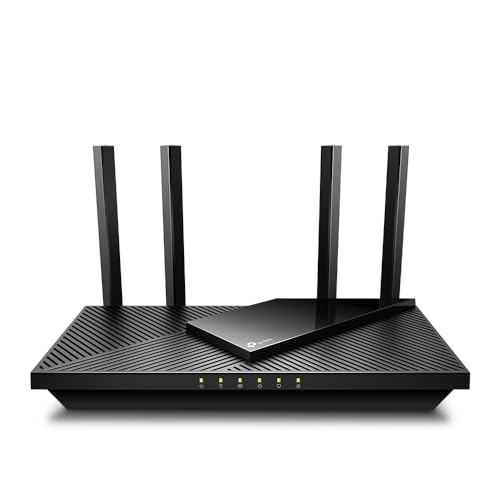 TP-Link AX1800 WiFi 6 Router | Wi-Fi 6(802.11ax) technology achieves faster speeds, greater capacity… Enjoy smoother and more stable streaming and gaming… Wi-Fi 6 technology communicates more data to more… | Check price |
As an Amazon Associate we earn from qualifying purchases at no extra cost to you.
Gaming Routers at a Glance
| Router | Best for | Key stated or reported features | Limits |
|---|---|---|---|
| TP-Link Archer GE800 | Best overall Wi-Fi 7 gaming router | Ranked first by PC Gamer and Smarter Ranking; dedicated gaming port, automatic QoS and multi-gig ports | Premium tier; a few listings misreport its Wi-Fi generation |
| Asus ROG Rapture GT-BE98 Pro | Top performance under heavy load | Quad-band Wi-Fi 7; one comparison says it holds latency best under heavy simultaneous load | Highest tier; large and costly |
| Netgear Nighthawk RS700S | Low-latency focus | Second in one scorecard and reported to lead on low latency | Premium tier; Netgear’s software features differ from Asus and TP-Link |
| Netgear Nighthawk RS600 | Strong Wi-Fi 7 without the top tier | PC Gamer scored it 86 percent and called it very speedy | Still upper-mid to premium tier |
| TP-Link Archer GE650 | Value gaming router | Named the value pick by Tom’s Guide and Technobezz | Fewer ports than flagships |
| TP-Link Archer BE550 / Netgear RS300 | Budget Wi-Fi 7 | Reported as entry-level Wi-Fi 7 upgrades | Fewer features and ports |
| Asus ROG Rapture GT-BE19000AI | Premium all-rounder | Named Tom’s Guide’s top overall pick | Premium tier |
Do You Really Need a Gaming Router?
A gaming router cannot reduce the distance between you and the game server, and it will not fix a poor internet connection. What it can do is reduce latency inside your home, especially when someone else is streaming or downloading. Features like QoS prioritise game traffic over other traffic, and a wired connection to the console or PC remains the most reliable way to keep ping stable.
If your household has few devices and a wired connection to your PC, a standard good router may be enough. A gaming-focused model makes more sense in crowded homes, with multi-gig fibre, or when you need Wi-Fi 7 for a recent laptop or phone.
What to Look For
Wi-Fi 7 and bands
Wi-Fi 7 adds a 6 GHz band, wider channels and multi-link operation. You need Wi-Fi 7 devices to use all of it, though older devices still work. Quad-band models add a second 5 GHz or 6 GHz band to spread out traffic.
QoS and gaming ports
Automatic QoS prioritises games, while a dedicated gaming port reserves bandwidth for one wired device. Smarter Ranking highlighted both on the GE800. Check how each brand implements QoS, as some require manual setup.
Multi-gig Ethernet
If you have fibre faster than 1 Gbps, look for 2.5G or 10G ports. Tom’s Guide praises the GE800 for fibre use because of its multi-gig ports.
Software and security
Check how long the maker supports firmware updates and what built-in security features are offered. Subscription features may be required for some advanced tools.
Size and placement
Flagships are large. Place them centrally and away from metal obstructions. Follow the maker’s guidance on ventilation.
TP-Link Archer GE800: The All-Rounder
Several roundups place the GE800 first. PC Gamer reports it at the top of its network testing table, Smarter Ranking gave it first place with a score of 90, and Tom’s Guide calls it the best gaming router for fibre. A comparison article also says its latency numbers match the Asus flagship in independent testing at a lower tier. It suits buyers who want near-flagship performance without paying the highest price. One site mislabels it as Wi-Fi 6, which is incorrect, so confirm specifications on the maker page.
Asus ROG Rapture GT-BE98 Pro: The Flagship
The GT-BE98 Pro is a quad-band Wi-Fi 7 flagship. Technobezz calls it the pinnacle of gaming router technology, and a comparison says it keeps its latency advantage best under heavy simultaneous load. It fits large homes with many devices and demanding users, at the highest cost. Its score in one ranking was slightly below the GE800 and RS700S, which shows that price does not always track results.
Netgear Nighthawk: Low-Latency Contenders
The RS700S placed second in Smarter Ranking and was reported to lead on low latency. PC Gamer gave the RS600 a strong score and called it a speedy Wi-Fi 7 router, while the RS300 scored lower but serves as the budget Wi-Fi 7 option. Netgear models suit buyers who like the brand’s app and simple setup, but compare ports and software features with Asus and TP-Link.
Value and Budget Picks
The TP-Link Archer GE650 is the value pick in Tom’s Guide and Technobezz. The TP-Link Archer BE550 is listed as a budget upgrade, and the Netgear RS300 is the entry-level Wi-Fi 7 option. These suit smaller homes or buyers upgrading from Wi-Fi 5 or 6 without wanting flagship hardware.
Setup and Compatibility Notes
- Connect your console or PC by Ethernet where possible. Wi-Fi is convenient but adds variability.
- Confirm your modem and internet plan. A fast router cannot exceed your service speed.
- Place the router centrally and off the floor. Avoid cupboards and metal shelves.
- Update firmware after setup and set a unique admin password and Wi-Fi password.
- Check that your devices support Wi-Fi 7 or 6E before paying for a premium band.
- For large homes, consider a mesh system rather than a single flagship.
- Follow the maker’s manual for mounting and ventilation.
Pick X If… Decision Table
| If you want… | Pick | Why |
|---|---|---|
| Best all-round gaming router | TP-Link Archer GE800 | Ranked first in several roundups |
| Best raw performance in a crowded home | Asus ROG Rapture GT-BE98 Pro | Quad-band Wi-Fi 7, strong under load |
| Low latency from a familiar brand | Netgear Nighthawk RS700S | Reported low-latency leader |
| Strong Wi-Fi 7 below flagship tier | Netgear Nighthawk RS600 | Well scored by PC Gamer |
| Value | TP-Link Archer GE650 | Value pick in two roundups |
| Cheapest Wi-Fi 7 | TP-Link Archer BE550 or Netgear RS300 | Entry-level options |
Alternatives
- Mesh Wi-Fi systems: Better for coverage in large homes.
- Wired access points: Strong choice if your home is already cabled.
- Powerline or MoCA adaptors: Useful where Ethernet cannot be run.
Wired vs Wireless Gaming
Even the best gaming router cannot give Wi-Fi the stability of a cable. Ethernet avoids interference from neighbouring networks and microwave ovens, and it removes variable delays caused by radio conditions. If you cannot run cable, powerline or MoCA adaptors offer a middle ground, although performance depends on your home wiring. Use Wi-Fi for phones, tablets and laptops, and keep your main console or PC on a wired port if you can.
When you must use wireless, connect to the 5 GHz or 6 GHz band, sit within a sensible distance of the router and avoid walls between you and it. Wi-Fi 7 adds multi-link operation that can use two bands together, which makers say reduces latency and improves reliability for compatible devices.
Budget Tiers
Budget: The Netgear RS300 and TP-Link Archer BE550 bring Wi-Fi 7 at an entry tier. Mid-range: The TP-Link Archer GE650 and the Netgear RS600 sit here, offering stronger radios and more ports. Premium: The GE800, RS700S, GT-BE98 Pro and GT-BE19000AI occupy the top tier, with multi-gig ports and the broadest feature sets.
Settings That Help Gaming
- Turn on automatic QoS or game acceleration if the router offers it, then compare play with and without it in your own home.
- Set the console or PC to a reserved address so QoS rules apply consistently.
- Choose a less crowded Wi-Fi channel if the router does not select one automatically.
- Keep firmware current, since updates can improve stability and security.
- Enable the guest network for visitors so their devices do not compete with yours.
- Turn off features you do not use, following the maker’s notes.
Security Basics
Change the default admin password, use WPA3 or the strongest option your devices support, and disable remote administration unless you need it. Gaming routers often expose port-forwarding and UPnP settings, so open only what your game requires and close the rest. If you are unsure, follow the maker’s setup guide and consult your internet provider for advice.
Frequently Asked Questions
Will a gaming router lower my ping?
It can lower latency inside your home, especially under load, but it cannot reduce the delay to the game server. A wired connection and a stable internet plan matter more.
Is Wi-Fi 7 necessary for gaming?
No. Wi-Fi 7 helps when you have compatible devices and a busy network. A good wired connection is still the most reliable option for competitive play.
What is QoS?
Quality of Service is a setting that prioritises certain traffic, such as game packets, over others. It is most useful when other devices use the connection at the same time.
Do I need multi-gig ports?
Only if you have an internet plan faster than 1 Gbps or a local network with multi-gig devices. Otherwise, standard gigabit ports are enough.
Should I buy a router or a mesh system?
A single router works for small to medium homes. A mesh system is better for larger homes or those with thick walls.
How long do gaming routers stay supported?
Support periods vary by maker. Check the manufacturer’s firmware policy and update regularly.
More from Amazon
Programs that pair well with the guide above. Offers and eligibility are set by Amazon and may change.
Free shipping on eligible items, Prime Video and more. Eligible new members can start with a free trial.
Start a Prime free trialAd-free music streaming. Eligible new subscribers can start with a free trial.
Try Music Unlimited freeA Prime membership for ages 18-24 with a trial period. Eligibility is set by Amazon.
See Prime for Young AdultsAudiobooks and podcasts to listen to on the go. Eligible new members can start with a free trial.
Try Audible freeAs an Amazon Associate we earn from qualifying purchases.