Key takeaways
- Frequency band. Wireless mics use UHF, 2.4 GHz or 1.9 GHz bands. Allowed frequencies vary by country and change over time, so choose a model sold for your region and check local rules. Digital 2.4 GHz systems are popular for small setups but share space with Wi-Fi and Bluetooth.
- Capsule. Many handheld transmitters use familiar capsules such as the Shure SM58 or Beta 58, Sennheiser e835 or e935, and similar. Vocalists often choose a system based on the capsule they already like.
- Number of channels. More channels need better frequency management. Systems with automatic scan and sync tools simplify setup.
- Latency and sound. Digital systems list latency in milliseconds. Many makers state very low figures, but real-world differences are small for most singers.
- Battery type. Rechargeable lithium-ion transmitters save money over time. AA-powered models are easy to swap during a gig.
- Range and reliability. Makers list line-of-sight range in tens of meters, and walls, crowds and metal can reduce it. Diversity receivers help keep the connection stable.
- Metering and controls. Gain control, display and lock functions help prevent accidental changes on stage.
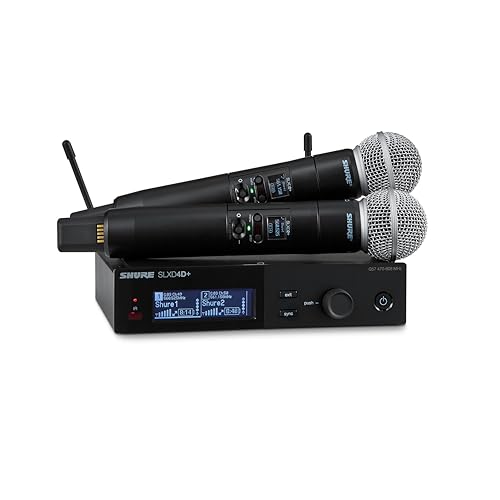
For live vocals, the Shure SLXD24/SM58 and BLX24/SM58 systems, the Sennheiser EW-D and XSW series, and the Audio-Technica System 10 Pro are the usual professional-grade choices, while the Shure BLX or Sennheiser XSW lines suit working bands on a tighter budget. The right system depends on where you play, how many wireless channels will run at once, and whether you need rechargeable batteries and frequency coordination.
Our top picks



As an Amazon Associate we earn from qualifying purchases at no extra cost to you.
What matters in a live-vocal wireless system
- Frequency band. Wireless mics use UHF, 2.4 GHz or 1.9 GHz bands. Allowed frequencies vary by country and change over time, so choose a model sold for your region and check local rules. Digital 2.4 GHz systems are popular for small setups but share space with Wi-Fi and Bluetooth.
- Capsule. Many handheld transmitters use familiar capsules such as the Shure SM58 or Beta 58, Sennheiser e835 or e935, and similar. Vocalists often choose a system based on the capsule they already like.
- Number of channels. More channels need better frequency management. Systems with automatic scan and sync tools simplify setup.
- Latency and sound. Digital systems list latency in milliseconds. Many makers state very low figures, but real-world differences are small for most singers.
- Battery type. Rechargeable lithium-ion transmitters save money over time. AA-powered models are easy to swap during a gig.
- Range and reliability. Makers list line-of-sight range in tens of meters, and walls, crowds and metal can reduce it. Diversity receivers help keep the connection stable.
- Metering and controls. Gain control, display and lock functions help prevent accidental changes on stage.
At a glance: live vocal wireless systems
| System | Best for | Key stated specs | Limits |
|---|---|---|---|
| Shure SLXD24/SM58 | Working bands needing reliability | Digital UHF, rechargeable battery option, SM58 capsule, automatic frequency tools per the maker | Premium tier; check regional frequency bands |
| Shure BLX24/SM58 | Budget UHF system | Analog UHF, familiar SM58 capsule, simple setup | Fewer features and less channel capacity than digital models |
| Sennheiser EW-D series | Flexible digital system | Digital UHF with multiple capsule options per the maker | Mid to premium tier; check exact kit configuration |
| Sennheiser XSW 1-835 / similar | Value-oriented working musicians | Analog or digital variants depending on model, e835 capsule on some kits | Confirm which version and frequency range you are buying |
| Audio-Technica System 10 Pro | Simple 2.4 GHz digital option | Rack-mount and handheld options, easy pairing | 2.4 GHz band shares space with Wi-Fi |
| Rode Wireless PRO-style or Wireless Go handheld alternatives | Compact use cases | Small digital systems | Designed more for creators; live-stage reliability varies |
Budget tier: reliable, simple
The Shure BLX24/SM58 is a familiar entry point: a UHF receiver with a SM58-capsule handheld. Reviewers describe it as straightforward and rugged, with fewer features than digital rivals. The Sennheiser XSW family offers similar simplicity with its own capsule choices. For solo singers and small venues, these systems are generally adequate, provided you check frequency availability in your area.
Mid-range tier: digital convenience
The Sennheiser EW-D and Shure SLXD lines bring digital audio, automatic channel setup and rechargeable batteries. They are commonly used in churches, schools and touring bands because setup is quick and interference is easier to manage. Audio-Technica’s System 10 Pro offers a 2.4 GHz alternative that is easy to use, though reviewers caution that busy Wi-Fi environments can crowd the band.
Premium tier: touring-grade
High-end systems from Shure (such as Axient and ULX-D), Sennheiser (the Digital 6000 and 9000 series) and others offer advanced frequency coordination, encryption options and top-tier capsules. They suit venues with many wireless channels and are usually beyond a solo singer’s needs. If you are renting or working in a venue with an existing system, ask the sound team about frequency coordination before the show.
Fit, handling and care notes
- Handheld size. Check the transmitter’s weight and body diameter, since some singers find larger bodies tiring.
- Capsule choice. Choose a capsule suited to your voice and stage volume. Dynamic capsules tolerate loud stages, while condenser capsules can offer more detail but are more sensitive to feedback.
- Antenna placement. Place the receiver in line of sight, off the floor, and away from metal racks. Use antenna distribution or remote antennas where needed.
- Battery routine. Start each gig with fresh or fully charged batteries. Carry spares and check battery indicators during soundcheck.
- Hygiene. Clean the grille with the maker-recommended method and avoid sharing mics without sanitizing them.
- Frequency rules. Operating wireless mics on unauthorized frequencies may be illegal in some regions. Follow local regulations and the maker’s guidance.
Setup tips for stable live performance
Run an automatic frequency scan at the venue, keep transmitters and receivers within line of sight, and avoid placing receivers near Wi-Fi routers or LED walls if possible. Use a gain structure that avoids clipping at the transmitter, then trim at the mixer. Test walking to the farthest corners of the stage, and keep a wired backup microphone for emergencies.
Pick X if…
| If you… | Pick | Why |
|---|---|---|
| Want the simplest budget handheld | Shure BLX24/SM58 | Easy and familiar capsule |
| Need digital with rechargeable batteries | Shure SLXD24 or Sennheiser EW-D | Easier frequency setup and lower running costs |
| Play in small venues with few channels | Audio-Technica System 10 Pro | Straightforward 2.4 GHz operation |
| Want to choose your capsule | Sennheiser EW-D or SLXD with a compatible capsule | Interchangeable capsules on many models |
| Work in busy RF environments | UHF digital systems with frequency coordination | More stable than shared 2.4 GHz |
Alternatives
- Wired dynamic microphone. Cheaper and more reliable, and often the best option if you do not need to move around.
- Compact creator wireless kits. Handy for videos and light gigs, but verify their stage-level reliability.
- In-ear monitor wireless packs. Not a microphone replacement, but often paired with wireless mics in live rigs.
Choosing a capsule for your voice
The capsule shapes your sound more than the wireless technology does. Dynamic capsules such as the SM58 are forgiving on loud stages and handle close-up singing well. Condenser capsules, such as those on some Shure Beta and Sennheiser models, can capture more detail and brightness, but they are more prone to feedback and handling noise. Try the capsule with your voice in a rehearsal space before buying, and check that the system supports capsule swapping if you want flexibility later.
Rack, handheld and bodypack formats
Most singers choose a handheld kit with a rackmount or half-rack receiver. Bodypack systems pair a transmitter you clip to a belt with a headset or lavalier microphone, which frees your hands for instruments or movement. Headset mics are common in musical theater and for singers who play guitar. Check that the system’s bodypack connector matches the microphone you intend to use, since connectors differ between brands.
Maintenance and long-term costs
Wireless systems last for years if looked after. Keep the receiver clean and dry, store transmitters without batteries during long breaks if the maker recommends it, and replace worn grilles and foam. Rechargeable systems cut ongoing battery spending, but over time battery capacity falls and may need replacement. When comparing systems, think about the cost of accessories such as antennas, rack kits and spare batteries, as well as the receiver and transmitter themselves.
Soundcheck and feedback control
A wireless system will not fix a poor stage mix. During soundcheck, ring out the monitors by raising gain slowly until feedback starts, then cut the offending frequency slightly. Keep the singer’s microphone out of the direct line of the monitor wedges, and aim the wedges at the null of a cardioid capsule. Hold the microphone by the body rather than cupping the grille, since cupping changes the pickup pattern and invites feedback. Mark the transmitter with colored tape for each singer, and label the receiver channel, so a swapped microphone does not cause confusion in a quick changeover between songs.
Frequently Asked Questions
Is 2.4 GHz good enough for live vocals?
It can work in small venues, but it shares the band with Wi-Fi and Bluetooth, so interference is more likely in busy places. UHF digital systems are generally preferred for working bands.
Do wireless mics sound worse than wired?
Modern digital systems are generally described by reviewers as very close to wired. Differences are often tied more to the capsule and the mix than to the wireless link.
How many wireless mics can I run at once?
It depends on the system and the frequency environment. Makers list the maximum number of compatible channels, but real numbers are lower in crowded RF settings.
Do I need a license to use a wireless microphone?
In some regions certain bands require licensing or are restricted. Check local regulations and the maker’s regional model listing before you buy.
What should I do about feedback?
Position monitors correctly, use gain discipline and consider capsules with tighter pickup patterns. Wireless systems do not cause feedback on their own but make it easier to roam near speakers.
How long do wireless mic batteries last?
Makers list runtimes from several hours to over a day, depending on the system and battery type. Carry spares and replace rechargeable cells as capacity declines.
More from Amazon
Programs that pair well with the guide above. Offers and eligibility are set by Amazon and may change.
Free shipping on eligible items, Prime Video and more. Eligible new members can start with a free trial.
Start a Prime free trialAd-free music streaming. Eligible new subscribers can start with a free trial.
Try Music Unlimited freeA Prime membership for ages 18-24 with a trial period. Eligibility is set by Amazon.
See Prime for Young AdultsAudiobooks and podcasts to listen to on the go. Eligible new members can start with a free trial.
Try Audible freeAs an Amazon Associate we earn from qualifying purchases.