Choosing the right insecticide spray is not a decision most people take lightly, yet a sudden infestation of ants, roaches, or flying pests rarely gives you time to research. Whether you are defending your kitchen from a trail of sugar ants or trying to keep mosquitoes away from your patio, the wrong product can leave you dealing with lingering bugs and wasted money. We compiled this roundup by comparing published specifications, current retail prices, and aggregated owner feedback across the market’s most popular options. Our goal is to cut through the marketing noise so you can buy the exact formula that matches your specific pest problem.
The difference between a good insecticide spray and a poor one comes down to active ingredient selection, application method, and residual effectiveness. A cheap aerosol might knock down a fly instantly but fail to stop the next generation of roaches hatching behind your baseboards. Conversely, a heavy-duty perimeter treatment is overkill if you only need to clear out a few gnats near your houseplants. By evaluating how each product performs according to real owners and matching those experiences against manufacturer claims, we identified which sprays deliver reliable results for indoor barriers, outdoor perimeters, and targeted bug control in 2026.
Our top picks
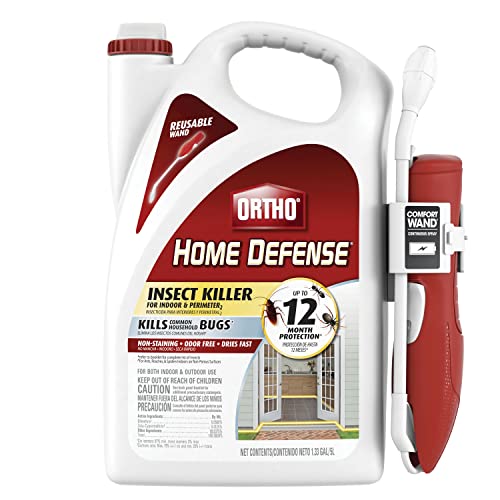 Ortho Home Defense Insect Killer for Indoor
- Use this pest control spray indoors in kitchens…
- This outdoor perimeter and indoor bug spray for…
- This 1.33 gal
 Raid Multi Insect Killer
- One 15 oz can of Raid Multi Insect…
- Raid Insect Killer works where crawling and flying…
- This pest killer comes in an easy-to-use spray…
 Ortho Home Defense Max Indoor Insect Barrier
- Ready-To-Use Ortho Home Defense Max Indoor Insect Barrier…
- Apply Ortho Home Defense Max Indoor Insect Barrier…
- This insect control, bug spray for home kills…
| Product | Key specs | |
|---|---|---|
| Ortho Home Defense Insect Killer for Indoor | Use this pest control spray indoors in kitchens… This outdoor perimeter and indoor bug spray for… This 1.33 gal | Check price |
| Raid Multi Insect Killer | One 15 oz can of Raid Multi Insect… Raid Insect Killer works where crawling and flying… This pest killer comes in an easy-to-use spray… | Check price |
| Ortho Home Defense Max Indoor Insect Barrier | Ready-To-Use Ortho Home Defense Max Indoor Insect Barrier… Apply Ortho Home Defense Max Indoor Insect Barrier… This insect control, bug spray for home kills… | Check price |
 Raid Flying Insect Killer Raid Flying Insect Killer | Mosquito spray that also kills hornets, wasps, yellow… Can be used as both an outdoor and… Fruit fly killer spray with Outdoor Fresh scent | Check price |
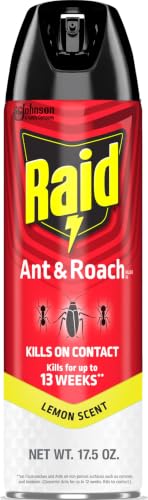 Raid Ant & Roach Killer Bug Spray Raid Ant & Roach Killer Bug Spray | Raid Ant & Roach kills a wide variety… Kills on contact and has residual killing power… Easy-to-use ant & roach killer that can be… | Check price |
 Ortho Home Defense Insect Killer for Indoor Ortho Home Defense Insect Killer for Indoor | Ortho Home Defense Insect Killer for Indoor &… This bug spray for homes creates an indoor… Apply this outdoor and indoor bug spray bug… | Check price |
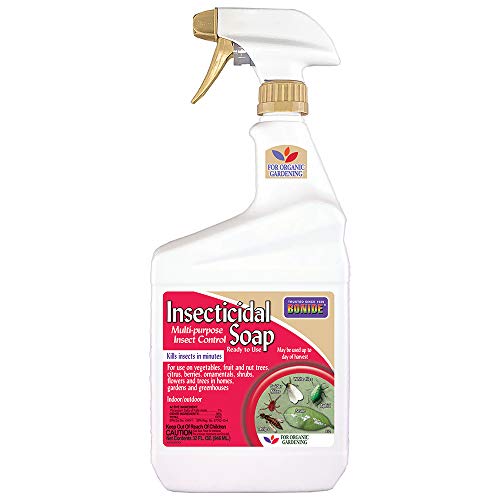 Bonide Insecticidal Soap Bonide Insecticidal Soap | Captain Jack's Insecticidal Super Soap controls species of… Designed for outdoor residential use in home gardens,… Product kills through direct contact and ingestion | Check price |
 Atticus Talak 7.9% Indoor/Outdoor Bifenthrin Insecticide Concentrate Atticus Talak 7.9% Indoor/Outdoor Bifenthrin Insecticide Concentrate | VERSATILE PARTNER, PROVEN EFFECTIVENESS: Talak 7.9 F contains… Our water-based formula can be used indoors and… Talak 7.9 F targets more than 75 indoor… | Check price |
As an Amazon Associate we earn from qualifying purchases at no extra cost to you.
Quick Picks
| Product | Best for | Price |
|---|---|---|
| Ortho Home Defense Insect Killer (1.33 gal) | Large perimeter treatments | $18.49 |
| Raid Multi Insect Killer (15 oz) | General indoor knockdown | $7.57 |
| Ortho Home Defense Max Indoor Barrier (1 gal) | Indoor barrier protection | $16.14 |
| Raid Flying Insect Killer (18 oz) | Flying insects indoors and outdoors | $7.37 |
| Raid Ant & Roach Killer (17.5 oz) | Budget crawling insect control | $5.28 |
| Ortho Home Defense Refill (1 gal) | Refilling existing wand sprayers | $10.46 |
| Bonide Insecticidal Soap (32 oz) | Organic gardening pest control | $9.99 |
| Atticus Talak Bifenthrin Concentrate (32 oz) | Heavy-duty concentrate mixing | $26.99 |
How We Picked
Selecting the best insecticide spray requires balancing four critical criteria: target pest spectrum, application convenience, residual longevity, and overall value. First, we looked at what each formula is designed to kill, because a spray optimized for flying insects will rarely perform well against hard-shelled roaches. Second, we evaluated how easy the product is to apply, noting whether it includes a battery-powered wand, a standard trigger, or requires manual dilution. Third, we compared owner feedback regarding how long the protective barrier lasts before reapplication is necessary. Finally, we weighed the price against the total volume provided to determine which products offer the lowest cost per ounce without sacrificing efficacy.
The 8 Best Insecticide Spray in 2026
Ortho Home Defense Insect Killer (1.33 gal)
This large-format perimeter spray is built for homeowners who want to establish a broad defensive line around their property. The integrated battery-powered wand extends to reach high corners and deep into foundation cracks without requiring you to bend or pump manually. Owners frequently praise the sheer coverage area and the convenience of the continuous spray mechanism. It targets a wide variety of common household pests, making it a versatile first line of defense.
- Pro: Battery-operated wand provides effortless, even application over large areas.
- Pro: High volume covers both indoor edges and outdoor perimeters effectively.
- Con: The bulky jug is heavy and cumbersome to store in small spaces.
Skip this if you only need to treat a single room or prefer a lightweight aerosol for quick spot treatments.
Raid Multi Insect Killer (15 oz)
Designed as a catch-all solution, this aerosol is ideal for renters or homeowners dealing with occasional, varied pest sightings rather than a full-scale infestation. The Orange Breeze scent attempts to mask the harsh chemical odor typical of bug sprays, which owners generally appreciate when using it inside living spaces. It works on contact and leaves a residual film that continues to deter crawling insects for a limited period after application.
- Pro: Versatile formula handles multiple insect types from a single can.
- Pro: Scented formulation reduces the unpleasant chemical smell indoors.
- Con: Small aerosol size depletes quickly if used for anything beyond spot treatments.
Skip this if you need long-term perimeter defense or are treating a severe, established colony of pests.
Ortho Home Defense Max Indoor Insect Barrier (1 gal)
This product focuses specifically on creating an invisible shield inside your home, particularly along baseboards, window sills, and entry points. Like its larger sibling, it utilizes a battery-powered wand for precise application, ensuring the liquid reaches tight crevices where bugs hide. Owner reviews highlight its effectiveness at stopping ants and spiders from crossing treated thresholds. The formula is engineered to dry clear and odorless, preventing stains on interior surfaces.
- Pro: Dries clear without leaving visible residue on floors or walls.
- Pro: Wand attachment allows for precise targeting of cracks and crevices.
- Con: Strictly formulated for indoor use, limiting its utility for yard treatments.
Skip this if your primary pest problems originate outdoors or if you need a product safe for direct garden application.
Raid Flying Insect Killer (18 oz)
When mosquitoes, flies, or moths invade your space, this specialized aerosol delivers a fast-acting knockdown effect. It is formulated for dual use, meaning you can clear out a screened porch or a closed bedroom with equal ease. Users report that the spray disperses widely, allowing you to treat a room quickly without aiming directly at every individual bug. The larger can size offers slightly more volume than standard multi-insect aerosols.
- Pro: Rapid knockdown action clears flying pests almost immediately.
- Pro: Approved for both indoor and outdoor use adds significant versatility.
- Con: Ineffective against crawling insects like roaches or bed bugs.
Skip this if your main concern is crawling pests hiding under appliances or inside pantry cabinets.
Raid Ant & Roach Killer (17.5 oz)
This is the quintessential budget option for tackling the two most stubborn household invaders. Formulated with a lemon scent to minimize odor complaints, it kills on contact and provides residual killing power for weeks on non-porous surfaces. Owners consistently note its reliability for breaking pheromone trails left by scouting ants. The straightforward aerosol design makes it easy to grab and deploy the moment you spot a pest scurrying across the floor.
- Pro: Highly affordable price point makes it accessible for any budget.
- Pro: Lemon scent is noticeably less offensive than traditional chemical sprays.
- Con: Aerosol delivery lacks the precision needed for deep crack-and-crevice penetration.
Skip this if you require a heavy-duty, long-lasting perimeter barrier rather than a reactive spot treatment.
Ortho Home Defense Insect Killer Refill (1 gal)
If you already own an Ortho wand sprayer, this refill jug is the most economical way to maintain your home’s protective barrier. It contains the same trusted formula as the original kit but eliminates the cost of purchasing another battery-operated wand. Owners appreciate the reduced plastic waste and the lower cost per ounce compared to buying a brand-new unit. It pours easily into the existing reservoir without spilling.
- Pro: Lower cost per ounce compared to buying a new sprayer kit.
- Pro: Eco-friendlier option that reuses your existing hardware.
- Con: Completely useless if you do not already own a compatible wand sprayer.
Skip this if you are a first-time buyer who needs a complete application system out of the box.
Bonide Insecticidal Soap (32 oz)
This ready-to-use spray caters to a completely different audience: organic gardeners and houseplant enthusiasts. Instead of synthetic chemicals, it uses potassium salts of fatty acids to break down the cell membranes of soft-bodied insects like aphids, mites, and whiteflies. Owners love that it can be applied up to the day of harvest on edible plants without safety concerns. The trigger spray bottle is simple to operate for targeted foliar applications.
- Pro: Safe for use on edibles and approved for organic gardening practices.
- Pro: Targets soft-bodied pests without harming beneficial pollinators once dry.
- Con: Requires direct contact with the pest and offers no residual barrier.
Skip this if you are trying to eliminate hard-shelled roaches, ants, or structural pests inside your home.
Atticus Talak Bifenthrin Concentrate (32 oz)
This professional-grade bifenthrin concentrate is intended for serious users who know how to mix and apply liquid insecticides safely. A small amount of this 7.9% formula yields a massive volume of finished spray, making it incredibly cost-effective for large properties. Owners with extensive acreage or severe recurring infestations rate it highly for its broad-spectrum control and long-lasting residual activity. It requires a separate pump sprayer for application.
- Pro: Extremely high yield per ounce makes it the most cost-effective option for large areas.
- Pro: Broad-spectrum control handles virtually any crawling or flying outdoor pest.
- Con: Requires careful manual dilution and separate spraying equipment.
Skip this if you want a simple, ready-to-use consumer product without the hassle of measuring and mixing chemicals.
Buying Guide
Active Ingredients and Target Pests
The most important specification on any insecticide spray label is the active ingredient, as it dictates exactly what the product will kill. Pyrethroids like bifenthrin and cypermethrin are common in perimeter sprays and excel at eliminating crawling insects such as ants, spiders, and roaches. For flying insects, pyrethrins provide a faster knockdown effect but typically degrade quicker in sunlight. If you are treating edible plants or sensitive indoor environments, insecticidal soaps rely on fatty acids rather than neurotoxins, making them safer but strictly contact-dependent.
Application Method and Coverage
How the product is delivered matters just as much as what is inside the bottle. Aerosol cans are convenient for immediate, reactive spot treatments but become prohibitively expensive if you try to treat an entire foundation. Pump sprayers and battery-powered wands allow you to lay down a continuous, even barrier along baseboards or exterior walls efficiently. Concentrates require you to supply your own tank sprayer and measure carefully, which introduces a learning curve but dramatically lowers the cost per square foot covered.
Residual Longevity and Safety
A contact killer stops working the moment it dries, whereas a residual insecticide continues to kill pests that walk over the treated surface days or weeks later. Perimeter sprays generally boast the longest residual life, sometimes lasting months on porous surfaces like concrete or wood. However, longer residuals often mean stronger chemicals, requiring you to keep pets and children away until the surface is completely dry. Always check the label for re-entry intervals and ensure the formula is explicitly rated for your intended environment, whether that is a vegetable garden or a child’s bedroom.
Our Verdict
After comparing specifications, pricing, and owner consensus, the Ortho Home Defense Insect Killer for Indoor & Perimeter (1.33 gal) stands out as our top pick. Its combination of a battery-powered wand, massive volume, and versatile indoor-outdoor formula makes it the most practical choice for comprehensive home defense. For buyers seeking the lowest upfront cost to handle a sudden sighting, the Raid Ant & Roach Killer Bug Spray is our budget pick, offering reliable knockdown power for under six dollars. However, if you manage a large property or face severe agricultural pests, the Atticus Talak Bifenthrin Concentrate wins outright due to its unmatched dilution ratio and professional-grade residual control.
FAQ
How often should I apply insecticide spray around my home?
Most perimeter sprays recommend reapplication every three to four months for optimal prevention, though heavy rain can wash away exterior barriers sooner. Indoor applications typically last longer since they are protected from weather degradation. Always follow the specific interval listed on the product label to avoid over-application.
Is insecticide spray safe to use around pets and children?
Synthetic insecticide sprays are generally safe once they have dried completely, but you must keep pets and children out of the treated area during application and while the surface is wet. Insecticidal soaps are inherently safer for homes with sensitive occupants but are only effective on plant-dwelling pests. Read the label’s precautionary statements carefully before use.
Can I use an outdoor insecticide spray indoors?
You should never use a product labeled exclusively for outdoor use inside your home, as these formulas often contain higher concentrations of chemicals that require ventilation to dissipate safely. Many products are explicitly labeled for both indoor and outdoor use, providing flexibility without compromising safety. When in doubt, purchase separate formulations dedicated to each environment.
What is the difference between a contact spray and a residual spray?
A contact spray kills insects only while they are directly exposed to the wet mist, making it ideal for knocking down flying bugs instantly. A residual spray leaves behind an active layer that continues to kill crawling insects for days or weeks after the liquid has dried. Most comprehensive home defense strategies utilize residual sprays for prevention and contact sprays for immediate emergencies.