Key takeaways
- E-bikes, which add motor vibration and are ridden faster over rough surfaces
- Gravel, cobbles and trails
- Very stiff carbon bars with no tape or grips under the mount
- Long daily rides, where exposure adds up
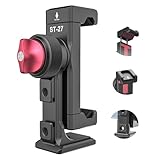
For most riders, the best bike phone holder is a case-based twist or snap mount from Quad Lock, Peak Design or SP Connect. All three lock the phone to a bracket instead of squeezing it with spring arms. Quad Lock is the most secure, Peak Design is the easiest to use one-handed, and SP Connect is the most compact. Universal clamp holders such as the Topeak Omni RideCase and budget silicone straps are still useful if you don’t want to buy a dedicated case.
Which system is right depends on your riding (road, gravel, commuting, e-bike), on whether you’ll pay for a matching case, and on how much camera vibration you’re willing to risk. The tables and checklists below cover those points.
Our top picks


As an Amazon Associate we earn from qualifying purchases at no extra cost to you. Ratings are shown as listed on Amazon.
How the main bike phone holders compare
| System | Attachment | Needs brand case | Vibration damping | Typical cost (mount + case) |
|---|---|---|---|---|
| Quad Lock Out Front Pro | Push and twist, dual-stage lock | Yes (or adhesive adapter) | Optional dampener, about $25 | $90–$130 |
| Peak Design Out Front Bike Mount | Magnetic snap with mechanical lock | Yes (or universal adapter) | Built into the mount | $100–$130 |
| SP Connect Handlebar Mount Pro / Pro MTB | 90-degree twist | Yes (or universal clamp) | Optional anti-vibration module | $80–$120 |
| Topeak Omni RideCase / RideCase | Slide-in clamp or slide-on case | No for Omni, yes for RideCase | None built in | $35–$70 |
| Silicone strap holders (generic) | Stretch band around phone | No | Silicone absorbs a little | $10–$20 |
Matching the holder to your riding
| Rider type | Best fit | Why |
|---|---|---|
| Road cyclist using navigation | Quad Lock or Peak Design out-front | Puts the screen ahead of the bars, in line with a bike computer |
| Commuter who removes the phone often | Peak Design | One-hand snap on and off, portrait or landscape |
| Gravel and MTB | SP Connect Pro MTB or Quad Lock with dampener | Metal bracket plus isolation for rough surfaces |
| E-bike rider | Any locking system plus a dampener | Motor and higher speeds add vibration |
| Shared or rental bikes | Universal clamp or strap | No special case and moves between bikes in seconds |
| Phone changes every year | Universal clamp, or a system with a stick-on adapter | Avoids buying a new case for each phone |
The three leading systems in detail
Quad Lock: the most secure hold
Quad Lock’s push-and-twist interface engages a spring-loaded lock, and the phone can’t come off without pressing a release collar. The company makes cases for a very wide range of phones and sells adhesive adapters for the rest. The out-front mount sets the phone ahead of the stem so you can see it without looking down. It takes a little more fiddling to mount than Peak Design.
Peak Design: the easiest to use
Peak Design’s SlimLink system snaps the phone on magnetically, then a mechanical lock holds it, so you can attach and release it with one hand at a traffic light. Vibration damping is built into the bike mounts. It is the most expensive of the three once you add a case.
SP Connect: compact and rugged
SP Connect cases are fairly slim, and the Pro MTB handlebar mount is machined aluminum. You turn the phone 90 degrees to lock it, which means you choose portrait or landscape when you install the bracket. The anti-vibration module is sold separately.
Camera vibration: what is real and what isn’t
Apple’s support guidance warns that high-amplitude vibration, especially from high-power motorcycle engines, can damage the optical image stabilization and autofocus in recent iPhone cameras. For small or electric motors, Apple recommends a vibration-dampening mount. A pedal bike on smooth tarmac produces much less of that high-frequency vibration, so most cyclists don’t need extra isolation.
The risk goes up with:
- E-bikes, which add motor vibration and are ridden faster over rough surfaces
- Gravel, cobbles and trails
- Very stiff carbon bars with no tape or grips under the mount
- Long daily rides, where exposure adds up
If any of these apply to you, a dampener costs $20 to $30, which is very little compared with a camera module repair. Rider reports of telephoto lenses losing focus on e-bikes are anecdotal, but they show the problem is possible.
Fit checklist before you buy
- Bar diameter: most out-front mounts fit 31.8 mm and 35 mm bars with shims. Check if you have aero or integrated cockpits, which often need a dedicated adapter.
- Stem mounts: some systems replace the stem top cap, which suits clean cockpits but depends on your headset spacer setup.
- Phone size: large phones of 6.7 to 6.9 inches leverage the mount more on bumps. Out-front mounts sit closer to the bar clamp and handle that better than stem-top mounts.
- Weather: branded cases protect the phone but not from heavy rain. Most systems sell a separate poncho or rain cover.
- Charging: some brands offer wireless charging heads, and those need power from a top-tube battery or an e-bike USB port.
Running costs and what wears out
- Cases: the real cost of a case-based system is a new case each time you change phones, usually $30 to $60.
- Rubber pads and O-rings: handlebar mounts often use rubber bands or pads that perish after a year or two in the sun. Replacements cost little.
- Dampeners: the elastomer in vibration modules stiffens with age and heat. Replace it if the phone feels more buzzy than it used to.
- Clamp springs: universal clamps lose tension over time. Check the grip before each ride on rough ground.
Safety and battery tips
Set the route before you ride and use voice prompts so you don’t need to read the screen often. Turn screen brightness to auto and use a dark map theme to save battery. On long rides, navigation with the screen on can use 10 to 20 percent of the battery per hour, so carry a small power bank for full-day routes.
FAQ
Are universal clamp holders safe?
Good ones with locking arms are fine for commuting on smooth roads. On rough terrain a sharp hit can open spring arms, so a case-based lock is safer.
Can I use the same case in the car?
Yes. Quad Lock, Peak Design and SP Connect all sell car, desk and motorcycle mounts for the same case, which helps justify the cost.