Key takeaways
- Old 12W USB-A charger: navigation and screen use can draw several watts, so net gain over 30 minutes may be only about 10-20 percent, and on hot days the battery can stay flat or even drop.
- 25W PPS charger: Samsung quotes up to roughly 50 percent in 30 minutes from a low battery when idle; while navigating, a net gain of around 30-40 percent is a reasonable expectation.
- 45W PPS charger on a supported Ultra: similar or slightly better than 25W in a short drive, with the advantage most visible when starting from a low battery.
The best car charger for Android is a USB-C Power Delivery charger that supports PPS (Programmable Power Supply) and delivers at least 25W per port, or 45W if you own a Samsung Galaxy Ultra or Plus model, because PPS is what unlocks Samsung Super Fast Charging and Google Pixel’s top wired speeds. A dual-port charger with one 45W PPS USB-C port plus a second port for a passenger covers almost every Android phone sold in the last few years. Brands such as Anker, Belkin, UGREEN, Spigen and Samsung itself sell chargers that meet this spec; what matters is the PPS label and the per-port wattage, not the total wattage printed on the front.
Our top picks


As an Amazon Associate we earn from qualifying purchases at no extra cost to you. Ratings are shown as listed on Amazon.
Why “Fast Charging” on the Box Is Not Enough
Android phones do not all speak the same charging language. Samsung and Google rely on USB PD with PPS, which lets the phone request precise voltage and current in small steps so the battery stays cooler during fast charging. A charger that supports only standard USB PD (fixed 5V, 9V, 15V steps) will still charge a Galaxy or Pixel, but often at a lower speed and without the “Super fast charging” notification. Older phones and some budget models use Qualcomm Quick Charge, and brands like OnePlus use proprietary systems that drop back to ordinary PD speeds on third-party chargers.
What Your Phone Can Actually Accept
| Phone group | Max wired charging | Protocol needed | Car charger port to look for |
|---|---|---|---|
| Galaxy S Ultra (S22 Ultra and later), S Plus models | 45W | USB PD 3.0 with PPS, 5A cable | 45W PPS USB-C |
| Galaxy S base models, Galaxy A5x / A3x, Z Flip and Z Fold lines | 25W | USB PD with PPS | 25W+ PPS USB-C |
| Google Pixel 8 to Pixel 10 series | Roughly 27-37W depending on model | USB PD with PPS | 30W+ PPS USB-C (45W for Pro XL models) |
| Pixel “a” series | Around 18-23W | USB PD | 20W+ USB-C |
| OnePlus, Oppo, Xiaomi flagships | 65-100W+ on proprietary chargers | Proprietary; PD fallback is slower | PD/PPS USB-C, or the brand’s own car charger for full speed |
| Older Android with USB-A cable | About 15-18W | Quick Charge 3.0 or basic 5V | QC 3.0 USB-A port |
Exact figures vary by model and region; check your phone’s spec sheet for the maximum wired wattage.
Decision Guide: Which Car Charger Fits Your Car Life
| Your situation | Charger configuration | Why | Typical price range |
|---|---|---|---|
| Solo commuter with a Galaxy S base model or Pixel | Single 30W PPS USB-C, flush-fit | Full speed, nothing sticking out of the dash | $12-$25 |
| Galaxy S Ultra owner who navigates daily | 45W PPS USB-C plus a 5A e-marked cable | Only setup that reaches Super Fast Charging 2.0 | $20-$40 |
| Driver and passenger, both Android | Dual USB-C, 45W + 20-30W, or 60W+ shared | Both phones stay fast at the same time | $20-$45 |
| Family or rideshare with mixed devices | 2C1A charger, 65-100W total, with a rear-seat extension | Covers old USB-A cables and back-seat tablets | $30-$60 |
| Laptop or tablet on road trips | Charger with one 60W+ USB-C port | Enough for a USB-C laptop plus a phone | $35-$70 |
Read the Per-Port Fine Print
A “65W” dual charger rarely provides 65W to each port. A common split is 45W on one port and 20W on the other when both are in use. If your Galaxy Ultra is plugged into the port that drops to 20W, you lose Super Fast Charging the moment a passenger connects. Look for a power distribution diagram in the product listing or manual, and plug the phone that needs the most power into the port that keeps its full rating.
A Worked Example: What a 30-Minute Commute Gets You
Take a phone with a 5,000mAh battery (common on Galaxy and Pixel models) running Google Maps or Android Auto with the screen on:
- Old 12W USB-A charger: navigation and screen use can draw several watts, so net gain over 30 minutes may be only about 10-20 percent, and on hot days the battery can stay flat or even drop.
- 25W PPS charger: Samsung quotes up to roughly 50 percent in 30 minutes from a low battery when idle; while navigating, a net gain of around 30-40 percent is a reasonable expectation.
- 45W PPS charger on a supported Ultra: similar or slightly better than 25W in a short drive, with the advantage most visible when starting from a low battery.
The lesson: moving from an old 12W adapter to 25W PPS is the big jump. Going from 25W to 45W is a smaller, model-specific bonus.
The Cable Matters as Much as the Charger
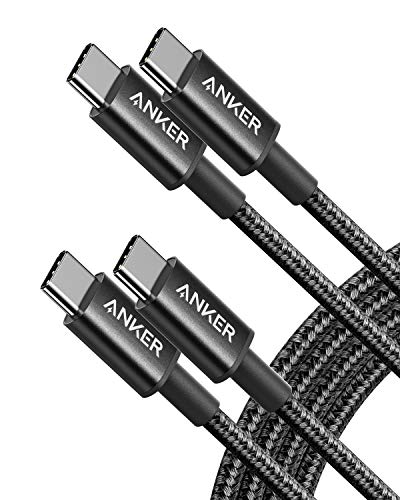
- 45W needs a 5A cable. Standard USB-C cables are rated 3A. That is fine for 60W at 20V, but PPS phone charging runs at roughly 9-10V, so a 3A cable caps a Galaxy at about 25-30W. For 45W Super Fast Charging 2.0 you need a 5A e-marked cable.
- Keep it short. A 3 foot (1m) cable reaches most mounts; a 6 foot cable for rear seats should be a quality, thicker gauge cable to limit voltage drop.
- Coiled cables keep the console tidy but stretch and fatigue faster; expect to replace them more often.
Built-In USB Ports vs a 12V Charger
Many cars have USB ports that exist mainly for data with Android Auto. They often supply only 0.5 to 1.5A at 5V (2.5 to 7.5W), which cannot keep up with navigation. Newer vehicles may offer USB-C ports with 15W to 27W or more, but rarely PPS at 45W. If you use wired Android Auto, you can connect through the car’s port for data and still benefit from a fast 12V charger for a second device, or switch to wireless Android Auto and charge from the 12V charger instead.
Heat, Safety and Ownership Realities
- Summer heat throttles charging. A phone in a sunny windshield mount may cut charging speed or pause entirely to protect the battery. A vent mount with air conditioning helps; this is the phone protecting itself, not a faulty charger.
- Socket fit wears. The 12V socket’s spring contacts can loosen; a charger that wobbles will cut out on bumps. Metal-bodied chargers tend to grip better and shed heat.
- Look for safety certifications. USB-IF certification for PD chargers and markings such as UL or equivalent, plus over-current, over-voltage and temperature protection.
- Socket power budget. Most 12V sockets are fused at 10 to 20 amps (120 to 240W), so even a 100W charger is within limits. Avoid stacking splitters with other high-draw accessories like tire inflators.
- Always-on sockets. Some cars keep the 12V socket live with the engine off. A charger with a status LED can slowly drain the battery over weeks of parking; unplug it if the car sits.
FAQ
Will a car charger made for iPhone work on my Android?
If it has a USB-C PD port, yes, but iPhone-oriented chargers often skip PPS. Check the PPS label for Galaxy and Pixel fast charging.
Can a high-wattage charger damage my phone?
No. The phone negotiates only the power it supports. A 100W charger will deliver 25W to a phone that requests 25W.