A dead phone at the airport, a laptop that quits mid-flight, a camping trip with no outlet in sight—these are the everyday emergencies a power bank solves. But not all battery packs are equal. Some promise fast charging and deliver a trickle. Others are so bulky they defeat the purpose of portability. And a few hide real capacity behind inflated marketing numbers that make them useless by the second day of a trip.
The best power banks 2026 have to offer come down to matching capacity, output wattage, and form factor to how you actually use your devices. A commuter needs something slim that charges a phone once or twice from a jacket pocket. A remote worker needs enough stored energy to top off a laptop across a full day away from a wall outlet. This roundup compares specs, published capacities, price-to-value ratios, and recurring themes from owner feedback across eight current models to help you find the right fit without overspending or buying a brick you will leave in a drawer.
Our top picks
 INIU 10000mAh 45W Fast Charging Portable Charger
- 40% Smaller & Lighter Portable Charger: Powered by…
- 45W Pro Speed Portable Phone Charger: This 45W…
- Detachable Cable for Multiple Devices: Unlike a standard…
 Miady 2-Pack Portable Charger
- Power 3 Devices at Once—No More Waiting! This…
- USB-C Bidirectional Power Bank: Designed with USB-C input…
- 2-Pack 10000mAh Power Bank: Double the power, double…
 Anker Power Bank
- 87W Power to Share: Distribute 87W across three…
- Speedy Cable Charging: Utilize the built-in cable to…
- 20,000mAh for Extended Use: Eliminate concerns about battery…
| Product | Key specs | |
|---|---|---|
| INIU 10000mAh 45W Fast Charging Portable Charger | 40% Smaller & Lighter Portable Charger: Powered by… 45W Pro Speed Portable Phone Charger: This 45W… Detachable Cable for Multiple Devices: Unlike a standard… | Check price |
| Miady 2-Pack Portable Charger | Power 3 Devices at Once—No More Waiting! This… USB-C Bidirectional Power Bank: Designed with USB-C input… 2-Pack 10000mAh Power Bank: Double the power, double… | Check price |
| Anker Power Bank | 87W Power to Share: Distribute 87W across three… Speedy Cable Charging: Utilize the built-in cable to… 20,000mAh for Extended Use: Eliminate concerns about battery… | Check price |
 Portable Charger Power Bank 60000mAh Portable Charger Power Bank 60000mAh | 60000mAh - The Largest Capacity on the Market:… Charge 5 Devices at Once & Cable Included:… 22.5W Fast Charging - Half the Time of… | Check price |
 Jackery Explorer 300 Portable Power Station Jackery Explorer 300 Portable Power Station | Ultra-Lightweight: At only 7.5 lbs, the Explorer 300… Versatile Power for 6 Devices: Equipped with 2… Built to Last: Upgraded with premium LiFePO4 chemistry,… | Check price |
 Anker Laptop Power Bank Anker Laptop Power Bank | Check price | |
 Anker Power Bank Anker Power Bank | Speedy 30W Charging: Experience cutting-edge 30W fast charging… Ready for Endless Use: Crafted for durability, the… Mighty Compact Power: This powerful 10,000mAh power bank… | Check price |
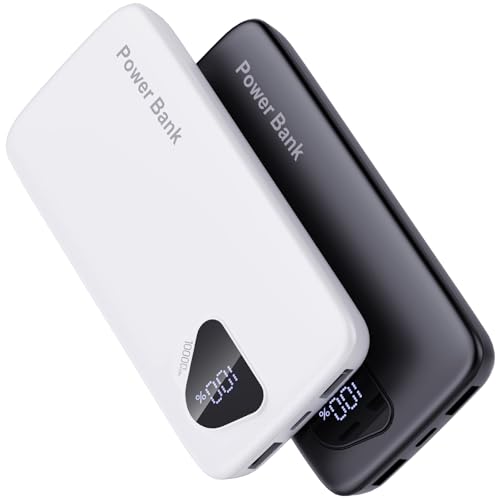 2026 2-Pack 10000mAh Portable Charger Battery Pack 2026 2-Pack 10000mAh Portable Charger Battery Pack | 【Charge 4 Devices Simultaneously】Total 4 output ports (built-in… 【Universal compatible with All popular devices】As portable phone… 【Super Slim, Accurate Percentage of Remaining Juice】 Slim… | Check price |
As an Amazon Associate we earn from qualifying purchases at no extra cost to you.
Quick Picks
| Product | Best for | Price |
|---|---|---|
| INIU 10000mAh 45W | Commuters who want speed in a small package | $21.59 |
| Miady 2-Pack Slim 10000mAh | Couples or travelers splitting packs | $19.97 |
| Anker 20,000mAh USB-C Cable | One-cable simplicity for phone and tablet | $59.98 |
| 60000mAh 22.5W PD | Multi-day trips without access to outlets | $28.99 |
| Jackery Explorer 300 | Camping, tailgating, and emergency backup | $259 |
| Anker 25,000mAh 165W | Laptop users who need serious wattage | $104.99 |
| Anker 10,000mAh 30W | Best all-round value for phone charging | $29.99 |
| 2026 2-Pack with Built-in Cables | Budget buyers who hate cable clutter | $22.99 |
How We Picked
We narrowed the field using four criteria: usable capacity relative to advertised rating, output wattage compared to what modern phones and laptops actually accept, physical size and weight against intended use case, and owner-reported reliability over months of daily carry. Products that scored well on specs but showed recurring complaints about inconsistent charging or premature failure were excluded. Price alone was not a filter—several budget options matched or beat models costing three times as much on core specs.
The 8 Best Power Banks 2026 in 2026
INIU 10000mAh 45W Fast Charging Portable Charger
This is for the person who grabs a power bank off the nightstand every morning and wants it charged by the time they reach the gate. The 45W output means it can fast-charge most flagship phones and even top off a tablet, which is unusual at this price point and size. Owners consistently praise how quickly it refuels its own battery between uses.
- Pro: 45W output outpaces nearly every competitor under $25.
- Pro: Compact enough for a jacket pocket or small bag.
- Con: 10000mAh gives only one to one-and-a-half full charges for a large phone.
Skip it if you need to charge multiple devices in a single day or want a laptop-capable pack.
Miady 2-Pack Slim 10000mAh Power Bank
Two slim 10000mAh packs for less than most single-brand competitors cost a premium. Ideal for couples, parent-child pairs, or anyone who wants a backup in the office drawer. The slim profile keeps each unit pocketable, and the two-pack format removes the anxiety of forgetting to recharge the one you carry.
- Pro: Lowest cost per capacity unit in this roundup.
- Pro: Slim form factor makes both easy to carry simultaneously.
- Con: No published high-wattage PD output; charging speed is standard.
Skip it if you need to fast-charge a laptop or want a single higher-capacity unit for a long trip.
Anker Power Bank 20,000mAh with Built-in USB-C Cable
Anker’s built-in cable approach eliminates the “where did I put my charging cable” problem entirely. At 20,000mAh, it handles two to three phone charges comfortably and can sustain a tablet through a full workday. The black finish resists scuffs, and the integrated cable stores flush so it does not snag in a bag.
- Pro: Built-in USB-C cable removes a common point of failure.
- Pro: 20,000mAh capacity supports a full weekend trip for one person.
- Con: Premium price for capacity that competitors offer for less.
Skip it if cable clutter is not a concern and you want maximum wattage-per-dollar.
Portable Charger Power Bank 60000mAh 22.5W
Astronomical capacity on paper, and owners report it genuinely lasts for multi-day festivals, camping weekends, or extended flights without a single outlet. At 28.99, the price-per-milliamp-hour ratio is hard to argue with. The tradeoff is bulk and a modest 22.5W ceiling that will not satisfy laptop users.
- Pro: 60000mAh handles a week of phone charging for one person.
- Pro: Aggressive pricing for this capacity tier.
- Con: Heavy and thick; clearly a bag-only carry.
Skip it if you want something pocketable or need to charge a laptop at full speed.
Jackery Explorer 300 Portable Power Station
This is not a pocket power bank—it is a 292Wh station for people who need AC outlets in a tent, a van, or a power outage. The Jackery name carries strong resale value and a wide ecosystem of compatible accessories. Owners highlight its quiet fan and clean power delivery for sensitive electronics like CPAP machines.
- Pro: AC outlet expands use cases far beyond USB devices.
- Pro: 292Wh reliably runs small appliances for hours.
- Con: $259 and a 292Wh ceiling limit serious off-grid applications.
Skip it if you only need USB charging and want something you can carry in one hand.
Anker Laptop Power Bank 25,000mAh 165W Total Output
165W total output is the headline here—it can simultaneously fast-charge a laptop and a phone without throttling. For digital nomads, photographers on location, or anyone who dreads the “low battery” warning during a client call, this is the pack that ends the anxiety. The 25,000mAh pool sustains a laptop through a full workday and still has headroom for a phone.
- Pro: 165W total output handles laptop-class power demands.
- Pro: Simultaneous multi-device charging with minimal power split.
- Con: At $104.99, it costs more than two mid-tier packs that cover most needs.
Skip it if your laptop stays plugged in most days and you only need phone-level charging.
Anker Power Bank 10,000mAh 30W
Thirty watts of PD output in a 10,000mAh shell for under thirty dollars is a sweet spot. It is slim, light, and fast enough for any modern phone at its peak charging rate. Anker’s long warranty track record and broad compatibility make it a low-risk default recommendation for most readers.
- Pro: 30W output covers virtually every phone at full speed.
- Pro: Proven brand reputation and solid build quality at this tier.
- Con: Single phone charge to a single-and-a-half; no margin for power-hungry setups.
Skip it if you regularly charge two or more devices between recharges or need laptop wattage.
2-Pack 10000mAh Portable Charger with Built-in Cables
Built-in cables in a 2-pack under twenty-three dollars is the kind of value that forces premium brands to justify their pricing. Each unit carries its own cable, so neither of you ever searches for the right connector. The 10000mAh rating is honest for daily phone top-offs, and the pair format works well for households.
- Pro: Integrated cables eliminate accessory loss and clutter.
- Pro: Two full-size 10000mAh packs for the price of one premium unit.
- Con: Lower wattage than single-brand flagships at similar capacity.
Skip it if fast-charging speed matters more to you than convenience and cost.
Buying Guide
Match Wattage to Your Device
Modern phones negotiate up to 20-45W via USB-C Power Delivery; tablets may accept 30W; most laptops need 65W or higher. A 22.5W pack will charge a phone quickly but crawl on a tablet. If you plan to charge a laptop, look for 60W output per port minimum, or 100W+ total if charging multiple devices at once.
Understand Advertised vs. Usable Capacity
A power bank rated at 10,000mAh stores energy at 3.7V internally; converting to 5V USB output loses roughly 30-40% to inefficiency. Expect about 6,000-7,000mAh of usable charge from a 10,000mAh pack. Multiply your phone battery capacity by two to find the rated pack size that gives you one full charge.
Size and Carry Frequency
A pocket power bank should be under 200 grams and thin enough to slip beside a wallet. Anything above 300 grams belongs in a bag. If you charge overnight and leave home without it, buy one that annoys you less to carry—often the 10,000mAh tier—rather than the larger unit that gathers dust.
Our Verdict
The Anker 10,000mAh 30W is our top pick for most readers: it fast-charges any phone, carries a strong warranty, and costs less than many single-purpose accessories. For the tightest budget, the Miady 2-Pack at $19.97 delivers two functional chargers for less than one competitor. If your laptop is the bottleneck, the Anker 25,000mAh 165W wins—nothing else in this group sustains that wattage without a wall outlet.
FAQ
Can I bring a power bank on a plane?
Yes, in your carry-on only. Most airlines cap individual packs at 100Wh (roughly 27,000mAh at 3.7V) without approval. The 60000mAh pack listed here likely exceeds airline limits when converted to watt-hours, so check carrier rules before packing it.
Do built-in cables wear out faster than detachable ones?
Integrated cables are exposed to repeated bending at the housing, but premium brands like Anker use reinforced strain reliefs specifically for this. If the cable fails, you lose a charging method but still have USB ports. Budget brands with built-in cables carry slightly more long-term risk.
Is higher mAh always better?
Only if you carry the pack regularly. A 60000mAh unit that stays home because it is too heavy is worse than a 10000mAh unit in your pocket. Match capacity to the number of charges you actually need between recharges.
What does “PD” or “Power Delivery” mean?
It is a USB-C charging standard that lets the charger and device negotiate voltage and current dynamically, rather than defaulting to a slow 5W trickle. A PD-rated pack will charge your phone significantly faster than a basic USB-A charger of the same capacity.