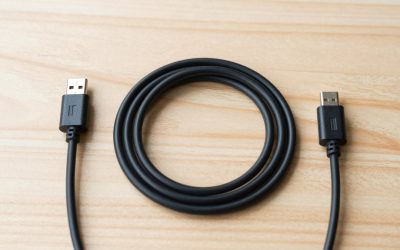
A dead or dying type c charging cable is one of the most common daily frustrations in smartphone ownership. The cable frays at the connector, the phone switches to trickle charge, and by the time you notice the damage, you have already spent twenty minutes hunting for a compatible cord in a drawer. Replacing a worn-out cable is simple, but choosing the right replacement is not: wattage ratings, connector types, length options, and build quality all matter, and the price gap between a solid pick and a throwaway is smaller than most buyers realize.
What separates a genuinely good cable from a cheap one is rarely visible in a product photo. Nylon braiding, strain relief at the connectors, certified wire gauge, and actual supported wattage all determine whether a cable lasts six months or six years. The options below span the full range of buyer needs, from single high-power cables for laptops to multi-packs that let you stock every room in the house. This roundup compares published specifications, listed prices, and recurring themes in owner feedback across 2026 to narrow the field.
Our top picks
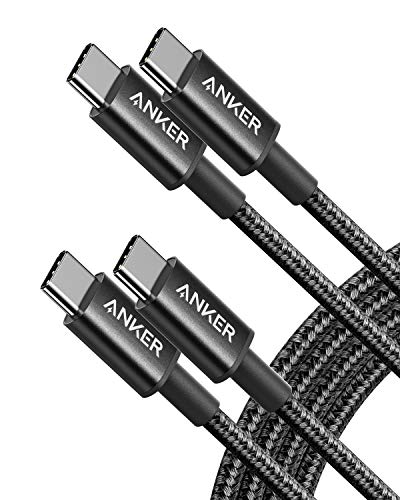 Anker USB C to USB C Cable
- Durable Design: Reinforced nylon exterior and a robust…
- Fast Charging: Supports Power Delivery for up to…
- Versatile Compatibility: Works with virtually all USB-C devices,…
| Product | Key specs | |
|---|---|---|
| Anker USB C to USB C Cable | Durable Design: Reinforced nylon exterior and a robust… Fast Charging: Supports Power Delivery for up to… Versatile Compatibility: Works with virtually all USB-C devices,… | Check price |
 INIU 240W USB C to USB C INIU 240W USB C to USB C | Check price | |
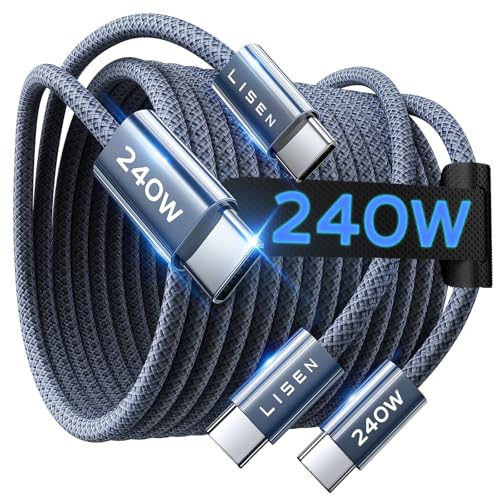 LISEN USB C to USB C Cable LISEN USB C to USB C Cable | Check price | |
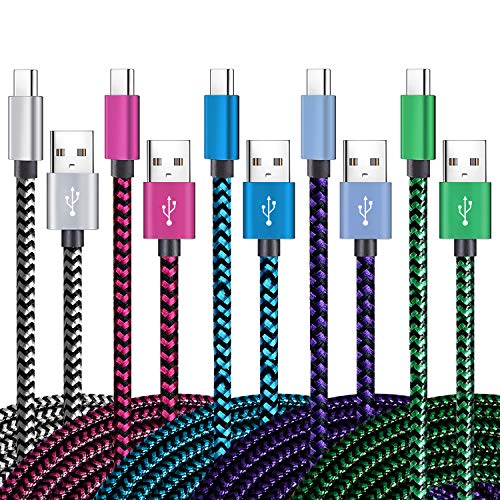 Teeind USB C Cable 6ft 5Pack Teeind USB C Cable 6ft 5Pack | 【3A Quick Charge&Sync】Transfer speed up to 480Mb/s, 3A… 【Certified Safety 】: This USB-C cable has electronic… 【Super Durable】Strong fiber, the most flexible, powerful and… | Check price |
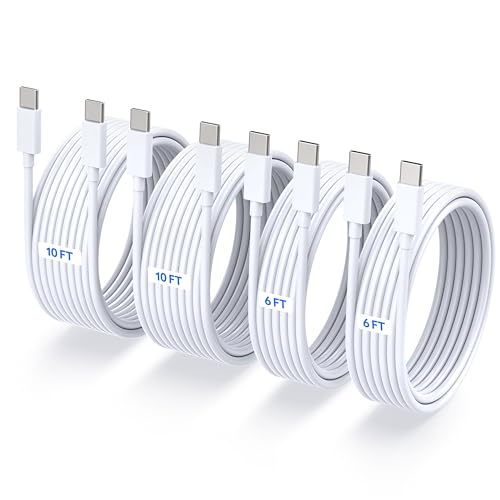 TZBAY 4-Pack TZBAY 4-Pack | 【 High-Quality Construction 】: Made from premium materials,… 【 Dual Length Fast Charger USBC Cable 】:… 【 60W Fast Charging USB C Cord 】:… | Check price |
 USB C Cable 5 Pack 6FT USB C Cable 5 Pack 6FT | 5 Pack 6FT Charging Cords: Includes five 6-foot… 3A Fast Charging and Sync: Supports up to… Braided for Daily Use: Nylon braided material helps… | Check price |
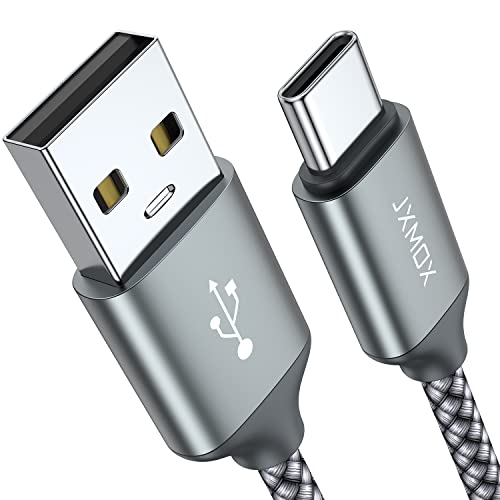 USB Type C Cable USB Type C Cable | 【3.1A Fast Charging】: Supports safe high-speed charging 3.1A… 【Military grade material】: Strong military fiber can be… 【Wide Compatibility】: Work with All USB Type-C devices… | Check price |
 LISEN USB C to USB C Cable LISEN USB C to USB C Cable | 60W Turbo Fast Charging:This iPhone 18 charger cord… Right for ALL Your Devices:This is the USB-C… Green Recyclable Materials:The LISEN USB C to USB… | Check price |
As an Amazon Associate we earn from qualifying purchases at no extra cost to you.
Quick Picks
| Product | Best for | Price |
|---|---|---|
| Anker 60W 2-Pack 6ft | Trusted-brand everyday use | $9.99 |
| INIU 240W 6.6ft 2-Pack | Maximum power on a budget | $9.47 |
| LISEN 240W 6.6ft Single | Cheapest single 240W cable | $8.97 |
| Teeind 3A 5-Pack 6ft | Whole-house stocking | $9.99 |
| TZBAY 60W 4-Pack Mixed Lengths | Flexible length choices in one buy | $9.99 |
| USB A to C 5-Pack 6ft | Compatibility with older adapters | $8.97 |
| USB A to C 3.3ft 2-Pack | Lowest cost entry point | $3.99 |
| LISEN 60W 5-Pack Mixed Lengths | Length variety with a known brand | $9.99 |
How We Picked
We filtered the field on four criteria: supported wattage relative to price, connector type (USB-C to USB-C versus USB-A to USB-C), value per cable when multi-packs are involved, and recurrence of durability complaints or praise in owner reviews. Cables that matched on price but flagged consistently for connector failure or slower-than-advertised charging were excluded. Brand recognition played a small role only where it correlated with verifiable warranty or replacement policies.
The 8 Best Type C Charging Cable in 2026
Anker USB C to USB C Cable, 60W Fast Charging Cable (2-Pack, 6 ft, Black)
For buyers who want a no-surprises cable from the most recognized name in phone accessories, Anker’s 60W two-pack delivers exactly that. Sixty watts handles every smartphone and most tablets at their fastest supported rate, and the six-foot length is practical on a nightstand or desk without excess slack. The two-pack format means one cable stays at home while the other lives in a bag.
- Pro: Anker’s replacement warranty and brand consistency reduce guesswork
- Pro: 60W ceiling is more than sufficient for phones and tablets
- Con: Not a viable option for charging a 100W or 240W laptop
Skip this if you need to charge a laptop over USB-C or want higher per-cable wattage in a single purchase.
INIU 240W USB C to USB C Cable, 6.6ft + 6.6ft Fast Charging Type C Cord
INIU’s 240W two-pack is the standout value in this list for anyone whose devices support high-wattage USB-C Power Delivery. Two cables at 6.6 feet each, rated to the maximum PD spec, land at a price point where single-cable alternatives barely compete. Owners repeatedly note that it charges laptops and tablets at full rated speed without the cable heating noticeably.
- Pro: Full 240W rating at a price that undercuts many 60W options
- Pro: Two cables included, both long enough for comfortable desk use
- Con: Less brand recognition means fewer published long-term durability tests
Skip this if your devices never draw more than 60W and you prefer a well-known brand for peace of mind.
LISEN USB C to USB C Cable, 240W Fast Charging Type C Charger Cord (6.6FT)
As a single-cable purchase, LISEN’s 240W option is the lowest-priced way to get full Power Delivery 3.1 spec into your setup. It suits a buyer who already owns a high-wattage charger and needs one reliable cable rather than spares. The 6.6-foot length mirrors the INIU above, and owner feedback highlights consistent fast-charge performance across a range of phones and ultrabooks.
- Pro: Cheapest entry to 240W charging among the cables compared here
- Pro: Slim profile that fits through tight ports and cable-management clips
- Con: Only one cable per package, so multi-device households may need to buy twice
Skip this if you want multiple lengths or positions covered in a single order.
Teeind USB C Cable 6ft 5Pack, 3A Fast Charging Nylon Braided Type C Cord
Teeind targets the buyer who wants to replace every cable in the house at once. Five six-foot braided cables for under ten dollars is aggressive pricing, and the 3A rating covers the standard 60W PD ceiling. Nylon braiding earns repeated praise for resisting the fraying that kills cheaper TPE-jacketed cords. The tradeoff is that the listing does not specify the connector on the source side, so buyers with USB-C wall adapters should confirm compatibility.
- Pro: Five-pack economics bring per-cable cost below two dollars
- Pro: Braided jacket consistently noted as a durability advantage in reviews
- Con: Wattage ceiling and connector configuration are less clearly stated than competitors
Skip this if you need guaranteed 240W throughput or want connector-type clarity before ordering.
TZBAY 4-Pack (6ft, 6ft, 10ft, 10ft) 60W USB C to USB C Fast Charging Cable
TZBAY solves the length problem: a 10-foot cable behind a couch or on a kitchen counter eliminates the awkward stretch, while the 6-foot pairs cover bedside and desk use. All four are 60W, making them fine for phones and tablets but a dead end for laptop charging. The packaging keeps cost per cable under three dollars.
- Pro: Two 10-foot cables included, a length rarely bundled in affordable packs
- Pro: Four cables at the same price as many single-cable options
- Con: 60W cap rules out high-wattage laptop or monitor charging
Skip this if any device in your setup demands more than 60W over USB-C.
USB C Cable 5 Pack 6FT, USB A to Type C Fast Charger Cord
This pack addresses a real transitional need: many power banks, car adapters, and older wall chargers still ship with USB-A output. Rather than replacing every adapter, this cable bridges the gap for anyone whose phone is USB-C but whose charger is not. Five cables at six feet covers multiple locations cheaply.
- Pro: Directly compatible with the large installed base of USB-A power sources
- Pro: Five-pack pricing makes per-cable cost negligible
- Con: USB-A input physically limits maximum power transfer below USB-C-to-USB-C options
Skip this if every charger you own already has a USB-C port.
USB Type C Cable, USB A to USB C 3A Fast Charging (3.3ft 2-Pack)
At under four dollars for two cables, this is the lowest-risk way to test whether a braided USB-A-to-C cable meets your needs. The 3.3-foot length is tight but ideal for car consoles or short desk runs where excess cable becomes a trip hazard. Listed compatibility spans several generations of iPhone, Galaxy, and LG hardware.
- Pro: Cheapest total cost in this comparison, near-disposable price per cable
- Pro: Short length keeps charging stations tidy and cord-free-looking
- Con: 3.3 feet is too short for most bed or couch scenarios
Skip this if you need reach beyond arm’s length or want a long-term primary cable.
LISEN USB C to USB C Cable, 5-Pack [3.3/3.3/6.6/6.6/10FT] 60W Fast Charging
LISEN bundles five different lengths into a single purchase, eliminating the guesswork of which cable goes where. Two short cables for tight spots, two mid-length for standard use, and one 10-footer for the long reach. The 60W ceiling matches its intended audience: phone and tablet owners who want organization without spending a premium.
- Pro: Five distinct lengths in one pack covers every room without a second order
- Pro: LISEN’s presence in the 240W line adds brand credibility to this 60W tier
- Con: Two of the five cables are only 3.3 feet, which may sit unused for some buyers
Skip this if you need laptop-grade wattage or would never use a cable shorter than six feet.
Buying Guide
Match Wattage to Your Highest-Power Device
USB-C Power Delivery scales from 15W to 240W. A 60W cable will fast-charge most phones and tablets at full speed but will throttle a MacBook Pro or gaming laptop. If any device in your household lists a USB-C charger above 60W, buy a 240W-rated cable. The price difference is often under a dollar, and overspeccing does no harm to lower-wattage devices.
Decide Between USB-C to USB-C and USB-A to USB-C
USB-C to USB-C cables support the full PD negotiation and higher wattage tiers. USB-A to USB-C cables are limited to whatever the USB-A port can supply, typically capped at 15W to 25W depending on the adapter. If your wall chargers, power banks, and laptop ports all have USB-C outputs, a USB-A cable is a step backward. Buy USB-A-to-C only when you are bridging older hardware you do not want to replace yet.
Length and Jacket Material Determine Real-World Longevity
A six-foot cable is the practical default: long enough for a nightstand or desk, short enough to avoid tangling. Ten-foot cables solve reach problems but add bulk and can overheat slightly under sustained high-wattage loads. Nylon braiding resists abrasion and pet teeth far better than bare TPE rubber, and the cost difference in 2026 multi-packs is negligible. Prioritize braided jackets if the cable will live in a car, bag, or shared family space.
Our Verdict
The top pick is the INIU 240W two-pack. It offers the highest power rating on the market at one of the lowest per-cable prices, covering phones, tablets, and laptops in a single purchase. For budget buyers who need only phone-level charging, the Teeind 5-Pack delivers five braided cables for under ten dollars and will last years of daily use. If you specifically need long-reach options in a multi-pack, the TZBAY 4-Pack with two 10-foot cables wins on practical layout flexibility despite its 60W ceiling.
FAQ
Will a 240W cable charge my phone slower or damage it?
No. USB-C Power Delivery negotiation means the cable and charger agree on the highest safe wattage for the connected device. A 240W cable plugged into a phone that draws 25W will simply deliver 25W, identical to a 60W cable in that scenario.
Do cable length or thickness actually affect charging speed?
Length adds electrical resistance, but within the 3-to-10-foot range used for consumer devices the effect is negligible under normal PD negotiation. Thicker gauge wires in 240W-rated cables matter most for sustained high-current laptop charging, where a thin cable can trigger thermal throttling.
Can I use any USB-C cable for data transfer and charging?
Most USB-C cables support both, but cheaper cables may be wired for charging only at USB 2.0 data speeds. If you transfer large files frequently, look for explicit data-rate claims (10 Gbps or higher) rather than assuming all Type-C cables handle full USB 3 or Thunderbolt throughput.
How do I know which wattage my device actually needs?
Check the power adapter that came with the device; the output label lists voltage and amperage. Multiply them for total watts. Alternatively, the device settings menu on most phones shows current charge rate in real time, letting you confirm whether your cable is delivering the expected speed.