Key takeaways
- Small oven and limited patio: Start with a compact table, but measure the oven’s footprint, including handles and any required clearance. A top that merely matches the oven base leaves little room to set down a peel or turn dough.
- Regular weekend cooking: A mobile cart is a good all-rounder. Look for a work surface at least 6–10 inches (15–25 cm) wider than the oven on one side, so tools have a dedicated landing area.
- Large or heavy oven: Prioritize the manufacturer’s load rating, frame rigidity, and top dimensions over shelves or decorative features. Include the oven, fuel, accessories, and anything stored on the table when estimating the total load.
- Permanent outdoor kitchen: A fixed table or cabinet can provide better storage and stability. It still needs weather-appropriate materials and enough open space around the oven for ventilation and safe operation.
- Occasional use or easy storage: A folding table can be practical if it locks securely when open and its stated capacity covers the oven. Avoid leaving a lightweight folding frame loaded and exposed to wind.
Best Outdoor Pizza Oven Tables: Match the Stand to Your Oven and Patio
The best outdoor pizza oven table is one rated to hold your oven with a comfortable safety margin, built with a heat-resistant top, and sized to leave room for a peel and other tools. For most owners, a sturdy stainless-steel or powder-coated steel cart with locking wheels is the most versatile choice; a fixed, weatherproof cabinet suits a permanent setup, while a compact folding table works for occasional use and smaller ovens.
Compare table types before choosing
Dimensions and capacities vary by model, so treat the figures below as practical selection targets—not specifications for a particular product. Always check the table maker’s stated load rating and the oven manufacturer’s clearance and placement requirements.
Our top picks


As an Amazon Associate we earn from qualifying purchases at no extra cost to you. Ratings are shown as listed on Amazon.
| Table type | Useful top size | Target load rating | Typical construction | Best suited to |
|---|---|---|---|---|
| Compact folding table | 24 × 24 in (61 × 61 cm) | At least 100 lb (45 kg) | Steel frame; metal or heat-resistant composite top | Small ovens, tight patios, occasional cooking |
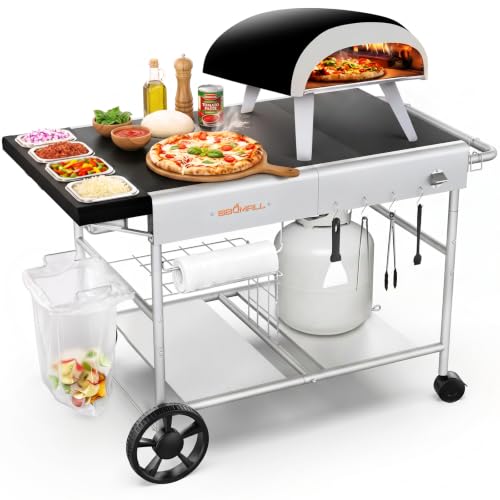
| Mobile prep cart | 30 × 24 in (76 × 61 cm) | At least 150 lb (68 kg) | Stainless or coated steel; locking casters | Frequent use and movable setups |
| Large work table | 36 × 30 in (91 × 76 cm) | At least 200 lb (91 kg) | Heavy-gauge steel or stainless steel | Large ovens, tools, and prep space |
| Fixed outdoor cabinet | 36 × 24 in (91 × 61 cm) or larger | At least 200 lb (91 kg) | Weather-rated steel, masonry, or outdoor-rated cabinetry | Permanent installations with covered storage |
Choose by your oven, space, and cooking routine
- Small oven and limited patio: Start with a compact table, but measure the oven’s footprint, including handles and any required clearance. A top that merely matches the oven base leaves little room to set down a peel or turn dough.
- Regular weekend cooking: A mobile cart is a good all-rounder. Look for a work surface at least 6–10 inches (15–25 cm) wider than the oven on one side, so tools have a dedicated landing area.
- Large or heavy oven: Prioritize the manufacturer’s load rating, frame rigidity, and top dimensions over shelves or decorative features. Include the oven, fuel, accessories, and anything stored on the table when estimating the total load.
- Permanent outdoor kitchen: A fixed table or cabinet can provide better storage and stability. It still needs weather-appropriate materials and enough open space around the oven for ventilation and safe operation.
- Occasional use or easy storage: A folding table can be practical if it locks securely when open and its stated capacity covers the oven. Avoid leaving a lightweight folding frame loaded and exposed to wind.
Check fit and weight capacity—not just the tabletop dimensions
Measure the oven’s base and compare it with the table’s usable top area. Account for feet, protruding controls, side handles, and any support or clearance rules in the oven manual. If the table has a raised edge, cutout, or inset panel, measure the flat area where the oven will actually sit.
For a simple load check, add the oven’s weight to the weight of fuel and accessories that will remain on the table. For example, a 65 lb oven plus 15 lb of stored tools and fuel creates an 80 lb working load. A table rated for 100 lb technically exceeds that figure, but a sturdier rating—such as 150 lb or more—gives useful headroom for movement and uneven loading. The rating does not replace a level, stable setup.
Do not assume every table surface is safe directly beneath a hot oven. Stainless steel and steel are generally durable outdoor choices, but metal can become hot and coatings can be damaged by concentrated heat. Follow the oven maker’s instructions about heat shields, clearance, and approved surfaces. Keep the table away from combustible walls, railings, and overhangs as directed by the manual.
Details that matter after the first few cooks
Heat resistance and work space
A heat-resistant top is only part of the equation: the frame, finish, and nearby storage also need to tolerate the oven’s operating conditions. Leave a clear landing area for a peel and turning tools, and keep dough preparation separate from the hottest zone. If the table is just wide enough for the oven, consider a side shelf or a separate prep surface rather than crowding tools beside the flame.
Wheels and stability
Check wheel diameter, caster material, and whether at least two wheels lock. Small casters can catch on patio joints, gravel, or thresholds; larger wheels usually roll more easily but do not make a table suitable for rough ground. Lock the casters before cooking, and test the loaded table for wobble on the actual surface. A level patio matters more than a long feature list.
Weather resistance and storage
Stainless steel resists corrosion well, though its grade and finish affect how it holds up near salt air. Powder-coated steel can be durable, but scratches and chips may expose the metal beneath. Shelves and enclosed cabinets help organize tools, but outdoor storage can still collect moisture; keep fuel and accessories only where their instructions allow. A fitted cover and a dry, ventilated storage area can extend the life of the table and help protect the finish.
Common ownership mistakes to avoid
- Using the full rated capacity as a target: A rating is a limit, not a reason to load the table to its maximum. Leave margin for accessories and shifting loads.
- Ignoring the floor: A table that feels stable on a showroom floor may rock on pavers or decking. Check it where it will be used, with the casters locked.
- Cleaning with harsh abrasives: Abrasive pads can scratch stainless steel and damage coated finishes. Use a suitable cleaner and soft cloth, and follow the table maker’s care instructions.
- Leaving water trapped on the surface: Dry the top and check seams, fasteners, and caster fittings after rain. This is especially important for coated steel.
- Storing the oven on an unsuitable shelf: Confirm that shelves are rated for the load and are not exposed to heat or weather beyond their intended use.
Final recommendation
For a flexible everyday setup, choose a mobile steel or stainless-steel cart with a heat-appropriate work surface, locking wheels, and a load rating comfortably above the combined weight of the oven and stored gear. Go smaller only when space or portability is the priority, and choose a fixed outdoor cabinet when the oven has a permanent home. Before buying, verify the table’s usable dimensions, capacity, wheel locks, finish, and compatibility with the oven’s placement instructions.