Key takeaways
- Closed-back headphones isolate you from the room and keep your monitor mix from bleeding into a vocal mic. They are the right tool for tracking vocals and instruments.
- Open-back headphones let sound escape and let outside sound in. Reviewers commonly describe them as more spacious and less fatiguing for long mixing sessions, but they are unsuitable when a microphone is open nearby.
- Semi-open designs split the difference but still leak some sound.
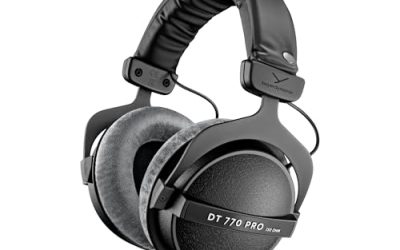
For most home studios, the Audio-Technica ATH-M50x or the beyerdynamic DT 770 Pro is the sensible closed-back choice for tracking, the Sennheiser HD 560S or beyerdynamic DT 990 Pro is the better open-back choice for mixing, and the Sony MDR-7506 is the budget standard. Closed-back designs stop sound leaking into a microphone, while open-back designs usually give a wider, more natural soundstage when nobody is recording.
Our top picks



As an Amazon Associate we earn from qualifying purchases at no extra cost to you.
Closed-back or open-back?
- Closed-back headphones isolate you from the room and keep your monitor mix from bleeding into a vocal mic. They are the right tool for tracking vocals and instruments.
- Open-back headphones let sound escape and let outside sound in. Reviewers commonly describe them as more spacious and less fatiguing for long mixing sessions, but they are unsuitable when a microphone is open nearby.
- Semi-open designs split the difference but still leak some sound.
Other things that matter
- Impedance: Headphones with higher impedance, such as the 250 ohm versions of beyerdynamic’s DT series, typically need a headphone amplifier or audio interface with enough output. The 80 ohm versions work better with laptops and basic interfaces. Makers list the impedance and sensitivity, so compare it to what your interface can drive.
- Detachable cables: A replaceable cable saves the headphone if the cable fails. Many studio models include a straight and a coiled option.
- Comfort: Sessions can last hours. Pad material, clamping force and weight matter, and velour pads usually breathe better than leatherette.
- Sound signature: Studio headphones aim to be accurate, but each model has its own tilt. Many engineers check a mix on several pairs and speakers before finalising.
- Serviceability: Studio-oriented models often have replaceable pads and parts, which extends life.
Headphones at a glance
| Model | Type | Best for | Key stated specs | Limits |
|---|---|---|---|---|
| Audio-Technica ATH-M50x | Closed-back | Tracking and general monitoring | Detachable cables, 45 mm drivers, 38 ohm impedance, as listed by the maker | Some reviewers find the low end warm |
| beyerdynamic DT 770 Pro | Closed-back | Tracking and comfortable long sessions | Available in 32, 80 and 250 ohm versions, replaceable pads | Higher impedance versions need a stronger amp |
| Sony MDR-7506 | Closed-back | Budget tracking and voice work | Foldable, 63 mm drivers as listed by the maker | Non-detachable cable; bright sound |
| Sennheiser HD 560S | Open-back | Mixing on a home budget | Open-back design, 120 ohm impedance, as listed | Leaks sound; not for tracking |
| beyerdynamic DT 990 Pro | Open-back | Mixing with a lively treble | 250 ohm impedance, replaceable pads, as listed | Bright for some listeners; needs a decent interface |
| Sennheiser HD 600 / HD 650 | Open-back | Critical listening and mixing at a premium tier | Detachable cable, 300 ohm impedance, as listed | Need a good amp; no isolation |
Closed-back picks for tracking
The ATH-M50x is among the most widely used studio headphones. Audio-Technica lists detachable cables and large drivers, and reviewers typically note solid isolation and a fun, warm response. The beyerdynamic DT 770 Pro is a long-running studio staple, and the maker sells several impedance versions, so match it to your gear. Many users find the DT 770 more comfortable for long sessions because of its velour pads. The Sony MDR-7506 remains common for voice and broadcast work and is the lowest tier of these, with a foldable body but a fixed cable.
Open-back picks for mixing
Sennheiser’s HD 560S is often named by reviewers as an accessible reference-style open-back. The DT 990 Pro is also popular, with a brighter presentation that some like for spotting harshness, though it can be fatiguing for some listeners. At a premium tier, the HD 600 and HD 650 are long-standing references for detail and neutrality but need a capable amplifier. Because all open-backs leak sound, plan to use them only when you are not recording.
Matching headphones to your setup
- Laptop or basic interface: Choose low to medium impedance, such as the ATH-M50x, DT 770 Pro 80 ohm or Sony MDR-7506.
- Interface with a strong headphone amp: You can use 250 ohm DT models or 300 ohm Sennheiser models.
- Shared rooms: Closed-back models keep your listening from disturbing others.
- Small rooms: Headphones are valuable when you cannot treat the room acoustically, but many engineers still check mixes on speakers.
Care and listening safety
- Keep volume at a comfortable level. If you notice ringing in your ears or muffled hearing after a session, rest your ears and consult a hearing professional.
- Take regular breaks. Long sessions at high volume increase fatigue and the risk of damage.
- Replace worn pads according to the maker’s guidance, since compressed pads change both comfort and sound.
- Use the proper cable length and avoid yanking connectors, and store headphones on a stand instead of on the desk.
Pick X if…
| If you… | Pick |
|---|---|
| Record vocals and need isolation | ATH-M50x or DT 770 Pro |
| Want a lower-tier closed-back standard | Sony MDR-7506 |
| Mix at home and want a wide soundstage | Sennheiser HD 560S |
| Like a bright, detailed sound | DT 990 Pro |
| Want a premium reference and have an amp | Sennheiser HD 600 or HD 650 |
| Use a laptop with no interface | Lower-impedance models |
Alternatives to consider
- AKG K371 or K240-series: The K371 is a closed-back studio model; the K240 line is semi-open and long-established.
- Shure SRH840A or SRH440A: Studio-oriented closed-back options at a mid-range or budget tier.
- Studio monitors: Speakers give a different reference and a more natural spatial feel if your room allows.
Budget tiers for a home studio
At the budget tier, the Sony MDR-7506 and similar closed-back models give reliable monitoring for tracking and voice work, with a bright presentation that reveals problems. In the mid-range, the ATH-M50x, DT 770 Pro and HD 560S offer better comfort, replaceable parts and a more refined sound, and reviewers often name them as the sweet spot for home users. At the premium tier, the Sennheiser HD 600 and HD 650 and higher-end beyerdynamic models offer detail and comfort for long mixing sessions, but they need good amplification and a quiet room, since open-back designs do not block noise. Most beginners are well served by one closed-back pair first and an open-back pair later.
Connectors, cables and adapters
Most studio headphones use a 3.5 mm plug with a screw-on 6.35 mm adapter, or a detachable cable that ends in one of those sizes. Audio interfaces usually offer a 6.35 mm headphone output, while laptops and phones use 3.5 mm. A cable that is too short restricts movement at a desk, and one that is too long catches on chairs, so pick the length that suits your setup. Coiled cables stretch to a long length but can transmit handling noise, while straight cables are quieter. If you track in a small booth, a long straight cable with a clip is a practical choice.
Using headphones in an untreated room
Headphones remove room reflections from what you hear, which is why they are popular in bedrooms and spare rooms. They also change how bass feels, because you do not feel low frequencies in your body as you do from speakers. Engineers often compensate by checking mixes on a car stereo, phone speaker and a small Bluetooth speaker. If you mix mainly on headphones, keep reference tracks handy and compare them frequently so you learn how your model translates.
Gear to pair with your headphones
A headphone amplifier or an audio interface with a dedicated headphone output gives you volume headroom and cleaner sound than a laptop jack, especially for 250 ohm or 300 ohm models. A splitter or a small headphone distribution box lets a performer and an engineer listen to the same cue mix. A stand or hook keeps the headband from stretching and the cable from tangling. Spare ear pads, which makers such as beyerdynamic and Audio-Technica sell separately, keep older pairs comfortable. If you record vocals, set the cue level low enough that the mic does not pick up bleed, and use closed-back models for that job only.
Finally, give any new pair a few hours of listening before judging it. Pads settle, your ears adapt, and reference tracks you know well reveal more than new music does. Reviewers often suggest comparing two pairs on the same songs at the same volume to spot differences in bass, treble and imaging.
Frequently Asked Questions
Do I need open-back headphones for mixing?
No, but many engineers prefer them because of the wider soundstage and lower fatigue. You can mix on closed-back headphones if you check the mix on other systems. Use closed-backs for tracking and open-backs for mixing if you own both.
What impedance should I choose?
Lower impedance models work with laptops and basic interfaces. Higher impedance models need an amplifier with enough output to reach full level. Read the maker’s spec and your interface’s headphone output rating.
Are studio headphones good for casual listening?
They can be, but they tend to sound analytical and are often less bass-heavy than consumer headphones. Many people enjoy them for music, others prefer a warmer tuning.
Can headphones replace studio monitors?
They are an excellent complement and are essential in untreated rooms, but they present sound differently from speakers. Check your mix on both when possible.
How long do studio headphones last?
With replaceable pads and cables, many models last years. Pads usually wear first, so look for a model whose parts are available.
Why is there a mic bleed with my headphones?
Open-back or high-volume listening can leak sound into a nearby mic. Switch to closed-back models and lower the cue level.
More from Amazon
Programs that pair well with the guide above. Offers and eligibility are set by Amazon and may change.
Free shipping on eligible items, Prime Video and more. Eligible new members can start with a free trial.
Start a Prime free trialAd-free music streaming. Eligible new subscribers can start with a free trial.
Try Music Unlimited freeA Prime membership for ages 18-24 with a trial period. Eligibility is set by Amazon.
See Prime for Young AdultsAudiobooks and podcasts to listen to on the go. Eligible new members can start with a free trial.
Try Audible freeAs an Amazon Associate we earn from qualifying purchases.