Key takeaways
- Phones chosen for long battery endurance, with page-stated capacity and runtime claims, charging notes and carrier checks to make before you buy.
As an Amazon Associate we earn from qualifying purchases.
Disclosure: This article contains affiliate links. If you buy through these links, we may earn a commission at no additional cost to you.


How this keyword is read, and why endurance is the subject
This keyword is garbled, and the reading used here needs to be stated plainly at the start. The phrase “range of phone battery charge” is read as phones with long battery endurance: handsets whose own product pages state a large battery capacity, a runtime claim measured in hours or days, or a battery-saving mode that extends the time between charges. The word “range” is treated as endurance range, meaning how far a phone can go on one charge, not as a distance figure, not as a charging accessory, and not as a collection of replacement batteries. If a different meaning was intended, this article will not match it, and that limitation is flagged here rather than hidden in the wording.
That reading shapes every choice that follows. A phone qualifies only when its Amazon US product page states the battery facts used to judge it. Capacity in milliamp hours is one of those facts, but capacity alone is not endurance. Screen size, processor efficiency, refresh rate behaviour and software battery management all change how long a stated capacity lasts in a hand. For that reason, each phone below is presented with the exact endurance language from its own listing: a capacity figure, a claim about going over a day, a claim about lasting over thirty hours, or a saver mode claim with a stated ceiling. Where a listing gives a claim with a footnote marker, the claim is reported as a manufacturer claim, not as a measured result, because no handset in this guide was put through a timed discharge run for this article.
Two phones met the full verification standard used here. That standard required an Amazon US page that showed the model, showed its ASIN in the product information or in an amazon.com/dp address for that exact listing, showed a buying option on the page, and showed no wording that the item was unavailable or without a featured offer. Listings that appeared only on mirror, tracker or aggregator pages were excluded, even when those pages repeated a plausible specification. Listings on non-US Amazon domains were also excluded. The result is a short guide rather than a long one, and that is deliberate: a short list of phones whose battery claims can be traced to their own pages is more useful than a long list built on second-hand figures.
There is also a near-match warning that belongs at the top. This site already covers battery life from other angles, including mainstream phones chosen for battery life, phones chosen for a large battery, and carrier-specific battery roundups. This guide is narrower: it ranks by stated endurance range alone, uses a product set that does not repeat the phones in those delivered articles, and should be read as a companion to them rather than a replacement.
The two phones at a glance
The Motorola Moto G Power, 2025 generation, is the capacity-led pick. Its listing states a 5,000 milliamp hour battery, describes going over a day on a single charge, and pairs that capacity with fast wired charging and wireless charging support in its comparison information. The Google Pixel 9a is the runtime-claim pick. Its listing describes an adaptive battery that can last over thirty hours, an extreme saver mode that can extend that figure to a stated ceiling of one hundred hours, a 128 gigabyte storage configuration with 8 gigabytes of memory, and a long software support window. Between them, the choice is a genuine one: a larger conventional Android experience built around a big cell and straightforward charging, or a smaller phone whose endurance case rests on software management as much as on the cell itself.
Neither phone is a rugged handset, neither is a feature phone, and neither makes its case on a removable battery. Buyers who need those traits should look at the site guides written for those categories instead, because endurance figures cannot be transferred across categories. A rugged phone with a similar capacity figure will usually be heavier, will often run a different processor, and will manage its screen differently. A feature phone will outlast both phones here in standby while doing far less per hour. Endurance only means something inside the job the phone is being bought to do, and for this guide that job is a full smartphone that asks for its charger less often.
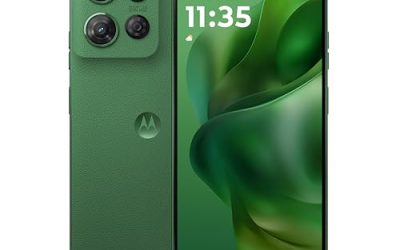
1. Motorola Moto G Power (2025) — 5,000mAh, unlocked, Leaf Green
- View on Amazon: https://www.amazon.com/dp/B0DP5H8Y82
The Moto G Power line exists for exactly the buyer this keyword describes. The 2025 listing states the essentials without ambiguity: an unlocked phone made for the US market, 8 gigabytes of memory with 128 gigabytes of storage, a 50 megapixel camera system, and a battery capacity of 5,000 milliamp hours. The endurance language on the page is direct. It describes a long-lasting battery with fast charging, says the phone can go over a day on a single charge with that 5,000 milliamp hour battery, and adds that hours of power can be gained in minutes when the battery does run low. The item model number given on the page is PB640003US, and the manufacturer is Motorola, which matters because this model family has carrier and regional variants whose listings can look similar at a glance.
Read that “over a day” claim carefully. It is a manufacturer claim about a usage pattern the buyer cannot see, not a promise that every owner will clear a second evening. Navigation with the screen held bright, sustained camera use, weak signal searching and hotspot work will all shorten any large battery, and a 5,000 milliamp hour cell is large rather than exceptional among current Android phones. What the capacity does buy is margin. A phone that starts the day with more stored energy can absorb a heavy afternoon without forcing a change of plans, and it can be charged less deeply on ordinary days, which is gentler behaviour for a lithium cell over a long ownership period. The endurance case for this phone is therefore honest and simple: a stated capacity at the level endurance buyers expect, a stated claim past one day, and charging that is described as fast enough to make a short top-up worthwhile.
The charging side deserves its own paragraph because endurance is a system, not a single number. The listing comparison information pairs the 5,000 milliamp hour battery with wired fast charging and with wireless charging at a lower stated rate. Wireless charging changes habits more than it changes totals: a phone that can be set down on a pad during a desk hour arrives at the evening with more charge in reserve, so the headline capacity is spent on the hours away from a desk rather than on the whole day. Buyers who have never owned a phone with wireless charging should still confirm the exact charger requirements on the listing for the unit they order, because the cable and ejector tool listed in the box contents are not the whole charging story, and a pad is a separate item unless a bundle states otherwise.
For the right buyer, this is the straightforward recommendation in this guide. Choose it if you want an unlocked Android phone whose battery argument is capacity first, if you prefer a larger phone, and if your carrier is a major US network that the made-for-US unlocked configuration is built to serve. Confirm the colour and configuration on the page you open, because this model is sold in more than one colour under separate listings with separate identifiers, and the ASIN above belongs to the Leaf Green 128 gigabyte listing whose page supplied the figures used here. A different colour is not automatically the same listing, and endurance buyers who care about exact figures should buy the exact listing they checked.
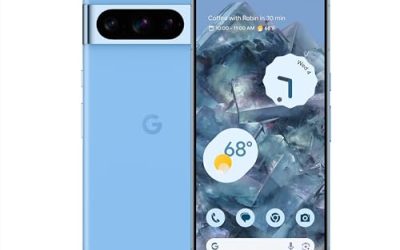
2. Google Pixel 9a — adaptive battery over 30 hours, saver mode to a stated 100 hours
- View on Amazon: https://www.amazon.com/dp/B0DVHV7X53
The Pixel 9a makes the opposite endurance argument, and its listing makes that argument in software language. The page describes a phone engineered by Google with an all-day battery and a durable design, then goes further than most listings bother to go: it states that the adaptive battery can last over thirty hours, and that turning on the extreme battery saver can extend endurance to up to one hundred hours. Those are the strongest runtime figures in this guide, and they need the clearest framing. The thirty-hour figure is tied to adaptive behaviour, meaning the phone learns which applications are used and spends less energy on the rest. The one hundred hour figure belongs to a restricted mode that limits what the phone does. Neither figure describes unrestricted heavy use, and the listing presents both as manufacturer claims with footnotes, which is how they are reported here.
The rest of the listing supports the endurance story rather than contradicting it. The configuration is 128 gigabytes of storage with 8 gigabytes of memory, the processor is the Google Tensor G4, the operating system is Android 15, and the screen is 6.3 inches with a 1080 by 2400 resolution and a refresh range that can move between lower and higher rates. A screen that does not hold its highest refresh rate at all times is an endurance feature in practice, even when a listing does not label it as one, because display refresh is one of the steady drains a phone carries from morning to night. The smaller screen, compared with the Motorola above, also works in the Pixel favour: there is simply less panel to light. Buyers choosing between these two phones are choosing between capacity spent on a larger display and management applied to a smaller one, and both routes to a longer day are legitimate.
Software support is part of an endurance decision too, in the longer sense of how many years the phone remains worth charging. The Pixel 9a listing states seven years of operating system and security updates, with feature additions arriving through Pixel Drops. A phone bought for battery endurance is usually a phone the buyer intends to keep, and a long stated support window protects that intention better than a marginal difference in capacity. Battery ageing will still happen, adaptive features will still depend on the owner leaving them enabled, and no support promise changes the physics of a cell that has been cycled daily for years. What the support window changes is the chance that software, rather than the battery, becomes the reason to replace the phone first.
Choose the Pixel 9a if the saver-mode ceiling matters to you: travel days, field work, festival weekends, or any pattern where the phone must stay reachable for calls and messages long after normal use would have ended it. In its restricted mode the phone is a communications device first, and buyers should enable that mode before they need it, learn which applications it pauses, and confirm that banking, transit and authentication tools behave as expected when the mode is on. Choose it, too, if you prefer the smaller handset of this pair. Confirm the colour and storage on the listing you open, since this family is sold in several colours and two storage sizes under separate listings, and the identifier above is the one whose page supplied the figures in this section.
Comparison table
| Phone | ASIN | Battery capacity stated on page | Endurance claim stated on page | Charging noted on page | Screen stated on page | Memory and storage |
|---|---|---|---|---|---|---|
| Motorola Moto G Power (2025), Leaf Green | B0DP5H8Y82 | 5,000mAh | Over a day on a single charge | Fast wired charging; wireless charging in comparison information | Larger class display; see listing for exact panel details | 8GB / 128GB |
| Google Pixel 9a, Obsidian, 128GB | B0DVHV7X53 | Capacity figure is given in the wider listing family; the endurance claims are the headline figures on this page | Adaptive battery over 30 hours; extreme saver up to 100 hours | See listing for charger requirements; no charger assumption should be made from the box list alone | 6.3 inches, 1080 x 2400, variable refresh | 8GB / 128GB |
The table is a summary, not a substitute for the sections above. In particular, the two endurance claims are not measured in the same way by their makers. Motorola states a capacity and a period past one day. Google states an adaptive runtime and a restricted-mode ceiling. Comparing thirty hours with “over a day” as if they were laboratory results from one bench would mislead, and this guide does not do it. Use the table to see the shape of the choice, then use the buying checks below to make the choice safely.
How to judge endurance claims on any phone listing
Start with the capacity, then refuse to stop there. Capacity tells you how much energy is stored, while endurance tells you how quickly the phone spends it. Two phones with the same capacity can finish a day in very different states if one carries a larger or brighter screen, a less efficient processor, or software that lets background applications work without restraint. That is why this guide insisted on a stated runtime claim alongside the capacity wherever the listing offered one, and why a listing that offers only a capacity should be read as an unfinished argument rather than a false one.
Next, separate the three kinds of claim that listings mix together. A talk-time figure measures one continuous activity and flatters phones used mostly for calls. A mixed-use figure, such as an over-a-day or over-thirty-hours claim, describes a pattern that includes idle time, which is why such figures can exceed the length of a waking day. A saver-mode figure describes a different phone in effect: fewer background tasks, fewer notifications, and often a screen that behaves more conservatively. All three can be honest and still describe the same battery. The buying mistake is to compare one phone saver figure with another phone mixed-use figure and call the difference a winner.
Then check the charging claim with the same care. Fast charging does not extend a single charge, but it changes how punishing a low battery is. A phone that can recover hours of use from a short wired session asks less planning of its owner than a phone that needs a long session to recover the same ground. Wireless charging, where a listing states it, changes behaviour rather than speed. What matters in both cases is what the box actually contains. Several listings in this category include a cable and no wall adapter, so the charging speed a page advertises may depend on an adapter the buyer already owns or must obtain separately. Read the box contents line before assuming anything.
Finally, treat standby as its own subject. Weak signal is the most common hidden cause of poor real-world endurance, because a phone raises its radio effort when coverage is poor, and no capacity figure can compensate for a building where the phone is constantly searching.
Buying checks before you order
Confirm the ASIN on the page matches the ASIN in this guide before ordering, because phone families generate near-identical listings for colours, storage sizes, renewed units and regional variants. Confirm the phone is the US configuration where the listing says so, and confirm your carrier against the listing network information rather than against the model name alone. Confirm whether the unit is new or renewed, since renewed listings for these same models exist under different identifiers and carry different box contents and warranty arrangements. Confirm the charger situation from the box contents, not from the charging headline. Also confirm the return window for the exact listing, especially on a renewed unit.
Verdict
For most endurance buyers, the Motorola Moto G Power (2025), ASIN B0DP5H8Y82, is the simpler recommendation: a stated 5,000 milliamp hour battery, a stated claim of over a day on a single charge, fast charging, and an unlocked made-for-US configuration in a phone built around exactly this priority. For buyers whose worst days matter more than their ordinary days, the Google Pixel 9a, ASIN B0DVHV7X53, is the stronger pick: a stated adaptive runtime over thirty hours, a stated saver ceiling of one hundred hours, a smaller screen to light, and a long stated update window for owners who keep their phones. Both phones earned their place from their own product pages, both sets of figures are manufacturer claims rather than measurements taken for this guide, and the right choice between them is the one whose endurance argument matches how you actually spend a charge.
More from Amazon
Programs that pair well with the guide above. Offers and eligibility are set by Amazon and may change.
Free shipping on eligible items, Prime Video and more. Eligible new members can start with a free trial.
Start a Prime free trialAd-free music streaming. Eligible new subscribers can start with a free trial.
Try Music Unlimited freeA Prime membership for ages 18-24 with a trial period. Eligibility is set by Amazon.
See Prime for Young AdultsAudiobooks and podcasts to listen to on the go. Eligible new members can start with a free trial.
Try Audible freeAs an Amazon Associate we earn from qualifying purchases.