Key takeaways
- Find the best battery life phone for Google Fi, with unlocked picks whose pages state Fi compatibility, battery capacity and endurance in hours clearly.
As an Amazon Associate we earn from qualifying purchases.
Disclosure: This article contains affiliate links. If you buy through these links, we may earn a commission at no additional cost to you.
Introduction
A phone can carry a large battery and still be the wrong choice for Google Fi if its listing never names the carrier. This guide works the other way around. Every phone below is an unlocked model whose Amazon US product page states, in its own carrier wording, that it works with Google Fi, and whose page also states its battery life or battery capacity in plain terms. Nothing here is included on reputation alone: if the page did not name Google Fi and did not describe the battery, the phone was left out.
One point of scope is worth stating at the start. This site already covers battery life phones from other angles, including carrier-specific and general Android roundups. This article is deliberately narrower and deliberately separate: it covers only the Google Fi angle, and the three phones below were chosen as a set that stands on its own for that single question. If your carrier is not Google Fi, the wider battery roundups on the site are the better read. If Google Fi is your carrier and running out of charge is your main frustration, this is the shortlist built for you.
What Google Fi compatibility actually requires
Google Fi runs on partner networks in the United States, and an unlocked phone still needs the right radios and carrier support to work well on it. The safest evidence is the product page itself. Each listing below uses explicit wording: the Pixel page says the phone works with Google Fi alongside other major carriers, and the two Motorola pages list Google Fi among the prepaid carriers their unlocked phones work with. That page-stated wording is the standard used throughout this guide, rather than a general claim that any unlocked phone will do.
Battery life needs the same discipline. Capacity in milliamp hours is only part of the story, because screen size, refresh rate, processor efficiency and software management all change how long a charge lasts. That is why each phone below is presented with both figures where the page gives them: the stated capacity, and the maker’s own stated endurance, such as an adaptive battery that lasts over a set number of hours or a saver mode that stretches a charge further. Compare those stated figures, not assumptions.
The picks at a glance

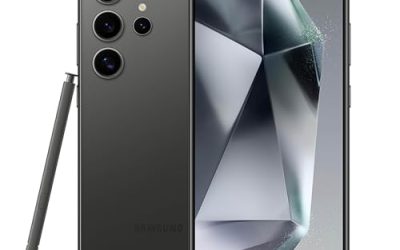
- Google Pixel 8 Pro (B0CGT9MH6F) — the flagship option, with an Adaptive Battery stated to last over 24 hours and up to 72 hours with Extreme Battery Saver turned on.
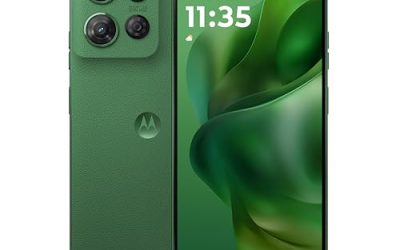
- Motorola Moto G Stylus 2025 (B0DXM9HDZJ) — a 5,000 mAh phone with a built-in stylus, for Fi users who take notes all day.
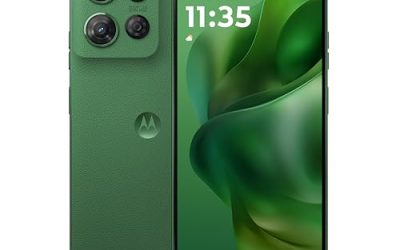
- Motorola Moto G Power 5G 2023 (B0BYGXFJ8K) — a 5,000 mAh phone whose page promises more than a full day on a single charge.
1. Google Pixel 8 Pro — B0CGT9MH6F
View the Google Pixel 8 Pro on Amazon
The Pixel 8 Pro is the strongest all-round answer here because its page states both halves of the brief clearly. On carrier support, the listing describes it as an unlocked Android 5G phone that works with Google Fi, Verizon, T-Mobile, AT&T and other major carriers. On battery, Google states that the Adaptive Battery can last over 24 hours, and that turning on Extreme Battery Saver can stretch that to up to 72 hours. The listed battery capacity is 5,050 mAh, which supports those endurance claims with a genuinely large cell rather than software promises alone.
The rest of the hardware explains why this phone suits heavy Fi users. It runs on the Google Tensor G3 chip, which the page credits with the phone’s AI-driven photo and video features and its adaptive battery management. The display is a 6.7-inch Super Actua panel whose refresh rate adjusts intelligently between 1 and 120Hz; that variable refresh is directly relevant to battery life, because the screen can slow down for static content instead of refreshing at full speed all day. Charging is fast wired charging with wireless charging support, so a short top-up is practical when a long day runs longer than planned.
The camera system is the other reason to choose this phone over the Motorolas below. The page describes four updated pro-level cameras, a dedicated telephoto lens with Pixel’s strongest zoom in this generation, and Pro controls that support full-resolution photos. For a Fi user who travels, shoots video and relies on the phone as a primary camera, that capability comes with no battery compromise on paper: the stated endurance still clears a full day, and the saver mode is there for travel days when a socket is hard to find.
Choose the Pixel 8 Pro if you want the most complete phone of the three and the clearest stated battery figures. Its combination of a named Google Fi statement, a capacity above 5,000 mAh, an adaptive endurance claim past 24 hours and a 72-hour saver ceiling makes it the benchmark the other two are measured against.
2. Motorola Moto G Stylus 2025 — B0DXM9HDZJ
View the Motorola Moto G Stylus 2025 on Amazon
The Moto G Stylus 2025 earns its place through the same two page statements. Its listing describes a global unlocked phone compatible with all major US carriers, and its carrier list names Google Fi among the prepaid carriers it works with, alongside carriers such as Boost Mobile, Cricket Wireless, Metro by T-Mobile, Mint and Tracfone. Its battery is a 5,000 mAh cell with TurboPower charging, and Motorola’s own wording on the page promises power for the day from a short charge and battery life that carries through work and play.
What separates this phone from the other Motorola below is the built-in stylus. The stylus is stored in the phone itself, and the page presents it as a tool for capturing thoughts, navigating the day, editing photos and sketching ideas. For Fi users whose phones double as notebooks — field workers, students, anyone who marks up documents — that changes how the battery gets used: quick handwritten notes replace long screen-on typing sessions, and the 5,000 mAh cell is spent on connectivity and capture rather than constant keyboard work.
The supporting specifications are solid for the role. The configuration covered here carries 8GB of memory and 256GB of storage, a 50MP camera system, and a model year of 2025, so it is a current device rather than an ageing clearance model. The box contents listed on the page include the phone, the stylus, a USB cable, a SIM tray ejector and a user guide, which tells you the stylus is integral to the package rather than an accessory to hunt down separately.
Choose the Moto G Stylus 2025 if your day involves handwriting, annotation or sketching and you want that workflow on Google Fi without giving up a full-size battery. Of the three phones here, it is the one designed around getting work done between charges rather than around camera hardware or raw endurance headlines.
3. Motorola Moto G Power 5G 2023 — B0BYGXFJ8K
View the Motorola Moto G Power 5G 2023 on Amazon
The Moto G Power line exists for one reason, and this 2023 model states it plainly. Its page describes 5G-friendly battery life built around a 5,000 mAh battery, promising more than a full day on a single charge, and elsewhere on the page Motorola repeats the point in stronger terms, describing days of use from that same large cell. The carrier wording is equally explicit: the phone is compatible with all major 4G US carriers, and its global unlocked description lists the prepaid carriers it works with, Google Fi included.
The configuration here is 4GB of memory with 128GB of storage, a 50MP camera and a Full HD+ display at 2400 by 1080 resolution. Those are modest figures next to the Pixel above, and that is precisely the point of this pick. A simpler hardware load places fewer demands on the battery, and the Power branding means the endurance claim is the headline rather than a footnote. For a Fi user whose priorities are calls, messages, navigation and browsing across a long day — delivery and service work, long commutes, travel days — a phone that treats battery life as its main job is often the right tool.
The page also notes Wi-Fi hotspot readiness across both common Wi-Fi bands, which matters for Fi users who share their connection with a laptop or tablet. Hotspot use is one of the fastest ways to drain a phone, so pairing that feature with a 5,000 mAh cell and a stated more-than-a-day endurance claim is a coherent combination rather than a coincidence.
Choose the Moto G Power 5G 2023 if endurance matters more to you than flagship cameras or a stylus, and you want the Google Fi statement and the battery statement to come from the same page. It is the most single-minded battery pick of the three.
How to choose between them
Start with how you actually spend a charge. If your heaviest use is photography, video and screen time at full brightness, the Pixel 8 Pro is the natural choice: its adaptive battery claim is the most detailed here, its saver mode ceiling is the highest, and its variable-refresh display is built to save power when content is static. If your heaviest use is writing and marking up work, the Moto G Stylus 2025 turns the phone into a notebook while keeping a 5,000 mAh cell underneath. If your heaviest use is simply being reachable and connected for as long as possible, the Moto G Power 5G 2023 is designed around exactly that.
Whichever you choose, do two things before you rely on it. First, confirm your Google Fi coverage and plan details for your area, because carrier compatibility on the page does not guarantee signal strength where you live. Second, set up the battery features the maker describes — adaptive battery management on the Pixel, and sensible charging habits on all three — because stated endurance figures assume those systems are allowed to do their work.
Frequently asked questions
Does an unlocked phone automatically work with Google Fi?
No. Unlocked describes the phone’s freedom from one carrier’s lock, not a guarantee of support for every carrier. That is why this guide only includes phones whose own product pages name Google Fi in their carrier wording.
Why do the battery figures differ between phones with similar capacities?
Capacity is the size of the fuel tank, not the fuel economy. Display size and refresh behaviour, processor efficiency and software battery management all change how long a stated capacity lasts, which is why each pick above quotes the maker’s own endurance wording alongside the capacity figure.
What does Extreme Battery Saver do on the Pixel 8 Pro?
As described on its product page, it is a mode that extends the phone’s stated endurance from over 24 hours to up to 72 hours by limiting background activity and non-essential functions. It is a travel and emergency tool rather than an everyday setting.
Can I use these phones on other carriers later?
Each page describes its phone as unlocked and lists several major carriers, so the listings themselves support moving between carriers. Check the exact carrier list on the page of the phone you choose before you buy.
Conclusion
For Google Fi users, the honest shortlist is short because the evidence standard is strict: the page must name the carrier and state the battery story. The Pixel 8 Pro (B0CGT9MH6F) is the complete flagship answer, the Moto G Stylus 2025 (B0DXM9HDZJ) is the working notebook with a full-size cell, and the Moto G Power 5G 2023 (B0BYGXFJ8K) is the endurance-first option. Pick by how you spend a charge, and each of the three will keep you connected on Fi from morning to well past dark.
More from Amazon
Programs that pair well with the guide above. Offers and eligibility are set by Amazon and may change.
Free shipping on eligible items, Prime Video and more. Eligible new members can start with a free trial.
Start a Prime free trialAd-free music streaming. Eligible new subscribers can start with a free trial.
Try Music Unlimited freeA Prime membership for ages 18-24 with a trial period. Eligibility is set by Amazon.
See Prime for Young AdultsAudiobooks and podcasts to listen to on the go. Eligible new members can start with a free trial.
Try Audible freeAs an Amazon Associate we earn from qualifying purchases.