Choosing the right type c cable sounds simple until you realize the differences between a $7 two-pack and a $10 five-pack can mean the gap between a phone that charges at full rated speed and one that crawls for hours. The confusion comes from three places: wattage ratings that matter only if your charger and device both support that speed, connector orientation (USB-C to USB-C versus USB-A to USB-C), and build quality that determines whether a cable survives being stuffed into a bag daily or frays within weeks.
The eight cables compared here split cleanly into two camps. The first group — Anker, LISEN, INIU, and the Certified 2Pack — are USB-C to USB-C cables meant for modern phones, tablets, and laptops where both ends are Type-C. The second group — the nylon braided 3-pack, the 5-pack, and the LISEN 5-Pack — target buyers who still rely on older USB-A wall adapters or want multiple cables at different lengths without thinking about wattage tiers. The 10-foot single cable bridges both camps as a desk-and-couch solution. Owner feedback across these models consistently points to connector durability and actual charging speed (versus rated) as the factors that separate a good purchase from a frustrating one.
Our top picks
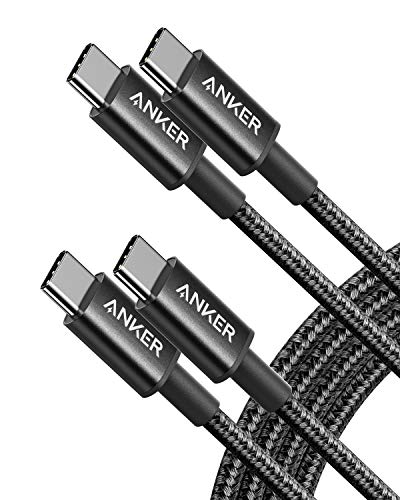 Anker USB C to USB C Cable
- Durable Design: Reinforced nylon exterior and a robust…
- Fast Charging: Supports Power Delivery for up to…
- Versatile Compatibility: Works with virtually all USB-C devices,…
| Product | Key specs | |
|---|---|---|
| Anker USB C to USB C Cable | Durable Design: Reinforced nylon exterior and a robust… Fast Charging: Supports Power Delivery for up to… Versatile Compatibility: Works with virtually all USB-C devices,… | Check price |
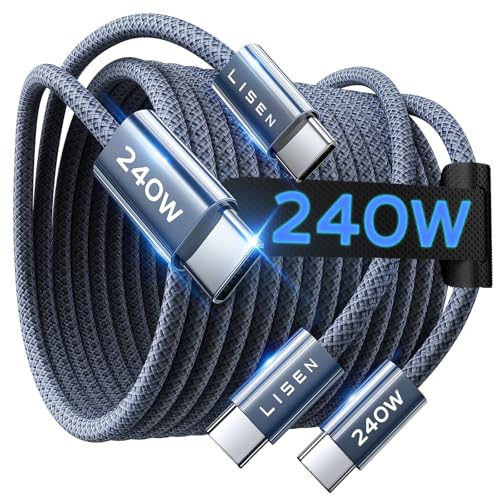 LISEN USB C to USB C Cable LISEN USB C to USB C Cable | Check price | |
 INIU 240W USB C to USB C INIU 240W USB C to USB C | Check price | |
 USB C to USB C Cable 3FT USB C to USB C Cable 3FT | This type c to type c cable supports… The Braided USB C cable complies with the… Broad Compatibility: This is a USB C to… | Check price |
 USB C Cable Fast Charging Nylon Braided USB C Cable Fast Charging Nylon Braided | Type c Charger Fast Charging and Sync: 3A… International Safe Certified: This USB-C cable has electronic… Enhanced Durability: Strong fiber, the most flexible, powerful… | Check price |
 USB C Cable 5 Pack 6FT USB C Cable 5 Pack 6FT | 5 Pack 6FT Charging Cords: Includes five 6-foot… 3A Fast Charging and Sync: Supports up to… Braided for Daily Use: Nylon braided material helps… | Check price |
 LISEN USB C to USB C Cable LISEN USB C to USB C Cable | 60W Turbo Fast Charging:This iPhone 18 charger cord… Right for ALL Your Devices:This is the USB-C… Green Recyclable Materials:The LISEN USB C to USB… | Check price |
 USB C to C Fast Charger Cable USB C to C Fast Charger Cable | 【Fast and Safe】The high-quality copper wire improves the… 【Built-in Smart Chip】 Super fast charging USB C… 【Super Durability】The iPhone charging cable uses high-quality materials,… | Check price |
As an Amazon Associate we earn from qualifying purchases at no extra cost to you.
Quick Picks
| Product | Best For | Price |
|---|---|---|
| Anker 60W 2-Pack (6 ft) | Reliable daily carry for most phones and tablets | $9.99 |
| LISEN 240W (6.6 ft) | High-wattage laptop charging on a budget | $8.97 |
| INIU 240W 2-Pack (6.6 ft) | Keeping one cable at home and one at the office | $9.47 |
| Certified 2Pack 60W Woven (3 ft) | Cable-managed desks and bedside nightstands | $6.99 |
| Nylon Braided 3-Pack (6 ft, USB-A) | Older wall adapters, multiple family members | $7.98 |
| 5-Pack 6 ft USB-A | Maximum cable count per dollar | $8.97 |
| LISEN 60W 5-Pack (varied lengths) | One set covering every room and travel scenario | $9.99 |
| 10 ft USB-C to USB-C | Couch-to-outlet reach without an extension | $8.99 |
How We Picked
Four criteria drove this comparison: connector compatibility with current device ecosystems, rated wattage relative to typical use cases, pack quantity versus single-cable durability expectations, and owner-reported longevity across months of daily use. A cable rated at 240W is overkill for a phone that tops out at 30W, but it becomes essential if you also charge a laptop through the same port. Build style — woven versus braided versus standard TPE — matters most for people who coil cables tightly or pull them across rough surfaces.
The 8 Best Type C Cable in 2026
Anker USB C to USB C Cable, 60W Fast Charging (2-Pack, 6 ft, Black)
This is the default recommendation for anyone with a recent Android phone or iPhone 15 and later who already owns a USB-C wall adapter. The 60W ceiling covers every current smartphone and most tablets without issue, while the 6-foot length balances reach against bulk in a pocket or bag. Two connectors in a pack means you can leave one plugged into a desk and carry the spare without worrying about misplacing it. Owner feedback highlights consistent charge rates that match the rating and connector housings that resist cracking at the strain relief point.
- Pro: Reliable 60W delivery that matches published specs across popular devices.
- Pro: Two cables for under ten dollars gives value for people who lose or damage cords often.
- Con: Not suitable if you need more than 60W for a high-demand laptop charger.
Skip it if your primary use is charging a 100W-plus laptop through USB-C; look at the 240W options instead.
LISEN USB C to USB C Cable, 240W Fast Charging (6.6 ft)
The LISEN 240W targets buyers who want a single cable that handles every device they own — phone, tablet, and laptop — without upgrading later. The wattage ceiling is generous enough for most current laptop chargers, and the slightly longer 6.6-foot length provides a small reach advantage over the six-foot competition. At under nine dollars, the price per watt makes this a strong value for anyone who needs high-delivery capability but only carries one cable at a time.
- Pro: 240W rating future-proofs the cable for any device you buy next year.
- Pro: Under nine dollars for single-cable coverage of phone, tablet, and laptop.
- Con: Single cable means if you misplace it or damage it, you are out of options until a replacement arrives.
Skip it if you prefer redundancy or want a spare already on hand; the two-pack alternatives deliver similar value.
INIU 240W USB C to USB C Cable, 6.6 ft + 6.6 ft
INIU combines the high wattage ceiling with two-pack redundancy, making it the strongest choice for someone who charges a laptop at a desk and a phone at the bedside but wants both cables at the same 240W spec. Owner reviews note that the connectors seat firmly and the outer jacket resists tangling better than thinner alternatives. It is essentially the LISEN 240W doubled for a slightly higher price, which most buyers will find fair.
- Pro: Two 240W cables eliminate the single-point-of-failure risk of a lone cord.
- Pro: Consistent connector fit reported by owners across Apple and Samsung devices.
- Con: Both cables are the same length, limiting flexibility for different room setups.
Skip it if you need varied lengths; the LISEN 5-Pack offers mixed lengths at a comparable price.
USB C to USB C Cable 3 ft, Certified 2-Pack, 60W Woven
Short cables solve a specific problem: they keep desk setups tidy and prevent the tripping hazard of a six-foot cord trailing across a nightstand. The woven outer jacket adds stiffness that resists kinks when routed along a monitor arm or under a keyboard. The certification badge signals that the cable meets standards for stable power negotiation, which some cheaper cables skip. For the price, this is the cheapest way to get two reliable USB-C to USB-C cables into a workspace.
- Pro: Three-foot length keeps cables out of the way at a desk or bedside table.
- Pro: Lowest price per cable in this roundup at under three dollars each.
- Con: Too short for couch or backseat charging where the outlet is far away.
Skip it if you routinely charge devices more than three feet from an outlet.
USB C Cable Fast Charging Nylon Braided 3-Pack 6 ft, USB-A to Type C
This is the pick for households where multiple people still use USB-A wall adapters from previous phone generations. The braided nylon exterior handles the abuse of being pulled across nightstands and tangled in bag pockets. Three cables at six feet each cover a family of phone chargers, power banks, and car adapters without anyone fighting over cords.
- Pro: Nylon braiding resists fraying and tangling better than standard TPE jackets.
- Pro: Three cables for under eight dollars provides maximum coverage for USB-A adapter users.
- Con: USB-A to USB-C cannot deliver the high wattages that USB-C to USB-C cables achieve on newer devices.
Skip it if every charger you own already has a USB-C port; the USB-C to USB-C options negotiate power more effectively.
USB C Cable 5-Pack 6 ft, USB-A to Type C
Quantity is the entire value proposition here. Five cables at six feet for under nine dollars means you can outfit every outlet in a house, stash one in a bag, leave one in a car, and still have extras for guests. The build is adequate for the price but not premium, so these work best as utility cables you replace without guilt.
- Pro: Nearly two dollars per cable makes this the lowest unit cost in the roundup.
- Pro: Five identical lengths simplify keeping spares organized.
- Con: Build quality is basic and owners report connector wear appearing faster than on braided or woven alternatives.
Skip it if you want a cable you will use daily for months without degradation; choose a braided or woven option instead.
LISEN USB C to USB C Cable, 5-Pack, 60W, Varied Lengths
The LISEN 5-Pack solves the length problem most buyers face: a short cable for the desk, a medium cable for the couch, and a long cable for the floor outlet near a bed. Having all five lengths in one purchase eliminates the need to evaluate multiple products. The 60W rating is appropriate for phones and tablets, though it will not drive a high-wattage laptop at full speed.
- Pro: Five different lengths in one pack covers virtually every room and scenario.
- Pro: USB-C to USB-C connectors ensure proper power negotiation with modern devices.
- Con: 60W ceiling means laptop charging may be slower than with a 240W cable.
Skip it if your main goal is laptop charging; pair a 240W cable with a shorter 60W one instead.
USB C to USB-C Fast Charger Cable 10 ft
Ten feet is the niche this cable fills: charging a device while lying in bed, sitting on a far couch, or working at a desk where the power strip is behind you. The connector compatibility list spans iPhone 17 Pro Max through older models, MacBook Pro generations, iPads, and Samsung Galaxy devices, making it a safe universal pick for mixed-Apple-and-Android households that need reach.
- Pro: Ten-foot reach eliminates the need for an extension cord or outlet relocation.
- Pro: Wide device compatibility across Apple, Samsung, and tablet lines.
- Con: Single cable with no backup; if it frays or gets lost, coverage disappears.
Skip it if you already own two or three shorter cables that reach your outlets; the extra length adds bulk in travel cases.
Buying Guide
Match the Connector Type to Your Adapter, Not Your Phone
The most common purchase mistake is buying a USB-C to USB-C cable when every wall adapter in the house still has a USB-A port, or vice versa. Check your charging bricks first. If they have small rectangular USB-A openings, a USB-A to Type C cable is the correct choice. If they have the oval USB-C port, buy USB-C to USB-C. The phone itself does not determine which cable you need; the adapter does.
Wattage Rating Only Matters if Both Ends Support It
A 240W cable will still deliver only what your adapter and device can negotiate. Buying high-wattage cables is worthwhile if you want a single cord that handles your laptop charger at full speed and your phone at whatever the phone supports, because a cable rated below a device’s maximum can throttle charging. A 60W cable is sufficient for any current smartphone; go to 100W or 240W only if you charge laptops through USB-C.
Build Style Determines Whether You Rebuy in Three Months or Three Years
Standard TPE jackets are cheapest but crack at the connector housing over time, especially if coiled tightly. Braided nylon handles abrasion and tangling. Woven fabric adds stiffness that prevents kinking at sharp corners behind a desk. If a cable will live in a bag pocket or get pulled from across the room daily, the braided or woven options reduce long-term replacement cost despite a slightly higher upfront price.
Our Verdict
The top pick is the Anker 60W 2-Pack at $9.99 because it delivers reliable power negotiation, a practical length, and two cables per purchase — a combination that covers the vast majority of smartphone and tablet owners without overcomplicating the decision. For anyone who also charges a laptop through USB-C, the LISEN 240W at $8.97 offers the best single-cable value in this roundup. The budget pick goes to the Certified 2-Pack 3-foot woven at $6.99, which is the cheapest entry point into reliable USB-C to USB-C charging for desks and nightstands. However, if your household has mixed USB-A adapters and you simply need cables that work without fuss, the nylon braided 3-pack at $7.98 remains the pragmatic choice.
FAQ
Can I use a USB-A to USB-C cable to fast charge a newer phone?
Usually not at the phone’s maximum rated speed. USB-A to USB-C cables cannot negotiate the higher power levels that modern USB-C power delivery standards require, so even if your adapter supports fast charging, the cable will likely cap it. For true fast charging, use a USB-C to USB-C cable paired with a USB-C power adapter.
Is a 240W cable wasteful if my phone only supports 30W charging?
Not wasteful in terms of safety or performance — the cable will simply deliver 30W regardless of its ceiling. The benefit is that the same cable can handle a laptop charger later without buying a new cord. If you already own only a phone and have no laptop plans, a 60W cable is sufficient and often cheaper per unit.
Why do some cables charge slower than their rated wattage?
Actual charging speed depends on the weakest link in the chain: adapter rating, cable rating, and device input limit. A cable rated at 100W will not fix a 20W adapter or a phone that only draws 18W. Cable quality also matters; poorly made internal conductors can add resistance that slightly reduces delivered power even when all components support the rating.
Do I need a cable from the same brand as my phone?
No. USB-C Power Delivery is a universal standard, so a well-made third-party cable from Anker, LISEN, or INIU will negotiate the same charging speed as a phone-brand cable at a fraction of the price. The only reason to buy an OEM cable is convenience if you already own one and have no other options.