Key takeaways
- Razer Phone 2 vs ASUS ROG Phone compared: 120Hz LCD vs 90Hz AMOLED, Snapdragon 845 tuning, cameras, battery and storage for two 2018 gaming phones.
Two phones launched in the same year, aimed at the same kind of buyer, and built around the same processor — yet the Razer Phone 2 and the original ASUS ROG Phone feel like answers to two different questions. One bets everything on the screen, with a faster refresh rate and speakers that face you while you play. The other bets on how you hold the phone, with squeeze controls on its edges, a side-mounted charging port, and clip-on accessories. Choosing between them is less about raw speed — both run the Snapdragon 845 — and more about which philosophy matches how you play.
This comparison is for anyone weighing these two 2018 gaming phones: collectors tracking down mobile gaming history, players looking for a second device, and buyers curious about how the first gaming phones differed. Both are discontinued and stopped at Android 9, so the decision turns on hardware character and condition, not software support, and every spec below comes from the original Amazon listings and manufacturer specifications.
As an Amazon Associate we earn from qualifying purchases.
The Two Phones at a Glance
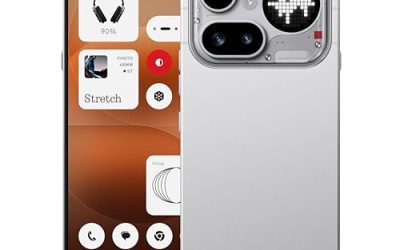
The Razer Phone 2 arrived in October 2018 as a refinement of the first Razer Phone. Razer kept the boxy, sharp-cornered shape and the dual front-facing speakers, then added a glass back with wireless charging, water resistance, and an illuminated Chroma logo that glows on the rear panel. Its headline feature is the 5.72-inch IGZO LCD display running at 120Hz with a 2560 x 1440 resolution, the fastest screen on a phone when it launched. Inside, a Snapdragon 845 with a vapor chamber cooling system pairs with 8GB of RAM and 64GB of storage, plus a microSD slot for expansion. The dual rear cameras pair a wide lens with a telephoto lens, and the 4000mAh battery supports wireless charging and fast charging.
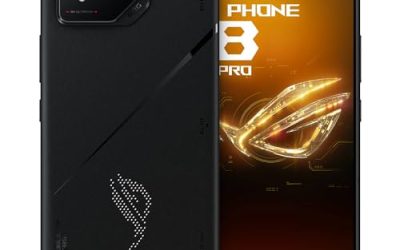
The ASUS ROG Phone, model ZS600KL, arrived the same month with a different set of priorities. Its 6.0-inch AMOLED display runs at 90Hz with a 2160 x 1080 resolution and HDR support, a step down in refresh rate from the Razer but a step up in contrast, since AMOLED panels produce deeper blacks than LCD. ASUS speed-binned the Snapdragon 845 in this phone, pushing sustained clock speeds up to 2.96GHz, and paired it with 8GB of RAM and 128GB of storage, with no microSD slot. Instead of speakers as its main trick, the ROG Phone added ultrasonic AirTrigger sensors on its edges that act as extra shoulder buttons, a GameCool vapor-chamber cooling system, and a side-mounted USB-C port so a charging cable never gets in the way of your grip.
| Feature | Razer Phone 2 | ASUS ROG Phone (ZS600KL) |
|---|---|---|
| Display | 5.72-inch IGZO LCD, 2560 x 1440, 120Hz | 6.0-inch AMOLED, 2160 x 1080, 90Hz, HDR |
| Processor | Snapdragon 845, 2.8GHz, vapor chamber cooling | Snapdragon 845 speed-binned up to 2.96GHz |
| Memory and storage | 8GB RAM, 64GB storage, microSD slot | 8GB RAM, 128GB storage, no microSD slot |
| Battery | 4000mAh, wireless charging, fast charging | 4000mAh, 30W wired charging, Quick Charge 4.0 |
| Rear cameras | Dual 12MP, wide plus telephoto | 12MP plus 8MP wide-angle |
| Front camera | 8MP | 8MP |
| Gaming extras | Dual front speakers, Dolby Atmos, THX DAC, Chroma logo | AirTrigger sensors, side USB-C, AeroActive Cooler |
| Water resistance | IP67 | No IP rating |
| Weight | 220g | 200g |
The table makes the trade-offs plain. The Razer Phone 2 gives you the faster screen, expandable storage, wireless charging, and water resistance. The ROG Phone gives you twice the built-in storage, a higher-clocked chip, a contrast-rich AMOLED panel, and controls that change how games feel in your hands. Neither phone has 5G, neither moved past Android 9, and both carry batteries that are now years old, so the hardware differences above are what the decision turns on.
How to Choose
Start With the Screen, Because You Look at It Constantly
The display is the single biggest difference between these two phones, and it shapes every session. The Razer Phone 2 runs at 120Hz on a 1440p LCD panel, which makes scrolling and fast-moving games look noticeably smoother than the 90Hz panel on the ROG Phone. If your games involve quick camera movement, racing, or fast shooters, that extra refresh rate is something you will notice within minutes. The ROG Phone answers with an AMOLED panel, which delivers deeper blacks and stronger contrast, so dark scenes in games and movies look richer. Fast action favors the Razer screen, while atmospheric games and video watching favor the ROG panel.
Decide How Much Storage Headroom You Need
Storage is the second fork in the road, and it cuts the opposite way from the screen. The ROG Phone ships with 128GB of built-in storage, double the 64GB inside the Razer Phone 2, which matters because both phones are old enough that their storage fills up fast with large games. The Razer Phone 2 compensates with a microSD slot, so you can add a card for media and move some content off the internal storage. The ROG Phone has no card slot at all, so the 128GB it ships with is the 128GB you keep. Count the games you actually want on the device, and remember that many games insist on living on internal storage.
Weigh Controls and Cooling Against Speakers and Simplicity
The ROG Phone was built around the idea that a gaming phone should change how you play, not just how fast it runs. Its AirTrigger sensors give you two extra inputs on the edges of the phone, which map to on-screen buttons and work like shoulder triggers. Its side-mounted USB-C port keeps a cable out of your palm, and the clip-on AeroActive Cooler pushes air across the back of the phone. The Razer Phone 2 is simpler: no extra buttons, no clip-on fan, but dual front-facing speakers with Dolby Atmos tuning and a THX-certified DAC that make games and movies sound far better without headphones. Competitive titles favor the ROG Phone, while casual play and video favor the Razer speakers.
Check Carrier Support and Everyday Usability Before Anything Else
Both of these phones are LTE-only devices from 2018, and carrier compatibility is a practical filter that can settle the decision on its own. The US model of the Razer Phone 2 was sold as compatible with GSM networks and Verizon, which gives you more options when activating a unit. The ROG Phone listing for the ZS600KL model is GSM only, so it suits GSM carriers and leaves Verizon out. Beyond carriers, consider daily use: the Razer Phone 2 carries IP67 water resistance and wireless charging, while the ROG Phone is the lighter device at 200g against 220g. Neither phone will receive new software, so confirm your carrier will still activate an LTE-only device before you commit.
What to Check Before Buying Either Phone in 2026
Both of these phones left the market years ago, so any unit you find today is a used or leftover device, and condition matters more than the spec sheet. Start with the battery. Every original battery in these phones is now several years old, and a degraded battery shows up as sudden shutdowns under load or a phone that drains quickly during games. Ask the seller how the battery behaves during a long gaming session, and favor a unit you can test or return. Next, check the screen for burn-in on the ROG Phone, since AMOLED panels can retain faint images of static interface elements after years of use, and check the Razer Phone 2 for dead pixels and backlight unevenness on its LCD panel.
Then verify the radios. Confirm the exact model number matches the listing you researched, because both phones shipped in regional variants with different network bands, and a variant built for another region may miss bands your carrier needs. Test Wi-Fi, Bluetooth, and mobile data, and confirm the phone activates on your carrier with a SIM card in place rather than trusting a listing description. Finally, look at the physical details that wear out first: the USB-C port should grip a cable firmly, the buttons and fingerprint sensor should respond cleanly, and the ROG Phone should include its AeroActive Cooler if the seller claims the full accessory set. A missing cooler or a loose charging port is a reason to walk away or renegotiate, not a detail to overlook.
Which One Fits Your Situation
You Want the Smoothest Screen for Fast Games
Pick the Razer Phone 2. Its 120Hz display at 1440p is the clearest advantage either phone holds, and it changes how fast games feel in a way no other spec here can match. The 5.72-inch LCD stays smooth during rapid movement, and the front-facing speakers add to the experience when you play without headphones. The 64GB of internal storage is the compromise, so plan on using the microSD slot for media.
You Play Competitive Games and Want Extra Controls
Pick the ASUS ROG Phone. The AirTrigger sensors give you shoulder-button inputs that the Razer Phone 2 cannot match, and the side-mounted USB-C port keeps your grip comfortable while the phone charges. The 128GB of built-in storage also means you can keep more large games installed without managing a memory card. The 90Hz AMOLED panel trails the Razer screen for smoothness, but the controls matter more when every input counts.
You Want a Media Device for Video and Music
Pick the Razer Phone 2. The combination of a sharp 1440p screen, dual front-facing speakers with Dolby Atmos tuning, wireless charging, and a microSD slot for a media library makes it the stronger choice for watching video and listening to audio. The IP67 water resistance is a bonus if the phone travels with you, and the Chroma logo adds character to a device kept for enjoyment.
You Want the Most Storage and the Most Accessories
Pick the ASUS ROG Phone. Its 128GB of built-in storage is double what the Razer Phone 2 offers, and its accessory ecosystem is the deeper one, with the AeroActive Cooler, the TwinView Dock for a second screen, and the Mobile Desktop Dock for connecting to a monitor. Those accessories are themselves used items now, so confirm availability and condition before counting on them.
Common Mistakes
- Treating either phone as a daily driver in 2026. Both stopped at Android 9 with no security updates, so they suit a second device, a retro gaming handheld, or a collection, not a primary phone carrying banking and sensitive accounts.
- Buying without confirming the exact model and network bands. Regional variants exist for both phones, and a unit built for another market may miss the LTE bands your carrier uses.
- Ignoring the battery. An original battery from 2018 is old by any measure, and gaming is the workload that exposes a weak battery fastest. Test under load or buy from a seller who accepts returns.
- Assuming the ROG Phone takes a memory card. It does not. The 128GB of internal storage is fixed, so check that it holds the games you want before you buy.
- Paying for accessories that are not in the box. The ROG Phone’s cooler and docks were sold separately and are often missing from used listings, so confirm exactly what is included rather than assuming the full set.
Frequently Asked Questions
Which phone has the better display?
It depends on what you value. The Razer Phone 2 has the faster and sharper screen, a 120Hz 1440p LCD that makes motion look smoother in fast games. The ROG Phone has the more vivid screen, a 90Hz AMOLED panel with HDR that shows deeper blacks and stronger contrast. Fast action favors the Razer panel, while movies and atmospheric games favor the ROG panel.
Do either of these phones still get software updates?
No. Both phones shipped with Android 8.1 and received Android 9 as their final major update, and neither receives security updates anymore. That is the main reason to treat them as secondary devices, retro gaming machines, or collectibles rather than primary phones. Check that the games and apps you want still run on Android 9 before you buy.
Can I expand storage on the ROG Phone?
No. The ROG Phone has no microSD slot, so the 128GB of internal storage it ships with is all you get. The Razer Phone 2 is the flexible one: it ships with 64GB of internal storage and adds a microSD slot for expansion. The ROG Phone’s bigger built-in storage and the Razer Phone 2’s card slot are two different answers to the same problem.
Which phone is better for competitive mobile games?
The ROG Phone has the edge for competitive play. Its AirTrigger sensors add two extra inputs on the edges of the phone, its side-mounted USB-C port keeps a charging cable out of your grip, and its speed-binned Snapdragon 845 sustains higher clock speeds under load. The Razer Phone 2 counters with a smoother 120Hz screen, so the choice comes down to whether extra controls or smoothness helps your games more.
More from Amazon
Programs that pair well with the guide above. Offers and eligibility are set by Amazon and may change.
Free shipping on eligible items, Prime Video and more. Eligible new members can start with a free trial.
Start a Prime free trialAd-free music streaming. Eligible new subscribers can start with a free trial.
Try Music Unlimited freeA Prime membership for ages 18-24 with a trial period. Eligibility is set by Amazon.
See Prime for Young AdultsAudiobooks and podcasts to listen to on the go. Eligible new members can start with a free trial.
Try Audible freeAs an Amazon Associate we earn from qualifying purchases.