Key takeaways
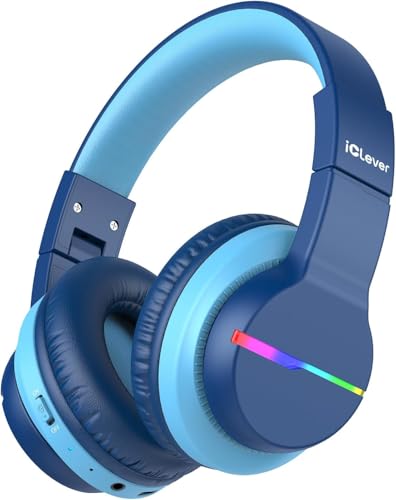
- Budget: Basic volume-limited models such as iClever and LilGadgets. They do the job for casual use, but comfort, battery and durability can vary.
- Mid-range: JBL JR310BT and Onanoff BuddyPhones Explore Plus. Reliable limiters, decent comfort and a good balance of features.
- Premium: Puro BT2200-Plus, JBL Jr460NC and Onanoff Cosmos Plus. Better sound, noise cancelling and sturdier builds suited to travel and older kids.
For most children, a volume-limited Bluetooth headphone such as the JBL JR310BT, Puro Sound Labs BT2200-Plus or Onanoff BuddyPhones Explore Plus is the safest pick, with the JBL Jr460NC suiting kids who travel and want noise cancelling, and a rugged, simple model suiting younger children who are rough on gear. The features that matter for children are a built-in volume limit, a comfortable adjustable fit, durable construction and a battery that lasts a school week or a long trip. This guide compares well-known kids’ wireless headphones on stated specifications and the conclusions that reviewers report, with conservative notes on hearing safety.
Our top picks



As an Amazon Associate we earn from qualifying purchases at no extra cost to you.
At a Glance
| Model | Best for | Key stated features | Limits |
|---|---|---|---|
| JBL JR310BT | Everyday on-ear use, ages roughly 3 to 10 | The maker lists a safe sound limit of about 85 dB, Bluetooth and long battery | On-ear fit may not suit larger heads |
| JBL Jr460NC | Travel and noisy settings | Active noise cancelling with volume limiting, per the maker | Higher tier; shorter battery with ANC on |
| Puro Sound Labs BT2200-Plus | Parents prioritizing hearing protection | Volume limiting to about 85 dB, over-ear design, built-in microphone | Premium tier; larger size |
| Onanoff BuddyPhones Explore Plus | Kids who want to share and play | Selectable volume limits, sharing cable, built-in microphone | Several models; check which are wireless |
| Onanoff BuddyPhones Cosmos Plus | Travel and noise reduction | Active noise cancelling and volume limits per the maker | Higher tier |
| LilGadgets Untangled Pro | Budget wireless with sharing port | Volume limit, wireless and wired use, shared listening | Build quality varies by reviewer |
| iClever and similar budget kids’ models | Tight budgets | Volume limited around 85 dB, foldable design | Comfort and battery less consistent |
Kids’ headphone lines are updated regularly, so a model named here may be a previous generation. The buying principles apply across revisions.
Hearing Safety First
Children’s ears are still developing, and loud listening over long periods can damage hearing. Many makers cap volume at around 85 decibels, a level commonly cited in health guidance for safe listening for several hours a day, though guidance differs and quieter is better. Choose headphones with a limiter that cannot be removed by a child, and set phone or tablet volume to a moderate level too. Not every limiter works the same way: some limit only the headphone, while others limit the audio input, and the device volume still plays a part. If your child complains of ringing, discomfort or muffled hearing, stop listening and talk to a doctor or hearing specialist. Headphones do not replace parental supervision, and breaks are recommended during long listening sessions.
What to Look For
Volume limiting
Look for a stated limit in decibels and read how the maker implements it. Some models offer a switch for several limits, such as 75, 85 and 94 dB. A lower setting suits younger children. Reviewers who measure output sometimes find real output differs from the stated value, so use the limit as a guide rather than a guarantee.
Fit and size
Kids’ heads vary a lot between ages. On-ear models suit younger children, while over-ear designs are more comfortable for older kids with larger heads. Look for a padded, adjustable headband and soft ear cushions. Check the maker’s age range and head-size guidance. A headphone that is too tight causes discomfort, while one that is too loose slides and leaks sound, leading kids to turn up the volume.
Durability
Choose flexible headbands, strong hinges and replaceable ear pads if possible. Folding designs go into a school bag more easily. Some models are splash resistant, but follow the maker’s instructions and keep them away from water. Many use removable cables or sharing ports that can wear out.
Battery and charging
The makers list battery life in the range of many hours, with some saying more than a day of use. Models with noise cancelling tend to have shorter battery life with the feature on. A wired fallback is handy if the battery runs flat, and USB-C charging is the easier standard.
Microphone and school use
For video calls and online classes, a built-in microphone helps. Check for a clear pickup and a mute switch. Many classrooms also use wired headsets, so having a 3.5 mm cable option adds flexibility.
Sharing features
Some models include a share port to connect two headphones. This is convenient for siblings but check that the volume limit still applies.
Budget Tiers
- Budget: Basic volume-limited models such as iClever and LilGadgets. They do the job for casual use, but comfort, battery and durability can vary.
- Mid-range: JBL JR310BT and Onanoff BuddyPhones Explore Plus. Reliable limiters, decent comfort and a good balance of features.
- Premium: Puro BT2200-Plus, JBL Jr460NC and Onanoff Cosmos Plus. Better sound, noise cancelling and sturdier builds suited to travel and older kids.
Care and Safety Notes
- Check ear pads and headbands regularly for cracks or loose parts, and replace the headphones if small pieces can detach.
- Use the supplied cable and a certified charger. Do not use damaged cables or charge unattended.
- Clean ear cushions with a slightly damp cloth, then let them dry completely.
- Teach children not to wrap cables around necks or hands.
- Take listening breaks, and keep the volume at a level where your child can still hear you speaking nearby.
- Noise-cancelling headphones can make traffic harder to hear. Advise children not to wear them while walking near roads or cycling.
Pick X If…
| If you need… | Pick |
|---|---|
| A reliable, affordable everyday pair | JBL JR310BT |
| Strong hearing-protection credentials | Puro Sound Labs BT2200-Plus |
| Noise cancelling for flights and road trips | JBL Jr460NC or Onanoff Cosmos Plus |
| Selectable volume limits and sharing | Onanoff BuddyPhones Explore Plus |
| The lowest cost with a volume limit | iClever or LilGadgets models |
| A larger fit for an older child | Puro BT2200-Plus or an over-ear model |
Alternatives
- Wired kids’ headphones: No battery, no pairing, and often cheaper. Many include volume limiting.
- Adult over-ear headphones with an app-based volume cap: Suit older teens, though the cap depends on the phone and may be changed.
- Bone-conduction or open-ear designs: Keep ears open to surroundings, but sizing and limiter features vary.
- Cable-based volume limiter adapters: Can be added to any wired headphone for an extra layer of control.
Choosing for Different Ages
Toddlers and preschoolers do best with light, simple on-ear models with soft pads and a hard volume limit, because they are more likely to drop, chew or bend the headphones. Look for smooth edges, flexible bands and no small detachable parts. Many parents of young children prefer a wired model with a sturdy cable at first, then move to wireless when the child can manage charging and pairing.
Children aged roughly six to ten can handle more complex headphones. Foldable designs, sharing ports and colorful skins appeal to this group, and a microphone helps with online classes. Pre-teens and teenagers often prefer adult-looking over-ear designs, which fit larger heads. For them, parents can use device-level volume caps in the phone settings, supported by honest conversations about hearing protection.
Whatever the age, teach kids to remove headphones during conversations, when crossing streets and when they feel any discomfort. Set a daily listening routine and store the headphones in a case or on a hook so they do not get crushed in a school bag. If a child has sensory sensitivities, ear cushions and clamping force matter even more; a soft, loose fit is better than a tight one. If you have a concern about your child’s hearing, such as missed words or frequent requests to repeat, book a hearing test rather than relying on a product to solve the problem.
Frequently Asked Questions
What volume limit is best for kids?
Many kids’ headphones cap volume at about 85 dB, and some offer lower options. Lower settings are better for younger children and longer sessions. Follow the maker’s guidance and your pediatrician’s advice if you have concerns.
Are noise-cancelling headphones safe for children?
They can reduce the need to turn up the volume in noisy places such as planes, which can help protect hearing. They also make it harder to hear traffic, so children should not wear them near roads. Keep use to appropriate settings.
What age are these headphones for?
Makers publish age ranges, commonly from about 3 up to 10 or 12 years. Head size matters more than age, so check the headband range and try the fit. Older children may be more comfortable in adult-size models with their own limit settings.
How long should kids listen with headphones?
There is no single number for every child, but taking regular breaks and keeping volume moderate is widely advised. If your child shows signs of discomfort, ringing or hearing difficulty, stop and see a doctor.
Can volume limiters be bypassed?
Some limiters are built into the headphone and cannot be changed by the child, while others depend on a switch or the device. Read the maker’s description to understand how yours works, and keep the device volume moderate as well.
Do wireless headphones work with tablets and school laptops?
Most connect over standard Bluetooth to phones, tablets and laptops. A few schools restrict wireless devices, so a model with a wired option is helpful. Check the headphone’s manual for pairing steps.