Our Top Picks
The best Bose earbuds for most people are the QuietComfort Ultra and QuietComfort Earbuds listings if you want active noise cancellation, and the Ultra Open or Sport Open Earbuds if you want to hear your surroundings. The titles in this set split into three families: in-ear noise-cancelling buds, clip-on open-ear buds, and older or lookalike options. One listing is not a Bose product at all, and two are renewed. This guide compares all ten on what each title states, flags what it leaves out, and ends with a battery worked example.
Top picks at a glance

Bose QuietComfort Ultra Earbuds (2nd Gen) - Wireless Noise Cancelling Earbuds with Mic, Immersive Audio, USB-C Charging, Up to 6 Hours Battery, IPX4 Rating, Black


As an Amazon Associate we earn from qualifying purchases. Product prices and availability are accurate as of the date/time indicated.

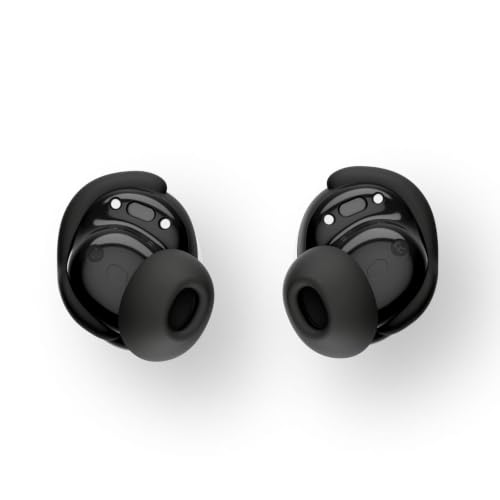
Bose QuietComfort Earbuds - True Wireless Bluetooth Earbuds with Active Noise Cancellation and Mic, USB-C Charging, IPX4 Rating, Up to 8.5 Hours of Playtime, Black



As an Amazon Associate we earn from qualifying purchases. Product prices and availability are accurate as of the date/time indicated.

Bose Ultra Open Earbuds (2nd Gen) - Open-Ear, Clip-On, Wireless Earbuds, Bluetooth, Immersive Audio, Wireless Charging, Up to 28 Hrs of Audio, Ideal for Traveling, School, and Office, Black


As an Amazon Associate we earn from qualifying purchases. Product prices and availability are accurate as of the date/time indicated.

Bose Sport Open Earbuds - Wireless Earbuds, Clip-On, USB-C Charging, Up to 22 Hrs of Audio, Sweat Resistant, IP54 Rating, Ideal for Workouts, Microphones for Clear Calls, Eucalyptus Green


As an Amazon Associate we earn from qualifying purchases. Product prices and availability are accurate as of the date/time indicated.

Bose Ultra Open Earbuds - Bluetooth Open Ear Earbuds with OpenAudio for Awareness, Clip-On Design for Comfort, Water Resistant, Up to 48 Hrs of Playtime, White Smoke


As an Amazon Associate we earn from qualifying purchases. Product prices and availability are accurate as of the date/time indicated.

Bose SoundSport, Wireless Earbuds, (Sweatproof Bluetooth Headphones for Running and Sports), Black


As an Amazon Associate we earn from qualifying purchases. Product prices and availability are accurate as of the date/time indicated.

Baseus Inspire XC1 Open Ear Clip-On Earbuds, Sound by Bose, Dolby Audio, Adaptive Tunning Sound, Hybrid 2-Way Driver, Zero-Sense Air Cushion, 4-Mic Adaptive Clear Calls, IP66 Waterproof, 40H Playtime


As an Amazon Associate we earn from qualifying purchases. Product prices and availability are accurate as of the date/time indicated.

Bose QuietComfort Ultra Bluetooth Earbuds, Wireless Earbuds with Spatial Audio and World-Class Active Noise Cancellation, Deep Bass, Up to 6 Hours of Playtime, Black


As an Amazon Associate we earn from qualifying purchases. Product prices and availability are accurate as of the date/time indicated.

Bose QuietComfort Ultra True Wireless Noise Cancelling In-Ear Earbuds - Black (Renewed)


As an Amazon Associate we earn from qualifying purchases. Product prices and availability are accurate as of the date/time indicated.
| Model | Key point from the title | Price tier | Best for |
|---|---|---|---|
| Bose QuietComfort Ultra Earbuds (2nd Gen) | Noise cancelling, immersive audio, up to 6 hours, IPX4 | Premium | Commuters wanting the newest in-ear model |
| Bose QuietComfort Earbuds | Active noise cancellation, up to 8.5 hours, IPX4 | Mid-range | Longer battery claim at a lower tier |
| Bose Ultra Open Earbuds (2nd Gen) | Open-ear clip-on, wireless charging, up to 28 hours of audio | Premium | Office and travel awareness |
| Bose Sport Open Earbuds | Clip-on, IP54, sweat resistant, up to 22 hours | Mid-range | Workouts |
| Bose Ultra Open Earbuds | OpenAudio, water resistant, up to 48 hours of playtime | Mid-range | All-day awareness listening |
| Bose (Certified Renewed) Ultra Open Earbuds | Renewed unit, title gives almost no specs | Mid-range | Saving on the open-ear design |
| Bose SoundSport Wireless | Sweatproof, built for running and sports | Budget | Simple workout buds on a small budget |
| Baseus Inspire XC1 | Open-ear, “Sound by Bose,” IP66, 40 hours | Budget | Open-ear on a tight budget (not a Bose product) |
| Bose QuietComfort Ultra Bluetooth Earbuds | Spatial audio, noise cancellation, up to 6 hours | Premium | First-generation Ultra buyers |
| Bose QuietComfort Ultra (Renewed) | Renewed in-ear noise-cancelling buds | Budget | Lowering the cost of the Ultra line |
What is changing in Bose-style earbuds
Two shifts stand out across this set. The first is the move to open-ear, clip-on designs, which rest outside the ear canal so you can hear traffic, colleagues and announcements. The second is feature layering on in-ear models, where noise cancellation sits alongside spatial or “immersive” audio modes. Both are general trends visible in the titles, and neither tells you how a unit sounds.
Another change is the growing number of renewed and lookalike listings. Renewed units can lower the price of a premium model, but they come with questions about battery wear, accessories and warranty. Lookalike or co-branded products borrow a famous name in their titles, so reading the brand field matters.
Finally, battery claims have become harder to compare. Some titles quote hours per charge, others quote hours with the charging case included, and some do not make clear which one they mean. A claim of 48 hours does not imply 48 hours in your ears. Treat all of these as seller claims and check the specifications.
How we picked these
We read each listing title, compared the stated features, and grouped the earbuds into price tiers relative to this set. We checked the brand field to separate Bose products from lookalikes, and we noted where a title leaves out details such as battery per charge. Nobody on the team used or measured these units. Sound quality, comfort, call clarity and noise reduction are not judged here; where the title is silent we say “check the listing.”
Ten listings compared, one by one
Bose QuietComfort Ultra Earbuds (2nd Gen): the newest in-ear flagship
The title names wireless noise cancelling, a microphone, immersive audio, USB-C charging, up to 6 hours of battery, an IPX4 rating and black colour. “2nd Gen” signals a newer version, but the title does not say what changed.
It suits a daily commuter who wants noise cancellation in a compact in-ear design and is comfortable paying the top tier of this set.
Pros
- Noise cancelling and immersive audio are both named.
- USB-C charging is a convenient standard.
Cons
- Six hours is a shorter battery claim than some cheaper listings.
- Highest price tier, shared with two other listings.
A typical day might be a morning train, a lunchtime walk and an evening call. Because the title does not give a case-charge figure, plan to top up the case overnight and treat the battery claim as a ceiling rather than a promise.
Pair it with a clear plan for the charging case: a short battery claim matters less if the case keeps you topped up during the day. Check the listing for case battery, wireless charging support and what changed from the first generation. Question to ask: how many extra charges does the case provide?
Bose QuietComfort Earbuds: the longer-battery in-ear option
This title promises true wireless Bluetooth, active noise cancellation, a microphone, USB-C charging, an IPX4 rating and up to 8.5 hours of playtime. It lists no generation label, so check whether it is an earlier model in the QuietComfort line.
It suits someone who wants noise cancellation for flights or open-plan offices without paying the Ultra premium.
Pros
- 8.5-hour claim is the longest of the in-ear noise-cancelling titles.
- Lower price tier than the Ultra models.
Cons
- No spatial or immersive audio is mentioned.
- Probably an older design, so feature set may differ from newer listings.
Picture a long-haul flight or a loud open-plan office: this is the kind of listing that title-wise targets that need. The older naming means you should compare its feature list line by line with the Ultra titles before deciding.
Think of it as the value pick for noise cancellation: you give up headline extras and gain battery on paper. Check the listing for the Bluetooth version, case charging and multipoint pairing. Question to ask: does the missing “Ultra” label matter for the features I want?
Bose Ultra Open Earbuds (2nd Gen): the wireless-charging open-ear model
The title says open-ear, clip-on, wireless Bluetooth earbuds with immersive audio, wireless charging and up to 28 hours of audio, and suggests them for travel, school and the office. Whether 28 hours includes the case is unclear.
It fits a user who needs to hear colleagues and announcements while listening, such as a student crossing a campus or a traveller in an airport.
Pros
- Wireless charging is named, which is rare in this set.
- Open-ear design keeps ambient sound audible.
Cons
- Premium price tier.
- Open-ear designs typically do not block outside noise, so loud places can still be a challenge.
A realistic scene is walking to class with music on while still hearing a bike approach from behind. In that setting awareness is the benefit, and the premium tier is the cost of the newest generation and the wireless-charging case.
Open-ear buds change how you listen, so be realistic about noisy places; they are not a substitute for noise cancellation. Check the listing for whether the 28 hours is per charge or with the case. Question to ask: do I want to hear my surroundings more than I want to block them?
Bose Sport Open Earbuds: the workout-focused clip-on
The title lists clip-on earbuds, USB-C charging, up to 22 hours of audio, sweat resistance, an IP54 rating, workout use, microphones for calls and a Eucalyptus Green colour.
It suits runners and gym users who want to stay aware of traffic and other people, and who want a colour that stands out.
Pros
- IP54 is a specific, comparable rating for sweat and dust.
- Designed around exercise and clip-on fit.
Cons
- Mid-range price for a workout-focused model.
- No noise cancelling, by design of the open fit.
A typical use is a park run or a gym session where you want to hear a trainer or passing cyclists. The bright colour is cosmetic, but it suggests the listing is aimed at active buyers rather than office listeners.
An IP rating is a starting point, not a promise; follow the manufacturer’s care instructions after sweaty sessions. Check the listing for the case, fit sizes and the 22-hour meaning. Question to ask: will the clip-on fit stay put during my kind of exercise?
Bose Ultra Open Earbuds: the original open-ear listing
The title names Bluetooth open-ear earbuds with OpenAudio for awareness, a clip-on comfort design, water resistance and up to 48 hours of playtime, in White Smoke. Like other long claims, 48 hours probably counts the case.
It suits someone who wants a comfortable all-day wear and does not need wireless charging or the newer generation.
Pros
- Longest playtime claim in the set.
- Same open-ear idea as the newer model at a lower tier.
Cons
- “Water resistant” is vague, with no rating named.
- Older listing than the 2nd Gen version.
Imagine a full workday with a few calls and a lot of background music at your desk: open-ear listening fits that pattern, and a long playtime claim means fewer charging reminders. The vague water wording is the main gap in the title.
It is the sensible comparison point for the 2nd Gen model above; the price gap tells you what the newer listing charges for. Check the listing for the water rating and whether 48 hours includes the case. Question to ask: is the newer generation worth the price difference to me?
Bose (Certified Renewed) Ultra Open Earbuds: the renewed option
The title is short: Bose, Certified Renewed, Ultra Open Earbuds, White Smoke. It is almost certainly the same colour and design family as the previous listing, but the title lists no specifications.
It suits a buyer who is comfortable with renewed products in exchange for a modest saving, and who will read the renewal terms.
Pros
- Slightly lower price than the new listing of a similar design.
- Same open-ear design family as the new listing.
Cons
- Renewed units can have wear on batteries and accessories.
- The title offers nothing beyond the name.
It makes most sense for a careful shopper who has already decided on the open-ear design and wants to stretch the budget. If you cannot confirm the warranty in writing, the new listing is the safer comparison.
The saving here is small, which makes the warranty the real question. Check the listing for the renewal grade, warranty length, return window and whether a charging cable and case are included. Question to ask: does the discount justify any shorter warranty compared with the new version?
Bose SoundSport Wireless: the budget sports bud
The title says wireless earbuds, sweatproof Bluetooth headphones for running and sports, in black. It states nothing about noise cancelling, battery, water rating or microphones.
It suits a runner on a limited budget who wants a basic, well-known brand and does not need modern extras.
Pros
- Lowest price in the set.
- Sweatproof sports positioning.
Cons
- Title gives no battery, case or rating details.
- Likely an older design with fewer features than newer listings.
Picture a gym or running route where you want secure, sweat-ready earphones without extras. The short title means you will rely on the specification table for almost everything, so compare it carefully with newer listings before buying.
It makes sense only if you want the simplest possible sports earphones. Check the listing for battery life, charging port type, microphone support and the exact sweat-resistance claim. Question to ask: do I need a charging case or voice calls, and does this model offer them?
Baseus Inspire XC1: the lookalike with Bose tuning in the title
This is a Baseus product, not a Bose one. The title says open-ear clip-on earbuds, “Sound by Bose,” Dolby Audio, adaptive tuning, a hybrid 2-way driver, a zero-sense air cushion, four-microphone clear calls, IP66 waterproof and 40 hours of playtime.
It suits a buyer who likes the open-ear idea and wants a lower price, and who accepts that the badge on the earbuds is Baseus.
Pros
- Lower price than the Bose open-ear listings.
- IP66 is a named, comparable rating.
Cons
- It is not a Bose-brand product, and “Sound by Bose” is the seller’s wording.
- Support and parts come from a different company.
Picture a commuter who walks to work and wants to hear traffic: the open-ear design fits, and the 40-hour claim looks generous on paper. The IP66 rating is a named detail, but treat it as a seller claim until you read the specification table.
Read the brand field, not just the phrase in the title. Check the listing to learn exactly what “Sound by Bose” means, how long the warranty runs and who handles service. Question to ask: am I buying this for the open-ear design, or for the Bose name?
Bose QuietComfort Ultra Bluetooth Earbuds: the first-generation listing
The title names wireless earbuds with spatial audio, active noise cancellation, deep bass and up to 6 hours of playtime, in black.
It suits a buyer who wants the Ultra line but is comparing it with the 2nd Gen listing, and who wants to see whether the older version offers meaningful savings.
Pros
- Spatial audio and noise cancelling are both named.
- Same battery claim as the 2nd Gen listing.
Cons
- Same top price tier as the 2nd Gen listing in this set.
- Title does not say which generation it is.
A buyer who already owns a phone with spatial audio features might like this listing, but the title does not say how those features are delivered. Compare the price against the 2nd Gen listing and the renewed Ultra before choosing.
If the price matches the newer listing, there is little reason to choose the older one. Check the listing for generation, charging and IPX rating. Question to ask: why would I pay the same as the 2nd Gen price for this version?
Bose QuietComfort Ultra (Renewed): the lower-cost Ultra
The title reads: QuietComfort Ultra true wireless noise cancelling in-ear earbuds, black, renewed. It gives no battery or rating details.
It suits a shopper who wants noise cancellation and the Ultra name for less, and is prepared to check the renewal terms closely.
Pros
- Much lower price than new Ultra listings.
- Noise cancelling and in-ear design are named.
Cons
- Renewed status brings battery-wear and warranty questions.
- No spec details in the title.
Imagine someone who flies twice a year and wants noise cancelling for those trips without paying a full new price. For that occasional use, the renewal terms matter more than small feature differences.
Treat the saving as a trade for certainty. Check the listing for the renewal standard, warranty, accessories and generation. Question to ask: what do I do if the battery fades early, and who covers the repair?
QuietComfort Ultra versus QuietComfort Earbuds
These two lines answer the same question differently. The Ultra titles add immersive or spatial audio on top of noise cancelling, and they quote a 6-hour battery claim. The QuietComfort Earbuds title quotes 8.5 hours and omits spatial audio. If you listen mostly to podcasts and calls on a train, the longer battery figure may matter more to you than a sound mode. If you like feature-rich audio modes, the Ultra titles are the ones that mention them.
Both use USB-C and an IPX4 rating according to their titles, which suggests protection against light splashes rather than heavy rain or swimming. Prices, as ever, change, so treat the tiers in this guide as relative positions in one set.
Bose earbuds compared with other brands
A well-known brand name gives you a clear support route, but it does not guarantee that a particular pair will suit your ears. Fit, comfort and call quality depend on ear shape and use. Competitors offer in-ear and open-ear styles too, often at lower prices, and the best way to compare is to match the features you need: noise cancelling, open-ear awareness, battery, water rating and microphones. Our guides to lower-priced wireless earbuds and the cheapest wireless earbuds cover cheaper alternatives, and wireless earbud features compared explains the spec terms.
Buying guide for Bose earbuds
In-ear noise cancelling or open-ear?
In-ear designs seal the ear canal, which helps with noise cancelling and bass but can feel isolating. Open-ear clip-on designs leave the canal open so you can hear traffic, colleagues and announcements. Open-ear is generally better for walking, cycling and offices, while sealed designs suit flights and noisy trains. Check local rules and common sense about listening while cycling or crossing roads.
Battery claims and what they mean
Look for two numbers: hours per charge in the earbuds, and total hours with the case. Titles often quote only one, and not always clearly. A 48-hour claim is almost certainly the total with the case, and an 8.5-hour claim is probably earbuds only. If the title does not say, the specification table should.
Water and sweat ratings
IPX4 suggests protection against splashes, and IP54 adds a dust rating, while IP66 claims stronger protection against water jets. “Water resistant” or “sweatproof” without a rating is a vaguer claim. No rating on its own makes earbuds safe for swimming or showering, so follow the manufacturer’s care instructions.
Fit, comfort and hearing safety
Fit decides whether earbuds feel good after an hour. Open-ear clips can press on the ear for some people, and in-ear tips need the right size. Whichever you choose, keep the volume at a comfortable level, especially in noisy places where it is tempting to turn it up, and take breaks. This is general guidance, not medical advice.
Calls and microphones
If you take calls on the move, look for a stated microphone count and wind or noise handling. In this set, the Baseus title names four microphones and the Sport Open title mentions microphones for clear calls, while other titles simply say “with Mic” or nothing at all. Real call quality depends on your environment and fit, so use these as a prompt to read the specification table, not as a ranking.
New, renewed or lookalike
New units come with the clearest warranty. Renewed units can save money but may have battery wear. Lookalikes and co-branded products can offer features at lower prices, but you rely on a different company for support. Always read the brand field and the seller terms.
A worked example with stated assumptions
Suppose you commute two hours a day and take calls for another hour. Assumptions for this estimate: noise cancelling is on, you reduce the claimed per-charge time by 20% for real use, and the case holds a few extra charges (check the listing). With a 6-hour claim, planning for about 4.8 hours means one earbud charge covers roughly one and a half days of three-hour use, so you would recharge from the case about every day and a half. With an 8.5-hour claim, the same reduction gives about 6.8 hours, which covers two full days. For an open-ear listing quoting 28 hours with the case, a 20% reduction gives about 22 hours of total audio, or about seven days of three-hour use. These numbers are rough estimates for comparison, not measurements.
| Spec concept | What to look for | Why it matters |
|---|---|---|
| Noise handling | Active noise cancellation or open-ear design | Decides isolation versus awareness |
| Battery | Hours per charge and with the case | Sets how often you charge |
| Rating | IPX4, IP54, IP66 or vague wording | Indicates sweat and splash tolerance |
| Charging | USB-C or wireless case | Convenience at home and on trips |
| Microphones | Stated count and call features | Matters if you take calls often |
| Condition and brand | New or renewed, true brand versus lookalike | Affects warranty and support |
Mistakes buyers make
The first mistake is buying open-ear earbuds for a noisy flight and expecting noise cancellation. The second is reading “48 hours” as the time in your ears. The third is trusting a brand name in a title without checking the brand field, which is how a Baseus product appears in a search for Bose.
A fourth mistake is paying new prices for a first-generation listing when a newer one costs the same. A fifth is ignoring renewal terms: a small discount can vanish if the warranty is short. The last is forgetting about safety, since wearing earbuds that block surroundings while cycling or crossing roads can be risky. Follow local rules and keep the volume sensible.
Verdict by use case
For noise cancelling, the QuietComfort Ultra 2nd Gen listing is the newest in this set, while the QuietComfort Earbuds listing is the value pick with the longest in-ear battery claim. For awareness at work or on campus, choose between the Ultra Open 2nd Gen and the original Ultra Open. For exercise, the Sport Open Earbuds name a specific IP54 rating, and the SoundSport is the cheapest basic option. The renewed listings are for careful shoppers who check warranties, and the Baseus Inspire XC1 is for people who want open-ear on a budget and accept that it is not a Bose product. Also see our guide to wireless Bluetooth earbuds for every budget.
Frequently asked questions
Which Bose earbuds are best for noise cancelling?
In this set, the QuietComfort Ultra listings and the QuietComfort Earbuds listing are the ones whose titles name active noise cancellation. The Ultra titles add spatial or immersive audio and quote up to 6 hours, while the QuietComfort Earbuds title quotes up to 8.5 hours. The open-ear models are designed to let outside sound in, so they are not noise-cancelling choices.
Are open-ear Bose earbuds good for the office?
They suit offices where you want to hear colleagues, announcements or your phone ringing while listening to music or calls. The clip-on design leaves the ear canal open, so surrounding sound stays audible. The trade-off is that they do not block noise, so a loud open-plan space or a flight remains noisy. Check the listing for microphone details if you take calls. Fit matters too, since clips can feel different on each ear.
Is the Baseus Inspire XC1 a Bose product?
No. The brand on the listing is Baseus, and the title includes the phrase “Sound by Bose” as part of its description. That wording is the seller’s claim about tuning, not proof that Bose makes or supports the product. Read the brand field, the warranty terms and the listing details to see who handles service before you buy. Compare the price with true Bose listings before deciding.
Are renewed Bose earbuds worth buying?
They can be if the saving is meaningful and the terms are clear. Renewed units may show battery wear or arrive with different accessories, and warranty lengths can be shorter than for new ones. Check the renewal standard, the return window and what is in the box, and compare the price gap against the new equivalent. A short warranty can erase a small saving.
What does IPX4 or IP54 mean on earbuds?
These ratings describe resistance to water and, where a second digit is given, dust. IPX4 generally points to protection from splashes, and IP54 adds some dust protection, while IP66 claims more against water jets. None means the earbuds are made for swimming or the shower. Follow the manufacturer’s instructions on care, and treat title ratings as seller claims. Check the care guide.
Do the battery hours in the title mean per charge?
Not always. Long figures such as 28, 40 or 48 hours usually include recharges from the case, while shorter figures such as 6 or 8.5 hours are more likely to describe a single charge. Titles rarely explain which is meant. Open the specification table, and plan with about 80 percent of the claim as a cautious estimate. The case is the key detail.