Key takeaways
- For reliable browning: Choose an uncoated, heavy-gauge aluminum pan. It conducts heat efficiently and avoids a coating that can wear out, but muffins may need greasing or paper liners.
- For easy release: Choose a reputable nonstick steel pan with a smooth, intact coating. It is convenient for sticky batters, though the coating calls for gentler utensils and hand-washing.
- For frequent baking: Look for a rigid pan with rolled or reinforced rims. A sturdier frame is less likely to twist when moved full or warp under oven heat.
- For a dishwasher-first kitchen: Buy a pan whose manufacturer explicitly allows dishwasher use. “Dishwasher-safe” does not mean the coating will last as long as it would with hand-washing.
The best muffin pans for even baking are heavy-gauge aluminum pans for consistent browning, while nonstick steel pans are a better fit when easy release and cleanup matter most. Choose by checking the actual cup dimensions, material thickness and care instructions—not just the pan’s advertised capacity.
Our top picks
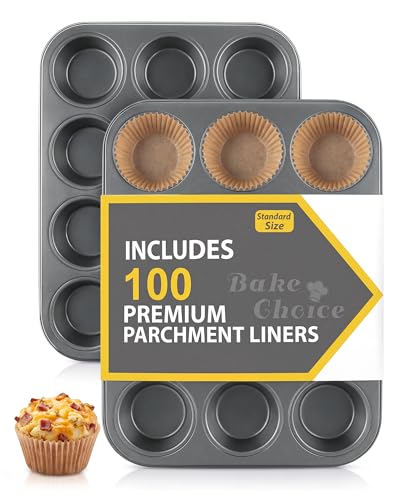
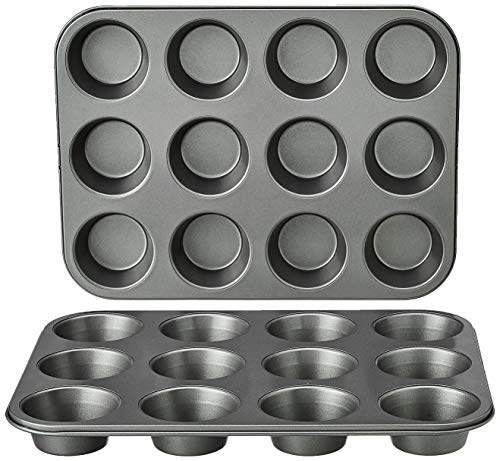


As an Amazon Associate we earn from qualifying purchases at no extra cost to you. Ratings are shown as listed on Amazon.
Quick picks by baking situation
- For reliable browning: Choose an uncoated, heavy-gauge aluminum pan. It conducts heat efficiently and avoids a coating that can wear out, but muffins may need greasing or paper liners.
- For easy release: Choose a reputable nonstick steel pan with a smooth, intact coating. It is convenient for sticky batters, though the coating calls for gentler utensils and hand-washing.
- For frequent baking: Look for a rigid pan with rolled or reinforced rims. A sturdier frame is less likely to twist when moved full or warp under oven heat.
- For a dishwasher-first kitchen: Buy a pan whose manufacturer explicitly allows dishwasher use. “Dishwasher-safe” does not mean the coating will last as long as it would with hand-washing.
What matters for even muffins
Cup consistency comes first. If cups differ in width or depth, the same scoop of batter will not sit at the same level in every well. Small portions can then bake at different rates. A standard 12-cup pan is commonly described as holding about 2½ to 3 ounces per cup, but capacity conventions vary. Compare the manufacturer’s stated cup capacity and pan dimensions when replacing a favorite pan.
Material sets the browning pattern. Aluminum transfers heat readily, which can help muffins brown evenly when the pan is evenly built and the oven temperature is accurate. Dark-coated steel absorbs more radiant heat at the surface and can brown edges and bottoms faster; some recipes may need a temperature reduction or a check a few minutes early. Glass and silicone are less direct substitutes for metal: glass heats differently and is heavy, while flexible silicone needs support and may produce paler sides.
Coating affects release, not baking skill. Nonstick surfaces can release muffins cleanly, but scratches, abrasive cleaners and overheating shorten their useful life. Uncoated pans have no coating to flake or degrade, but release depends more on greasing, liners and cooling time.
Pan types compared
| Pan type | Typical format | Browning tendency | Release and care | Best fit |
|---|---|---|---|---|
| Heavy-gauge aluminum, uncoated | 12 cups; usually about 2½–3 oz per cup | Quick, even heat transfer; tends to brown more than silicone | Grease or line; hand-washing is simple, but avoid prolonged contact with acidic residue | Frequent bakers prioritizing browning and a long-lived surface |
| Coated steel, light or medium color | 12 cups; capacity varies by model | Generally moderate; lighter finishes can brown less aggressively than dark finishes | Easy release while coating is intact; use nonmetal utensils and follow care directions | Everyday baking and convenient cleanup |
| Dark nonstick steel | 12 cups; capacity varies by model | Can brown edges and bottoms quickly | Good release when new; hand-wash to help preserve coating | Bakers who want a crisp exterior and monitor bake time |
| Silicone | Often 12 cups; flexible construction | Often paler sides and bottoms than metal | Release can be easy; set on a rigid baking sheet before filling and moving | Occasional baking or gentle release, not maximum browning |
These are material tendencies, not guarantees. Pan thickness, oven calibration, rack position, batter formulation and how full each cup is can all change the result. For more predictable comparisons, keep the recipe and portion size constant when changing pans.
Choose by your kitchen and routine
| Your situation | Practical choice | Trade-off to expect |
|---|---|---|
| Occasional baker with a tight budget | Basic 12-cup, light-colored steel pan with a smooth finish | Inspect for thin, flexible construction; the lowest-cost pans are more prone to bending |
| New baker who values easy release | Nonstick steel, plus paper liners for sticky batters | Coating needs careful handling and may eventually lose release performance |
| Frequent baker who wants even browning | Heavy-gauge aluminum, uncoated or with a durable light finish | Uncoated aluminum may need more deliberate greasing and cleanup |
| Limited storage space | One standard 12-cup pan rather than a stack of specialty sizes | Confirm outside dimensions and rim shape so it fits your oven and cupboard |
| Dark, crisp muffin tops are the goal | Dark-coated steel, with an early check for doneness | Edges can overbrown before the center is done if the recipe is not adjusted |
How to avoid uneven baking and premature wear
- Check fit before buying. Compare the pan’s outside length and width with your oven rack and storage shelf. For a replacement, compare cup diameter, depth and stated capacity—not just “standard size.”
- Portion evenly. Use the same scoop for each cup and leave similar headroom. Unequal fill levels are a common cause of muffins finishing at different times, even with a good pan.
- Support the pan when filling. A full pan is heavier and easier to flex. Carry it by both sides, particularly if it has thin rims or a flexible construction.
- Use the recipe as a starting point when switching finishes. Check muffins a little early in a dark pan, especially if you are moving from light metal. Avoid changing both the pan and oven temperature at once; otherwise, it is harder to tell which change affected browning.
- Let muffins rest briefly before removing. A short cooling period lets the crumb firm up. If they stick, loosen the edges gently rather than levering against a nonstick coating with a knife.
- Wash according to the maker’s directions. For coated pans, warm water, mild dish soap and a soft sponge are the safer default. Remove baked-on residue by soaking rather than scraping with metal or scouring pads. Dry thoroughly before stacking.
Durability, dishwasher safety and replacement signs
On coated pans, release performance is often the first thing to decline: food begins sticking even though the pan still looks usable. Scratches, peeling or bubbling are stronger reasons to retire a coated pan. On uncoated metal, look instead for a warped base, sharp damage, persistent baked-on residue or corrosion. A pan that rocks on a flat surface or has visibly distorted cups may bake less consistently and should be replaced.
Dishwasher safety is model-specific. Heat, detergent and repeated contact with other items can dull finishes or shorten coating life, so hand-washing is the more conservative choice for coated pans—even when dishwasher use is permitted. For bare aluminum, follow the manufacturer’s instructions; dishwasher detergents can discolor it. Dry any pan promptly and avoid storing it while damp.
Paper liners can make release and cleanup easier, but they do not correct inconsistent cup sizes or a warped pan. They also reduce direct contact between batter and pan, which can soften the sides of some muffins. If browning matters, try greasing the wells lightly instead and compare results using the same recipe.
Bottom line
For the strongest balance of even browning and long-term durability, choose a rigid, heavy-gauge aluminum muffin pan with consistent cup dimensions. For easier release, choose coated steel and protect its surface with hand-washing and nonmetal tools. If you prefer silicone, use a rigid support sheet and expect less pronounced browning. Whichever type you choose, uniform portions and a pan that sits flat will do as much for consistent muffins as the label on the product.