Key takeaways
- For college or frequent commuting: Choose the IdeaPad Slim 5 or Swift Go 14. A 14-inch screen and a weight below 3.5 pounds are more valuable than a larger display if the laptop travels daily.
- For spreadsheets and a fixed desk: Choose the Vivobook 15 or Aspire 5. Their larger screens and number-pad options improve productivity, while the extra weight matters less.
- For handwritten notes or presentations: Choose the IdeaPad Flex 5, but budget for a protective sleeve because convertible hinges and touchscreens add handling risk.
- For light programming: Prioritize 16GB of RAM and a 512GB SSD. The IdeaPad Slim 5 and Aspire 5 are better values than a premium-looking laptop limited to 8GB.
- For photo and video work: Prefer an OLED or color-accurate display and at least 16GB of RAM. Integrated graphics are adequate for basic editing but not demanding 3D or professional video workloads.
- For gaming: A laptop with a dedicated graphics processor is usually a better target, but new models with one commonly exceed $800. Under this budget, restrict expectations to casual games and older releases.
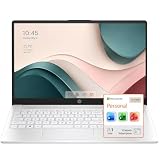
The best laptops under 800 dollars in 2026 are the Lenovo IdeaPad Slim 5 for the best overall balance, the Acer Aspire 5 for upgradeability, the ASUS Vivobook 15 for everyday productivity, and the Lenovo IdeaPad Flex 5 for buyers who want a 2-in-1.
At this price, the key is choosing the right configuration rather than simply buying the newest-looking model. Aim for at least 16GB of RAM, a 512GB SSD, a modern six- or eight-core processor, and a display with an IPS or OLED panel. These specifications matter more in daily use than a small difference in processor branding.
Best laptops under 800 dollars: ranked picks
1. Lenovo IdeaPad Slim 5 — best overall
The Lenovo IdeaPad Slim 5 is the strongest all-round choice when it is available in a configuration with an AMD Ryzen 5 or Ryzen 7 processor, 16GB of RAM, and a 512GB SSD. It handles dozens of browser tabs, office applications, video calls, light photo editing, and programming without feeling like a budget machine.
Its main advantages are a relatively rigid chassis, a comfortable keyboard, good port selection, and battery life that commonly reaches about 9 to 12 hours of mixed web and document use, depending on the screen and processor. The 14-inch versions are easier to carry, while 16-inch versions provide more workspace but weigh closer to 4 pounds.
The standard IPS display is usually the compromise. Many configurations use a 1920-by-1200 panel with modest brightness, which is fine indoors but less comfortable near a sunny window. Choose an OLED version if its price remains below $800 and you value contrast and movie quality more than maximum battery life.
2. Acer Aspire 5 — best for value and upgrades
The Acer Aspire 5 remains a practical choice for students and home users because it often provides more memory or storage than similarly priced competitors. Look for an Intel Core i5 or AMD Ryzen 5 configuration with 16GB of RAM and a 512GB SSD. Some versions make it possible to expand memory or replace the storage, although the exact internal layout varies by screen size and generation.
Performance is sufficient for office work, school software, web development, and moderate multitasking. Integrated graphics are suitable for casual games and older titles, but this is not a gaming laptop. Expect roughly 7 to 10 hours of light use from many configurations.
The plastic body is functional rather than luxurious, and the hinge and display lid deserve more care than those on a heavier business laptop. The reward is a useful selection of USB ports, relatively easy servicing, and frequent market prices around $500 to $700.
3. ASUS Vivobook 15 — best for a large everyday screen
The ASUS Vivobook 15 is a good fit for buyers who want a conventional 15.6-inch laptop without paying for a premium ultrabook. Configurations with Intel Core i5 or AMD Ryzen 5 processors, 16GB of RAM, and a 512GB SSD provide responsive general-purpose performance.
The larger keyboard deck is comfortable for spreadsheets and long documents, and many models include a full-size number pad. Battery life is typically around 7 to 10 hours for web browsing and writing. The 15.6-inch chassis is less convenient in a small backpack than a 14-inch model, but the extra screen area can reduce the need for an external monitor.
Check the exact panel before buying. Some inexpensive Vivobook models use a dim 1920-by-1080 display with limited color coverage. That is acceptable for documents, but photographers and video editors should look for an OLED configuration or a panel specifically advertised with wider color coverage.
4. Lenovo IdeaPad Flex 5 — best 2-in-1
The Lenovo IdeaPad Flex 5 adds a 360-degree hinge and touchscreen, allowing it to work as a laptop, tablet, or stand-mounted screen. It is particularly useful for handwritten notes, recipe viewing, travel, and presentations. A stylus may be included with some bundles and absent from others, so verify the package contents.
AMD Ryzen 5 versions with 16GB of RAM and a 512GB SSD offer enough power for everyday work and light creative applications. Battery life is generally about 8 to 11 hours, though touchscreen use and a bright display reduce runtime. At roughly 3.5 to 4 pounds, it is portable but not tablet-light.
The convertible hinge is a moving part that receives more stress than a standard clamshell design. Avoid lifting the computer by the display and do not force the hinge past its intended positions.
5. Acer Swift Go 14 — best display-focused option
The Acer Swift Go 14 is worth considering when a sale brings a suitable configuration under $800. Its strengths are a lighter metal or metal-and-plastic chassis, a sharp 14-inch display, and stronger portability than most budget 15-inch laptops. Some versions use a high-resolution OLED panel, which produces substantially better contrast and color than a typical budget IPS screen.
Modern Intel Core Ultra configurations are capable of office work, coding, image editing, and light creative workloads. Expect approximately 8 to 11 hours of mixed productivity, with OLED models often landing toward the lower end when displaying bright content.
Thin designs can become warm and louder during sustained workloads, and memory may be soldered. Buy the RAM capacity you need at purchase time; 16GB is the safer choice for a laptop intended to last several years.
Head-to-head comparison
| Model or type | Typical useful configuration | Weight | Battery target | Display and build | Typical market range |
|---|---|---|---|---|---|
| Lenovo IdeaPad Slim 5 | Ryzen 5/7, 16GB RAM, 512GB SSD | 3.1–4.0 lb | 9–12 hours | 14 or 16 inches; sturdy plastic, some OLED options | $650–$800 |
| Acer Aspire 5 | Core i5 or Ryzen 5, 16GB RAM, 512GB SSD | 3.7–4.2 lb | 7–10 hours | 15.6 inches; practical plastic chassis, upgrade-friendly variants | $500–$700 |
| ASUS Vivobook 15 | Core i5 or Ryzen 5, 16GB RAM, 512GB SSD | 3.6–3.9 lb | 7–10 hours | 15.6 inches; plastic body, panel quality varies widely | $550–$750 |
| Lenovo IdeaPad Flex 5 | Ryzen 5, 16GB RAM, 512GB SSD | 3.5–4.0 lb | 8–11 hours | 14 or 16 inches; touchscreen and 360-degree hinge | $600–$800 |
| Acer Swift Go 14 | Core Ultra 5, 16GB RAM, 512GB SSD | 2.9–3.3 lb | 8–11 hours | 14 inches; sharper displays, thinner metal-oriented design | $700–$800 on sale |
Battery figures are realistic planning ranges for web browsing, writing, video calls, and streaming at moderate brightness. Local video playback may last longer, while gaming, sustained compiling, video rendering, maximum brightness, and frequent video meetings can cut runtime substantially. Manufacturer battery claims are not directly comparable because test methods differ.
Choose by situation, not just benchmark speed
- For college or frequent commuting: Choose the IdeaPad Slim 5 or Swift Go 14. A 14-inch screen and a weight below 3.5 pounds are more valuable than a larger display if the laptop travels daily.
- For spreadsheets and a fixed desk: Choose the Vivobook 15 or Aspire 5. Their larger screens and number-pad options improve productivity, while the extra weight matters less.
- For handwritten notes or presentations: Choose the IdeaPad Flex 5, but budget for a protective sleeve because convertible hinges and touchscreens add handling risk.
- For light programming: Prioritize 16GB of RAM and a 512GB SSD. The IdeaPad Slim 5 and Aspire 5 are better values than a premium-looking laptop limited to 8GB.
- For photo and video work: Prefer an OLED or color-accurate display and at least 16GB of RAM. Integrated graphics are adequate for basic editing but not demanding 3D or professional video workloads.
- For gaming: A laptop with a dedicated graphics processor is usually a better target, but new models with one commonly exceed $800. Under this budget, restrict expectations to casual games and older releases.
What to check before buying
First, read the complete configuration rather than relying on the family name. “IdeaPad,” “Aspire,” and “Vivobook” lines can contain models with different processors, displays, batteries, and memory arrangements. Reject 4GB RAM models and treat 8GB as a short-term compromise. A 256GB SSD also fills quickly once applications, downloads, and offline media accumulate.
Second, inspect the display resolution and brightness. A 1920-by-1080 or 1920-by-1200 IPS panel is the minimum sensible choice for most buyers. A brightness rating around 300 nits is more comfortable than a 220- or 250-nit panel, particularly in rooms with daylight. OLED improves contrast but can consume more power with bright content.
Third, count the ports. For a home office, two USB-A ports, one USB-C port, HDMI, and a headphone jack reduce the need for adapters. USB-C charging is convenient but is not universal on budget laptops, so confirm whether the USB-C port supports charging, display output, or only data.
Ownership realities and maintenance
The parts that usually show wear first are the battery, keyboard, trackpad surface, hinge, and charging cable. Battery capacity gradually declines with heat and repeated cycles; keeping the laptop ventilated and avoiding permanent use on a bed or soft couch helps. Use the manufacturer’s battery conservation mode if the computer spends most of its time plugged in.
Clean the screen with a dry microfiber cloth or a lightly dampened cloth designed for displays. Do not spray cleaner directly onto the panel. Blow dust from ventilation openings with short bursts of air while the laptop is powered off, and avoid blocking the intake during demanding work.
A simple value calculation can clarify whether paying more is worthwhile. Suppose a $600 laptop lasts four years and is used five days per week for 48 weeks each year: 5 × 48 × 4 equals 960 use days, or about $0.63 per use day before electricity and accessories. A $780 laptop lasting five years at the same frequency costs about $0.65 per use day. The more expensive option is worthwhile only if its better display, keyboard, battery, or durability solves a problem you will notice repeatedly.
Bottom line
For most buyers, choose the Lenovo IdeaPad Slim 5 with 16GB of RAM and a 512GB SSD. Select the Acer Aspire 5 when upgradeability and low price matter most, the ASUS Vivobook 15 when you need a spacious screen, the IdeaPad Flex 5 when touch and tablet modes are useful, and the Acer Swift Go 14 when portability and display quality justify waiting for a discount. Whatever the brand, prioritize memory, SSD capacity, screen brightness, and battery size over a small processor-number advantage.