Key takeaways
- Low gaiters, about 10–18 cm high: Best for stopping grit, pine needles and small stones from entering trail shoes. They are lighter and less restrictive, but offer little protection against deep mud, rain running down trousers or snow.
- Mid-height gaiters, about 20–35 cm high: The most versatile choice for wet hiking, muddy paths and variable weather. They work well with hiking shoes and mid-height boots.
- Tall gaiters, about 35–45 cm high: Best for snow, scree, long grass and off-trail travel. They need a reasonably close fit around the calf and can feel warm during summer hiking.
The best gaiters for hiking depend on your trail conditions: choose low stretch gaiters for trail debris, mid-height waterproof gaiters for wet and muddy paths, or tall reinforced gaiters for snow, scree, and repeated off-trail use.
Our top picks
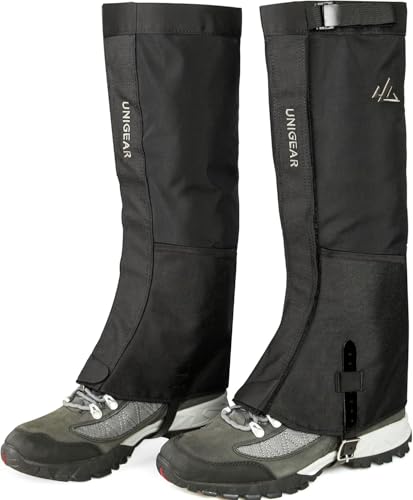

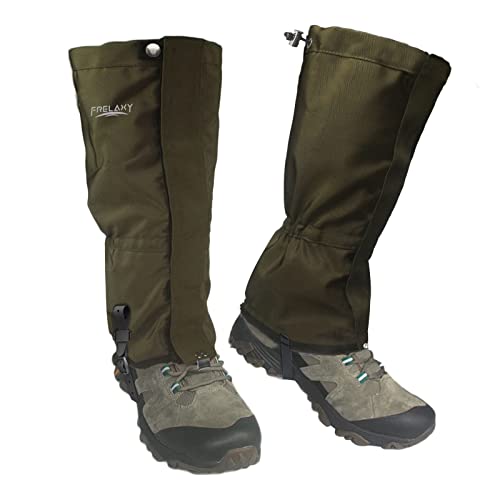

As an Amazon Associate we earn from qualifying purchases at no extra cost to you. Ratings are shown as listed on Amazon.
Quick picks by hiking situation
| Hiking situation | Best type or pick | Why it fits | Typical price range |
|---|---|---|---|
| Dry trails and trail-running style hiking | Kahtoola INSTAgaiter Low | Low profile, stretchy fit and integrated underfoot strap | $25–$40 |
| Frequent rain, mud and wet grass | Hillsound Armadillo LT | Stretch waterproof construction and a close shoe seal | $50–$75 |
| Snow, deep mud and rough mountain trails | Outdoor Research Crocodile GORE-TEX | Tall coverage, waterproof-breathable laminate and strong lower-leg protection | $85–$110 |
| Alpine or mixed four-season use | Rab Latok Alpine Gaiter | Durable waterproof fabric, secure closure and compatibility with mountain boots | $90–$130 |
| Ultralight three-season backpacking | Stretch woven or waterproof-breathable low gaiters | Lower weight and pack size than expedition gaiters | $30–$80 |
What makes a gaiter suitable for your hike?
Waterproof rating and weather protection
Gaiter waterproofing is more complicated than a single number. Some manufacturers publish a hydrostatic-head rating in millimetres; others only state that a fabric is waterproof or use a membrane such as GORE-TEX. A rating of 10,000 mm is normally adequate for rain, wet vegetation and shallow mud, while 20,000 mm or more offers a larger margin for sustained wet contact. However, seams, zippers, hook-and-loop closures and the boot interface can leak before the fabric does.
For ordinary wet-weather hiking, look for a waterproof-breathable upper, a gusset or closure that overlaps securely, and a sealed lower edge. For snow travel, the gaiter should also resist compression from crampon straps and keep snow from entering around the ankle. A water-resistant stretch gaiter can be comfortable in damp conditions but is not a substitute for a fully waterproof model in persistent rain.
Height: low, mid and tall
- Low gaiters, about 10–18 cm high: Best for stopping grit, pine needles and small stones from entering trail shoes. They are lighter and less restrictive, but offer little protection against deep mud, rain running down trousers or snow.
- Mid-height gaiters, about 20–35 cm high: The most versatile choice for wet hiking, muddy paths and variable weather. They work well with hiking shoes and mid-height boots.
- Tall gaiters, about 35–45 cm high: Best for snow, scree, long grass and off-trail travel. They need a reasonably close fit around the calf and can feel warm during summer hiking.
Height should match your footwear. A tall gaiter designed around a stiff mountain boot may sit poorly on a flexible trail shoe, while a low gaiter may not cover the gap between a hiking boot and trousers.
Head-to-head comparison of popular hiking gaiters
| Model | Approx. height | Approx. weight | Waterproof approach | Upper and wear protection | Best boot match |
|---|---|---|---|---|---|
| Kahtoola INSTAgaiter Low | Low ankle coverage | About 140–170 g per pair | Water-resistant stretch fabric; not intended as a deep-snow shell | Stretch textile with integrated underfoot strap | Trail shoes and low hiking shoes |
| Hillsound Armadillo LT | About 30 cm | About 260–300 g per pair | Waterproof-breathable stretch fabric; manufacturer specifications vary by version | Close-fitting stretch upper with reinforced lower area | Trail shoes and mid-height boots |
| Outdoor Research Crocodile GORE-TEX | About 40 cm | About 500–600 g per pair | GORE-TEX waterproof-breathable laminate | Heavy-duty lower panel, full-length closure and replaceable-style instep strap design | Hiking, backpacking and mountaineering boots |
| Rab Latok Alpine Gaiter | About 38–42 cm | About 400–500 g per pair | Waterproof-breathable technical fabric; check the current version’s membrane specification | Durable lower-leg construction and mountain-oriented closure | Stiff hiking and alpine boots |
Weights and dimensions can change between seasons, sizes and regional versions, so treat these as useful comparisons rather than exact measurements. The most important difference is not a few grams: it is whether the gaiter has enough structure and coverage for your footwear and terrain.
Best gaiters for hiking by trail condition
For summer trails, sand and small stones
Low gaiters such as the Kahtoola INSTAgaiter Low are practical when your main problem is debris. Their stretch fit follows the ankle and shoe, and an underfoot strap keeps the lower edge from riding up. They pack small and add little heat. They are less suitable for prolonged rain because low coverage leaves the upper shoe and trouser cuff exposed.
For dry, rocky routes, prioritize a snug shoe seal and a durable toe-facing panel. A gaiter that is waterproof but loose around the collar can admit more grit than a well-fitting water-resistant model.
For rain, mud and wet vegetation
A mid-height stretch gaiter is usually the best compromise. The Hillsound Armadillo LT is designed around a close fit, which helps prevent water and grass seeds from entering at the ankle. Stretch fabric also reduces flapping and makes it easier to wear over different trail shoes.
Look closely at the closure design. A continuous front zip is quick to use but can be vulnerable if the zip is clogged with grit. A wide hook-and-loop flap is easier to clean and adjust, although it may catch on vegetation. Whichever design you choose, the top opening should grip the calf without creating a painful pressure point.
For snow, scree and rough terrain
The Outdoor Research Crocodile GORE-TEX remains a strong choice when coverage and abrasion resistance matter more than minimum weight. Its tall profile protects trousers and boot uppers, while the reinforced lower section is better suited to crampon contact, sharp rock and repeated brushing against vegetation.
The Rab Latok Alpine Gaiter is aimed at similar conditions. It makes the most sense with stiff boots and a mountain-oriented layering system. On lightweight trail shoes, a tall alpine gaiter may feel unnecessarily bulky and can be harder to anchor securely.
Fit and boot compatibility
Measure your calf circumference while wearing the trousers and base layers you normally hike in. Also measure the circumference around the widest part of the boot or shoe, including any heel or outsole flare. Compare both measurements with the manufacturer’s size chart rather than choosing only by shoe size.
A correct fit should meet four checks:
- The top edge stays in place while walking uphill without cutting into the calf.
- The lower opening overlaps the boot upper all the way around.
- The instep strap sits under the boot’s waist, not directly beneath the heel or widest forefoot.
- You can bend your ankle and squat without the front closure pulling open.
For example, if your boot circumference is 31 cm and the gaiter’s usable lower opening is 34 cm, the nominal 3 cm of overlap may be enough for a close seal. If the gaiter opening is 40 cm and the boot is only 29 cm around, excess fabric can fold, catch on rocks and allow debris through. A smaller compatible model is usually preferable, provided it still fits your calf.
Closure designs: which is easiest to live with?
- Front hook-and-loop closure: Simple, adjustable and easy to repair in the field. It can collect seeds and lose grip when packed with mud.
- Water-resistant zipper: Fast and neat, but it should not be forced when dirty or frozen. Use the manufacturer’s zipper-care instructions.
- Rear or side closure: Often reduces front snagging and may work well with crampons, but can be less convenient to reach while wearing a pack.
- Stretch pull-on design: Comfortable and light, with fewer moving parts. It generally offers less adjustment for unusual boot shapes and thick winter layers.
Durability, care and ownership costs
The first parts to wear are commonly the underfoot strap, strap buckle, boot hook and lower fabric near the toe. Crampon points and sharp scree can puncture even tough textiles. A replaceable strap is therefore more valuable than a small difference in fabric denier.
After a muddy hike, brush off loose dirt before rinsing. Wash according to the care label, use no fabric softener, and let the gaiters dry completely away from strong heat. Store them uncompressed so hook-and-loop panels do not abrade the fabric. Do not place waterproof gaiters over wet footwear and assume they will dry the boot; gaiters block external moisture but do not replace breathable socks or suitable footwear.
Consider cost per use when choosing between models. A $35 low gaiter used on 10 dry hikes costs $3.50 per outing. A $95 waterproof gaiter used on 30 wet or snowy hikes costs about $3.17 per outing, before replacement straps or repairs. For occasional summer walking, the cheaper low model may be the better purchase; for regular wet-weather hiking, durable waterproof gaiters can provide better value.
Final recommendation
Choose low gaiters for debris, mid-height stretch gaiters for general wet-weather hiking, and tall reinforced waterproof gaiters for snow, scree and demanding mountain use. If you own only one pair, select a mid-height model that fits both your most frequently used trail shoes and hiking boots. If your routes regularly involve deep snow or crampons, skip the lightweight compromise and buy a tall model with a reliable closure, reinforced lower fabric and a replaceable underfoot strap.