Key takeaways
- The best CPU parts for gaming in 2026 are usually an AMD Ryzen 5 7600 for value, Ryzen 7 7800X3D or 9800X3D for high-refresh gaming, and a current AM5 motherboard paired with 32GB of DDR5; the right GPU and cooler…
The best CPU parts for gaming in 2026 are usually an AMD Ryzen 5 7600 for value, Ryzen 7 7800X3D or 9800X3D for high-refresh gaming, and a current AM5 motherboard paired with 32GB of DDR5; the right GPU and cooler determine whether that CPU investment pays off at 1080p, 1440p, or 4K.
Our top picks


As an Amazon Associate we earn from qualifying purchases at no extra cost to you. Ratings are shown as listed on Amazon.
Quick picks by gaming situation
| Build situation | CPU and socket | Suggested GPU class | Cooling | Why it makes sense |
|---|---|---|---|---|
| Lowest sensible 1080p cost | Ryzen 5 7600, AM5 | Radeon RX 7600 or GeForce RTX 4060 | Included stock cooler or $25-$40 tower | Six Zen 4 cores are sufficient for mainstream 1080p gaming and leave room for later AM5 upgrades. |
| Competitive 1080p, 240Hz | Ryzen 7 7800X3D, AM5 | GeForce RTX 5070 or Radeon RX 9070 | $35-$60 dual-tower air cooler | Large 3D V-Cache helps CPU-limited esports and high minimum frame rates. |
| Best all-round 1440p | Ryzen 7 9800X3D, AM5 | GeForce RTX 5070 Ti or Radeon RX 9070 XT | $40-$80 dual-tower air or 240mm liquid cooler | Strong gaming performance without requiring an expensive workstation platform. |
| 4K value build | Ryzen 5 7600 or Ryzen 7 7700, AM5 | Radeon RX 7800 XT or GeForce RTX 5070 | $25-$50 tower cooler | At 4K, the GPU usually limits frame rate, so spending more on the CPU gives smaller returns. |
| Gaming plus heavy productivity | Ryzen 9 9950X, AM5, or Intel Core Ultra 9 285K, LGA1851 | GeForce RTX 5080 or Radeon RX 9070 XT and above | 280mm or 360mm liquid cooler | High core counts help rendering and compiling, but this is overkill for gaming alone. |
What matters when choosing the best CPU parts for gaming
A gaming CPU is only one part of a compatible group. Check the socket, motherboard chipset, memory generation, cooler mounting hardware, power supply, and case clearance before comparing benchmark numbers.
AMD’s Ryzen 7000, 8000G, and 9000 desktop processors use the AM5 socket and DDR5 memory. AM5 is the most attractive upgrade platform for a new gaming build because a suitable B650, B850, or X870 motherboard can support multiple Ryzen generations, subject to BIOS support. A B-series board is normally the sensible choice; X-series boards add connectivity and tuning features rather than automatically increasing gaming FPS.
Intel’s Core Ultra desktop processors use the LGA1851 socket, while 12th-, 13th-, and 14th-generation Core desktop processors use LGA1700. These sockets are not interchangeable. An LGA1851 processor cannot be installed in an LGA1700 board, even if the motherboard looks similar. Confirm the exact CPU support list and BIOS version before ordering.
Head-to-head: value CPUs versus gaming-specialist CPUs
Ryzen 5 7600: the sensible budget starting point
The six-core Ryzen 5 7600 is a strong foundation for a $700-$1,000 gaming tower, depending on the graphics card and regional pricing. Its 65W default thermal design makes it easy to cool, and it includes integrated graphics for display output and troubleshooting. Pairing it with a Radeon RX 7600 or GeForce RTX 4060 keeps the platform balanced for high-refresh 1080p.
Typical market pricing for the processor is roughly $170-$230, while a compatible B650 motherboard may cost about $130-$220 and a 32GB DDR5-6000 kit about $80-$130. That platform cost is higher than an old AM4 build, but it provides a more useful future upgrade path.
Ryzen 7 7800X3D: still a high-value upgrade when discounted
The 7800X3D has eight cores and 3D V-Cache, a combination that can produce excellent average and one-percent-low frame rates in CPU-limited games. It is particularly appealing for simulation games, large multiplayer matches, and 1080p gaming above 144Hz. It uses AM5 and has a 120W package power rating, although actual gaming consumption is often much lower than that.
Do not buy it automatically for a 4K system. If the same budget can upgrade a graphics card by one performance tier, that GPU upgrade will usually have a larger effect on 4K frame rate.
Ryzen 7 9800X3D: the premium gaming choice
The Ryzen 7 9800X3D is an eight-core AM5 processor designed for buyers who want very high gaming performance without moving to a 12- or 16-core chip. Its 3D V-Cache is most useful when the graphics card is not the limiting component. It is a better fit for a powerful RTX 5070 Ti, RTX 5080, Radeon RX 9070 XT, or faster card than for an entry-level GPU.
Expect roughly $450-$600 for the processor depending on promotions and availability. Add a good B850 or X870 board only if you need its connectivity; a quality B650 board with an updated BIOS can be enough for many systems.
Intel Core Ultra: consider it when the whole platform fits
Intel Core Ultra desktop options on LGA1851 can make sense for mixed gaming and productivity workloads, especially when a bundle includes the motherboard and memory. Compare total platform cost rather than CPU price alone. Gaming performance varies substantially by title, power settings, and memory configuration, so there is no universal reason to choose LGA1851 over AM5 for a gaming-only computer.
GPU pairing: where FPS per dollar is won
At 1080p, the CPU frequently becomes the limiter, especially with a 165Hz or 240Hz display. A Ryzen 5 7600 can be excellent with an RX 7600 or RTX 4060, while a Ryzen 7 7800X3D or 9800X3D is more appropriate for a high-end graphics card and competitive settings.
At 1440p, the graphics card carries more of the workload. A Ryzen 5 7600 remains adequate for an RX 7800 XT or RTX 5070 in many games, although an X3D processor can improve minimum FPS in CPU-heavy titles. At 4K, an expensive CPU often produces little visible improvement unless you also use a very fast GPU, low settings, or a high-refresh display.
As a budgeting example, suppose a Ryzen 5 7600 platform costs $360 for the CPU, board, and memory, while a 9800X3D platform costs $750. The $390 difference could instead move a build from a $500 graphics card to a $750 graphics card. If the target is 4K, the second allocation is usually the better FPS-per-dollar decision. For 1080p competitive gaming, the faster CPU may be the better choice because the GPU is already rendering relatively simple frames.
Cooling and thermal performance
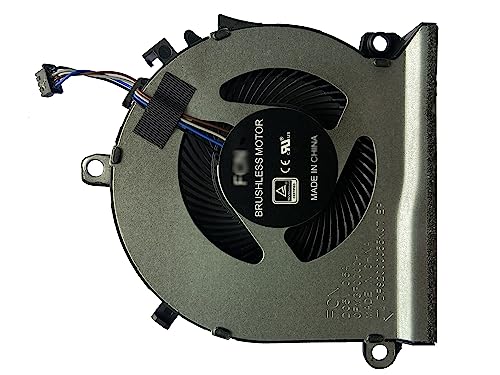
Use a quality 120mm tower air cooler for the Ryzen 5 7600, Ryzen 7 7700, or similar 65W processor. A dual-tower cooler with two 120mm fans is a sensible match for the 7800X3D and 9800X3D. Budget approximately $25-$40 for a basic tower, $35-$80 for a stronger dual-tower model, and $90-$170 for a reputable 280mm or 360mm liquid cooler.
Liquid cooling is not automatically faster for gaming. It can reduce peak temperatures during long multicore workloads and may help in a compact case, but it introduces a pump, radiator, and additional failure points. For a gaming-only X3D build, a large air cooler is often simpler and quieter.
Allow at least 160-165mm of CPU-cooler clearance unless your case specifies otherwise. Check graphics-card length, radiator thickness, and RAM height together: a tall memory heat spreader can interfere with the front fan of a dual-tower cooler.
Buying decision matrix
| Your priority | Recommended direction | Common mistake to avoid |
|---|---|---|
| Under $1,000 total PC budget | Ryzen 5 7600, B650, 32GB DDR5, and put the largest share into the GPU. | Buying a premium CPU while using an entry-level graphics card. |
| 240Hz esports at 1080p | Ryzen 7 7800X3D or 9800X3D with fast DDR5 and a strong midrange GPU. | Judging the system only by average FPS; monitor one-percent lows too. |
| Quiet, low-maintenance system | 65W Ryzen processor and a large air cooler in a ventilated case. | Using a small cooler with an unrestricted motherboard power profile. |
| Upgrade planned in two to four years | AM5 B650/B850 board with two usable M.2 slots and adequate VRM cooling. | Choosing a very cheap board with limited BIOS support or expansion. |
| Gaming and content creation | Ryzen 9 or Core Ultra 9 only if the extra cores will be used regularly. | Paying for workstation-level cores that do not improve the games you play. |
Setup and ownership details that affect performance
- Update the motherboard BIOS before installing a newer-generation AM5 processor if the board has an older stock firmware.
- Install two matching memory modules in the motherboard’s recommended slots, usually A2 and B2, then enable the advertised EXPO or XMP profile.
- Apply a small, centered amount of thermal paste and tighten the cooler evenly. Excess paste is less harmful than an uneven mounting pressure, but neither improves temperatures.
- Set a reasonable fan curve and verify temperatures with a game and a multicore workload. Brief temperature spikes are normal; sustained throttling is not.
- Clean dust filters every one to three months in a dusty room. Dust first restricts the case intake and GPU cooler, then raises fan speed and noise.
Thermal paste can dry over several years, fans can develop bearing noise, and liquid-cooler pumps have a finite service life. Replace a noisy fan rather than running it intermittently, and inspect the radiator for dust buildup. For most buyers, the best long-term combination is a compatible AM5 motherboard, 32GB of DDR5, a Ryzen 5 7600 or X3D chip selected for the target resolution, and the strongest graphics card the remaining budget can support.