Key takeaways
- Inside length of the tub from the back wall to the front curve or tap housing.
- Clear inside width at the narrowest point.
- Bath-rim height from the floor.
- Rim width and whether it is level on both sides.
- Location of the drain, taps, grab rails, shower hose, and any molded seat.
- Clearance beside the tub for the transfer wheelchair or carer.
The best bath lifts for most people are the Drive Bellavita for low tubs and limited bathroom space, the Aquatec Orca for a wider, higher-capacity seat, and a powered bath lift with a reclining backrest when positioning comfort matters more than portability.
Our top picks


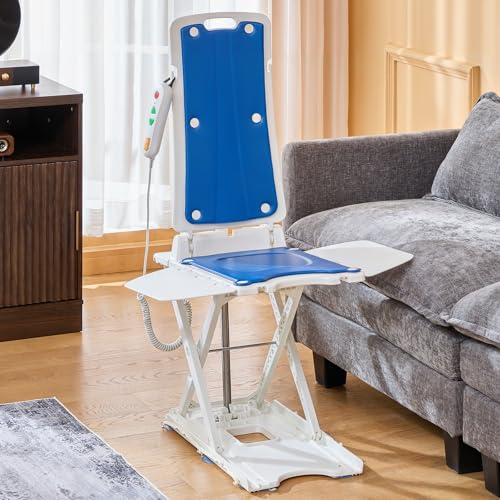
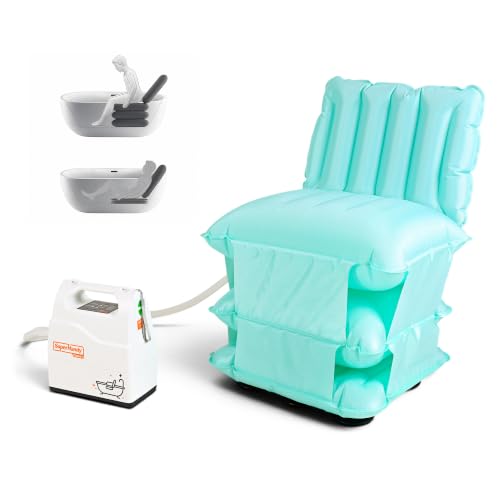
As an Amazon Associate we earn from qualifying purchases at no extra cost to you. Ratings are shown as listed on Amazon.
Best bath lifts at a glance
A bath lift lowers a seated user into the tub and raises them back to the rim using a rechargeable battery. Unlike a bath board or transfer bench, it is designed for someone who can usually sit upright but needs help managing the vertical change in height. The right choice depends less on brand than on five measurements: lowest seat height, highest seat height, tub length and width, user weight, and the position of the drain or taps.
| Bath lift | Typical seat range | Weight capacity | Backrest and recline | Best suited to |
|---|---|---|---|---|
| Drive Bellavita | About 2.3–18.8 in (6–48 cm) | Up to about 308 lb (140 kg) | Reclines to about 50° | Low tubs, compact bathrooms, users needing a very low entry position |
| Invacare Aquatec Orca | About 2.8–18.5 in (7–47 cm) | Up to about 308 lb (140 kg) | Reclines to about 40° | General-purpose use and users wanting a broad, supportive seat |
| Invacare Aquatec Orca XL | About 2.8–18.5 in (7–47 cm) | Up to about 330 lb (150 kg) | Reclines to about 40° | Larger users who have enough tub width and floor space |
| Powered bath lift with lateral flaps | Usually about 2.5–18 in (6–46 cm) | Commonly 275–330 lb (125–150 kg) | Usually reclines 35–50° | Transfers where a wider side flap reduces the gap between wheelchair and lift |
Dimensions and limits vary by model year and regional configuration, so confirm the manual before purchase. The capacity is a maximum equipment rating, not a recommendation to use the lift beyond a clinician’s or occupational therapist’s assessment.
Our picks by bathing situation
Best for a low or awkwardly shaped bathtub: Drive Bellavita
The Bellavita’s unusually low minimum seat height is its main advantage. A seat that descends to roughly 2.3 inches leaves more room for the user’s legs and can make side transfers less demanding in a shallow or low-sided tub. Its backrest also reclines substantially, which can be useful for someone who needs support while bathing rather than sitting fully upright.
It is relatively light for a powered lift, at roughly 20 lb (9 kg), and separates into sections for storage. The trade-off is a narrower, more compact design than some full-width lifts. Check that the side flaps can rest securely on the bath rim and that the tub is long enough for the backrest and leg section without pressing against the taps.
Best all-rounder: Invacare Aquatec Orca
The Aquatec Orca is a sensible middle choice when the priority is a conventional, supportive bath-lift layout rather than the lowest possible seat. Its smooth, wipe-clean plastic surfaces, detachable components, adjustable side flaps, and reclining backrest suit regular household use. A typical capacity around 308 lb gives useful headroom, but the seat is not automatically suitable for every larger user: hip width, thigh clearance, and tub width matter just as much.
Choose the Orca when the user can make a reasonably controlled sideways transfer and the bath has a conventional rectangular footprint. If the person needs to remain highly reclined or cannot clear the tub rim safely, a professional assessment may point to a different transfer method.
Best for a higher-capacity seat: Aquatec Orca XL
The Orca XL increases usable seat width and raises the maximum user weight to approximately 330 lb (150 kg). That does not mean it will fit every bath. Measure the clear internal width at the narrowest point, including any molded contours, and allow room for the side flaps to sit fully on the rim. A larger lift can also be harder to remove and may leave less space for a carer or showering equipment.
For users near the standard model’s limit, the XL is preferable to treating a standard lift as “almost strong enough.” Never exceed the stated limit, even if the lift appears mechanically solid.
What the numbers mean when comparing bath lifts
Seat height and lifting range
The lowest seat height determines how far the user must lower their hips before entering the bath. This is especially important when knee, hip, or balance limitations make a deep squat uncomfortable. The highest seat height determines whether the user can transfer from the lift to the bath rim or a nearby wheelchair without an excessive drop.
A broad range of roughly 2–19 inches is more versatile than a lift that begins several inches higher. However, the highest setting is useful only if the lift is stable on the rim and the transfer surface is at a similar height. Measure the bath rim from the floor and compare it with the manufacturer’s top seat setting.
Battery operation
Most current powered bath lifts use a sealed rechargeable battery in the handheld controller. The controller is generally waterproof for bathing use, but it should not be left submerged, dropped, or charged in the bath. Many systems provide enough charge for several complete raising-and-lowering cycles rather than a fixed number of days, because cycle count changes with user weight, lift range, and battery age.
A useful ownership rule is to recharge after each bathing session or according to the manual, rather than waiting until the indicator is nearly empty. Some controllers will not lower the lift if the battery cannot complete the return journey. If two people use the bath, choose a model with a clear charge indicator and keep a charging routine.
Bathtub compatibility
Before ordering, record these measurements:
- Inside length of the tub from the back wall to the front curve or tap housing.
- Clear inside width at the narrowest point.
- Bath-rim height from the floor.
- Rim width and whether it is level on both sides.
- Location of the drain, taps, grab rails, shower hose, and any molded seat.
- Clearance beside the tub for the transfer wheelchair or carer.
Suction cups need a reasonably smooth, clean surface. Textured, heavily curved, damaged, or repaired bath surfaces may reduce grip. A lift that technically fits but blocks the drain, catches on the taps, or leaves one side flap unsupported is not a safe fit.
Decision matrix: which type makes sense?
| Your situation | Prefer | Why | Check first |
|---|---|---|---|
| Occasional bathing and limited storage | Lightweight compact lift | Sections can be removed and stored between uses | Lift weight and whether one person can handle it safely |
| Low-sided bath or difficulty lowering the body | Lift with a minimum seat near 2–3 in | Provides a lower transfer and greater lifting range | Lowest setting, leg clearance, and rim height |
| Frequent use by a larger user | Wider, higher-capacity model | More seating room and capacity margin | Internal tub width and maximum rated load |
| Transfer from a wheelchair | Wide side flaps or compatible transfer surface | Reduces the gap that must be crossed | Wheelchair armrest height and side-flap support |
| Need for supported bathing posture | Reclining powered lift | Allows a more reclined position during the bath | Backrest angle, head position, and leg support |
Setup, use, and maintenance that affect safety
On the first installation, place the lift centrally and verify that every suction cup is flat against the bath surface. Test the empty lift through its full range before transferring onto it. Confirm that the backrest clears the taps, the side flaps are level, and the emergency stop or controller functions as described in the manual.
For each use, inspect the suction cups, side flaps, hinges, belt, and battery indicator. Sit fully back against the backrest before operating the control. Keep fingers, clothing, and the controller cable away from moving joints. Do not stand on the lift, use it as a step, or ask it to lift an additional person.
Rinse soap residue from the seat and suction cups, then dry the surfaces before storage. Avoid abrasive cleaners, solvents, and unapproved disinfectants, which can damage plastic or rubber. The parts most likely to need attention are suction cups that lose elasticity, charger or controller cables, hand-control buttons, and battery packs that no longer hold a charge. Replacement intervals depend on use and storage conditions; replace damaged parts rather than improvising repairs.
Cost and ownership
Powered bath lifts commonly sit in a broad market range of roughly $500–$1,200, with higher prices for wider seats, specialist support, or bundled accessories. If a $700 lift is used four times per week for three years, that is about 624 uses, or approximately $1.12 per use before electricity, cleaning products, and replacement parts. Occasional users may find a rental or local equipment-loan service more economical, while frequent users benefit more from a durable rechargeable system.
Do not choose solely by the lowest price. A model that requires two people to install, does not fit the tub securely, or has expensive proprietary replacement parts can cost more over its useful life.
Bottom line
Choose the Bellavita when minimum seat height, compact storage, and a pronounced recline are the deciding factors. Choose the Aquatec Orca for a balanced everyday option, or the Orca XL when both the user’s dimensions and the tub allow a wider, higher-capacity seat. Before buying any bath lift, verify the complete tub measurements, transfer height, battery instructions, and weight rating. If the user has unpredictable balance, significant weakness, pain during transfers, or cannot remain seated safely, ask an occupational therapist or other qualified professional to assess the bathroom and transfer method.