Key takeaways
- TYPE IT IN
- MAKE IT
- FAST
Shopping for the newest android phones means wading through dozens of launches that promise flagship features at accessible prices. The practical problem is choosing between devices that look nearly identical on a spec sheet but diverge sharply in software longevity, camera consistency, and daily usability. A phone that handles photos well outdoors may struggle with low-light video, and a device with a bright display might sacrifice battery life without any obvious trade-off visible on the product page.
This roundup compares eight unlocked and carrier-tied options spanning three price tiers, drawing on published specs, listed prices, and aggregated owner feedback. The goal is to flag which phones deliver real value at their stated price and which ones cut corners that become apparent in month six rather than the first week of ownership.
Our top picks
 Samsung Galaxy A16 4G LTE
- Please note, this device does not support E-SIM
- Compatibility with certain third-party devices and accessibility accessories,…
- Camera: 50 MP, f/1.8, (wide), 1/2.76", 0.64µm, AF…
 Google Pixel 11
- Google Pixel’s iconic design meets the latest evolution…
- Unlocked Android phone gives you the flexibility to…
- Sleek, solid, and built to last: Pixel 11…
| Product | Key specs | |
|---|---|---|
 Samsung Galaxy S26 Samsung Galaxy S26 | TYPE IT IN MAKE IT FAST | Check price |
| Samsung Galaxy A16 4G LTE | Please note, this device does not support E-SIM Compatibility with certain third-party devices and accessibility accessories,… Camera: 50 MP, f/1.8, (wide), 1/2.76", 0.64µm, AF… | Check price |
| Google Pixel 11 | Google Pixel’s iconic design meets the latest evolution… Unlocked Android phone gives you the flexibility to… Sleek, solid, and built to last: Pixel 11… | Check price |
 Samsung Galaxy A37 5G Samsung Galaxy A37 5G | AWESOME SCREEN Whether it’s family moments or important calls, stay… NEVER MISS THE SHOT, EVEN IN LOW LIGHT:… | Check price |
 Motorola Moto G Play LTE Motorola Moto G Play LTE | Blazing-fast Qualcomm performance Fluid display + immersive stereo sound 50MP*** Quad Pixel camera | Check price |
 Samsung Galaxy A17 5G Smart Phone 128GB Samsung Galaxy A17 5G Smart Phone 128GB | YOUR CONTENT, SUPER SMOOTH: The ultra-clear 6.7" FHD+… LIVE FAST Capture every angle in stunning clarity, from wide… | Check price |
 Motorola Moto G Stylus 5G Motorola Moto G Stylus 5G | NEW built-in stylus 6.7" pOLED display and Dolby Atmos 50MP Ultra Pixel camera + OIS | Check price |
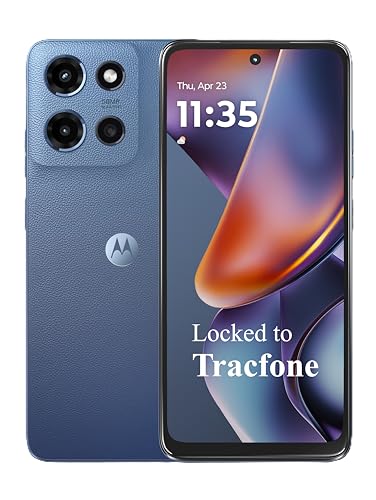 Tracfone Motorola Moto G 2025 Tracfone Motorola Moto G 2025 | Carrier: This phone is locked to Tracfone, which… Immersive viewing on a 6.7-inch super-bright 120Hz display… Advanced 50MP Quad Pixel camera captures sharp, detailed… | Check price |
As an Amazon Associate we earn from qualifying purchases at no extra cost to you.
Quick Picks
| Product | Best for | Price |
|---|---|---|
| Samsung Galaxy S26 | Best overall | $774.99 |
| Samsung Galaxy A16 4G LTE | Best value basic phone | $159.87 |
| Google Pixel 11 | Best camera and AI features | $899 |
| Samsung Galaxy A37 5G | Best mid-range all-rounder | $569.99 |
| Motorola Moto G Play LTE | Best under $100 | $99.99 |
| Samsung Galaxy A17 5G | Best budget 5G | $224.99 |
| Motorola Moto G Stylus 5G | Best with built-in stylus | $199.99 |
| Tracfone Motorola Moto G | Lowest entry price | $49.88 |
How We Picked
We evaluated each phone on four criteria: price-to-value ratio relative to what the spec sheet actually delivers, hardware quality where it counts most in daily use (display type, battery capacity, camera configuration, storage headroom), the manufacturer’s software update track record and stated support window, and recurring themes in owner-reported feedback after the first few months. Phones that looked strong on paper but generated consistent complaints about a single weak link dropped in our ranking.
The 8 Best Newest Android Phones in 2026
Samsung Galaxy S26
The S26 leads this list for anyone wanting flagship performance without crossing into four-figure territory. With 256GB of storage and the Cobalt Violet finish, it is Samsung’s strongest general-purpose option in this group.
- Pro: Premium build and display quality that justifies the price gap over mid-range competitors.
- Pro: Robust multi-year software support backed by Samsung’s update commitment.
- Con: Costs meaningfully more than the Pixel 11 while delivering comparable rather than superior camera results in owner comparisons.
Skip it if your budget tops out below $800 or you prioritize AI-assisted photography over raw build quality.
Samsung Galaxy A16 4G LTE
The A16 targets buyers who need a large screen and acceptable camera performance without pretension. At 6.7 inches with 128GB storage and 4GB of RAM, the international SM-A165F/DS model supports dual SIM and ships with a protective case.
- Pro: Large display and triple-camera setup at a price that undercuts most competitors.
- Pro: Dual SIM flexibility for travelers or users managing personal and work lines.
- Con: 4G-only connectivity limits data speeds on modern networks, and 4GB RAM can feel tight during multitasking.
Skip it if you rely heavily on mobile data for streaming or regularly run more than a few apps simultaneously.
Google Pixel 11
The Pixel 11 is the pick for anyone who treats computational photography and AI features as essential. With Gemini integration, 256GB of storage, and the Obsidian finish, it delivers a software experience that feels a step ahead of most competitors.
- Pro: Camera output that consistently impresses owners, especially in challenging lighting.
- Pro: Deep AI integration for photo editing, transcription, and contextual assistance.
- Con: At $899 it is the most expensive phone on this list, and the premium reflects software polish more than a dramatically different hardware spec sheet.
Skip it if you want the best hardware value per dollar or prefer Samsung’s One UI ecosystem.
Samsung Galaxy A37 5G
The A37 occupies a comfortable middle ground. A 5000mAh battery, AMOLED display, IP68 rating, and 256GB of storage make it feel more complete than many phones in its bracket. The Awesome Lavender color and slim profile add visual appeal.
- Pro: IP68 water and dust resistance at this price point is uncommon and genuinely useful.
- Pro: AMOLED display paired with a 5000mAh battery gives a daily-use advantage over LCD competitors.
- Con: Owners note the triple-camera system, while competent, does not match the computational photography of the Pixel 11 in low light.
Skip it if you need the absolute cheapest 5G option or if camera quality is your non-negotiable priority.
Motorola Moto G Play LTE
The G Play is the most straightforward choice under $100. With 64GB of storage, 4GB of RAM, and a 50MP camera in Sapphire Blue, it handles calls, messaging, navigation, and light app use without fuss.
- Pro: Price is nearly impossible to beat for an unlocked, US-made Moto with a capable camera.
- Pro: Motorola’s clean software means fewer preloaded nuisances than budget Samsungs.
- Con: 64GB fills quickly; owners with heavy photo or video habits need cloud backup or microSD expansion.
Skip it if you expect smooth performance with more than three or four apps active, or if you need 5G connectivity.
Samsung Galaxy A17 5G
The A17 slots into the budget 5G tier with 128GB of storage and a US manufacturer warranty, removing uncertainty that comes with cheaper imports. It is a solid step up from the A16 for anyone wanting faster data.
- Pro: 5G connectivity at a price only marginally above 4G alternatives makes future-proofing affordable.
- Pro: US warranty and domestic carrier compatibility reduce buyer risk.
- Con: Some owners report day-to-day performance feels similar to the A16 despite the 5G modem, suggesting the chipset does not fully leverage the faster connection.
Skip it if you already own an A16 and expected a noticeable speed upgrade beyond the radio.
Motorola Moto G Stylus 5G
The Stylus is a rare mid-range phone with a built-in pen, useful for note-taking, sketching, and precise text selection without carrying accessories. At 256GB of storage and 8GB of RAM, it has headroom for multitasking.
- Pro: Integrated stylus adds a functional advantage no other phone on this list offers at this price.
- Pro: Generous RAM and storage for a sub-$200 unlocked device.
- Con: The stylus requires the phone’s specific software layer, and some owners find pen latency frustrating for detailed drawing.
Skip it if you do not expect to use the pen regularly; the same money buys a Moto G Play with better battery or a Galaxy A16 with a larger screen.
Tracfone Motorola Moto G
At $49.88 this is the cheapest option here, serving one purpose: putting a functioning smartphone in someone’s hands at almost no upfront cost. The 64GB model in Sapphire Blue handles essential tasks.
- Pro: Lowest barrier to entry for a family member, secondary device, or first smartphone.
- Pro: Motorola’s straightforward interface keeps the learning curve gentle for new users.
- Con: Locked to the Tracfone network, which limits carrier flexibility and may not suit frequent travelers or users who want to switch providers.
Skip it if you want an unlocked device you can move between carriers, or if you need more than basic app performance.
Buying Guide
Display Type and Size
The display is the most-used component on any phone. AMOLED panels, found on the Galaxy A37 and S26, produce deeper blacks and consume less power in dark-mode interfaces compared to LCD. If a listing shows only a size number with no panel type mentioned, assume LCD. For reading and media consumption, 6.5 inches or larger makes a tangible difference over compact screens without pushing the device into one-hand-unusable territory.
Camera: Beyond Megapixels
The 50MP sensor appears on six of the eight phones here, which tells you megapixel count alone means very little. What separates good results from mediocre ones at this price tier is software processing, lens aperture, and physical sensor size—none of which appear in a headline spec. When two phones share the same MP number, check owner-uploaded low-light samples before trusting the marketing claim.
Software Updates and Battery Endurance
Battery capacity in milliamp-hours gives a rough sense of endurance, but real-world longevity depends on chipset efficiency and display type. A 5000mAh phone with an AMOLED screen and a power-efficient processor will typically outlast the same capacity with an LCD and a thirstier chip. On the software side, Samsung’s stated multi-year update commitments for Galaxy devices and Google’s Pixel track record provide more confidence than Motorola’s budget-line support cycles.
Our Verdict
The Samsung Galaxy S26 is the overall winner for anyone wanting the best combination of build quality, display, software support, and camera without exceeding the mid-three-figure range. For strict budget buyers, the Motorola Moto G Play LTE delivers the most usable experience under $100. The Google Pixel 11 wins outright if computational photography and AI-assisted editing matter more to you than hardware specifications or price-per-feature.
FAQ
Is 4G still acceptable on a new phone?
Yes, for basic tasks like messaging, email, and occasional browsing. But if you stream video, use navigation apps, or sync cloud storage regularly, 5G or at least fast LTE is worth the small price increase. The Galaxy A16 and Moto G Play remain exceptions where the cost savings genuinely outweigh the connectivity trade-off.
Do I actually need a built-in stylus?
Only if you take handwritten notes, sketch, or sign documents on the go. The Moto G Stylus is the only option here that includes one, and owners who use it consistently tend to rate it as a real productivity boost. If you never touch a pen in daily life, skip it and put the money toward more storage.
Is a carrier-locked phone ever worth buying?
For a child’s first phone, a backup device, or someone on a fixed income with minimal data needs, the $49.88 entry price is compelling. Just be aware you are committed to Tracfone’s network, which limits future flexibility if your situation or carrier preference changes.
What matters more: RAM or storage?
For most buyers, storage runs out before RAM becomes the bottleneck—64GB fills fast with photos and app updates. Aim for at least 128GB if you plan to keep the phone beyond a year. RAM matters more for heavy multitasking or gaming, which is rarely the priority at these price points.