Key takeaways
- Prefer elastic sewn around the complete perimeter.
- Look for labels identifying head and foot ends; they make installation easier.
- Choose reinforced seams at the corners.
- Confirm whether the listed pocket depth is a range or a maximum.
- Check whether the package includes two fitted sheets or only one.
The best split king sheets for adjustable beds are usually a two-piece Twin XL fitted-sheet set with deep elastic, strong corner retention, and a flexible fabric such as cotton jersey, percale, or bamboo-derived viscose.
Our top picks


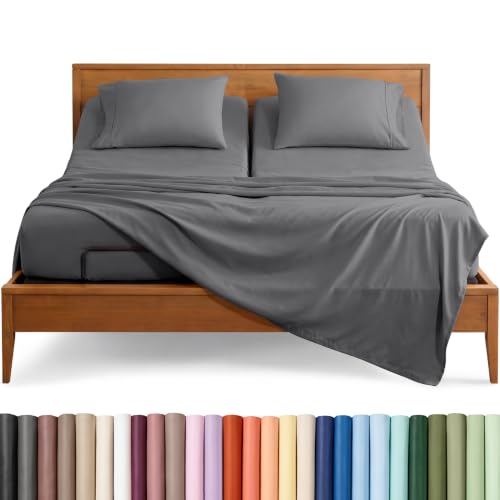
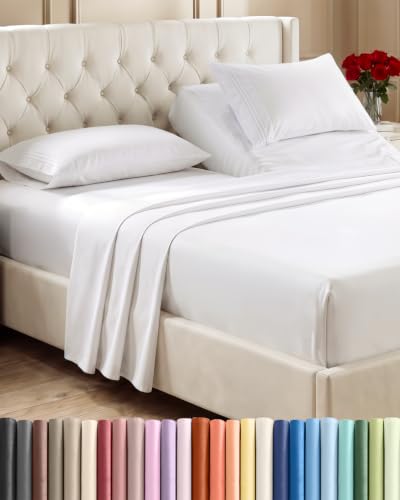
As an Amazon Associate we earn from qualifying purchases at no extra cost to you. Ratings are shown as listed on Amazon.
Quick picks by sleeping situation
| Situation | Best choice | Why it works | Target specifications |
|---|---|---|---|
| Most adjustable-bed owners | Two Twin XL fitted sheets plus one king flat sheet | Each mattress can move independently without pulling one sheet off the other | 39 × 80-inch fitted sheets; 14–18-inch pockets; all-around elastic |
| Frequent adjustment or raised-head sleeping | Stretch jersey or bamboo-derived viscose | Stretches over changing mattress angles with less corner lift | At least 5% elastane for jersey, or a generously cut viscose blend |
| Hot sleepers | Cotton percale | Lightweight, crisp, and more breathable than dense sateen | 200–300 thread count; fitted sheet under approximately 120 gsm |
| Deep mattresses or toppers | Deep-pocket cotton or microfiber set | Provides enough vertical fabric to remain tucked after movement | 18–24-inch pocket depth, measured rather than guessed |
| Lowest initial cost | Brushed microfiber split-king set | Usually inexpensive, smooth, and resistant to wrinkles | Two fitted sheets, perimeter elastic, and at least 14-inch pockets |
What makes split king sheets different?
A split king bed has two separate Twin XL mattresses, each measuring about 39 by 80 inches. Together they occupy the same width as a standard king, but the mattresses can raise, lower, or tilt independently. A regular king fitted sheet treats the bed as one surface, so it often pulls tight across the center seam, bunches when the head sections rise, or comes loose at the corners.
The most practical configuration is two Twin XL fitted sheets. You can add a standard king flat sheet if you want one continuous top layer, or use two Twin XL flat sheets if each sleeper prefers independent covers. Some specialized split-king sets include two fitted sheets, two flat sheets, and two pillowcases; others include only the fitted sheets. Check the contents before comparing prices.
Fabric comparison: comfort versus movement
Cotton percale
Percale has a plain weave that feels cool, dry, and lightly crisp. It is a strong choice for warm rooms and people who dislike clingy fabric. The trade-off is lower stretch: if the fitted sheet is cut too tightly, repeated adjustment can pull it off the lower corners. Look for a generous fit and elastic around the entire perimeter rather than elastic only at the corners.
Cotton sateen
Sateen feels smoother and warmer than percale because its weave is denser and silkier. It can be comfortable in cooler bedrooms, but heavy sateen may trap more heat and may not move as easily over a mattress that bends frequently. A medium-weight sateen is more practical than a very dense luxury weave for an adjustable bed.
Jersey knit
Jersey is often the easiest fabric to keep on an adjustable mattress. Its T-shirt-like stretch accommodates head and foot elevation without the same tension as woven cotton. It may pill sooner, particularly when washed with towels or rough synthetic garments. Choose a fitted sheet with a substantial elastic band, not just a stretchy fabric body.
Bamboo-derived viscose and lyocell
These fabrics feel smooth and drapey, and they generally conform well to moving mattresses. They can be a good middle ground for sleepers who want softness without the cling of some microfiber. Follow the care label carefully: high heat and over-drying can shorten the useful life of the elastic and cause shrinkage.
Microfiber
Brushed microfiber is usually the budget option. It resists wrinkles, dries quickly, and often has enough give for an adjustable bed. Its disadvantages are a warmer, less breathable feel and a tendency to develop static or pilling over time. It is sensible for a guest room or occasional-use bed, but hot sleepers may prefer percale or lyocell.
Fit retention matters more than thread count
For an adjustable bed, the best fit features are an all-around elastic hem, reinforced corners, and enough vertical depth to cover the mattress while leaving room for a topper. Corner straps can help, but they are a secondary solution. Straps that sit underneath the mattress may interfere with split bases, and weak clips can break before the sheet wears out.
Measure the mattress and topper together. For example, a 12-inch mattress with a 3-inch topper has 15 inches of total height. A sheet advertised for 14–16 inches may fit initially, but it has very little reserve for movement. A 16–18-inch pocket is the safer target, provided the sheet is not so loose that it wrinkles beneath the sleeper.
Allow for shrinkage. If a cotton sheet is likely to shrink by about 3%, a 39-inch-wide Twin XL fitted sheet could lose approximately 1.2 inches of width after washing:
39 × 0.03 = 1.17 inches
That does not mean every sheet will shrink by exactly that amount, but it explains why a barely adequate fit can become a corner-popping problem after several wash cycles.
Split-king configurations compared
| Configuration | Advantages | Drawbacks | Best for |
|---|---|---|---|
| Two Twin XL fitted sheets | Maximum independent movement; easiest to replace one worn sheet | Center gap remains visible; requires matching or coordinating pieces | Most couples with independently adjustable sides |
| One split-top king fitted sheet | Less separation near the head; cleaner appearance | Lower sections remain joined and can resist independent movement | Bases that only raise the head area |
| One standard king fitted sheet | Simple shopping and one continuous surface | Often pulls off corners or binds when either side moves | Rarely suitable unless the base has minimal movement |
| Two Twin XL fitted sheets and two flat sheets | Each sleeper controls their own bedding; minimal tugging across the center | More pieces to wash and fold | Partners with different temperatures or adjustment positions |
How to choose the right set
1. Measure every layer
Record mattress width, length, and height, then add the thickness of any permanent topper or mattress pad. Do not rely only on the bed’s “split king” label; some adjustable mattresses are thicker than others.
2. Match the sheet to your movement pattern
If the head and foot sections rise every night, prioritize stretch and a deep, elasticized hem. If you rarely adjust the base, breathable woven cotton may provide a nicer feel with less concern about movement. A sheet that fits a stationary mattress perfectly can still fail when the mattress bends daily.
3. Inspect the construction details
- Prefer elastic sewn around the complete perimeter.
- Look for labels identifying head and foot ends; they make installation easier.
- Choose reinforced seams at the corners.
- Confirm whether the listed pocket depth is a range or a maximum.
- Check whether the package includes two fitted sheets or only one.
4. Wash before judging the fit
Wash new sheets according to the care label before making a final assessment. Install each fitted sheet with the mattress flat, then raise the head and foot sections separately. If a corner lifts, the problem may be insufficient depth, excessive shrinkage, or a sheet that is cut too narrowly—not necessarily a defect in the adjustable base.
Durability and ownership costs
The elastic usually fails before the fabric does. Repeated stretching, hot drying, and overloading the washer can make it lose recovery. To extend its life, wash sheets separately from towels, avoid chlorine bleach unless the care label allows it, and use low or medium heat. Remove them promptly from the dryer to reduce both wrinkles and heat exposure.
Jersey and microfiber are more vulnerable to pilling when washed with abrasive items. Percale can soften over time but may wrinkle more. Viscose-based fabrics can weaken when wet if handled roughly, so avoid twisting them tightly and use the recommended cycle.
Replacement economics also favor the two-fitted-sheet configuration. If one side wears out, you can replace one Twin XL fitted sheet rather than discard a complete king set. For example, if a $90 set lasts three years and is washed weekly, its approximate fitted-set cost is:
$90 ÷ 156 washes = about $0.58 per wash
A cheaper set that loses its elastic after one year may cost more per use than a moderately priced set with stronger construction.
Bottom line
For most shoppers, the best split king sheets are two Twin XL fitted sheets made from a breathable stretch-friendly fabric, with 14–18-inch pockets, full-perimeter elastic, and reinforced corners. Choose percale for coolness, jersey or lyocell for frequent adjustment, sateen for a warmer smooth feel, and microfiber when price and easy care matter most. Measure the complete mattress setup first; accurate pocket depth and reliable corner retention matter more than an impressive thread-count number.