Key takeaways
- Limited space (studio/apartment), 1-2 pigs, low budget: 2×4 DIY or Kavee 2×4 without stand. Add a 1×2 loft later for hay kitchen to preserve floor running space. Fleece liner with single U-Haul pad layer keeps laundry manageable.
- Two boars or a bonded pair that squabbles: 2×5 flat, no loft. Boars benefit more from uninterrupted horizontal space than vertical levels. Choose 10-inch Coroplast walls to reduce bedding scatter during dominance displays.
- Three or more sows / herd: 3×4 or 2×6. The 3×4 provides wider turning radius for multiple hides and reduces traffic jams at water bottles. Consider a supportive grid stand with storage to protect floors.
- Owners who want minimal daily cleaning: 2×4 or larger with dual-layer fleece liners (fleece + bamboo/cotton absorbent + waterproof backing) plus a separate kitchen area with disposable paper bedding or wood pellet litter. This isolates 70% of urine and hay mess.
- Families with young children or cats/dogs in home: Enclosed C&C with lid grids and zip-tie reinforcement. Kavee and Guinea Pig Cage Store both sell lid kits. Avoid open-top setups if other pets can access the room unsupervised.
- Frequent movers or renters: MidWest Guinea Habitat Plus or a 2×4 C&C without a stand that can be disassembled flat. True Coroplast trays are lighter but bulkier to move than canvas.
The best C&C cages for guinea pigs for most owners are 2×4 grid models (approximately 28″ x 56″) for one to two pigs, and 2×5 or larger for three pigs or bonded pairs that need extra running space, with 14-inch grids, corrugated plastic (Coroplast) base, and fleece liners offering the best balance of space, ventilation, and easy cleaning.
Our top picks



As an Amazon Associate we earn from qualifying purchases at no extra cost to you. Ratings are shown as listed on Amazon.
C&C Cage Size Comparison: What Each Grid Layout Actually Gives You
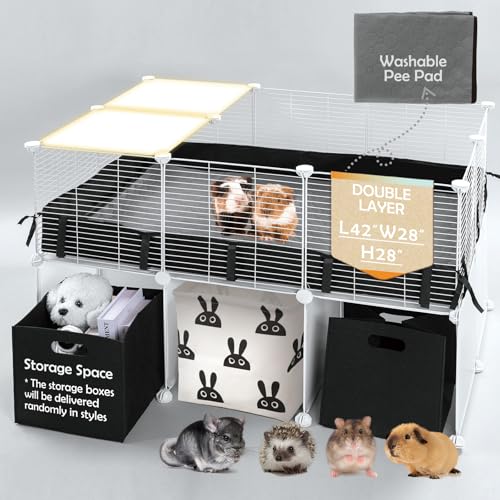
C&C (Cubes and Coroplast) cages are built from wire storage grids connected with connectors and a corrugated plastic tray. Sizing is standardized around 14-inch grid panels, but interior floor space is slightly less due to the Coroplast walls. Understanding true usable space helps you meet welfare guidelines without overbuying.
| Grid Layout | Exterior Dimensions (approx.) | Usable Floor Space | Recommended For | Common Add-On Footprint |
|---|---|---|---|---|
| 2×3 Grid | 28″ x 42″ (71 x 107 cm) | 7.1 sq ft (0.66 sq m) | 1 guinea pig (minimum), temporary hospital/quarantine cage | Fits on 30″ x 48″ table |
| 2×4 Grid | 28″ x 56″ (71 x 142 cm) | 9.8 sq ft (0.91 sq m) | 1-2 guinea pigs (standard recommendation) | Fits on 30″ x 60″ table or floor |
| 2×5 Grid | 28″ x 70″ (71 x 178 cm) | 12.3 sq ft (1.14 sq m) | 2-3 guinea pigs, boars needing more territory | Requires 30″ x 72″ floor space |
| 3×4 Grid | 42″ x 56″ (107 x 142 cm) | 14.7 sq ft (1.37 sq m) | 3-4 guinea pigs, herds | Needs dedicated floor area, not table-top |
| 2×6 Grid | 28″ x 84″ (71 x 213 cm) | 14.8 sq ft (1.38 sq m) | 4 guinea pigs or highly active pairs | Best as room divider along wall |
Most welfare organizations in 2026 recommend at least 7.5 sq ft for one guinea pig and 10.5 sq ft for two. A 2×3 meets the absolute minimum but leaves little room for separate kitchen, hide, and zoom space. That is why rescues and veterinarians now routinely advise starting at 2×4 and expanding with a loft or L-shape rather than a second level as a substitute for floor space.
Grids, Coroplast Height, and Why It Matters
Standard C&C grids have 9×9 squares with 1.4-inch openings and 14-inch outer dimensions. Baby-safe grids use smaller 5×5 or tighter mesh spacing to prevent young or small guinea pigs from getting heads stuck. Avoid grids with large rectangular openings from generic storage cube kits, as they are not guinea-pig safe.
Coroplast wall height is typically 6 inches for adults and 10-12 inches for babies, long-haired breeds, or enthusiastic burrowers who kick bedding. A 4mm thick Coroplast base (about 120-150 gsm) resists sagging and urine soak-through better than 3mm budget sheets, which tend to warp after 6-12 months of weekly washing.
Type Comparison: Which C&C Kit Fits Your Situation
Not all C&C cages are sold the same way. Your best choice depends on budget, tools, and how much customization you want.
| Cage Type | What’s Included | Assembly Time & Tools | Best For | General Market Price Range (2026) |
|---|---|---|---|---|
| Kavee C&C Cage with Fleece Liner | Powder-coated grids, pre-scored Coroplast, connectors, fleece liner with absorbent core | 30-45 minutes, no cutting needed | First-time owners wanting a complete, color-matched kit | $90 – $180 for 2×4, $150 – $260 for larger |
| Guinea Pig Cage Store (Cagetopia) C&C Kit | 14″ grids, 4mm Coroplast tray with 6″ walls, connectors, optional stand and ramp | 40-60 minutes, light scoring/folding of Coroplast | Owners who want US-made sizing and ramp/loft options | $80 – $170 for 2×4 base, stands extra |
| MidWest Guinea Habitat Plus (Hybrid) | Canvas bottom, wire top, divider panel – not true Coroplast but C&C-compatible size | 10-15 minutes, no tools | Apartment renters needing a portable, foldable option | $60 – $90 |
| DIY Cubes + Custom Coroplast | Bulk grids from storage sets + separate Coroplast sheet from sign shop | 60-120 minutes, requires box cutter, tape, measuring | Builders on a budget or needing non-standard L-shape | $40 – $85 total, liners separate |
Decision Matrix: Pick by Space, Budget, and Maintenance Style
Use this to match your situation to a setup without over- or under-buying:
- Limited space (studio/apartment), 1-2 pigs, low budget: 2×4 DIY or Kavee 2×4 without stand. Add a 1×2 loft later for hay kitchen to preserve floor running space. Fleece liner with single U-Haul pad layer keeps laundry manageable.
- Two boars or a bonded pair that squabbles: 2×5 flat, no loft. Boars benefit more from uninterrupted horizontal space than vertical levels. Choose 10-inch Coroplast walls to reduce bedding scatter during dominance displays.
- Three or more sows / herd: 3×4 or 2×6. The 3×4 provides wider turning radius for multiple hides and reduces traffic jams at water bottles. Consider a supportive grid stand with storage to protect floors.
- Owners who want minimal daily cleaning: 2×4 or larger with dual-layer fleece liners (fleece + bamboo/cotton absorbent + waterproof backing) plus a separate kitchen area with disposable paper bedding or wood pellet litter. This isolates 70% of urine and hay mess.
- Families with young children or cats/dogs in home: Enclosed C&C with lid grids and zip-tie reinforcement. Kavee and Guinea Pig Cage Store both sell lid kits. Avoid open-top setups if other pets can access the room unsupervised.
- Frequent movers or renters: MidWest Guinea Habitat Plus or a 2×4 C&C without a stand that can be disassembled flat. True Coroplast trays are lighter but bulkier to move than canvas.
Liners and Bedding: Assembly Is Easy, Laundry Is the Real Work
The cage itself is simple to assemble, but your liner choice determines weekly workload.
Fleece liners vs. disposable bedding
Fleece liners (most popular in 2026): A properly wicked fleece top lets urine pass to an absorbent middle layer (U-Haul furniture pad, bamboo, or Zorb). You need 2 sets to rotate. Sweep poops daily with a small broom, wash every 3-4 days on 86-104°F (30-40°C) without fabric softener. Cost per use drops below paper bedding after about 4-5 months. Liners with sewn-in absorbent cores cost more upfront but prevent bunching.
Paper bedding / aspen shavings in Coroplast tray: No laundry, but requires full change every 5-7 days for a 2×4, more often in summer. Expect 50-60L of paper bedding per change for a 2×4 at 2-inch depth. Dust-free paper is better for respiratory health than pine or cedar, which should be avoided.
Wood pellets + fleece hybrid (kitchen zone): Place pellets or paper bedding in a 1×2 section under the hay rack. Pellets control odor for 7-10 days and contain hay fallout, while fleece covers the rest. This hybrid cuts fleece washing frequency by about 30%.
Assembly Needs and Common Mistakes
- Reinforce every grid connection with cable ties in addition to plastic connectors. Connectors alone loosen after 3-6 months and cause wall flex.
- Score Coroplast only halfway through the flutes when folding walls. Cutting through weakens corners and leads to leaks.
- Leave a 1-inch grid overlap at corners and secure with ties so guinea pigs cannot push the Coroplast outward.
- Place the cage on a waterproof mat, even with liners. Urine can wick over 6-inch walls during popcorn zooms or if liners are saturated.
- Position water bottles and hay racks on the Coroplast side, not over bare grids, to prevent drips onto floors.
Durability and Ownership Realities
C&C cages last 3-5 years with basic care, but some parts wear faster:
- What wears first: Cable ties (replace every 6 months), Coroplast fold lines (crack after 18-24 months if folded sharply), and fleece waterproof backing (delaminates after 50-70 hot washes). Grids themselves rarely fail unless powder coating chips and rusts.
- Consumables to budget for: Second set of fleece liners ($45-$85 per set for 2×4), U-Haul pads if not sewn-in ($15-$25), replacement Coroplast tray every 2 years ($25-$50), and extra grids for repairs.
- Cleaning routine that extends life: Daily spot-clean, mid-week liner flip, full wash every 3-4 days. Wipe Coroplast with 50/50 white vinegar and water; avoid bleach on powder coating. Air-dry fleece to preserve backing.
- Common mistake: Using fabric softener or scented detergent. It re-waterproofs fleece so urine pools on top, causing bumblefoot risk and odor. Use unscented detergent and an extra rinse cycle.
- Weight and floor load: A 2×4 with grids, Coroplast, fleece, and accessories weighs 18-24 lbs empty and up to 35 lbs with bedding and water. A 2×6 on a grid stand can approach 50 lbs; verify table or stand rating.
For health-related concerns such as persistent sneezing, sore hocks, or changes in urination that may relate to bedding or cage setup, consult a veterinarian with experience in small mammals for general guidance.
Worked Example: Cost Per Use for Bedding
To see why liner choice matters long-term, compare a 2×4 cage over 12 months:
Paper bedding only: 52 changes x 50L bag at ~$22-$28 per bag = $1,144-$1,456 per year, plus trash volume.
Fleece system: 2 liner sets at $65 each = $130 + ~52 washes (2 per week, cold water) at ~$0.40 wash cost = ~$21 + replacement U-Haul pads $20 = ~$171 first year, then ~$40-$60 per year for detergent and eventual liner replacement. Even with water and energy, fleece costs about 85% less annually after the initial purchase, but requires 20-30 minutes of extra laundry time per week.
Frequently Asked Questions
Can I add a second level instead of a larger base?
Lofts and 1×2 second levels are great for kitchens or hide areas, but they do not count toward minimum floor space guidelines. Guinea pigs need flat running space. Count only the bottom level when checking square footage.
Are C&C cages safe for babies?
Standard 1.4-inch grid openings are not safe for pups under 6 months or petite adults under 400g. Use baby-safe grids with smaller openings or double up grids offset, and raise Coroplast to 10-12 inches until they reach adult size.
Do I need a lid?
If the cage is open-top in a room without cats, dogs, or small children, a lid is optional. With other pets, a hinged grid lid secured with clips is strongly recommended. Lids also prevent adventurous guinea pigs from climbing out of low-wall DIY trays.
How often should I replace Coroplast?
With gentle cleaning, 4mm Coroplast lasts 2-3 years. Replace sooner if you see deep chew marks, cracking at folds, or persistent odor after vinegar cleaning, as urine can seep into damaged flutes.