Key takeaways
- Choose it for: commuting, road trips, luxury sedans, and low-noise touring.
- Trade-off: steering feel is less immediate than a performance tire.
- Typical example size: 225/60R17, commonly found on midsize sedans and crossovers.
The best Bridgestone tires depend on your vehicle and driving priorities: choose Turanza QuietTrack for a quiet commuter sedan, WeatherPeak for year-round traction, Alenza AS Ultra for a crossover or SUV, Potenza Sport for sporty handling, and Blizzak WS90 for severe winter conditions.
Our top picks
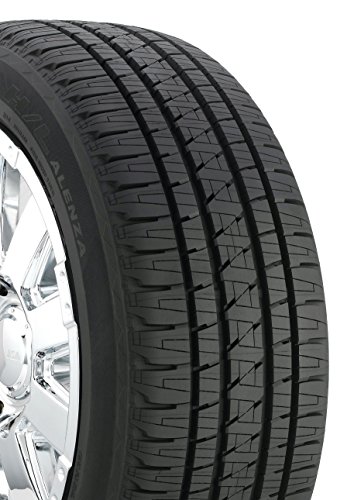


As an Amazon Associate we earn from qualifying purchases at no extra cost to you. Ratings are shown as listed on Amazon.
Best Bridgestone Tires at a Glance
| Best for | Recommended tire | Typical vehicle | Approximate price per tire | Key ownership advantage |
|---|---|---|---|---|
| Quiet daily driving | Bridgestone Turanza QuietTrack | Luxury and family sedans | $170–$290 | Long 80,000-mile limited warranty on many sizes |
| One set for changing weather | Bridgestone WeatherPeak | Sedans, hatchbacks, crossovers | $160–$280 | All-weather design with the Three-Peak Mountain Snowflake symbol |
| Family SUV comfort | Bridgestone Alenza AS Ultra | Crossovers and light SUVs | $190–$330 | Comfort-focused ride and long tread-life warranty |
| Performance street driving | Bridgestone Potenza Sport | Sport sedans and performance cars | $210–$390 | Strong dry-road steering and braking response |
| Winter snow and ice | Bridgestone Blizzak WS90 | Cars and crossovers | $150–$280 | Specialized winter compound and severe-snow certification |
| Run-flat replacement | Bridgestone DriveGuard Plus | Vehicles designed for compatible replacement sizes | $190–$330 | Limited mobility after a puncture, where vehicle compatibility allows |
Prices are broad 2026 market ranges for common passenger-car sizes. Size, speed rating, load rating, retailer, installation, and seasonal demand can change the final cost substantially.
Best Bridgestone Tires by Driving Situation
Best for quiet highway commuting: Turanza QuietTrack
The Turanza QuietTrack is the strongest choice for drivers who spend most of their time on paved roads and want low cabin noise, stable highway behavior, and a comfortable ride. Its tread design is aimed at reducing pattern noise, while Bridgestone offers an 80,000-mile limited treadwear warranty on many applications.
It is a grand-touring all-season tire, not a dedicated snow tire. It can handle occasional light snow, but drivers who regularly face unplowed roads, mountain travel, or icy conditions should consider WeatherPeak or a separate winter tire instead.
- Choose it for: commuting, road trips, luxury sedans, and low-noise touring.
- Trade-off: steering feel is less immediate than a performance tire.
- Typical example size: 225/60R17, commonly found on midsize sedans and crossovers.
Best all-weather tire: WeatherPeak
WeatherPeak is the better one-set solution for drivers who experience rain, cold temperatures, and recurring snow but do not want to change between summer and winter tires. Its Three-Peak Mountain Snowflake certification indicates that it meets the industry’s severe-snow performance standard, although it is still not equivalent to a dedicated studless winter tire on ice.
Compared with a conventional touring all-season tire, WeatherPeak is generally the more sensible pick for northern climates with moderate snowfall. Expect a somewhat firmer ride and potentially more road noise than from a comfort-oriented touring model.
- Choose it for: four-season driving, wet roads, light-to-moderate snow, and mild winters.
- Trade-off: it may not deliver the quietest ride or sharpest dry handling.
- Best alternative: Blizzak WS90 if winter traction matters more than convenience.
Best for crossovers and SUVs: Alenza AS Ultra
The Alenza AS Ultra targets crossover and SUV owners who prioritize ride comfort, wet-road confidence, and long-term value. It is designed around the heavier loads and higher seating position of modern utility vehicles, with sizes commonly carrying load ratings appropriate for compact, midsize, and larger crossovers.
It is a good match for a Honda CR-V-sized vehicle, a Toyota Highlander-sized vehicle, or similar models when the factory tire size and load rating match. Do not substitute it solely because the diameter appears correct: the tire must also meet the vehicle’s load index, speed rating, and approved rim width.
- Choose it for: family transportation, highway travel, and comfortable SUV driving.
- Trade-off: it is not intended for serious off-road terrain.
- Check first: the vehicle placard for exact size, pressure, and minimum load rating.
Best for sporty handling: Potenza Sport
Potenza Sport is Bridgestone’s street-focused summer performance tire. It provides quicker steering response and stronger dry-road grip than touring and all-season models, making it appropriate for performance sedans, coupes, and drivers who value cornering precision.
The compromise is important: summer performance tires are not suitable for cold-weather use. Grip can fall sharply near freezing, and the compound is not intended for snow or ice. Potenza Sport also typically wears faster than a touring tire, particularly when used on heavy vehicles or driven aggressively.
- Choose it for: warm-weather performance and responsive steering.
- Trade-off: shorter tread life, higher cost, and poor winter suitability.
- Do not choose it for: year-round use in climates with freezing temperatures.
Best for dedicated winter use: Blizzak WS90
Blizzak WS90 is the specialist choice for snow, packed roads, and winter temperatures. Its winter compound remains more flexible in cold conditions than ordinary all-season rubber, while the tread is built to evacuate slush and find traction in snow.
Winter tires should be installed as a complete set of four. Mixing two winter tires with two all-season tires can create uneven handling between the front and rear axles. Once spring temperatures return, remove them if possible: warm pavement accelerates wear and reduces the reason to use a winter compound.
Head-to-Head: WeatherPeak vs. Turanza QuietTrack
| Factor | WeatherPeak | Turanza QuietTrack |
|---|---|---|
| Snow capability | Higher; severe-snow certified | Moderate; conventional all-season design |
| Dry-road steering | Balanced and predictable | Comfort-oriented and relaxed |
| Ride and noise priority | Good, but weather capability adds compromises | Usually the better choice for quiet touring |
| Typical warranty | Varies by size and application | Up to 80,000 miles on many sizes |
| Best climate | Four-season regions with regular snow | Mild climates with occasional light snow |
Choose WeatherPeak when avoiding seasonal tire changes is the main goal. Choose Turanza QuietTrack when your roads are mostly clear and quietness, comfort, and long tread life matter more.
Where Other Bridgestone Models Fit
DriveGuard Plus for compatible run-flat applications
DriveGuard Plus is intended for drivers who want run-flat capability in an approved replacement size. Run-flat tires can allow limited travel after a puncture, but the distance and speed limits depend on the tire, pressure-loss conditions, and vehicle instructions. They are not a substitute for repairing the puncture promptly.
Run-flat construction can also produce a firmer ride and higher replacement cost. Confirm compatibility with the vehicle manufacturer before purchasing; a similar-looking non-run-flat size is not necessarily an acceptable substitute.
Ecopia for fuel-conscious commuters
Bridgestone Ecopia models use low-rolling-resistance designs intended to reduce energy losses. They can make sense for drivers who cover high annual mileage and prefer efficiency over sporty response. Actual fuel savings vary with pressure, alignment, weather, traffic, vehicle condition, and driving style, so the purchase should not be justified by an exact promised savings figure.
Dueler for pickup trucks and utility-focused driving
Dueler models cover several highway, all-terrain, and light-truck applications. A highway-oriented Dueler is appropriate for paved-road towing and commuting, while an all-terrain version is better for gravel, dirt, and occasional trail use. Neither should be selected by name alone: tow loads and payloads make the correct load range and load index essential.
A Practical Selection Matrix
| Your priority | Best direction | Why |
|---|---|---|
| Maximum tread-life value | Turanza QuietTrack or Alenza AS Ultra | Long-warranty touring designs can reduce replacement frequency |
| Snow without owning two sets | WeatherPeak | More winter capability than a standard all-season tire |
| Best cold-weather traction | Blizzak WS90 | Dedicated winter compound outperforms all-season designs in severe conditions |
| Fast steering and dry grip | Potenza Sport | Performance construction favors response over longevity |
| Lowest initial purchase price | Compare the correct-size Ecopia or touring all-season options | Smaller, lower-speed-rated sizes are often less expensive |
| Puncture mobility | DriveGuard Plus, if approved | Run-flat construction can provide limited mobility after air loss |
Tread Life, Maintenance, and Total Cost
A tire warranty is not a guarantee that every tire will last that many miles. Alignment, inflation, rotation frequency, vehicle weight, road surfaces, temperature, and driving habits determine real wear. The shoulders often wear first when pressure is low, while the center can wear first when pressure is too high. Misalignment may create feathering or a sawtooth pattern across the tread.
For example, suppose four tires cost $240 each and installation adds $120. The initial outlay is $1,080. If the set lasts 60,000 miles, the tire-and-installation cost is about 1.8 cents per mile:
($960 + $120) ÷ 60,000 miles = $0.018 per mile.
A cheaper $170 tire set may cost less initially, but if it lasts only 35,000 miles, its effective cost can be higher. Compare expected service life, warranty terms, seasonal suitability, and installation—not just the price printed on the tire.
- Check pressure at least monthly when the tires are cold.
- Rotate according to the vehicle maker’s schedule, commonly around 5,000–8,000 miles.
- Inspect tread, sidewalls, valve stems, and embedded objects during rotation.
- Replace a tire with significant sidewall damage rather than relying on a plug.
- Replace all four on all-wheel-drive vehicles when the owner’s manual requires closely matched tread depth.
How to Choose the Correct Bridgestone Size
Start with the driver’s-door placard or owner’s manual, not the size printed on a tire currently fitted to the vehicle. A marking such as 225/60R17 means a 225-millimeter section width, a 60-series aspect ratio, radial construction, and a 17-inch wheel diameter. The final characters also specify load index and speed rating, which must meet or exceed the vehicle requirement unless the manufacturer allows otherwise.
After selecting a model, compare its UTQG information where available, warranty conditions, expected climate, and installed price. A tire that is ideal for a sedan may be a poor choice for a loaded SUV, even when both use a 17-inch wheel.
Bottom Line
For most clear-road commuters, Turanza QuietTrack is the best Bridgestone all-around touring choice. WeatherPeak is the smarter one-set option for regular snow, Alenza AS Ultra suits comfortable crossover travel, Potenza Sport is for warm-weather performance, and Blizzak WS90 is the right tool for serious winter driving. Verify the exact size, load rating, speed rating, vehicle compatibility, and local climate before ordering.