Key takeaways
- Battery life and charging: makers list hours per charge and the case provides extra charges. Long interview days need a plan.
- Safety track: some models can record a secondary lower-level track so loud peaks can be recovered. Reviewers describe it as helpful for unpredictable speakers.
- Noise cancellation: built-in noise reduction can help outdoors, but it can also affect voice quality, so test the settings before the real interview.
- Interference: 2.4 GHz systems share a crowded band. In busy venues, keep transmitters near the receiver and have a backup.
- Lav quality: a clip-on microphone clipped to clothing may pick up rustle. Place the clip at chest level, away from jewellery and straps.
For interviews, a wireless clip-on system such as the DJI Mic series, Rode Wireless GO or Hollyland Lark is the best choice for most people recording face-to-face conversations on a phone or camera, a USB dynamic microphone such as the Shure MV7+ or Samson Q2U suits remote and desk interviews, and a handheld interview microphone suits reporters on the move. The right pick depends on where you record, how many people speak and what device you record on. This guide compares the main types, explains what the makers list and what reviewers commonly say, and gives clear decisions.
Our top picks


As an Amazon Associate we earn from qualifying purchases at no extra cost to you.
Match the microphone to the interview setup
In-person, two people, phone or camera
A wireless system with two transmitters and one receiver lets each person wear a clip-on microphone, which keeps the voice close and reduces room noise. Makers such as DJI, Rode and Hollyland sell compact kits with a receiver that plugs into a phone or camera and a charging case. Reviewers say the main advantages are freedom of movement and consistent voice levels, and the main drawback is that you must manage batteries and possible radio interference.
Remote interviews from a desk
USB dynamic microphones plug directly into a computer and need no audio interface. The Shure MV7+ and the Samson Q2U are common names in this tier. Dynamic designs reject more room noise than condenser designs, which suits untreated rooms. Reviewers often note that you must speak close to the microphone for the best result.
Handheld reporting
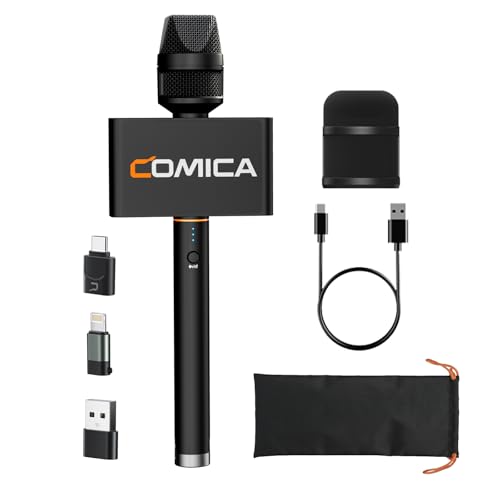
A handheld interview microphone, such as the Rode Interview PRO or a classic dynamic handheld like the Shure SM58 with a cable, is easy to point at a subject and is a familiar sight in news work. It suits street interviews, events and short question-and-answer sessions.
Phone-only interviews
Smaller systems such as the Rode Wireless Micro and DJI Mic Mini are designed with phone use in mind, with a receiver that plugs straight into the phone’s port. Check the connector type: USB-C and Lightning versions differ, and some kits include both adapters.
Interview microphones at a glance
| Product or type | Best for | Key stated specs | Limits |
|---|---|---|---|
| DJI Mic series (Mic 2, Mic 3, Mic Mini) | Phone and camera, two speakers | Maker lists clip-on transmitters, a charging case, a receiver and onboard recording on some models | Proprietary ecosystem; features differ by model |
| Rode Wireless GO and Wireless PRO | Creators and video interviews | Maker lists compact transmitters with built-in microphones, a receiver, and recording on the unit | Premium tier for PRO; bigger kit |
| Rode Wireless Micro | Phone-first users | Maker lists a tiny receiver for a phone port and clip-on transmitters | Fewer pro features |
| Hollyland Lark series | Value-conscious two-person kits | Maker lists compact transmitters and a charging case | Software and range vary by model |
| Shure MV7+ | Remote and desk interviews | Maker lists USB and XLR output, dynamic capsule | Needs a desk stand; close speaking distance |
| Samson Q2U | Budget desk recording | Maker lists USB and XLR connection, dynamic capsule | Basic build |
| Handheld such as Rode Interview PRO or Shure SM58 | Street and event reporting | Handheld form, cardioid pickup on typical models | One person at a time |
Wireless lavalier kits
These are the systems most people mean when they say an interview microphone today. Two compact transmitters clip to the collars and send audio to a receiver. Several models record internally as a backup, which reviewers value because it covers dropouts. Look at these points when comparing:
- Battery life and charging: makers list hours per charge and the case provides extra charges. Long interview days need a plan.
- Safety track: some models can record a secondary lower-level track so loud peaks can be recovered. Reviewers describe it as helpful for unpredictable speakers.
- Noise cancellation: built-in noise reduction can help outdoors, but it can also affect voice quality, so test the settings before the real interview.
- Interference: 2.4 GHz systems share a crowded band. In busy venues, keep transmitters near the receiver and have a backup.
- Lav quality: a clip-on microphone clipped to clothing may pick up rustle. Place the clip at chest level, away from jewellery and straps.
USB dynamic microphones
The Shure MV7+ is aimed at podcasters and remote interviewers. The maker lists both USB and XLR outputs and a dynamic capsule that is intended to focus on the voice. The Samson Q2U is a budget alternative that also offers USB and XLR and is frequently mentioned by reviewers as a good starting point. Both microphones benefit from a pop filter and a boom arm. For remote interviews, wear headphones to avoid echo.
Handheld interview microphones
A handheld dynamic with a foam windscreen gives clear, controlled audio when held a few centimetres from the speaker’s mouth. The Rode Interview PRO is marketed as a camera-ready reporter microphone with built-in recording on some versions, while the Shure SM58 is a long-standing wired option. Handhelds keep the interviewer in control of distance, so they suit loud places. They are less natural for long conversations, as arms tire.
Compatibility notes
- Phones: confirm whether your phone uses USB-C or Lightning and whether the receiver includes the right adapter. Some phones need a case removed to seat a receiver.
- Cameras: a 3.5 mm output works with most cameras, and a digital hot-shoe connector works with specific brands. Read the maker’s list.
- Computers: USB microphones appear as an audio input. Some receivers also work as USB audio devices.
- Android and iOS differences: some wireless receivers appear as a standard USB audio device on Android, while others need an adapter. Review the maker’s guide for your phone.
Budget tiers
Budget
Budget wireless kits and the Samson Q2U give usable voice recording for simple interviews. Expect fewer features and plainer accessories.
Mid-range
The DJI Mic Mini, Rode Wireless Micro, Hollyland Lark series and Shure MV7+ sit here and cover most creator needs.
Premium
Rode Wireless PRO and higher-end DJI kits add internal recording, safety tracks and better range, for professional reliability.
Pick this if
| If you | Choose | Why |
|---|---|---|
| Interview two people in person on a phone | DJI Mic Mini or Rode Wireless Micro | Compact two-person kits |
| Shoot video interviews for work | Rode Wireless GO or PRO | Backup recording and reliability |
| Record remote interviews at a desk | Shure MV7+ or Samson Q2U | USB dynamic microphones reject room noise |
| Report on the street | Handheld interview microphone | Quick to point and robust |
| Want the lowest cost | Samson Q2U or a budget wireless kit | Simple and affordable |
Alternatives
- Wired lavalier microphones: reliable and cheap, but cables limit movement.
- Shotgun microphones: camera-mounted shotguns can work for run-and-gun interviews, but they pick up more room sound.
- Portable recorders: a handheld recorder placed between two speakers can capture a conversation in a quiet room.
Getting clean audio on the day
Even the best microphone sounds poor if the setup is careless. Reviewers and audio educators commonly repeat a few habits that help any interview.
- Do a short test recording. Record thirty seconds, listen with headphones and fix problems before the guest sits down.
- Choose a quiet room. Soft furnishings absorb echo, and turning off fans, air conditioners and notifications removes avoidable noise.
- Set levels with the louder speaker in mind. Leave headroom so laughter or raised voices do not clip.
- Keep the microphone at a consistent distance. For handhelds, a few centimetres from the mouth is typical, and for clip-ons about a hand-width below the chin.
- Use a windscreen outdoors. Even a light breeze produces rumble.
- Record a backup. A second recording on a phone or the transmitter protects against dropouts.
Consent and etiquette
Tell guests they are being recorded and explain how the recording will be used. Laws about recording conversations vary by country and region, so follow local rules and obtain permission before recording, especially with remote guests.
Editing considerations
Separate tracks for each speaker give you more control in editing. Systems that record each transmitter independently are helpful, because you can reduce one person’s background noise without affecting the other.
Accessories worth having
A spare set of batteries or a power bank, a foam windscreen, a short extension cable and a small bag to keep everything together solve most problems on location. For desk interviews, a boom arm and pop filter keep the microphone close and steady. Headphones for monitoring let you catch problems early.
Frequently Asked Questions
What is the best microphone for a phone interview?
For recording a person in front of you, a compact wireless clip-on kit that plugs into the phone is the usual choice. Confirm the connector matches your phone before buying.
Do I need two microphones for a two-person interview?
Two clip-on microphones give a closer, cleaner sound for each speaker and let you edit voices separately. A single handheld works if you pass it between speakers.
Is a dynamic or condenser microphone better for interviews?
Dynamic microphones reject more background noise and suit untreated rooms. Condenser microphones capture more detail but need a quiet space.
How do I avoid wind noise outdoors?
Use the foam or furry windscreen supplied or sold by the maker, keep the microphone close to the mouth and turn off or reduce noise cancellation if it affects the voice.
Should I record a backup?
Yes. Wireless links can drop. Systems with onboard recording provide a backup, and a phone voice-memo app also works as a safety copy.
Can I use earbuds as an interview microphone?
You can in an emergency, but earbud microphones are designed for calls and tend to be thinner and noisier. A dedicated microphone sounds clearer.