Key takeaways
- Stand and shock mount: Use a sturdy stand. A shock mount reduces vibration.
- Pop filter: Place one a few centimetres in front of the microphone for vocals.
- Cables: Use balanced XLR cables of reasonable length. Damaged cables cause hum.
- Storage: Keep the microphone in its case, away from moisture and smoke.
- Handling: Do not blow into or tap the capsule.
- Power: Mute outputs when switching phantom power.
If you are buying your first XLR condenser, the Audio-Technica AT2020 or AT2035 suits a tight budget, the Rode NT1 (5th generation) suits quiet rooms and flexible setups, and the AKG C214 or Neumann TLM 102 suits buyers who want a more refined studio sound. The best XLR condenser for you depends on your voice or instrument, your room, and your audio interface.
Our top picks


As an Amazon Associate we earn from qualifying purchases at no extra cost to you.
XLR Condenser Microphones at a Glance
| Model | Best for | Key stated feature | Limits |
|---|---|---|---|
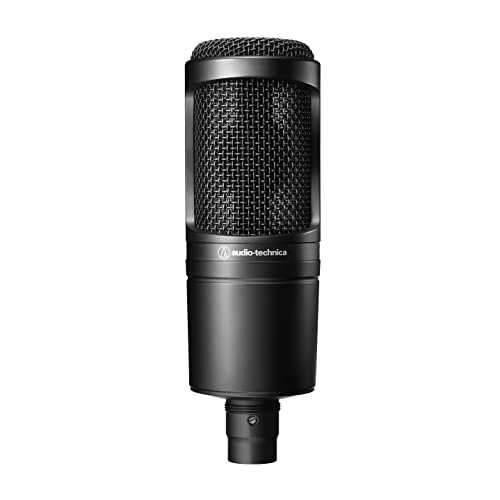
| Audio-Technica AT2020 | Entry-level home recording | Cardioid large-diaphragm condenser, phantom powered | No pad or low-cut switch; room noise shows |
| Audio-Technica AT2035 | Vocals, acoustic guitar, louder sources | Maker lists a switchable pad and low-cut filter | Large body and basic accessories |
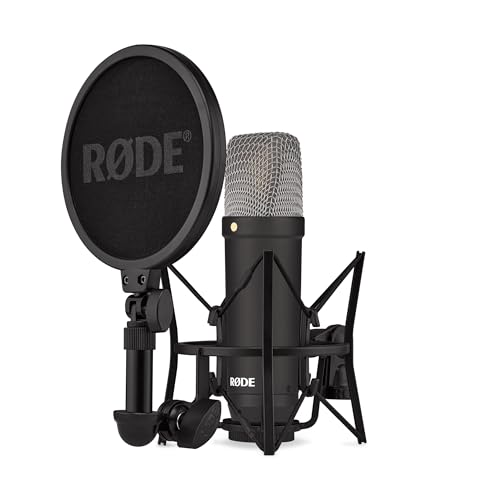
| Rode NT1 (5th generation) | Quiet-room vocals and flexible workflows | Maker lists XLR and USB outputs | Low self-noise reveals room sound |
| AKG C214 | Studio vocals, acoustic instruments, overheads | Maker lists a switchable pad and bass-cut | Premium-tier cost |
| Neumann TLM 102 | Compact studio vocal microphone | Maker lists a compact large-diaphragm design | Premium-tier cost; fewer switches |
| Lewitt LCT 440 Pure | Mid-range studio use with low noise | Maker lists low self-noise and cardioid capture | Narrower accessory ecosystem |
| Warm Audio WA-87 R2 | Vintage-style vocal sound | Maker lists multiple polar patterns and a classic-inspired design | Heavier; needs a good preamp |
| Shure SM27 | Versatile instrument and vocal use | Maker lists a large-diaphragm design with a switchable low-cut | Pricier than basic entries |
Models are revised over time. Compare the exact generation listed on each maker’s page before buying.
What an XLR Condenser Needs
Phantom power
Almost all studio condensers require 48V phantom power from an interface or mixer. Plug in the XLR cable before turning phantom power on, and turn it off before disconnecting, to avoid loud pops. Some ribbon microphones can be damaged by phantom power, so never assume it is safe for every microphone. Follow each maker’s manual.
Audio interface
An XLR microphone cannot plug directly into a computer. You need an interface or mixer with a microphone preamp. The preamp gain should be sufficient for your source. Condensers are generally sensitive, so most interfaces provide plenty of gain.
Polar patterns
Cardioid is the usual pattern and suits single sources. Multi-pattern microphones such as the WA-87 R2 can offer omnidirectional or figure-8 for interviews, duets, or room ambience. If you record solo, you will probably use cardioid nearly all the time.
Self-noise and sensitivity
Self-noise is the hiss the microphone makes on its own. Lower is better for quiet sources like acoustic guitar. Sensitivity indicates how much signal you get for a given sound level. The maker’s specification sheet lists both, though different makers measure them differently, so compare cautiously.
Room matters
A sensitive condenser will record reflections, computer fans, and street noise. Adding soft furnishings, blankets, or a reflection filter often improves results more than upgrading the microphone.
Models in Detail
Audio-Technica AT2020
The AT2020 is a long-standing entry choice. It is a cardioid condenser with a large diaphragm. Reviewers often praise its clear sound for the cost. It lacks a pad and low-cut switch, so very loud sources can overload it. It works well for quiet vocals, spoken word, and acoustic instruments in a treated space.
Audio-Technica AT2035
The AT2035 adds a switchable pad and a low-cut filter, according to the maker. These help with loud sources and rumble from desk vibrations. Reviewers frequently list it among sensible first condensers for vocals and acoustic guitar. Like the AT2020, it captures room sound, so treat your space.
Rode NT1 (5th generation)
The newer NT1 lists both XLR and USB outputs and extremely low self-noise. This is appealing for home creators who start on USB and later move to an interface. For vocals in a quiet room, reviewers describe the sound as clean. The same low noise floor means the room is easy to hear, so treatment is helpful.
AKG C214
The C214 is widely used in studios for vocals, acoustic instruments, and drum overheads. The maker lists a switchable pad and bass-cut filter. It is a step up in refinement and build, so it is best for buyers who record often. For casual use, a cheaper model will do the job.
Neumann TLM 102
The TLM 102 is a compact large-diaphragm condenser from a brand with a long studio history. The maker presents it as a studio microphone with a small body. Reviewers often describe it as clear and detailed. Because it has fewer switches, it relies on your interface for gain staging.
Lewitt LCT 440 Pure
Lewitt positions the LCT 440 Pure as a low-noise, mid-range studio condenser. It is a good fit for vocals and acoustic sources in a controlled room, though its accessory ecosystem is smaller than some larger brands.
Warm Audio WA-87 R2
This is a modern take on a classic large-diaphragm design. The maker lists multiple polar patterns. It is popular among home studio owners who like a vintage-leaning vocal sound. It is heavier and benefits from a sturdy stand and a quality preamp.
Shure SM27
The SM27 is a versatile large-diaphragm condenser. The maker describes it as suitable for vocals and instruments, with a switchable low-cut filter. It suits studios that value Shure’s reputation for reliability.
Budget Tiers and Trade-offs
| Tier | Examples | You get | You give up |
|---|---|---|---|
| Budget | AT2020 | Clear, simple condenser | Switches; headroom for loud sources |
| Mid-range | AT2035, Rode NT1 5th gen, Lewitt LCT 440 Pure, Warm Audio WA-87 R2, Shure SM27 | Pads, filters, lower noise, extra patterns | More decisions; some are bulky |
| Premium | AKG C214, Neumann TLM 102 | Refined build and sound | Gains are subtle without a good room and preamp |
Fit, Setup, and Care
- Stand and shock mount: Use a sturdy stand. A shock mount reduces vibration.
- Pop filter: Place one a few centimetres in front of the microphone for vocals.
- Cables: Use balanced XLR cables of reasonable length. Damaged cables cause hum.
- Storage: Keep the microphone in its case, away from moisture and smoke.
- Handling: Do not blow into or tap the capsule.
- Power: Mute outputs when switching phantom power.
Pick X If… Decision Table
| Pick this | If you |
|---|---|
| AT2020 | Want the simplest, lowest-cost entry |
| AT2035 | Want pad and low-cut switches at an entry level |
| Rode NT1 5th generation | Want XLR and USB options in one microphone |
| AKG C214 | Record often and want a studio standard |
| Neumann TLM 102 | Want a compact premium vocal microphone |
| Lewitt LCT 440 Pure | Want a low-noise mid-range option |
| Warm Audio WA-87 R2 | Want multiple patterns and a vintage voice |
| Shure SM27 | Want a versatile vocal and instrument microphone |
Alternatives
- Dynamic XLR microphones: Better for noisy rooms and loud sources.
- Small-diaphragm condensers: Often used for acoustic guitar and overheads.
- USB condensers: Easier to set up but limited to one input.
- Ribbon microphones: Warm sound, but fragile and phantom power sensitive.
Common Mistakes When Buying a First Condenser
The first mistake is spending on the microphone while ignoring the room. A mid-range condenser in a bare, echoing bedroom will usually sound worse than an inexpensive dynamic microphone in a treated corner. Hanging thick curtains, placing a bookshelf behind you, or using a portable vocal booth can improve results at little cost.
The second mistake is forgetting the rest of the signal chain. An XLR microphone needs a cable, a stand, a pop filter, and an interface with phantom power. Cheap interfaces can work well, but their preamps may add noise at high gain, which matters for quiet sources and low-output microphones. Look at the interface’s stated gain range and noise figures.
The third mistake is expecting one microphone to suit every source. Large-diaphragm condensers excel at vocals and acoustic instruments, but loud guitar amplifiers and drums are often better captured with dynamic microphones. Many home studios end up with one condenser and one dynamic, which covers most situations. Take time to compare sample recordings from independent reviewers, using headphones, and focus on how the microphone sounds on a voice or instrument similar to yours.
The fourth mistake is ignoring placement. Even an excellent condenser sounds thin or boomy when the singer is too close, too far, or off-axis. Start with a pop filter a short distance from the capsule, point the front of the microphone at the source, and move a few centimetres at a time while listening on headphones. Small adjustments often matter more than any change of model.
Frequently Asked Questions
Do I need an audio interface for an XLR condenser?
Yes. XLR microphones need a preamp and phantom power, which an interface or mixer provides. Some hybrid models also offer USB.
Is a large-diaphragm condenser better than a dynamic?
Not always. Condensers are more detailed but capture more room sound. Dynamics are more forgiving in untreated rooms.
Can phantom power damage my microphone?
Condensers are designed for it. Some ribbon microphones can be damaged, so follow the manual and connect before switching on.
What does the pad switch do?
It reduces the signal level to avoid distortion on loud sources. Use it for close, loud vocals or guitar amps.
How far should I sit from the microphone?
Many singers start about a hand’s width away with a pop filter and adjust to taste. Moving closer increases bass and sensitivity.
How should I store a condenser?
Keep it in a case away from humidity, dust, and smoke, and avoid shocks.